


In the search for better performance and well-being, many people are exploring the world of adaptogens and nootropics. While you might see the terms used together, they describe two very different types of compounds with distinct jobs.
Understanding this difference is the first step to using them effectively for your own health goals.
What Are Adaptogens and Nootropics?
At its core, the difference is simple: adaptogens help your body manage stress, while nootropics directly target and enhance brain function.
Think of it this way: adaptogens are like a thermostat for your body’s stress response system, while nootropics are like a software upgrade for your mind.

Defining the Two Categories
Adaptogens are natural substances—usually herbs or mushrooms—that improve your body's ability to adapt to and resist different kinds of stress, whether it's physical, chemical, or biological. They work by supporting your body’s stress-response system, mainly the hypothalamic-pituitary-adrenal (HPA) axis.
Imagine your stress response is like a car alarm that’s way too sensitive. When it’s constantly going off, you feel drained and burnt out. Adaptogens help recalibrate that system, ensuring the alarm only sounds when it’s truly needed and helping it reset more quickly afterward. This process builds long-term resilience.
Nootropics, on the other hand, are compounds that are all about cognitive function. Their main purpose is to improve mental performance in specific areas:
- Memory and Learning: Boosting your capacity to retain and recall information.
- Focus and Concentration: Sharpening your ability to stay on task.
- Creativity and Motivation: Supporting clearer thinking and the drive to follow through on ideas.
Nootropics are the brain’s direct performance enhancers, working to sharpen focus and clarity. Adaptogens are the body's resilience builders, strengthening your ability to withstand pressure without burning out.
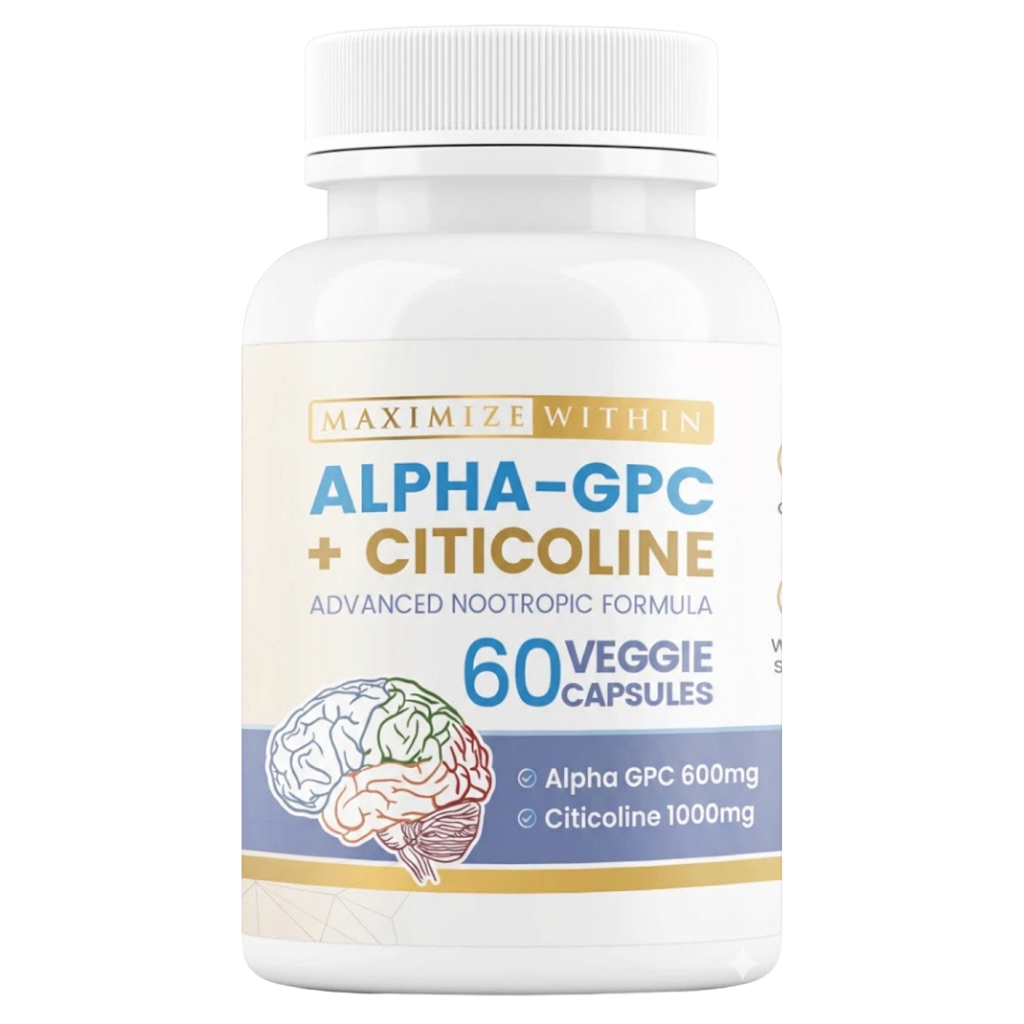
Featured Product
Alpha-GPC + Citicoline - Maximize Within | Advanced Nootropic Formula
A premium blend of Alpha-GPC (600mg) and Citicoline (1000mg), two well-known nootropic ingredients, in a convenient daily veggie capsule. Made in the USA. Gluten-free, soy-free, and preservative-free.
Shop Now →The Overlap Between Adaptogens and Nootropics
While their primary functions are different, some substances can pull double duty, offering both adaptogenic and nootropic effects. For example, certain adaptogens can improve mental clarity simply by reducing the brain fog that comes with chronic stress.
It’s in this dual action that the real synergy between adaptogens and nootropics comes to life.
Still, their core missions remain distinct. Adaptogens create a stable foundation, while nootropics optimize the cognitive functions built on top of it. By understanding these roles, you can make smarter choices about which compounds best match your goals, whether you need to manage daily pressures or sharpen your mental edge for a big project.
How Adaptogens Build Your Resilience to Stress
To really grasp how adaptogens work, we need to look at your body's built-in stress management system. This is called the Hypothalamic-Pituitary-Adrenal (HPA) axis, and it acts as the central coordinator for how you respond to everything from a tough day at work to a demanding workout. It's the system that decides when to release stress hormones like cortisol.
When you're dealing with ongoing, chronic stress, this system can become dysregulated. It might start overreacting to minor problems or simply fail to power down after a stressful event is over. This constant state of high alert is a direct path to the burnout, fatigue, and brain fog that so many of us know all too well.
This is where adaptogens come in. They serve as masterful regulators for this entire system. They don’t get rid of stress—that's not their job. Instead, they essentially retrain your HPA axis, helping it respond more appropriately to stressors and recover more efficiently afterward.
The Science of a Smarter Stress Response
At their core, adaptogens help bring your body back to a state of balance, or homeostasis. When stress has your cortisol levels spiking, certain adaptogens can help guide them back down. On the other hand, if your system feels depleted and exhausted, they can offer a gentle, stabilizing lift without acting as a harsh stimulant.
This impressive balancing act is achieved through a few key mechanisms:
- Modulating Cortisol Production: Adaptogens can help temper the overproduction of cortisol during stressful times. This is crucial for protecting your body from the long-term wear and tear caused by chronic stress.
- Enhancing Cellular Energy: They support your mitochondria—the tiny power plants inside your cells. By helping you produce energy more efficiently at the cellular level, they fight fatigue right at its source.
- Protecting the Nervous System: By helping to balance your stress hormones, adaptogens shield your brain and nervous system from the draining effects of being in a constant fight-or-flight mode.
You can think of adaptogens as a conditioning program for your biology. They help strengthen your body's internal "muscles" for handling stress, making you more resilient against the physical and mental demands of modern life.
The Tangible Benefits of Resilience
This improved biological resilience isn't just a concept; it translates into real-world benefits you can actually feel. When your body isn't wasting precious energy on a persistent, low-grade stress response, that energy becomes available for other, more important things.
The results are often distinct and incredibly valuable.
People who consistently use adaptogens often report:
- Stable, Jitter-Free Energy: Unlike the temporary and often shaky rush from stimulants like caffeine, adaptogens help build a foundation of steady, reliable energy that lasts throughout the day.
- Improved Mood and Emotional Balance: With a more regulated stress response, you become less susceptible to being thrown off by daily annoyances. This often leads to a calmer, more positive outlook.
- Enhanced Physical and Mental Endurance: By helping your body adapt more effectively to physical and mental strain, adaptogens can boost stamina during exercise and help you maintain sharp focus during long, demanding tasks.
By working with your body's own sophisticated systems, adaptogens help you shift from simply surviving the pressures of life to actively thriving in spite of them. This makes them a fundamental part of any effective strategy for both cognitive performance and overall well-being. When you combine the stress resilience from adaptogens with the targeted cognitive support of nootropics, the synergy can be truly powerful.
How Nootropics Sharpen Your Cognitive Edge
If adaptogens are the body's shield against stress, think of nootropics as the specialized toolkit for tuning up your brain's engine. Their whole job is to fine-tune your cognitive performance, which is why they’re so popular with professionals, students, and anyone who needs their mind to be at its sharpest.
Nootropics go to work in a few key ways. One of the most common is by influencing your neurotransmitters—the chemical messengers that run the show in your brain. Some compounds, for example, can boost levels of acetylcholine, a critical neurotransmitter for learning new things, recalling memories, and staying focused. Others might support dopamine, the molecule behind motivation and that feeling of satisfaction when you complete a task.
Boosting Brainpower and Protection
It's not all about brain chemistry, though. Many nootropics also improve the physical environment inside your head. They can enhance cerebral blood flow, which is just a technical way of saying they help get more oxygen and nutrients to your hardworking brain cells. It’s like upgrading the fuel line on a high-performance car; better flow means more power and clarity.
On top of that, many of these compounds offer neuroprotective qualities. They act like a cleanup crew, defending your brain cells from the damage caused by oxidative stress and inflammation, which can wear down cognitive function over time. If you're curious about specific ingredients that do this, you can learn more about Alpha-GPC and its role in cognitive health.
This combination of effects is what leads to the real-world results people are looking for.
The core promise of nootropics is to elevate your mental baseline. They help you think clearer, focus longer, and solve problems more effectively, especially when you’re under pressure to perform at your best.
From Mechanism to Real-World Results
So, what does all this brain-tuning actually feel like day-to-day? These aren't just abstract concepts; you'll notice the difference when you're facing a tough project or a long study session.
- Sharper Memory: By supporting neurotransmitters like acetylcholine, the right nootropics can make it easier to lock in new information and pull it up when you need it.
- Sustained Focus: With better blood flow and more balanced brain chemistry, you can push through distractions and stay in the zone for longer stretches of deep work.
- Enhanced Problem-Solving: When your brain is running more efficiently, you can tackle complex challenges with more mental agility and creative thinking.
At the end of the day, these compounds are tools for optimizing your mental output. Of course, nootropics are just one piece of the puzzle. Exploring other strategies on how to improve cognitive function is essential for building a sharper mind and achieving peak mental performance over the long haul.
Discovering Popular Adaptogens and Nootropics
Now that we understand the mechanisms behind adaptogens and nootropics, let's explore some of the most prominent compounds in each category. This will help you connect your specific wellness goals to the right natural solution.
Key Adaptogens for Resilience and Balance
Adaptogens are your primary tools for managing the body’s response to physical and mental stress. Among the most researched are Ashwagandha and Rhodiola Rosea.
Ashwagandha is a cornerstone of Ayurvedic tradition. Think of it as a regulating force; it helps calm the neurological "noise" of stress and anxiety without causing drowsiness. It’s particularly well-suited for individuals who feel simultaneously "wired and tired," helping restore a sense of grounded, stable energy.
Rhodiola Rosea, by contrast, is known for its ability to combat fatigue. It excels in situations requiring sustained mental and physical performance under pressure. Many users describe its effect as a clean, steady energy lift that enhances focus without the jitteriness or subsequent crash associated with common stimulants.
The term ‘adaptogen’ was first introduced in 1947 by Soviet scientist Nikolai Lazarev, who studied substances that could increase the body's non-specific resistance to stress. By the 1960s, Soviet researchers had systematized their knowledge, and by 1967, these compounds were officially used as tonics in USSR medical practice. This legacy has fueled a modern wellness movement, with the global adaptogens market projected to reach $17.65 billion by 2030 as demand for natural stress solutions grows.
Essential Nootropics for Cognitive Power
While adaptogens build your body's resilience, nootropics are designed to directly enhance cognitive function for peak mental performance.
Nootropic Insight: The primary goal of a nootropic is to make your brain work more efficiently—whether that means faster recall, deeper focus, or more creative problem-solving. They are precision tools for mental optimization.
A standout in the world of natural nootropics is Lion's Mane mushroom. It is renowned for its role in supporting nerve growth factor (NGF), a protein essential for the health and maintenance of brain cells. Instead of a sudden jolt, its effects are often described as a gradual clearing of brain fog, leading to improved mental clarity and memory.
This infographic breaks down how nootropics provide their cognitive benefits.

As the graphic illustrates, nootropics work by optimizing neurotransmitter function, increasing cerebral blood flow, and providing neuroprotective effects. These actions result in tangible improvements in memory, focus, and creativity.
For more direct enhancements to mental processing speed, many people utilize choline sources like Alpha-GPC and Citicoline. You can think of them as high-quality fuel for the brain. They supply the raw materials needed to produce acetylcholine, a neurotransmitter vital for learning, memory, and concentration. The result is often a feeling of sharper, more fluid thinking.
To help you distinguish between these compounds at a glance, we've prepared a simple comparison table.
Adaptogen vs Nootropic At a Glance
This table provides a side-by-side look at some popular compounds, highlighting their primary function and best-use scenarios.
| Compound | Type | Primary Function | Best For |
|---|---|---|---|
| Ashwagandha | Adaptogen | Modulates stress response, reduces cortisol | Easing anxiety and promoting calm, balanced energy |
| Rhodiola Rosea | Adaptogen | Combats physical and mental fatigue | Enhancing stamina and focus during demanding tasks |
| Lion's Mane | Nootropic | Supports nerve growth factor (NGF) | Improving memory, clarity, and long-term brain health |
| Alpha-GPC | Nootropic | Increases acetylcholine production | Boosting mental processing speed and sharp focus |
This chart simplifies the core purpose of each compound, helping you identify which might be most effective for your individual needs—whether you're aiming for stress reduction or a cognitive boost.
By understanding the distinct roles of these popular adaptogens and nootropics, you can start to build a regimen that aligns with your health objectives. To learn more, explore our guide on natural energy and focus supplements for additional ideas.
Building Your Personal Supplement Stack
Once you have a solid grasp of what adaptogens and nootropics do, you can start putting together a routine that’s right for you. This is often called “stacking,” and it’s all about combining different compounds to create effects that are tailored to your goals. Think of it like building a team where each player’s unique skill makes the whole group stronger.
The golden rule of stacking, however, is to start simple. It’s essential to introduce just one new ingredient at a time. This is the only way to truly monitor how your body responds, pinpoint any side effects, and understand what each compound actually does for you.

Creating Your Ideal Stack
The perfect stack is built around a specific outcome. Are you trying to sharpen your focus for a productive morning, or are you looking for help winding down after a long, stressful day? Your answer will point you toward the right ingredients.
Here are a few examples of goal-oriented stacks:
- Morning Focus Stack: This combination is designed to deliver clean energy and mental clarity. A classic pairing is L-Theanine with caffeine, a nootropic duo that can deliver sharp focus without the jitters. Adding a choline source like Alpha-GPC can provide an extra edge by supporting mental processing speed.
- Evening Unwind Stack: To encourage relaxation and help your body recover from stress, this stack might feature a calming adaptogen like Ashwagandha. When paired with Reishi mushroom, which is known for supporting restful sleep, it can help you decompress and prepare for the night ahead. You can explore more combinations in our article on the benefits of mushroom matcha.
By bringing adaptogens and nootropics together, you can create a more complete effect than any single ingredient could deliver on its own.
How to Choose High-Quality Supplements
The success of your stack is completely dependent on the quality of its ingredients. The nootropics market is growing quickly and is expected to reach $8.9 billion by 2032. While this growth means more options, it also means you have to be much more selective.
Consumers are increasingly demanding purity and effectiveness, pushing clean-label natural ingredients to the forefront over synthetics. You can learn more about these adaptogen market trends to see how preferences are shifting.
To make sure you’re getting safe and effective products, look for a few key indicators of quality.
Look for supplements that are third-party tested, feature clinically studied ingredients, and have a "clean label." This means they are free from unnecessary fillers, artificial colors, preservatives, and common allergens like soy or gluten.
Choosing products that meet these high standards, such as the clean-label formulas from Maximum Health Products, allows you to build a supplement routine that is both effective and aligned with your long-term health. By making informed choices, you can confidently create a stack that supports your cognitive and wellness goals.
Safe Usage Dosing and Potential Side Effects
When you're exploring adaptogens and nootropics, a responsible approach is key to getting the results you want without any unwanted surprises. The golden rule here is to start low and go slow. Begin with the smallest effective dose of a single new ingredient to see how your body feels before you think about increasing the amount or adding anything else to your stack.
This mindful approach also applies to how long you use them. Many experienced users find success with cycling—taking planned breaks to help maintain the compounds' effectiveness and prevent your body from building up a tolerance. A common cycle might look like five days on and two days off, or taking a supplement for three weeks followed by a one-week break.
Understanding Potential Side Effects and Interactions
While these compounds are generally well-tolerated, some people might notice mild side effects, especially when first starting out. The most common are things like digestive upset or headaches, but these are often temporary and can usually be eased by taking your supplements with a meal.
It's also incredibly important to be aware of how these supplements might interact with your body or other medications.
Always consult a healthcare professional before starting any new supplement regimen, particularly if you are pregnant, breastfeeding, have a pre-existing medical condition, or are taking medication.
This step is non-negotiable, especially for individuals taking certain types of medication:
- Antidepressants or Blood Thinners: Some adaptogens and nootropics have the potential to interact with these drugs, which could alter how they work in your body.
- Autoimmune Conditions: Because certain compounds can stimulate the immune system, they might be problematic for those with conditions like rheumatoid arthritis or lupus.
Putting safety first ensures that your journey with adaptogens and nootropics is a positive one that truly supports your overall wellness routine.
Frequently Asked Questions
As you explore the world of adaptogens and nootropics, some common questions are bound to pop up. Let's walk through some of the most frequent ones to help you build a routine that feels both safe and effective for your goals.
Can I Take Adaptogens and Nootropics Every Day?
While many of these compounds are generally safe for daily consumption, it's often not the best long-term strategy. The concept to understand here is cycling: taking planned, intentional breaks to maintain the supplement's effectiveness and prevent your body from building up a tolerance.
A very common approach is a five-days-on, two-days-off schedule. This simple rhythm helps ensure your body remains responsive to the benefits over the long haul.
How Long Until I Feel the Effects?
This really depends on the specific compound and your own unique body chemistry. Some nootropics, like caffeine and L-Theanine, are fast-acting, producing noticeable effects on focus and alertness within an hour or so.
On the other hand, the resilience-building benefits of many adaptogens are cumulative. For botanicals like Ashwagandha or Lion's Mane, you might need 2 to 4 weeks of consistent use before you notice significant shifts in your stress response or mental clarity. Patience is key here.
Is It Safe to Take These With Coffee?
Yes, and in fact, it's an incredibly popular combination. The synergy between caffeine (a classic nootropic stimulant) and L-Theanine (an amino acid naturally found in tea) is well-documented for a reason.
L-Theanine has a remarkable ability to smooth out the jittery "edge" that can come with caffeine, promoting a feeling of calm, focused alertness. This pairing is a perfect example of a simple yet powerful nootropic stack.
Can These Supplements Help With Weight Management?
Certain adaptogens can offer indirect support for weight management by targeting a major culprit: stress. When you're chronically stressed, your body produces excess cortisol, a hormone that can trigger cravings for high-calorie foods and signal your body to store fat, especially around the abdomen.
By helping to moderate your body’s stress response and balance cortisol levels, adaptogens like Ashwagandha can help curb stress-induced eating habits. This makes them a valuable supportive tool to include in a holistic weight management plan that also includes diet and exercise.
Ready to build a routine that supports your mind and body? Maximum Health Products offers clean-label, clinically studied formulas to help you achieve your wellness goals. Explore our full range of cognitive and wellness supplements at Maximum Health Products.

