


You've probably had this moment already. You walk into the gym, see the squat rack, and know the barbell is where real strength gets built. You also know it's easy to waste months doing random sets, copying a powerlifter's split that doesn't fit your life, or grinding yourself into sore elbows and a stalled deadlift.
A good barbell training program fixes that. It gives each lift a purpose, each week a direction, and each hard session a reason to exist. More important, it teaches you how to make decisions when life gets messy, your shoulder feels off, or your garage setup doesn't look anything like a commercial gym.
That's the difference between following a template and understanding programming. Templates are useful. Principles last.
Featured Product
Maximum Slim Original Classic Cocoa (30 Ct)
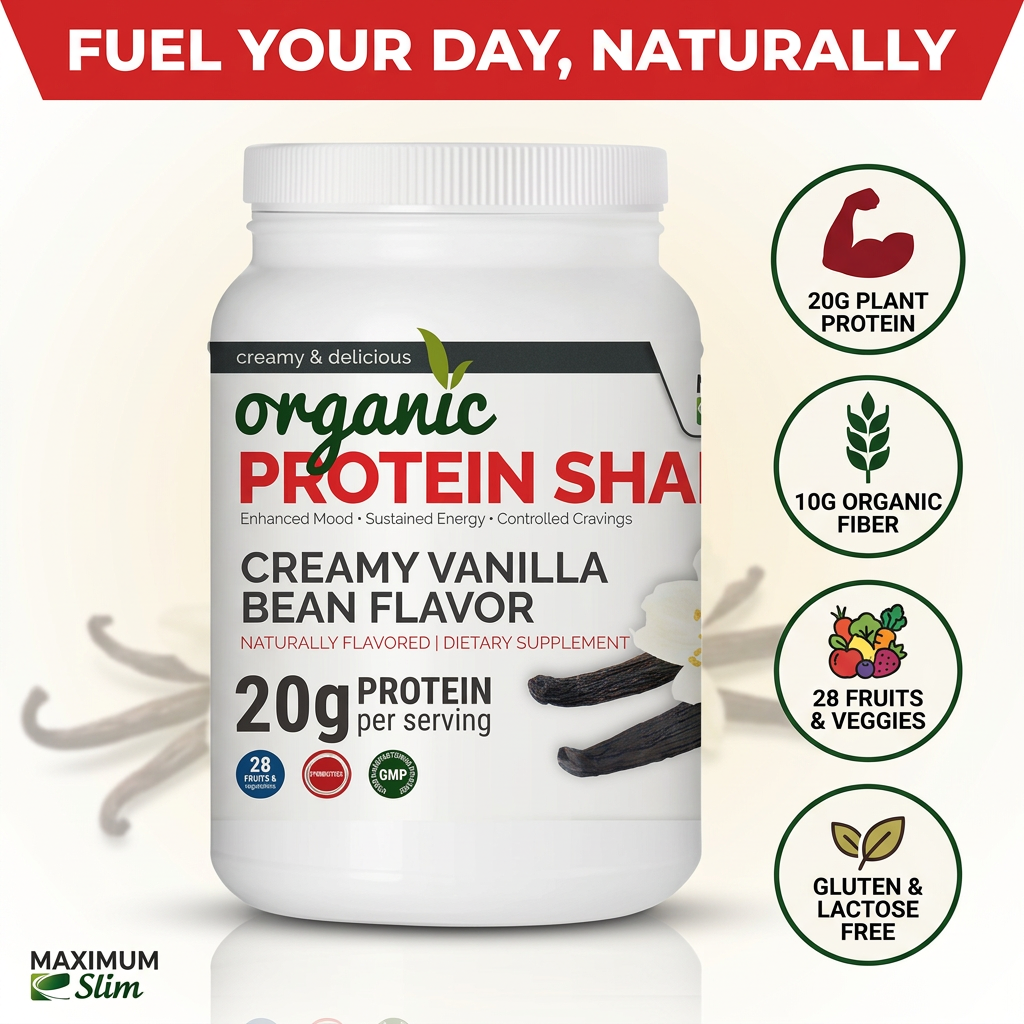
Maximum Slim Organic Protein Powder delivers 20g of organic plant-based protein and 10g of organic fiber per serving to support balanced nutrition and everyday wellness. Perfect for smoothies, shakes, or meal replacement support.
Shop Now →Foundations Before You Lift
Most beginners don't need more motivation. They need clarity.
The first mistake is starting with exercises before answering a simpler question. What are you training for? If you don't define that, every program looks equally convincing and every missed workout feels like failure.
Define what strong means for you
Strength goals should be concrete enough to guide choices, but simple enough to follow for months. A useful goal usually fits into one of these buckets:
- A performance goal. You want to bring up your squat, bench press, deadlift, or overhead press.
- A body composition goal. You want to get stronger while improving how you look and feel.
- A life-quality goal. You want to move better, feel more capable, and stop being intimidated by the weight room.
Write your main goal in one sentence. Then add one constraint. For example:
- Get stronger in the deadlift, without aggravating my lower back.
- Build full-body strength, with only three training days available.
- Improve body composition, while keeping barbell work as the center of training.
That second part matters. Good programming lives in practical settings, not in ideal conditions.
Check your starting point honestly
Before your first serious cycle, assess three things.
-
Movement comfort
Can you squat to a stable depth without your heels popping up? Can you press overhead without pain? Can you hinge without rounding into the floor? -
Training history
If you've never run a structured plan, you're a beginner for programming purposes, even if you've lifted on and off for years. -
Equipment reality
A rack, bench, plates, and space change what's possible. If you're still figuring out what bar you even need, this essential guide to strength training barbells helps you understand the trade-offs between different barbell types before you build your setup.
Practical rule: Start with the version of the plan your joints, schedule, and equipment can support consistently. Not the version your ego likes.
Build a usable baseline
You don't need a dramatic max-out day to begin. You need a baseline you can repeat later.
Use your first week to answer basic questions:
- Which lifts feel technically stable?
- Which positions feel restricted?
- Which exercises create discomfort that changes your form?
Keep notes after each session. If your front rack position is poor, if your bench setup feels shaky, or if your deadlift lockout is always the hard part, that's valuable programming information. It tells you what to practice and what to modify.
A beginner should leave the first week knowing this: what lifts they'll train, how often they can realistically train, and what limitation needs attention first. That's enough to begin well.
Your Program Blueprint and Core Exercises
A strong program gets built around a short list of lifts you can practice, recover from, and progressively improve. The typical list is: squat, bench press, deadlift, overhead press, and row.

The five lifts that do most of the work
Each of these lifts earns its place because it trains a large amount of muscle mass, teaches force production, and gives you a reliable way to measure progress.
| Lift | What it trains | One cue that matters |
|---|---|---|
| Squat | Legs, hips, trunk | Brace before you descend and stay balanced through the whole foot |
| Bench Press | Chest, shoulders, triceps | Pull your shoulder blades back and keep them there |
| Deadlift | Posterior chain, grip, upper back | Push the floor away instead of yanking the bar up |
| Overhead Press | Shoulders, triceps, upper back | Keep ribs down and press in a straight path |
| Barbell Row | Lats, upper back, arm flexors | Start from a solid hinge and pull toward the lower ribs |
If you're new to barbell work, don't drown in cues. One or two good cues performed consistently beat a page of technical notes you can't use under load.
A beginner who wants extra context on meet-style lifting standards and setup basics can also benefit from EVMT's guide to beginner powerlifting, especially if the long-term goal includes the squat, bench, and deadlift as primary lifts.
Why frequency matters more than variety
Most weak programs suffer from one of two problems. They either rotate too many exercises, or they train the main lifts too infrequently to build skill.
Across studies comparing higher- and lower-frequency programs with equated volume, the higher-frequency groups improved about 23% more overall in strength gains, which supports programming the main lifts 3 to 4 times per week for more practice and faster development according to Stronger by Science on training frequency.
That doesn't mean you need to max squat four days a week. It means frequent exposure to the movement pattern helps. Strength is partly muscular, but it's also technical. A better squat comes from stronger legs and from doing the squat often enough that your setup and bar path become repeatable.
The best early program isn't the one with the biggest exercise menu. It's the one that lets you practice the right lifts often enough to get good at them.
If your upper back lags behind your pressing and deadlifting, adding targeted pulling work helps balance the program. A useful reference for that is this guide to back exercises for mass, which shows where extra rowing and back work can support barbell progress.
Three sample weekly templates
These aren't magic routines. They're examples of how training age changes structure.
Beginner template
Train full body on three nonconsecutive days.
-
Day 1
Squat
Bench Press
Row -
Day 2
Deadlift
Overhead Press
Front Squat or lighter squat variation -
Day 3
Squat
Bench Press
Row or pull variation
This works because beginners improve from repeated practice, moderate exercise selection, and clear progression. They don't need novelty. They need reps performed well.
Intermediate template
Train four days per week with one heavy lower day, one heavy upper day, and two volume or technique-focused sessions.
- Lower A with squat emphasis
- Upper A with bench emphasis
- Lower B with deadlift emphasis
- Upper B with overhead press and row emphasis
Now the lifter usually needs more organization. Recovery matters more. Lift quality matters more. Weak points begin to matter.
Advanced template
Advanced lifters still build around the same lifts, but they rotate stress more carefully.
- One high-intensity exposure for the main competition-style lift
- One secondary variation to address a weak point
- Accessories chosen to support the lift, not distract from it
That's the key idea. As you advance, programming becomes less about doing more and more about making smarter decisions with a fixed recovery budget.
Driving Progress with Smart Periodization
If your training never changes, your body stops listening.
A useful barbell training program applies progressive overload, but not just by slapping more weight on the bar every session. Overload can come from better execution, more total work, harder variations, or denser training. The point is to give the body a reason to adapt without burying it in fatigue.

Progressive overload that actually works
Beginners often think progression means one thing. Add weight every workout forever.
That works for a while. Then bar speed slows, form gets noisy, and recovery starts lagging. At that point, smart progression looks more like this:
- Add load when the prescribed work is solid.
- Add reps before load if technique needs more practice.
- Add sets when work capacity is the weak link.
- Change the variation when the main lift is beating up the same joints.
Those options matter because the goal isn't to win one workout. It's to stack enough productive weeks that your strength keeps moving up over time.
Use phases instead of guessing
Modern strength programming often divides training into phases: an accumulation phase at 60% to 75% of 1RM, a strength phase at 75% to 85%, and a peaking phase above 85%, with volume decreasing as intensity rises, according to this overview of strength programming models.
Here's what that means in practice.
| Phase | Main purpose | What the training feels like |
|---|---|---|
| Accumulation | Build muscle, work capacity, and technical consistency | More total work, more repeated practice |
| Strength | Turn that base into heavier force production | Heavier bar weights, tighter exercise selection |
| Peaking | Express strength with lower fatigue | Very specific lifting, less volume, sharper recovery demands |
A lot of lifters fail because they train in peaking mode all year. Heavy singles look serious, but they don't build much if you never spend time on the base underneath them.
Coaching note: The right phase is the one that matches your current job. If you need size, stability, and cleaner reps, don't train like you're testing a max next Saturday.
Think in blocks, not forever plans
A program should answer one question per block. Build work capacity. Raise specific strength. Test it. Then repeat.
That mindset changes how you evaluate success. During an accumulation phase, feeling challenged by repeated submaximal work is normal. During a strength phase, the main lift should feel more specific and demanding. During a peaking phase, discipline matters more than volume chasing.
Good periodization isn't fancy. It's just organized patience.
Warmups Recovery and Mobility
Your first working set starts before you touch the bar. If you walk in stiff, rush your setup, and hope the empty bar will fix everything, you'll spend half the session trying to feel normal.
A short dynamic warmup gets you ready faster than endless stretching.

A warmup that earns its time
You don't need a complicated mobility circuit. You need enough movement to raise temperature, open the positions you'll train, and switch on muscles that help you stay stable.
A practical sequence looks like this:
-
Start with general movement
Walk briskly, cycle lightly, or do a few minutes of steady movement until you feel warmer and less stiff. -
Move through key positions
Bodyweight squats, hip hinges, lunges, and arm circles work well because they match what barbell training asks from your hips, shoulders, and trunk. -
Use ramp-up sets with the bar
The empty bar is part of the warmup. Squat it, press it, row it. Then add load gradually until the first work set feels familiar instead of shocking.
Warmups should solve a problem. If your ankles are tight for squats, spend a bit more time there. If overhead position is limited, open the shoulders and upper back before pressing. Keep it specific.
Recovery is part of the program
Most lifters treat recovery like something that happens if they get lucky. It works better when you treat it like training.
Three habits drive most of it:
-
Sleep enough to recover from hard sessions
Barbell training creates stress. Sleep is where you absorb it. -
Manage fatigue outside the gym
Hard training plus high life stress is still high stress. If work, parenting, or travel ramps up, your program may need a temporary adjustment. -
Stay moving on off days
Walking, easy cycling, and light mobility work often help more than complete inactivity.
If soreness is the thing that keeps knocking you off schedule, this guide on how to reduce soreness is useful because it focuses on practical ways to keep training consistently instead of chasing perfect comfort.
The best recovery plan is boring. Sleep, food, hydration, a reasonable warmup, and enough restraint to stop turning every session into a test.
For a visual walk-through of movement prep ideas, this simple mobility video is worth using before lower or upper sessions:
Mobility should serve the lifts
Mobility isn't a separate hobby. It's there to improve positions you need under the bar.
If your front rack is poor, spend time on wrists, triceps, and upper back extension. If your squat folds forward, look at ankle motion and hip control. If your bench setup feels unstable, work on shoulder positioning and thoracic extension.
That approach keeps mobility honest. You're not collecting drills. You're improving the positions your program depends on.
Fueling Your Lifts with Performance Nutrition
A barbell program can be written perfectly and still fail if food doesn't support it.
Strength training asks your body to do two things at once. Produce force in the session, then repair tissue and adapt afterward. That takes energy and raw material. Lifters who under-eat often misread the result as a programming issue when it's really a recovery issue.
The three nutrition levers that matter most
Individuals typically don't need complicated timing strategies first. They need the basics locked down.
-
Calories drive the broader direction
If bodyweight keeps dropping without intention, hard training will eventually feel flat. If intake is too high for too long, body composition drifts the other way. Match intake to the goal and monitor how training feels. -
Protein supports repair and growth
A steady intake across the day makes it easier to recover from repeated barbell sessions. -
Carbohydrates support training performance
Heavy lower-body sessions and higher-volume work feel very different when glycogen is chronically low.
That's why restrictive eating and serious strength training rarely pair well for long. You don't need to eat perfectly. You do need to eat enough and with some consistency.
Use supplements as support, not a substitute
If whole food covers your needs, great. If busy mornings, travel, or poor appetite make that harder, a clean protein powder can help close the gap after training or between meals.

A post-workout shake isn't magic. It's convenient. That convenience matters because missed protein targets add up the same way missed sessions do. If you want a practical framework for what to eat after training, this article on post-workout recovery nutrition is a solid starting point.
Eat to support the next session
That's the standard I use with lifters. Not whether a meal looks “clean” on social media. Not whether it fits a trend. Ask a better question. Does the way you're eating help you show up stronger, recover better, and train again on schedule?
If the answer is no, nutrition is limiting your program.
Long Term Success and Troubleshooting Your Program
A program doesn't run on autopilot. Even a good one eventually hits friction.
The lifter who keeps progressing isn't the one who never stalls. It's the one who knows how to adjust without throwing out the whole plan.
Stop treating every hard day like a max-out
One of the fastest ways to derail a barbell training program is to confuse training with testing.
Expert-level programs prevent overtraining by limiting near-max attempts above 90% of 1RM to no more than 3 consecutive weeks and by stopping sets 1 to 2 reps shy of failure, a fatigue-management approach outlined in these Westside-based powerlifting guidelines.
That rule matters for newer lifters too. If every week includes grinding, missed reps, and form breakdown, your body never gets a clean runway to adapt. You're just accumulating fatigue and calling it effort.
Strong lifters don't prove toughness by failing often. They prove judgment by knowing when to shut a set down.
Fix the problem you actually have
When a lift stalls, don't assume the whole system is broken. Find the weak link.
Use this simple troubleshooting lens:
| Problem | Likely issue | Smarter response |
|---|---|---|
| Bar speed is slow everywhere | Fatigue is too high | Reduce stress and rebuild momentum |
| Only one portion of the lift fails | Specific weak point | Use a targeted variation |
| Joints hurt more than muscles | Exercise choice or loading issue | Modify range, variation, or frequency |
If you always miss the bench near lockout, a pressing variation that attacks that range can help. If your deadlift sticks below the knee, a rack pull or pin-based variation may be useful. Joint-angle-specific work like board presses, pin presses, rack pulls, box variants, or deficit work can target sticking points or help you train around limitations when standard versions beat you up.
The mistake is using those variations randomly. They're tools, not entertainment.
Work around limitations without quitting
Plenty of lifters need modifications. Limited overhead mobility, cranky shoulders, hip irritation, a missing squat rack, or a garage gym with one barbell and little else. That doesn't mean training stops. It means the plan has to match reality.
If you only have one barbell and no rack, your main work may revolve around deadlifts, power cleans, front squats, presses, and conditioning. The trade-off is obvious. Some lifts become self-limiting because the clean determines what you can get into the front rack. That's not a flaw. That's a constraint to program around.
If bodyweight goals are part of the picture too, it helps to understand how gaining and losing phases affect training expectations. This overview will help you learn about bulking and cutting without turning the process into a guessing game.
Think in years, not hero workouts
Track bodyweight weekly if that matters to your goal. Review lifting performance every so often instead of reacting emotionally to one rough session. Pay attention to patterns. The lifter who trains around minor problems early usually avoids bigger ones later.
Good programming stays flexible on the surface and stubborn at the core. The core is simple. Train the main lifts with intent. Manage fatigue. Modify what hurts. Keep going long enough for the boring work to pay off.
Maximum Health Products makes it easier to support the recovery side of training with clean-label wellness tools, including protein, functional nutrition, and everyday supplements built for consistent routines. If you want simple support for energy, recovery, and long-term health habits, explore Maximum Health Products.

