


You buy a protein powder because you want something simple. A shake after training. A quick breakfast before work. A way to hit your protein target without cooking another full meal. Then the tub arrives, and within a few days you're dealing with bloating, a heavy stomach, odd aftertastes, or a reaction you can't quite explain.
That's the problem with this category. A lot of products look clean from the front label, but the details that matter live on the back panel, in the manufacturing standards, and in the testing the brand does or doesn't disclose.
The good news is that you're not overthinking it. Demand for cleaner allergen-friendly options has grown fast. The global gluten-free protein powder market was valued at approximately USD 3.5 billion in 2023 and is projected to reach USD 8.2 billion by 2030, with a 12.7% CAGR, according to DataIntelo's gluten-free protein powder market report. More shoppers are asking the same questions you are. Is it safe? Is it digestible? Is it worth the price?
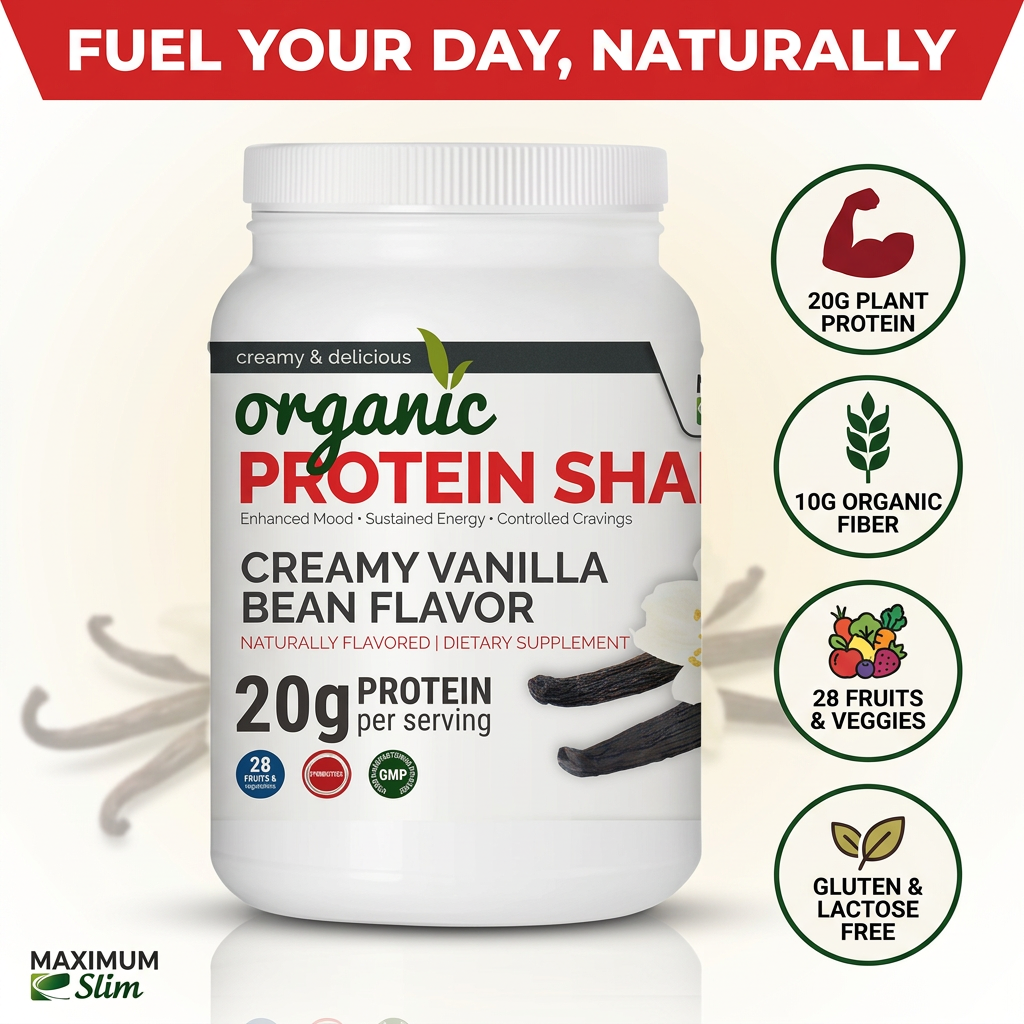
Featured Product
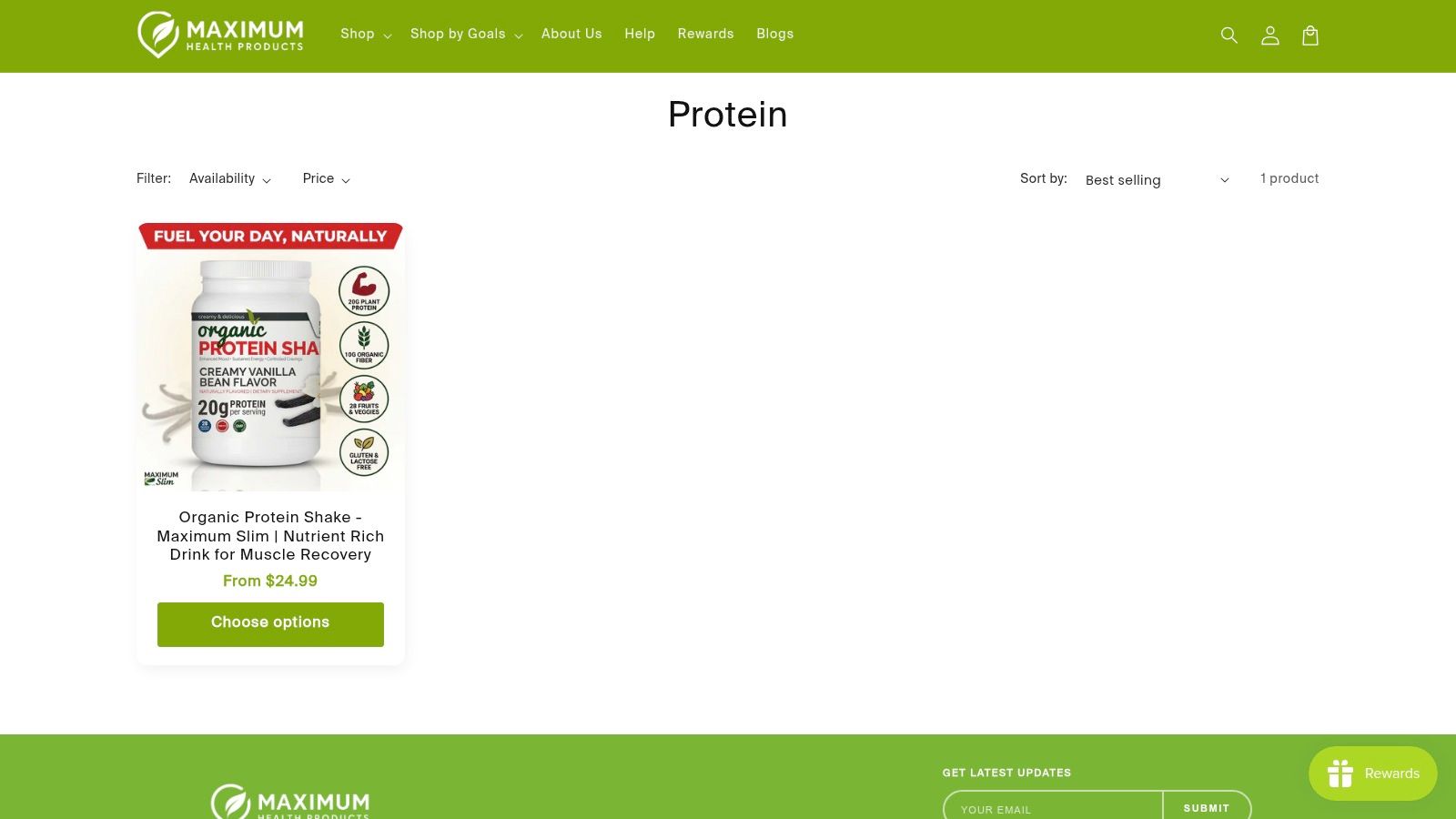
Organic Protein Shake
Maximum Slim Organic Protein Powder delivers 20g of organic plant-based protein and 10g of organic fiber per serving to support balanced nutrition and everyday wellness. Perfect for smoothies, shakes, or meal replacement support.
Shop Now →Finding a Protein Powder That Feels Good
You start using a new protein powder because it looks like an easy win. A scoop in a smoothie, better macros, less guesswork. Then by day three, your stomach feels off, your breakfast sits like a brick, and you are left wondering whether the problem is protein or the product.
I see that pattern often with sensitive clients. The issue is rarely the protein amount alone. More often, it is the full formula. Sweeteners, gums, dense flavor systems, dairy residues, or cross-contact during manufacturing can all change how a powder feels once you use it consistently.
Gluten is part of that conversation, but not in a simplistic way. A front label can suggest safety without telling you how carefully the product was sourced, produced, or tested. For people with celiac disease, non-celiac gluten sensitivity, or a history of reacting to low-level exposure, that gap matters.
Why this category is getting more attention
Interest in gluten-free protein has grown because shoppers are asking better questions than they used to. As noted earlier, market analysts tracking this category found rising demand for products that feel easier to digest and offer clearer allergen standards. In practice, that means buyers are no longer judging a tub by grams of protein alone. They want fewer surprises after the shake is gone.
That shift is useful. It pushes attention toward the details that affect daily tolerance, such as third-party certification, simpler ingredient lists, and contamination screening.
Heavy metals belong in that screening process too. Protein powders, especially plant-based options, can accumulate contaminants from soil and agricultural inputs. A powder can be gluten-free on paper and still fall short as a clean daily staple if the brand does not share meaningful testing standards.
Here is a practical starting point.
| What matters most | Better choice to start with | Why it often works better |
|---|---|---|
| Strict gluten safety | Certified gluten-free powder | Certification adds another layer of review beyond a simple label claim |
| Lowest contamination concern | Vanilla or unflavored whey isolate or collagen | Simpler formulas are often easier to evaluate for ingredient quality and testing transparency |
| Dairy-free complete option | Plant blend such as pea plus rice | Blends usually balance amino acids better than a single plant source |
| Sensitive digestion | Short ingredient list | Fewer added fibers, gums, and sweeteners means fewer possible triggers |
| Better texture | More refined blends, especially enzyme-treated plant proteins | Processing quality often affects mouthfeel more than marketing language |
Practical rule: If a powder makes you feel worse than the meal it replaced, it is the wrong formula for your body, even if the macros look strong.
What works better in practice
The best gluten free protein powder solves three problems at once. It gives enough protein per serving to be useful. It keeps avoidable risk low. It is easy enough to drink that you will use it consistently.
Many products often fall short concerning key details. Terms like “clean,” “natural,” and “wellness-focused” do not explain whether the powder was made on a dedicated line, whether it was tested for gluten at a stricter threshold, or whether the brand monitors for heavy metals. They also do not tell you much about digestibility. A long ingredient deck packed with thickeners and alternative sweeteners can upset the stomach even when the protein source itself is solid.
A good product usually looks less exciting on the label and performs better in real life. That is a trade-off worth making.
What Gluten-Free on a Label Really Means
The biggest mistake shoppers make is treating “gluten-free” and “Certified Gluten-Free” as the same thing. They aren't.
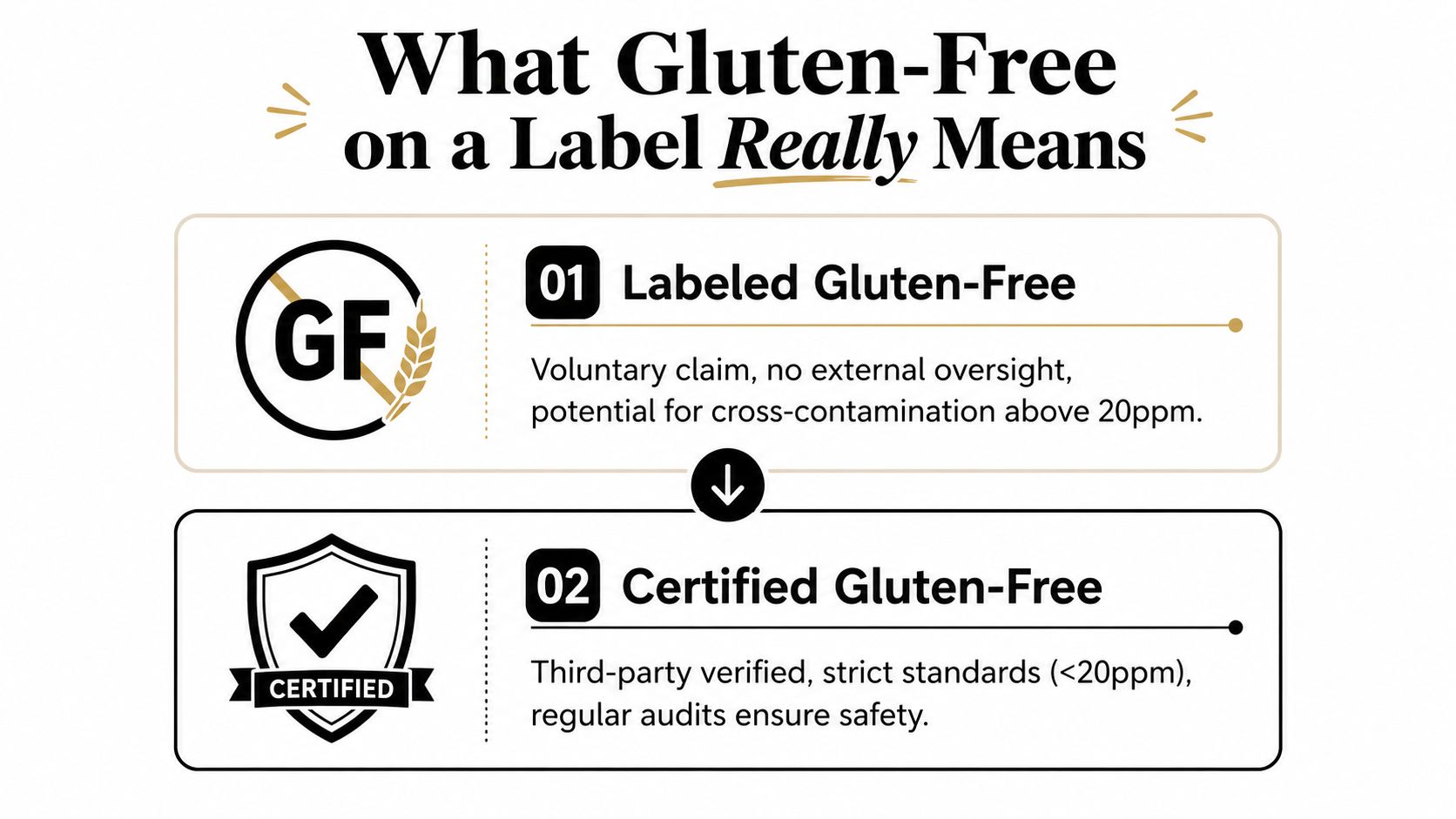
The label claim and the certification are not equal
A front label can say gluten-free, but that doesn't always tell you how the product was made, how aggressively it was tested, or how the brand handles cross-contact in manufacturing. For someone with celiac disease or strong gluten sensitivity, that gap matters.
According to Gainful's discussion of gluten-free protein powder benefits, 90% of FDA-labeled “gluten-free” products contain under 20 ppm gluten, while only GFCO-certified products guarantee under 10 ppm. That same source notes that many articles miss this distinction, which is one reason shoppers can end up trusting labels that don't match their level of sensitivity.
Why ppm matters
Ppm means parts per million. In plain terms, it's the threshold used to evaluate how much gluten may still be present in a finished product. Lower is better when you need tighter control.
The verified data also notes that certified gluten-free protein powders must contain less than 10 to 20 ppm, while products labeled gluten-free without certification may contain up to 50 ppm, based on Drink Wholesome's guide to gluten and dairy free protein powder. For highly sensitive users, that difference isn't academic. It's the difference between confidence and guesswork.
If you react strongly to trace exposure, don't stop at the ingredient list. Check the seal, then check whether the brand explains its manufacturing controls.
What to check before you buy
Use a short screening process:
- Look for a certification seal first. Don't assume a plain text claim on the label means the same thing.
- Read the ingredient list for obvious red flags. Barley grass, wheat grass, malt, and triticale don't belong in a celiac-safe protein routine.
- Check whether the brand talks about the facility. Certification is strongest when it aligns with dedicated manufacturing or strict contamination controls.
- Treat vague reassurance carefully. “No gluten ingredients” is not the same as third-party verified gluten safety.
Why people still get caught out
Many powders are naturally based on gluten-free ingredients such as whey isolate, egg white, collagen, pea, or rice. The risk often enters later through flavor systems, add-ins, or shared equipment. That's why someone can tolerate one vanilla formula and react to another with nearly identical macros.
For the best gluten free protein powder, certification isn't a marketing extra. It's part of the safety profile.
Your Buying Guide for the Cleanest Protein
Once gluten safety is handled, the next job is separating a decent protein powder from a clean, well-built one. The distinction often comes down to product formulation. Two tubs can both be gluten-free and still perform very differently in digestion, texture, and ingredient quality.
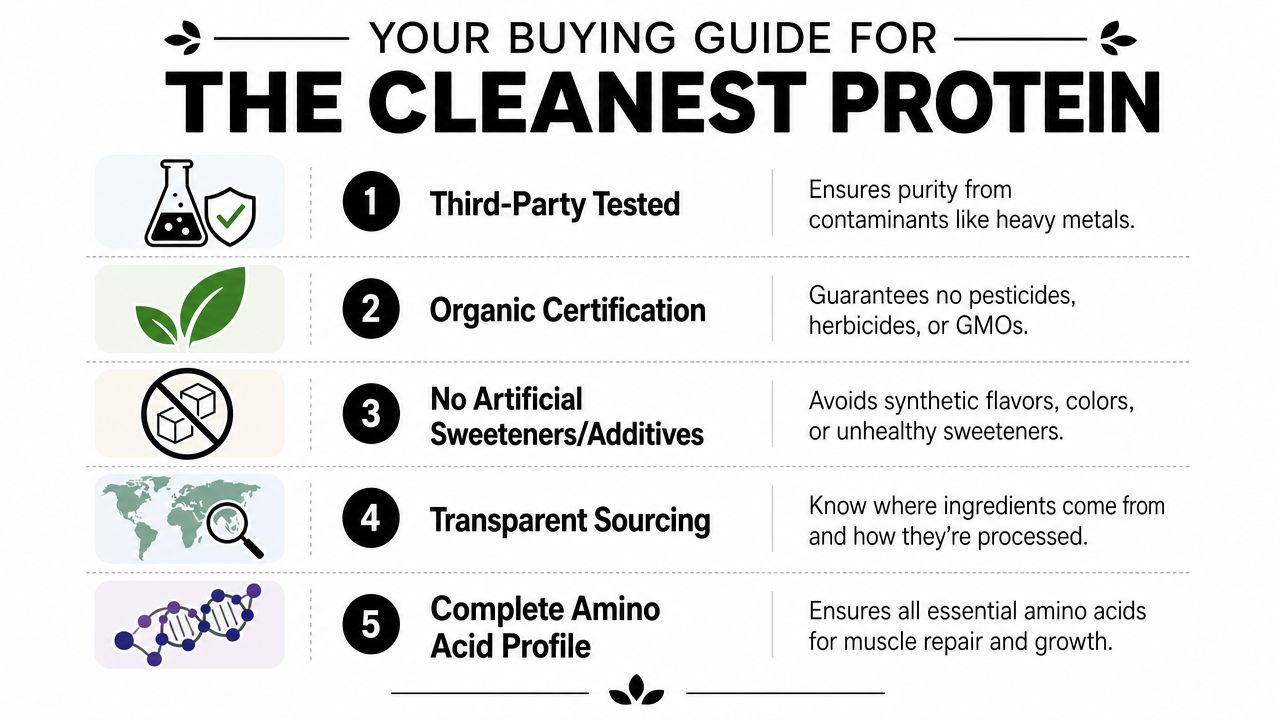
The core checklist
The clearest benchmark comes from Biochem Protein's overview of gluten-free protein powder benefits. It identifies the Certified Gluten-Free label as the gold standard, notes that this verifies the product contains no gluten ingredients and is manufactured in a dedicated gluten-free facility, and recommends whey protein isolates over concentrates for easier digestion. It also places the ideal serving range at 20 to 30 grams of protein per serving.
Use that as your base, then add a formulator's filter:
- Choose the right protein form. Whey isolate is often easier for many people than whey concentrate. If you avoid dairy, use a plant blend rather than a single incomplete plant source.
- Keep the ingredient deck short. The more gums, sweeteners, creamers, and “natural flavor systems” a powder uses, the more variables you introduce.
- Look for third-party contaminant testing. Gluten safety and contaminant testing solve different problems. You want both.
- Check practical serving strength. A powder that under-delivers on protein often forces you to use oversized scoops and ends up less satisfying.
What often sounds good but works poorly
A long list of “superfood” add-ins can make a product look premium while making it harder to tolerate. The same goes for aggressive sweetening. If someone tells me a powder tastes exactly like milkshake mix but the ingredient list reads like a flavor lab, I expect trade-offs somewhere.
Common weak points include:
- Overbuilt flavor profiles that create sweetness fatigue
- Heavy thickening systems that turn shakes into pudding
- Single-source plant proteins that mix poorly and taste earthy
- Low transparency about sourcing or testing
A good product doesn't need to impress you with complexity. It needs to perform consistently.
A fast shelf test
When you're comparing tubs in-store or online, ask four questions:
| Question | What you want to see | Why it matters |
|---|---|---|
| Is it certified gluten-free? | Clear seal and safety language | Better protection for sensitive users |
| What form is the protein? | Whey isolate, egg white, collagen, or a thoughtful plant blend | The protein form shapes digestibility and use case |
| How many extras are added? | Fewer fillers and flavoring agents | Simpler formulas are easier to evaluate |
| Does the brand explain testing? | Clear contaminant testing language | Transparency usually signals better quality control |
If you want another practical framework for evaluating cleaner formulas, this guide to best clean protein powder options is a useful companion read.
Comparing Top Gluten-Free Protein Sources
Protein source changes everything. It affects amino acid quality, digestibility, texture, allergen profile, and contamination risk. No single option is perfect for everyone, which is why the best gluten free protein powder depends on your priorities.
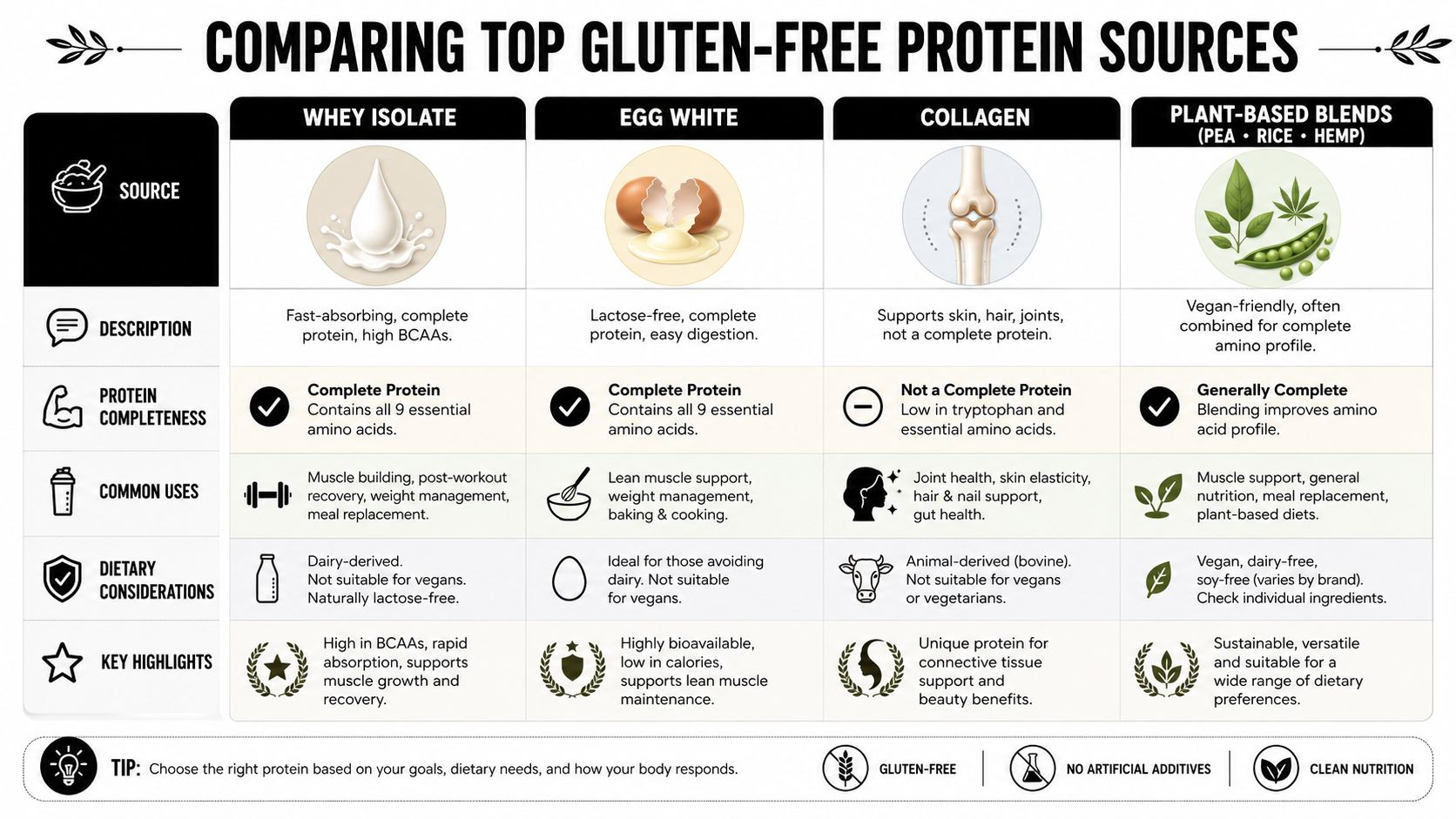
Side-by-side comparison
| Protein source | Protein quality | Digestive profile | Best fit | Watch-outs |
|---|---|---|---|---|
| Whey isolate | Complete protein | Often easier than concentrate for many users | Training recovery, muscle support, lower-contaminant priority | Not suitable if you avoid dairy entirely |
| Egg white | Complete protein | Usually light and clean-tasting when formulated well | Dairy-free users who still want a complete protein | Egg allergy, thinner texture |
| Collagen | Not a complete protein | Very easy to mix and often easy to tolerate | Skin, hair, joint support, simple add-ins | Not ideal as your main muscle-building protein |
| Plant-based blends | Better when multiple sources are combined | Varies widely by brand and processing method | Vegan diets, dairy-free routines | Texture issues, earthy flavor, contaminant trade-offs |
The contamination trade-off many lists miss
The choice of protein source is critical, extending beyond mere preference. The Clean Label Project protein powder white paper reports that plant-based protein powders contain five times more cadmium than whey-based counterparts. It also found that chocolate-flavored powders had 110 times more cadmium than vanilla-flavored varieties.
That doesn't mean every plant protein is bad or every whey is perfect. It does mean the cleanest choice for someone prioritizing low contaminant exposure often looks different from the most fashionable choice. If contamination is your top concern, unflavored or vanilla whey or collagen-based products are the lowest-risk starting point based on that benchmark.
Formulation note: Chocolate is often the flavor where a powder tastes best and screens worst. If you're troubleshooting reactions or trying to minimize contaminant exposure, start with vanilla or unflavored.
How each source performs in real use
Whey isolate is usually the most efficient all-around performer. It absorbs quickly, supports training well, and often has the cleanest mouthfeel when brands don't overload it with fillers.
Egg white protein works well for people who want a complete protein without dairy. It tends to be lighter in texture than many plant formulas, though flavoring quality matters a lot.
Collagen is useful, but it's easy to misuse. It dissolves beautifully and can be a great add-on in coffee, smoothies, or oatmeal. It just shouldn't be mistaken for a complete stand-alone workout protein.
Plant blends can be excellent when the brand combines sources intelligently. Pea plus rice is a common way to improve amino acid balance. If you want a broader overview of top plant-based protein sources, that resource gives helpful context on how different plant options compare. For readers focused specifically on vegan formulas, this deeper guide to best plant protein powder choices is also worth reviewing.
The simple decision rule
Choose whey isolate if you want the strongest mix of completeness, workout use, and lower contaminant concern. Choose egg white if dairy is the issue. Use collagen as a specialty protein, not your only one. Choose plant blends when vegan or dairy-free needs outweigh the trade-offs, then scrutinize certification, flavor, and testing more carefully.
How to Use Protein Powder for Your Goals
Buying the right tub matters. Using it correctly matters just as much. A lot of people judge a powder too quickly because they use it in the wrong context, at the wrong time, or in a shake that would upset almost anyone's stomach.
For workouts and recovery
If you train regularly, protein powder works best when it solves a practical problem. Most often, that's convenience after a session when you don't want a full meal right away. Mix it with water for speed, or pair it with fruit if you want something more filling and easier on energy levels.
Post-workout use is usually the simplest starting point because your appetite can be low and digestion may feel more sensitive. A shake with a clean formula is often easier than a heavy meal immediately after training.
For appetite control and daily protein intake
If your goal is weight management, don't use protein powder like dessert. Use it to anchor a meal or bridge a long gap between meals. Blend it with fiber-rich ingredients and a healthy fat source so it feels satisfying rather than thin and temporary.
That's also where people can fit protein into an effective low calorie high protein diet without defaulting to ultra-processed snack foods all day. The powder isn't the whole strategy. It's one clean tool inside a more stable eating pattern.
What usually works best
A few practical guidelines help:
- Use it when food convenience drops. Busy mornings, post-training windows, and travel days are where powders earn their place.
- Build the shake around tolerance. Water or a simple milk alternative often works better than loading a blender with too many extras at once.
- Match the protein to the job. A complete protein is the better default for training support. Collagen fits better as a supplement to meals, coffee, or smoothies.
- Watch your total formula load. If a powder already has fiber, gums, sweeteners, and add-ins, don't stack it with another dozen ingredients.
The best routine is the one you'll repeat. A simple shake you can digest consistently beats a “perfect” smoothie you avoid making.
The Maximum Health Pick for Clean Organic Protein
A product only deserves attention if it meets the standards that matter most in daily use. That means it should fit a sensitive diet, keep the formula straightforward, and support real goals like satiety, balanced digestion, and steady energy.
Why this type of formula stands out
From a practitioner's perspective, the strongest products usually share the same design choices. They avoid filler-heavy formulas. They skip artificial colors and flavors. They don't try to hide weak raw materials behind aggressive sweetening. They aim for a cleaner daily experience, not just a good first sip.
That's why an organic, plant-based formula with a clean-label focus can make sense for people who want one product to cover convenience, digestibility, and broader wellness values. The right powder should feel compatible with your routine, not like a compromise you tolerate because the macros look decent.
The standards worth looking for
When evaluating an option in this category, I'd want to see:
- Certified gluten-free positioning for better trust on sensitive diets
- A complete plant-based blend rather than a single incomplete source
- No fillers or artificial ingredients that make digestion more unpredictable
- No soy and no unnecessary additives for a simpler label
- A practical use case for smoothies, meal support, and everyday protein intake
If you're comparing organic formulas more broadly, this roundup of best organic protein powders is a helpful place to continue your research.
Common Questions About Gluten-Free Protein
A few issues come up repeatedly with gluten-free powders, especially plant-based ones. Most aren't caused by gluten itself. They come down to processing, texture, and the rest of the ingredient list.
Why do some plant proteins taste chalky or gritty
Texture is one of the biggest reasons people quit using a protein powder they otherwise like. Verified data shows that 65% of users report chalky or gritty experiences in plant-based powders, while enzyme-treated plant proteins and micro-milling have reduced this issue by 40%, according to the referenced discussion on plant protein texture improvements.
That aligns with what formulators see in practice. Grittiness often comes from particle size, poor dispersion, or a blend that relies on raw plant material without enough refinement. If mouthfeel matters to you, look for brands that mention enzyme treatment, micro-milling, or improved solubility rather than just “smooth taste” on the label.
Why do I still feel bloated with a gluten-free powder
Because gluten may not be the problem. A powder can be gluten-free and still be hard on your stomach if it uses a lot of gums, intense sweeteners, heavy flavoring systems, or a protein source that doesn't suit you.
If you're troubleshooting, change one variable at a time. Start with a shorter ingredient list. Try a different protein source. Use water instead of a rich milk base for a few days. You'll find the trigger faster when you simplify.
Is plant-based always the best choice for clean eating
Not automatically. Plant-based can align well with vegan preferences and some digestive needs, but clean eating isn't just about whether the source came from plants. It's also about testing, processing, contamination risk, and how the finished product performs in your body.
Can protein powder help with weight management
Yes, when it improves consistency. Protein powder helps most when it replaces a skipped meal, supports workout recovery, or keeps you from grabbing low-quality convenience food. It helps least when it becomes an extra snack on top of an already sufficient diet.
The best gluten free protein powder is the one you can use regularly, digest comfortably, and trust without second-guessing every scoop.
If you want a clean-label option from a brand focused on daily wellness, Maximum Health Products offers gluten-free, plant-based nutrition designed to support energy, balanced digestion, and practical weight-management routines without unnecessary fillers or artificial ingredients.

