


You've probably done it already. You scooped cacao powder into coffee, stirred for a few seconds, and ended up with a cup that was bitter, a little dusty, and stubbornly clumpy. The idea sounds better than the first sip tastes, which is exactly why technique matters more than hype.
Cacao powder in coffee isn't a trendy shortcut someone invented last month. It sits in a much older beverage lineage, from European chocolate drinks to the 17th-century Italian habit of mixing chocolate and coffee, then to the 19th-century cocoa-powder process that made powdered cacao practical for modern drinks [Britannica's history of cocoa and chocolate drinks] [Wiley excerpt on the 1828 cocoa-powder milestone]. That matters because the question isn't whether cacao belongs in coffee, it's how to make the blend drinkable, consistent, and worth repeating. If you want more kitchen-friendly ideas once you get the base method right, you can also find healing recipes online and adapt the same discipline to other warm drinks.
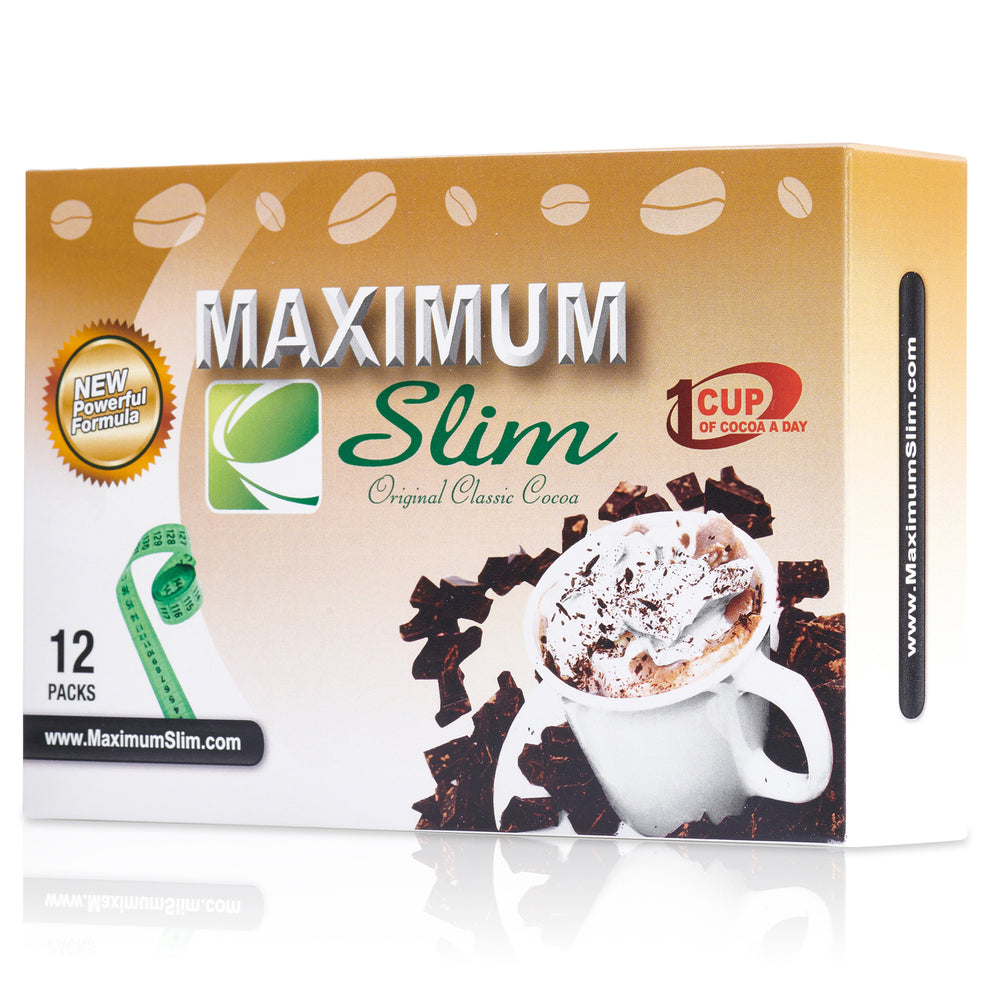
Featured Product
Maximum Slim Original Classic Cocoa
is a rich and flavorful instant cocoa drink crafted for those who enjoy a balanced lifestyle. This smooth cocoa blend combines quality cocoa with carefully selected ingredients to deliver a satisfying beverage you can enjoy daily.
Shop Now →Why Cacao Powder in Coffee Is More Than a Trend
The first bad cup usually sends people in the wrong direction. They blame the cacao, but the issue is the method, because cacao powder does not behave like instant coffee and it does not dissolve like sugar. It acts like a functional ingredient with texture, bitterness, and mixing limits, so the way you add it changes the drink as much as the ingredient itself.
The history tells you this isn't a novelty
Chocolate drinks reached Europe after Columbus brought cacao beans to Spain following his fourth voyage in 1502, and Spanish conquistadores encountered an Aztec chocolate beverage in Mexico in 1519 [Britannica's cocoa history]. By the 17th century, chocolate and coffee were already being combined in Italy, and Turin developed regional drinks such as bavareisa and bicerin, which folded chocolate, coffee, and cream into one cup.
That history changes the frame. Cacao powder in coffee is a long-running pairing of two bitter, aromatic drinks that work well together when they are prepared carefully. The modern version still asks for better dose control and less guesswork, because the cup turns muddy fast if the powder is added carelessly.
Practical rule: if the cup tastes muddy, bitter, or sandy, the recipe is usually under-mixed or over-dosed.
Cacao also has a long pre-European history. Human consumption goes back about 5,000 years in Ecuador, and cacao was widely cultivated by the Maya, Toltec, and Aztec more than 3,000 years ago [Wiley excerpt on cacao's ancient roots]. The industrial shift came in 1828, when Coenraad van Houten patented a process for separating cocoa butter from cacao solids, which made the powdered form much easier to blend into hot drinks and much cheaper to produce at scale.
That is the practical takeaway. Good cacao coffee depends less on chasing a trend and more on respecting what cacao powder is. It needs dispersion, not just stirring, and the drink improves quickly when you treat it that way.
If you want more kitchen-friendly ideas once you get the base method right, you can also find healing recipes online and adapt the same discipline to other warm drinks. The right starting point also helps if you use organic instant coffee, because cleaner coffee flavor gives the cacao room to read as rich instead of muddy.
The Slurry Method and Dose Scaling for a Smooth Cup
Cacao powder is hydrophobic, so it resists water, floats on the surface, and turns into clumps if you pour it straight into a mug. The practical fix is to build a slurry first, using a small splash of hot water or brewed coffee to turn the dry powder into a paste before you add the rest of the liquid. That extra minute pays off because it breaks up the dry pockets that cause grit and the thin, dusty finish people blame on the cacao itself.
Start low, then scale with intent
Begin with 1 teaspoon per cup. If the cup reads too faint, move to 2 teaspoons, then stop there unless you want a heavier chocolate note. A stronger serving can reach 1 tablespoon per cup, and dosing matters because cocoa powders vary a lot in intensity and composition The People's Pharmacy on cocoa-in-coffee dosing.
That same source notes ConsumerLab-reported measurements showing that 1 tablespoon of cocoa powder can deliver 37 to 130 mg of cocoa flavanols, which is a wide range for the same-looking spoonful. Product choice matters as much as portion size, and it is one reason I do not treat cacao as a casual sprinkle in coffee.
Best mixing order: cacao powder first, a splash of hot liquid second, stir into a paste, then add the rest of the coffee.
That sequence gives a smoother cup than trying to dissolve dry powder in a full mug. It also keeps the powder from sticking to the top layer, where the first sip often goes chalky. If you want a simple point of comparison for brewing habits, a practical organic instant coffee guide can help you think about how cleaner coffee flavor changes the way cacao reads in the cup.
Product type changes the result
Not every cacao behaves the same in the mug. Dutch-process or heavily alkalized cacao often tastes darker and smoother, but the processing can reduce flavanol density compared with natural cocoa. A milder flavor profile does not automatically mean better function.
The workflow I use at home stays simple.
- Measure the powder first. Free-pouring makes bitterness creep up fast.
- Slurry before dilution. A paste dissolves better than dry powder in a full cup.
- Track your own cup for a few days. One teaspoon may be enough, or two teaspoons may be the sweet spot.
- Choose natural cocoa when the functional side matters. Dutch-process can taste pleasant, but it may not give the same flavanol density.
The biggest gain comes from consistency. Once the dose and mixing order stay the same, you can tell whether the cacao is smoothing the cup or just adding more work and more bitterness.
Hot and Iced Cacao Coffee Variations
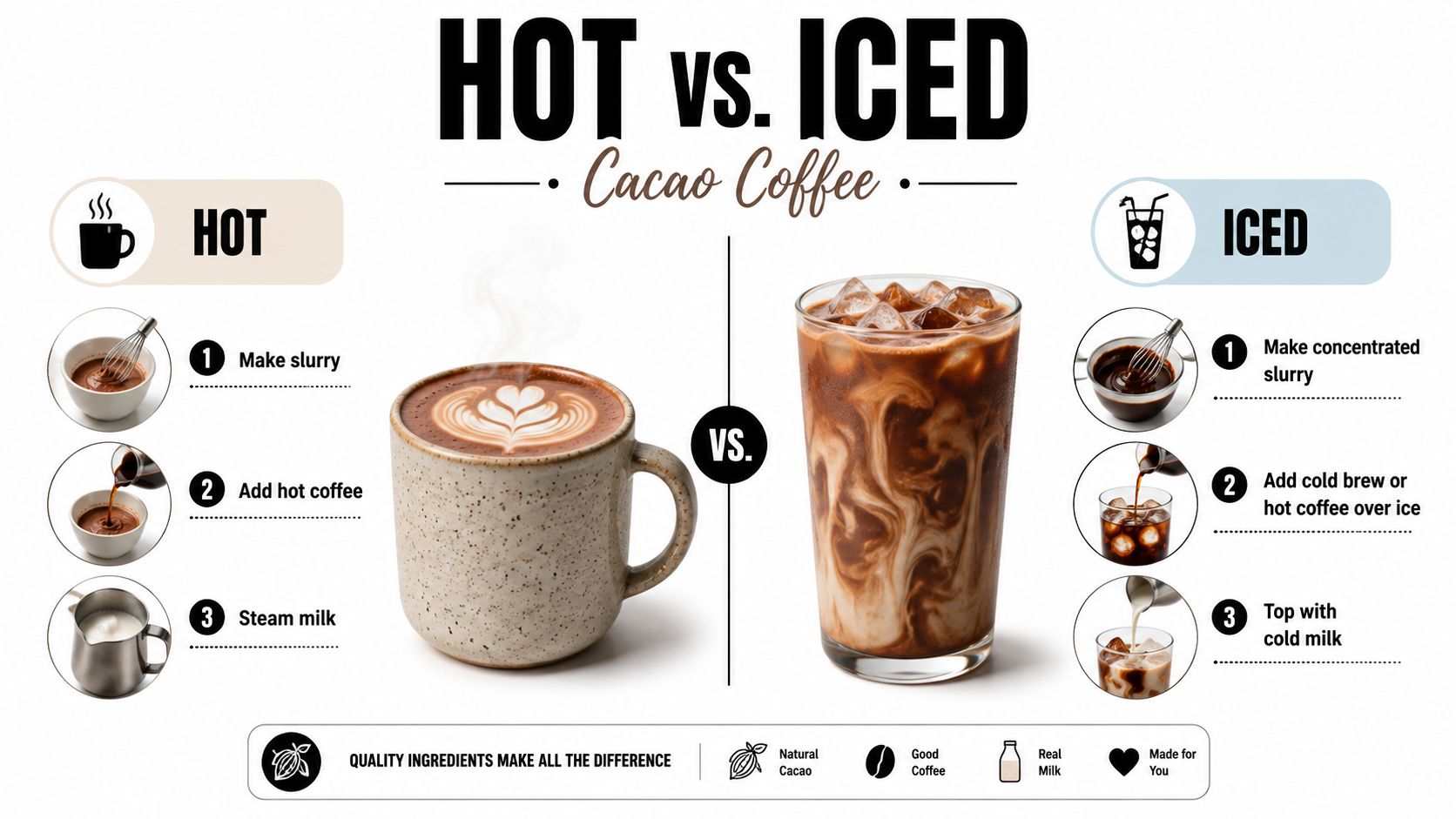
Hot cacao coffee rewards texture. Once the slurry is formed, the cocoa integrates into steam-warmed liquid, and the drink takes on a mocha-like body without needing a dessert-level amount of sweetener. In practice, that makes hot versions easier to balance with milk because the warmth softens bitterness and lets the coffee and cacao feel unified instead of separate.

Hot cup
For a hot version, make the slurry with 1 teaspoon to 1 tablespoon cacao powder, then add freshly brewed coffee and finish with steamed milk or a milk alternative. Oat milk gives the richest texture, while a lighter milk keeps the coffee edge sharper. If you're using espresso, pour it into the slurry first, then top with milk so the powder disperses before the volume gets too large.
The trick is not to overheat the milk. Boiling can flatten the chocolate notes and make the cup taste harsher. A warm, integrated drink beats a scalded one every time.
Iced cup
Iced cacao coffee needs a more concentrated slurry because cold liquid won't help the powder disperse. Mix the cacao with a small splash of hot water or hot coffee first, then pour that concentrate over ice and add cold brew or chilled espresso, followed by cold milk if you want a softer finish. That order prevents dry clumps from settling at the bottom of the glass.
Cold drinks need stronger concentration. If the slurry is weak, the ice will dilute the cacao faster than your palate can register it.
Flavor also shifts in the cold version. Chocolate notes often read cleaner over ice, but bitterness can poke through more sharply if you overdo the cacao. That's why the iced drink usually benefits from a slightly lighter hand on the powder and a more disciplined pour.
A useful comparison point for recipe development is this mushroom hot cocoa guide, since the same basic milk-and-powder logic applies even though the ingredients differ. The underlying lesson is the same, the base has to emulsify cleanly before you start layering flavors.
Milk, Sweetener, and Spice Pairings That Work
The base blend only does part of the job. Milk, sweetener, and spice decide whether cacao powder in coffee reads as a balanced morning cup or a blunt chocolate hit, and the mixing order matters just as much as the ingredients themselves. I've found the best pairings do not hide bitterness completely, they soften it enough that the drink stays repeatable from one day to the next.
What each addition changes
Dairy milk gives the most familiar mocha feel because its richness softens the edge of both coffee and cacao. Oat milk is usually the easiest plant milk to work with when you want creaminess without reaching for much sweetener. Almond milk runs thinner, so bitterness shows through more clearly, while coconut milk pushes the drink closer to dessert territory.
Sweeteners need a purpose, not a habit. Honey and maple syrup deepen the cup, but they can also make it easy to overshoot your calorie target. If you are keeping the drink plain or want a lighter add-in, the comparison point is a black creamer option for cafes, which shows what a minimalist, no-frills choice looks like in practice.
Pairings that hold together
A few combinations hold up well in real kitchens:
- Creamy and easygoing: oat milk with natural cacao and no sweetener. This is the most forgiving everyday version.
- Warm and spiced: a small pinch of cinnamon with a touch of vanilla. It reads like a lighter mocha without needing much sugar.
- Sharper and brighter: coffee-forward with a little cardamom. This keeps the blend aromatic and less heavy.
- Low-calorie and simple: unsweetened coffee, cacao, and a small amount of cream or plain milk. This keeps the cup useful if you are watching intake.
Cayenne can work, but it changes the cup fast. Use it only if you already like a little heat in your drinks, because it pushes the finish forward rather than smoothing it out.
Texture comes first, flavor second. If the milk choice does not round out the powder, no sweetener will fix the cup on its own. Start with the base, then decide whether cinnamon, vanilla, or nothing at all is the better fit. If cacao and coffee leave you feeling too wired, a practical guide to stopping caffeine jitters is worth keeping close before you increase the cacao again.
Caffeine, Theobromine, and When the Blend Becomes Too Much
Pour cacao into coffee and you are stacking stimulants, even if the cup feels gentler than straight espresso. Coffee gives the fast hit. Cacao brings theobromine and flavonoids, which are commonly described as producing a milder, more sustained lift than coffee alone, so the blend can feel smoother when the dose stays reasonable [Cacao versus coffee comparison summary] [Cacao, coffee, and energy discussion]. That is the practical appeal, a different stimulant profile, not a miracle.
Who should be careful
People who are sensitive to caffeine, sleep disruption, anxiety, palpitations, or reflux need to pay attention to the total effect of the cup, not just the ingredient list. Cacao is not stimulant-free, and layering it on top of coffee can turn a calm morning drink into a much sharper routine, especially with daily use. Harvard's guidance on cocoa is blunt about the bigger picture, the effects depend heavily on form and portion size, not on blanket “superfood” assumptions [Harvard Health on cocoa form and portion size].
A practical tolerance test is to keep the dose steady for a few days and watch how your body responds before adding more cacao. That gives you enough time to notice whether the blend feels smoother or whether sleep, digestion, or focus starts to slip. If the cup leaves you wired, the problem is usually the total stimulant load, not the idea of cacao itself.
If jitters show up early, a practical guide to stopping caffeine jitters is worth reading before you increase the cacao again.
Cacao is a function modifier, not a therapy. It can change how coffee feels, but it does not turn a stimulant drink into a medical treatment.
What the blend can and can't do
Cacao flavanols have been linked to vascular and blood-pressure-related benefits in broader cacao contexts, but those effects depend on the flavanol dose, cacao type, and habitual intake rather than a lightly flavored coffee cup [Harvard Health on cocoa form and portion size]. A teaspoon or two in coffee should be judged by how it changes energy and digestion, not by broad health claims.
If the goal is replacing a sugar-heavy latte, keeping the drink unsweetened matters. Add cocoa, sweetener, cream, and flavored syrups all at once, and a clean functional experiment turns into dessert in disguise. The most useful version stays simple, coffee, cacao, water or milk, and a dose you can repeat without thinking.
Fixing Bitterness, Grittiness, and Other Common Problems
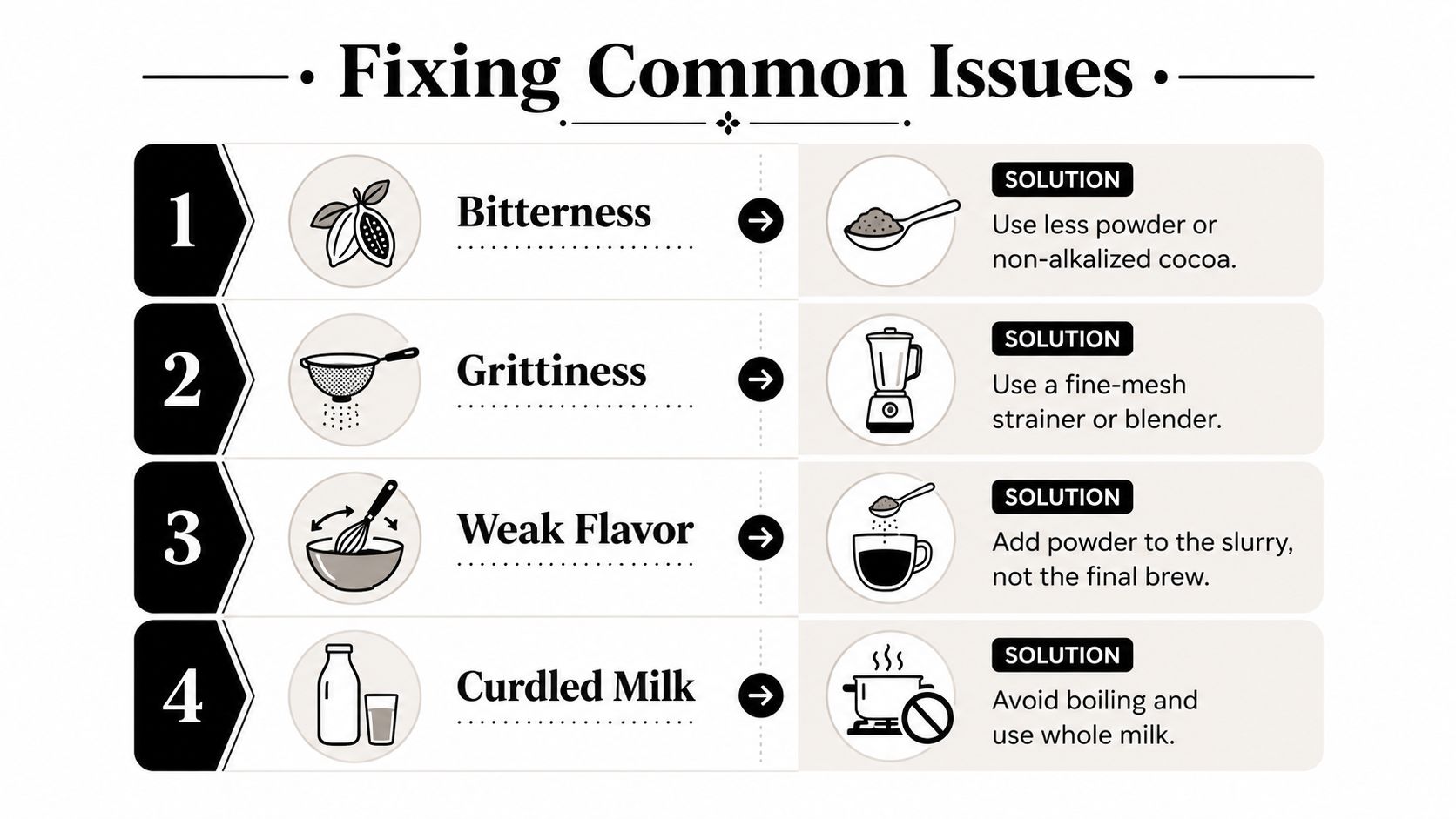
Bitterness usually comes from one of two places, too much cacao or the wrong cacao. Heavily alkalized powder can taste darker, but it often loses some of the sharp, lively character that makes the blend feel balanced. The practical fix is simple, cut the dose first, then switch to natural cacao if the cup still tastes flat or harsh.
Grittiness almost always points to skipped mixing. Dry powder dropped into a full mug rarely disperses evenly, so the last sip carries sediment and the first sip can taste dusty. Make a slurry with a small splash of hot liquid, stir until the paste looks smooth, then add the rest of the coffee or milk.
Fast fixes that help
- Bitterness: use less powder or choose natural cacao instead of heavily alkalized powder.
- Grittiness: make a paste first, then dilute.
- Weak flavor: mix the cacao into the slurry, not as a final sprinkle.
- Cold separation: use a concentrated slurry and pour it over ice with coffee or milk.
Chalky mouthfeel usually means the cacao quality is off, or the dose is too high for the cup size. I see this most often when the powder is added too fast or the grind is fine but still stubborn in liquid. The fastest correction is to reduce the amount and test again with a finer powder that disperses more evenly. For iced versions, a fine-mesh strainer can catch the last rough particles before they hit the glass.
If one cup fails, don't abandon the idea. Change one variable at a time and the drink gets easier to calibrate.
That is the lesson with cacao powder in coffee. Technique matters more than improvisation, and a better cup usually comes from a smaller dose, better dispersion, and a clear decision about whether you want comfort, energy, or both. If you are ready to stock your kitchen with better daily-use wellness tools, visit Maximum Health Products and look for options that fit the same clean, practical approach you would use in your mug.

