


You're standing in the kitchen after a long day, craving something warm, creamy, and chocolatey. At the same time, you don't want a sugary dessert disguised as a wellness choice. That tension explains the appeal of functional hot chocolate. It keeps the comfort of cocoa while treating the drink as a practical way to deliver selected nutrients and bioactive compounds.
The important distinction is simple. Regular hot chocolate is usually designed around flavor, sweetness, and texture. A functional version is formulated around a defined purpose, such as flavanol intake, protein, fiber, focus, or a calming ritual. The label still matters, because a long ingredient list doesn't prove that a product contains useful amounts of anything.

This makes the drink a useful example of functional nutrition, where food and beverages are chosen for how they fit a person's wider needs rather than for calories or pleasure alone. It also fits a broader HempWell USA holistic approach, which considers daily routines, stress, nourishment, and sustainable habits together.
By the end of this guide, you'll know what makes a cocoa blend functional, why flavanol dose and ingredient quality matter, how timing affects the experience, and how to choose a product without paying for decorative claims. You'll also have practical ways to make the ritual enjoyable enough to repeat.
Featured Product
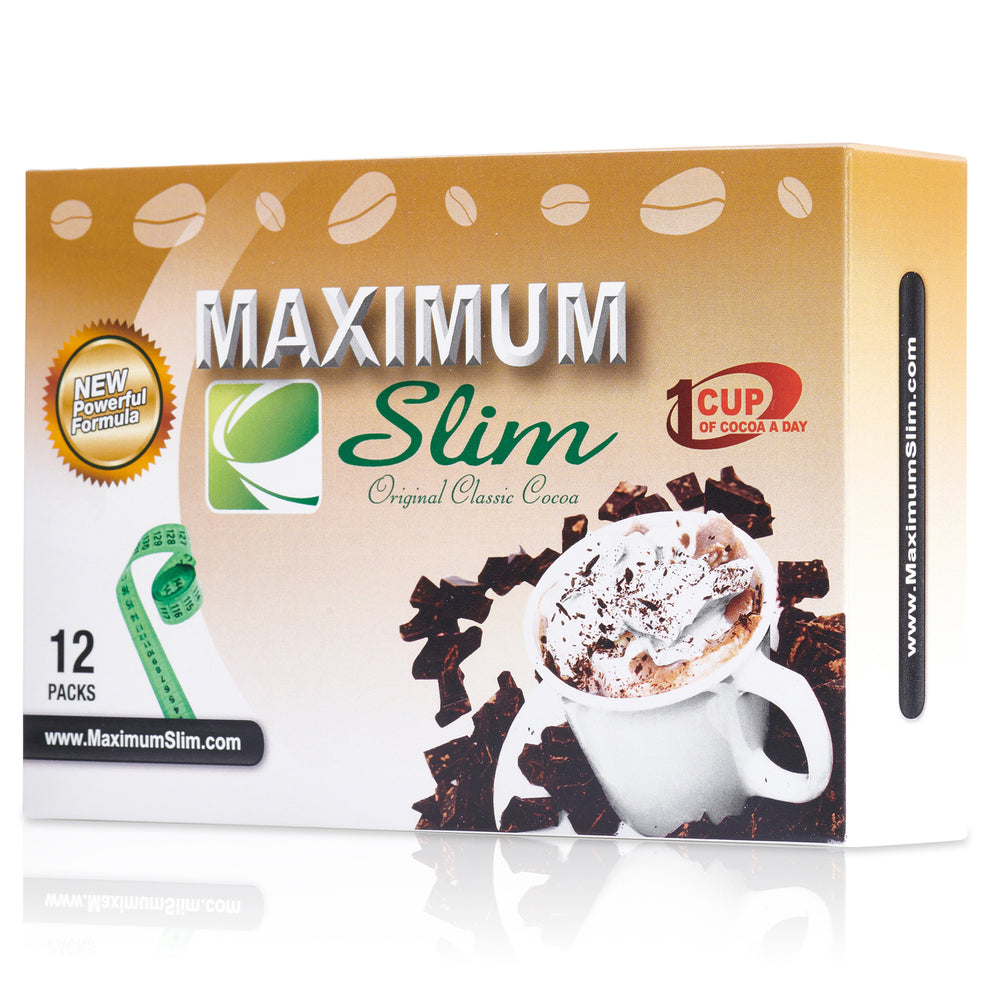
Maximum Slim Original Classic Cocoa
is a rich and flavorful instant cocoa drink crafted for those who enjoy a balanced lifestyle. This smooth cocoa blend combines quality cocoa with carefully selected ingredients to deliver a satisfying beverage you can enjoy daily.
Shop Now →Introduction to Functional Hot Chocolate as a Daily Wellness Ritual
A busy professional may want a focused start before work. A parent may need a comforting pause between responsibilities. Someone training regularly may prefer a warm drink that contributes more than sweetness. Functional hot chocolate can fit each situation when its formulation matches a defined purpose.
Cocoa makes that purpose easier to repeat. Its aroma, warmth, and familiar taste reduce the effort required for a daily habit. Instead of swallowing a capsule or preparing an elaborate recipe, you make a drink you already enjoy, then check whether its ingredients support a clear goal.
The mug should be viewed as a dosed delivery system, not a cozy treat. Each serving needs a job, such as providing cocoa flavanols, supporting satiety with protein or fiber, or shaping the timing of naturally occurring methylxanthines. The benefit depends on what the serving contains and when you drink it.
Some mixes are mainly sweetened powder with wellness language on the front. Others include high-flavanol cocoa, protein, fiber, mushrooms, or herbs, yet give too little information to judge the serving. Functional means purposeful and transparent, not merely fashionable.
Practical rule: Treat the mug as a delivery system first and a treat second. Ask what the serving is meant to deliver, how much it contains, and whether you'll use it consistently.
Start with one job. For a gentle morning lift, choose stimulant content and timing that suit you. For a more satisfying snack, protein or fiber may matter more than a long list of botanicals. For cocoa flavanol intake, look for a stated flavanol amount rather than relying on the word “antioxidant.” A clean label can also involve tradeoffs, because fewer ingredients do not guarantee a useful dose, while a longer list does not prove better value.
This is the practical side of functional nutrition. It also fits a broader HempWell USA holistic approach, which considers daily routines, stress, nourishment, and sustainable habits together. Cinnamon, frothed milk, and a favorite mug can keep the ritual enjoyable while the formulation gives it a sensible nutritional foundation.
What Makes Hot Chocolate Functional and How It Works
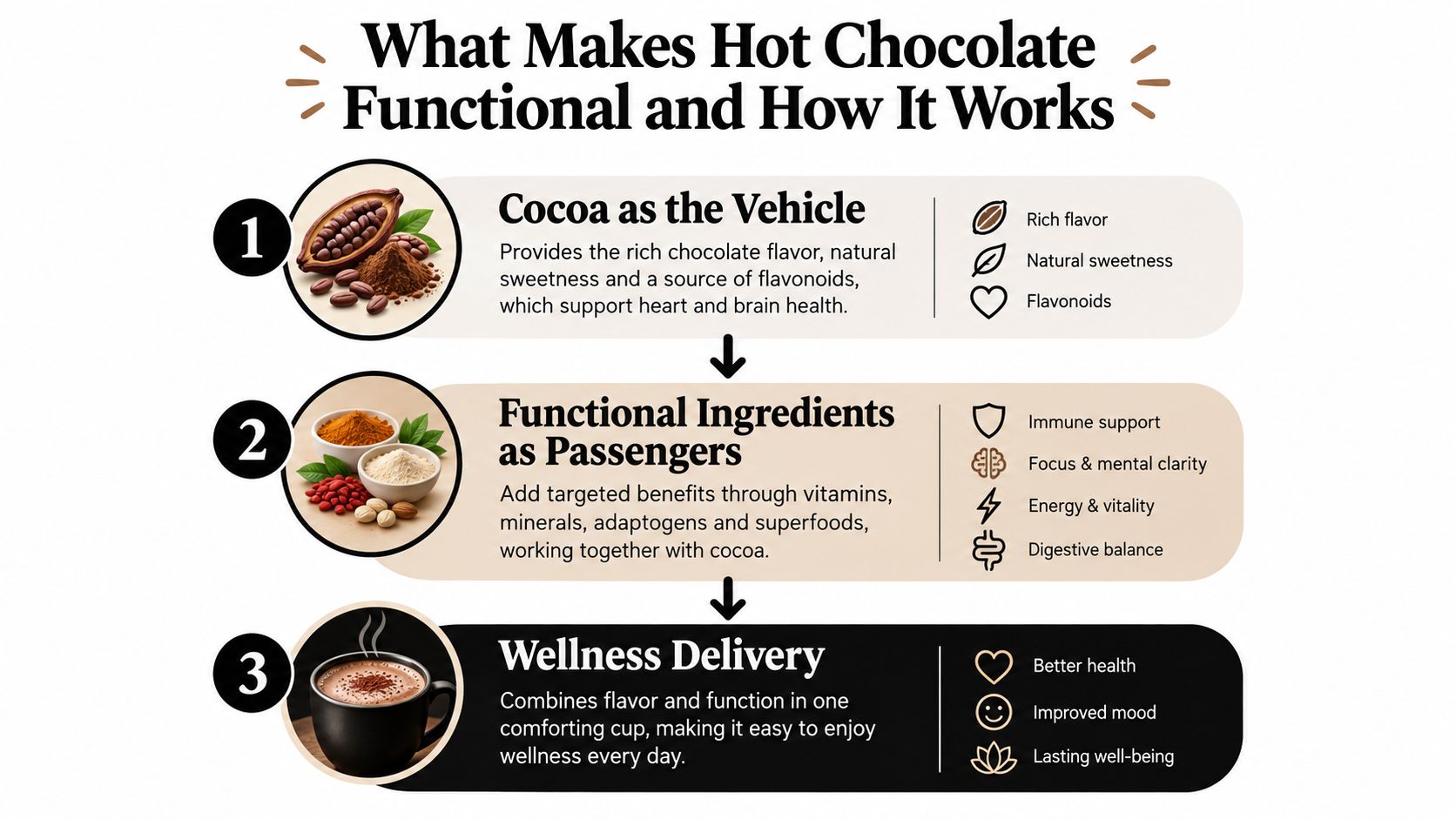
Think of a plain cocoa drink as a vehicle. Cocoa is the vehicle, carrying flavor, color, and naturally occurring compounds. Functional ingredients are the passengers, each selected for a particular purpose. A well-designed product makes sure the passengers are present in useful amounts and can remain stable through preparation.
Start with cocoa quality
Cocoa contains polyphenols, including flavanols, which have attracted decades of nutritional research. A systematic review covering randomized controlled trials found a significant improvement in triglyceride profiles from chocolate or cocoa consumption, while most other measured outcomes weren't significantly different from control groups. A broader review described possible cardiovascular mechanisms involving blood pressure, inflammation, and platelet function in the cocoa polyphenol evidence.
Processing can affect the final profile. A product that names cocoa but doesn't explain its flavanol content leaves you unable to tell whether it's delivering a meaningful amount. The word “cacao” can describe an ingredient, but it doesn't by itself guarantee standardization.
Add a targeted passenger
A formula may add protein for satiety, fiber for digestive support, or a mushroom or botanical for a particular routine. These ingredients can change thickness, flavor, mixing behavior, and tolerance. A powder that clumps, tastes sharply bitter, or requires excessive sweetener may be less useful in daily life, even if its ingredient list looks impressive.
Heat and preparation matter, too. Some ingredients tolerate warm liquids well, while others may require careful formulation. Consumers should follow the product's preparation instructions instead of assuming that boiling or prolonged heating is harmless for every added compound.
Deliver a measurable serving
Dose turns a concept into a product. Research on cocoa flavanols has examined a wide range of intakes, from roughly 45 mg to more than 1,000 mg per day, and an FDA-qualified health claim has been permitted for high-flavanol cocoa products containing at least 200 mg per serving, as summarized in this cocoa health review. These figures don't mean every person needs the highest amount. They show why “contains cocoa” and “delivers a specified flavanol amount” are different statements.
The same principle applies to added ingredients. A recognizable name on the label isn't enough. You need the serving size, the quantity, and, where relevant, the form or extract standard.
Evidence Backed Benefits for Energy Mood and Metabolism
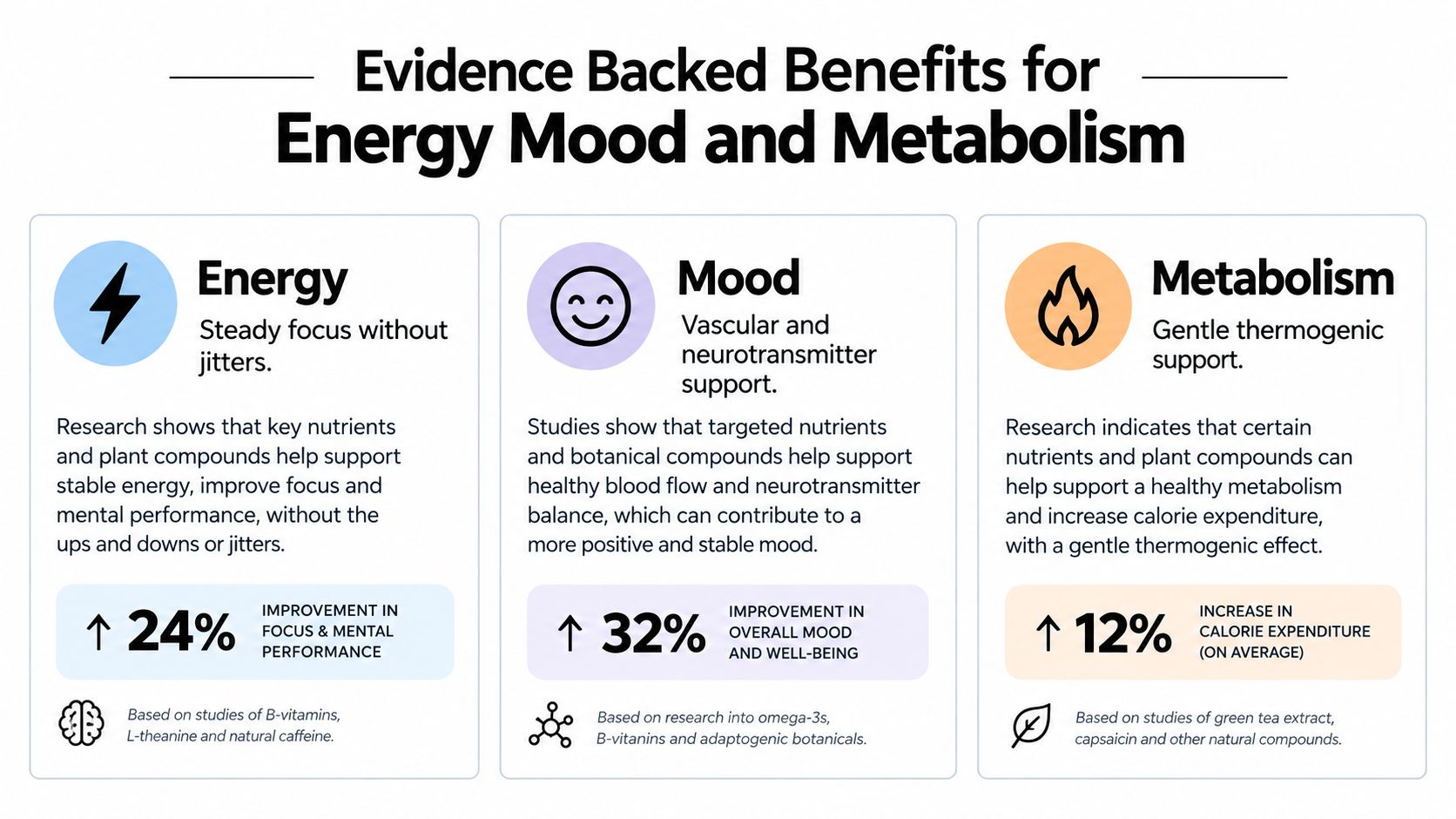
A functional hot chocolate can support different goals, but each benefit depends on the ingredient and its delivered amount. Cocoa flavanols, methylxanthines, protein, fiber, and herbs do not create one universal effect. They work more like separate dials: the formula, serving size, and timing determine what a cup can realistically provide.
Energy has a timing component
Cocoa naturally contains the methylxanthines theobromine and caffeine. These compounds may support alertness, although cocoa usually feels different from coffee because products vary in composition and serving size. Someone sensitive to stimulants may notice a clear lift, while another person may experience only mild activation. The cup's timing also matters, particularly when used later in the day.
Cocoa flavanols have been studied with methylxanthines as part of the same formulation. In a randomized crossover trial, 820 mg of cocoa flavanols with methylxanthines improved several vascular markers, while co-ingestion produced stronger measures for flow-mediated dilation and diastolic blood pressure than flavanols alone, as reported in the vascular trial. The finding supports attention to dose and timing. It does not make every cocoa drink an instant energy product.
Mood is more than a sweet taste
A warm, familiar drink can create a calming pause in the day. Cocoa also supplies sensory pleasure and naturally occurring bioactives, while its compounds may contribute through vascular and nervous-system pathways. These effects are possible contributors, not a basis for claiming that hot chocolate treats anxiety, depression, or chronic stress.
The ritual matters because it can shape how the drink fits into a routine. If a blend contains an adaptogen or mushroom, assess the specific ingredient, its amount, and your own response rather than treating the category name as proof of a mood benefit.
Metabolism support is indirect
“Metabolism” covers too much when used as a general marketing promise. A cocoa drink cannot replace movement, adequate protein, sleep, or an eating pattern suited to your energy needs. A lower-sugar serving may fit a weight-management plan more easily than a dessert-style drink, and protein or fiber may make it more filling. Those are useful practical roles, not guaranteed fat-loss effects.
Flavanol benefits are dose-sensitive. A meta-analysis found the greatest endothelial response around 710 mg total flavanols, 95 mg of (-)-epicatechin, or 25 mg of (+)-catechin. A clinical review described 200 mg of cocoa flavanols as a practical daily target, potentially supplied by about 2.5 g of high-flavanol cocoa powder or 10 g of high-flavanol dark chocolate, according to the flavanol dose analysis. A label that discloses the amount therefore says more than one that lists cocoa.
Key Functional Ingredients Inside Every Quality Blend
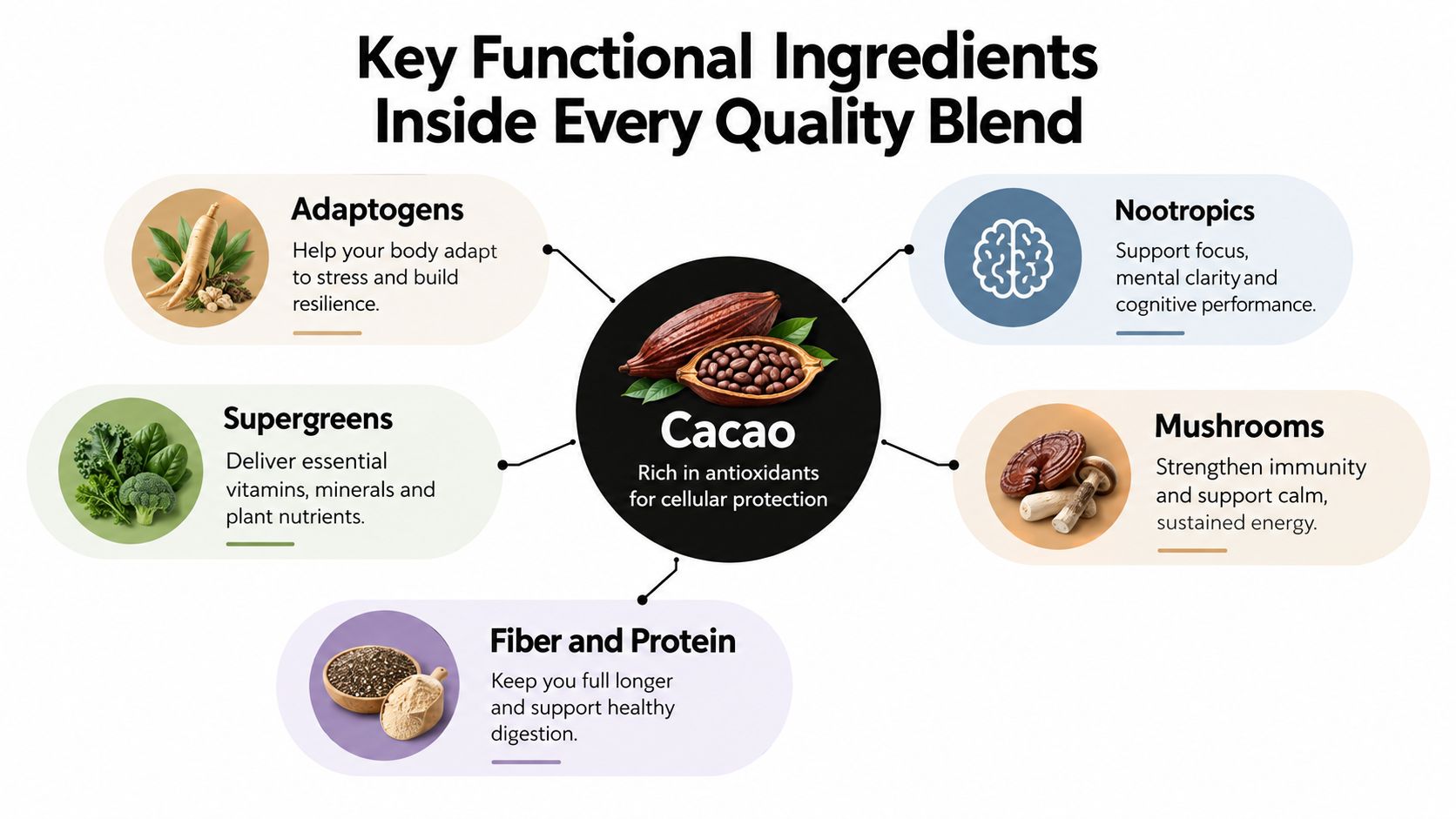
A quality blend doesn't need every possible wellness ingredient. It needs a coherent reason for each one. Cacao may provide the base, while other ingredients change the drink's nutritional role, sensory profile, and best time of day.
Read the families, not just the buzzwords
Adaptogens such as ashwagandha are commonly selected for stress-resilience positioning. They can bring earthy or bitter notes, so a formula may need balancing with cocoa and spices. People taking medication or managing a health condition should check suitability before using them regularly.
Nootropics are chosen for attention and mental clarity. Their value depends heavily on the exact compound and serving amount, not on the label category alone. Mushrooms such as lion's mane may be included for focus-oriented positioning, while other mushrooms bring different sensory and routine considerations. For a broader discussion of mushroom-based focus, see Optimal Native on mushroom-based focus.
Supergreens can increase the micronutrient identity of a drink, but they may make the cocoa taste grassy. Fiber and protein usually have the clearest practical role for fullness and nutrition density, although they can thicken the drink or make it sandy if poorly dispersed. A guide to using cocoa with protein appears in this protein cocoa powder resource.
| Ingredient Family | Primary Job | Taste and Heat Notes |
|---|---|---|
| Cacao and cocoa flavanols | Cocoa flavor and flavanol delivery | Naturally bitter; processing and heat exposure can affect the final profile |
| Adaptogens | Stress-resilience positioning | Earthy or bitter; follow preparation guidance |
| Nootropics | Focus and clarity positioning | Flavor varies by compound; dose transparency matters |
| Mushrooms | Focus, calm-energy, or broader wellness positioning | Earthy notes; texture and solubility need attention |
| Fiber and protein | Satiety and nutritional density | Can thicken or clump; whisking helps |
| Supergreens | Micronutrient-oriented positioning | Often grassy; cocoa and spice can soften the taste |
Ingredient synergy can be useful, but complexity isn't automatically better. Every extra component creates another question about dose, taste, stability, interactions, and whether the final serving is large enough to matter.
How to Choose a High Quality Clean Label Product
Start with the serving panel, not the front of the packet. A product can promise focus, metabolism support, or wellness while giving you no way to evaluate the amount of its active ingredients. A clean-label choice is transparent enough for you to judge both what's included and what's missing.
Use this quick label check.
- Find the cocoa specification. Look for high-flavanol cocoa or a stated flavanol amount if flavanol delivery is the main reason you're buying. “Antioxidant-rich” is less useful than a clear quantity.
- Check the serving size. A small sachet may contain a long list of ingredients in amounts too low to assess. Compare the serving with the product's stated purpose rather than assuming every listed ingredient is present meaningfully.
- Inspect added sugar. A functional drink can become a sugar-heavy dessert if sweeteners dominate the formula. Unsweetened or lightly sweetened options give you more control, especially if you add milk or a topping.
- Review the supporting ingredients. Protein and fiber can make a drink more satisfying, but check their quantities. For botanicals, mushrooms, or nootropics, look for the exact form and amount.
- Scan for unwanted extras. If your standard is no preservatives, artificial colors or flavors, soy, gluten, fillers, or animal products, verify each item on the label and allergen statement rather than relying on broad phrases such as “natural.”
- Compare value per cup. Market data places single-serve functional hot chocolate at $6 to $12 per serving, compared with $1 to $3 for conventional hot chocolate, as described in the functional hot chocolate market analysis. The higher price can make sense only when the formula discloses useful doses and suits your routine.
For a deeper way to assess evidence behind named ingredients, consult how to verify backed ingredients. The goal isn't to reject every premium product. It's to pay for a defined formulation rather than attractive packaging.
Serving Ideas Recipes and Pairing With Your Wellness Routine
A functional hot chocolate works best as a repeatable daily ritual. Start with unsweetened cocoa or a clearly labeled blend, then choose a liquid that matches your routine. Dairy milk contributes creaminess and protein, while unsweetened plant milk keeps the cup dairy-free. The base is more than a flavor choice. It also changes how filling and sweet the finished drink feels.
For a protein-forward cup, whisk the powder into warm milk rather than boiling liquid. Let the liquid cool slightly before adding protein powder, since intense heat can make some powders clump. A small blender or milk frother improves texture without requiring more sweetener.
Treat the serving like a measured delivery system, not an unlimited cozy drink. For an afternoon focus ritual, leave enough time between the cup and bedtime. Research on cocoa flavanols and methylxanthines suggests that formulations intended for near-term cardiovascular or cognition-related effects may be used roughly 90 to 180 minutes before the desired window. Epicatechin may peak later, around 2 to 3 hours, so the label's serving size and your personal response matter more than following a precise clock. Cocoa's stimulating compounds can also make an evening cup feel less relaxing than expected.
Try these simple variations:
- Lightly spiced cocoa: Add cinnamon and a small pinch of chili for warmth without making the drink dessert-like.
- Dairy-free cocoa: Use unsweetened oat, almond, or another suitable plant milk, then froth until smooth.
- Evening-style cocoa: Choose a caffeine-conscious blend and keep sweeteners modest to support sleep quality.
- Workout-adjacent cocoa: Pair a protein-containing serving with a balanced meal or snack. The drink alone is not complete recovery nutrition.
Build the ritual around water, regular meals, movement, and sleep. Functional hot chocolate can make those habits easier to repeat by creating an enjoyable pause, yet its value still depends on the rest of the routine.
For more preparation ideas, explore these mushroom hot cocoa recipes. Keep the method simple enough for rushed mornings and quiet evenings alike.
Safety Contraindications and Smart Daily Use
A wellness label doesn't remove the need for caution. Cocoa naturally contains caffeine and theobromine, so anyone sensitive to stimulants should begin conservatively and avoid assuming that a warm drink is automatically gentle. If you notice restlessness, palpitations, headaches, digestive discomfort, or disrupted sleep, reduce the serving or stop using the product.
Pregnant or breastfeeding people, children, and anyone managing a medical condition should ask a qualified healthcare professional before using blends with concentrated botanicals, mushrooms, adaptogens, or stimulant-oriented ingredients. The same applies if you take medication, particularly when a product combines several active compounds. “Natural” describes an origin, not a guarantee of compatibility.
Use a simple tolerance plan
- Begin with less than a full serving if the label permits and you're unsure how you'll respond.
- Use it earlier in the day when the formula contains caffeine or other activating compounds.
- Change one product at a time so you can identify the cause of any unwanted response.
- Track sleep, digestion, mood, and energy rather than judging the drink by its marketing promise.
- Stop and seek professional advice if symptoms are persistent, severe, or unusual for you.
Safety first: Don't use a functional hot chocolate blend to replace prescribed treatment, a balanced diet, hydration, regular movement, or adequate sleep.
The cleanest routine may be a simple one. Choose a transparent cocoa product, decide whether your priority is flavanols, protein, fiber, or a specific botanical, and use the drink at a consistent time. Reassess the label when the formula changes, and remember that a premium price only has value when the serving provides information you can evaluate.
Functional hot chocolate works best as a measured addition to an already sensible lifestyle. If you're pregnant, taking medication, managing a condition, or considering concentrated adaptogens or mushrooms, speak with your clinician before making it a daily habit.
Maximum Health Products offers cocoa-based wellness drink mixes alongside clean-label options for protein, supplements, energy, focus, and weight-management routines. Visit Maximum Health Products to compare its cocoa collection with your own serving, ingredient, and sweetness priorities.

