


You're standing in the supplement aisle, turning over one tub after another. One says “plant-based.” Another says “dairy-free.” A third says “clean.” Then the fine print ruins your confidence: soy lecithin, “processed in a facility with wheat,” a long gum-and-flavor list, or a protein source that sounds healthy but doesn't fit your needs.
That frustration is real. If you need a gluten free soy free protein powder, you're not just shopping for macros. You're shopping for safety, digestibility, and something you will use consistently without dreading the taste or the aftermath.
You're also not alone. The global gluten-free protein powder market reached about $8.5 billion in 2023, with demand driven in part by celiac disease, which affects 1% of the population, and non-celiac gluten sensitivity, which affects up to 13% of people according to this gluten-free protein market report. More people are asking the same questions you are: What's safe? What works? What's just marketing?
The good news is that label-reading can become a skill, not a guessing game. If you already know what makes a formula clean and useful, resources like this guide to the best clean protein powder can help you compare options faster. But the more valuable skill is knowing how to evaluate any tub on your own.
Why Finding the Right Protein Powder Matters
A protein powder can look “healthy” and still be a poor fit. I've seen people buy a product because the front label promised energy, recovery, or lean muscle, only to realize later that the formula included hidden soy ingredients, questionable flavor systems, or a protein source that left them bloated and hungry.
That matters because protein powder often becomes a daily habit. You might use it after training, in a rushed breakfast, or to keep afternoon cravings from taking over. If the formula is irritating, chalky, or nutritionally weak, you won't stick with it.
Clean protein affects more than workouts
Protein supports muscle repair, but that's only part of the story. The right powder can also make it easier to build balanced meals, support satiety, and avoid the crash that happens when breakfast is mostly sugar or caffeine. For people with food sensitivities, it can also reduce the mental fatigue that comes from constantly second-guessing ingredients.
Practical rule: A good protein powder should solve a problem in your routine, not create a new one in your gut.
The hardest part is that “free from” claims don't tell the whole story. A tub can be gluten free and still contain soy derivatives. It can be soy free and still be made in a way that makes highly sensitive people nervous. It can be high in protein and still have a texture that guarantees it sits untouched on your shelf.
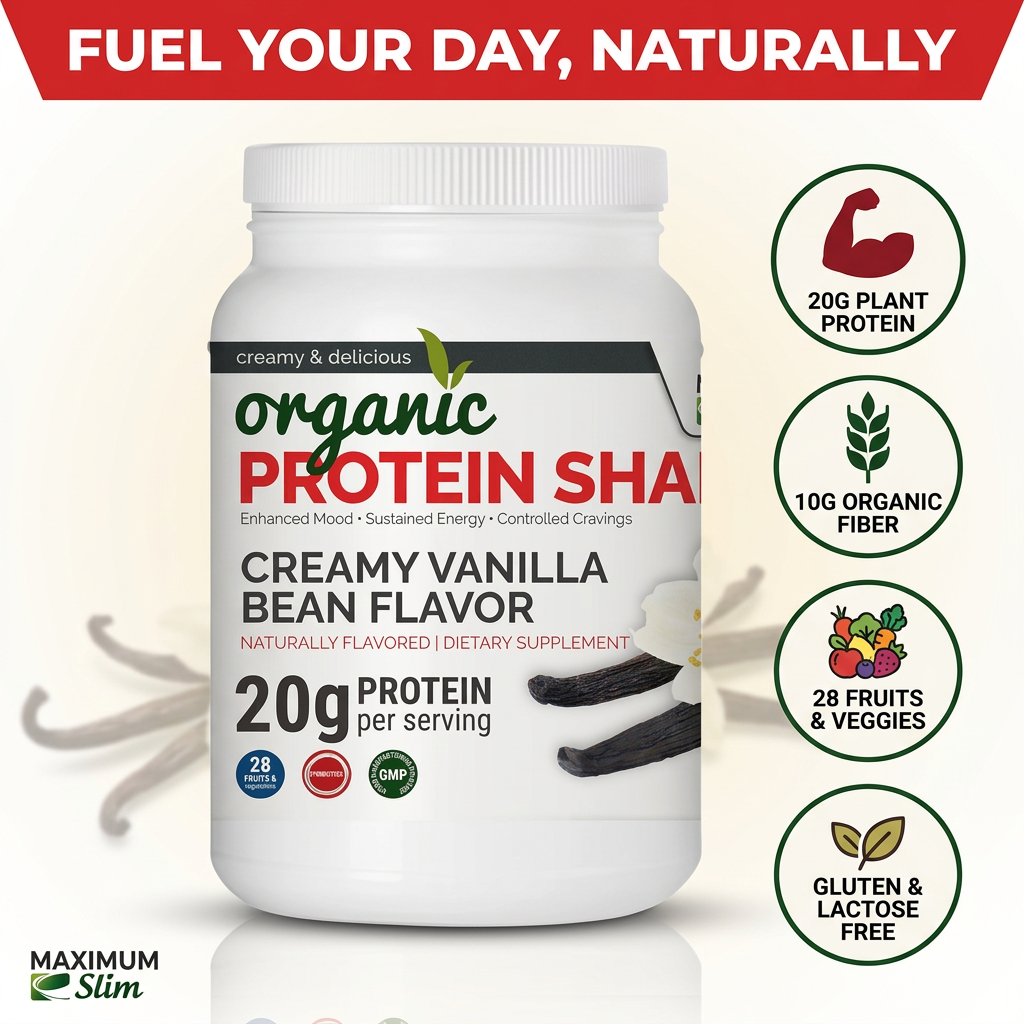
Featured Product
Organic Protein Shake - Maximum Slim | Nutrient Rich Drink for Muscle Recovery
This formula includes a blend of 28 fruits and vegetables and is made to fit a variety of dietary needs.
Shop Now →The goal is confidence, not hype
The best shoppers I know don't chase the loudest claims. They look at four things:
- Protein source: Does it fit your body and your goals?
- Allergen safety: Is it clearly free from gluten and soy, including the fine print?
- Formula quality: Are there fillers, sweeteners, or gums that may cause problems?
- Real-life usability: Will it mix, taste decent, and fit your routine?
Once you know that method, you won't need a “top 10” list to make a smart decision.
Comparing Common Gluten and Soy Free Protein Sources
The first useful filter isn't brand. It's protein source. If you choose the wrong source, no amount of pretty packaging will save the product.

Pea and rice work better together
Among plant options, pea protein and rice protein are often stronger as a pair than alone. Many formulas combine pea protein, which is rich in leucine, with rice protein, which is higher in methionine. When blended well, that pairing can achieve bioavailability comparable to whey for post-workout recovery, as explained by Momentous on plant protein formulation.
That's why a smart plant-based formula often beats a trendy single-source one. A label that says “pea protein only” isn't automatically bad, but it does deserve more scrutiny if muscle recovery is one of your goals.
Quick comparison by source
| Protein Source | Amino Acid Profile | Common Texture | Best For |
|---|---|---|---|
| Pea protein | Strong in BCAAs, especially useful in blends | Usually smooth to slightly earthy | Post-workout shakes, meal support |
| Rice protein | Helpful partner in blends, weaker alone for some goals | Dry or chalky if used heavily | Mixing with pea, sensitive diets |
| Hemp protein | Broad nutrient appeal, but often less refined in texture | Earthy, thicker, grainier | Smoothies, whole-food style blends |
| Pumpkin seed protein | Useful variety option, not always complete alone | Nutty, denser mouthfeel | Rotation, smoothie bowls, baking |
| Egg white protein | Complete amino acid profile | Thin but can get foamy | Lean recovery, lower-fat formulas |
| Collagen peptides | Not a complete muscle-building protein on its own | Very mixable, light | General wellness routines, adding protein to coffee or oats |
What works well and what usually disappoints
Pea protein is often the easiest place to start for plant-based shoppers. It tends to have a better body than rice alone and usually performs well in smoothies. The downside is that low-quality pea formulas can taste dusty or leave a dry finish.
Rice protein has value, but it's frequently overused in budget formulas. When rice is the dominant source, texture often gets chalkier and the shake can feel thin while still leaving grit at the bottom.
Hemp protein appeals to people who want a less processed feel. It can work nicely in a blender with berries, nut butter, or cacao. In a shaker bottle with plain water, it's usually not impressive.
If you want a shake that tastes easy with minimal effort, hemp and pumpkin are rarely the first choices. They do better in recipes than in “scoop and shake” situations.
Egg white protein is a strong option for people who want a complete protein and tolerate eggs well. It can foam aggressively, though, which some people mistake for poor mixability.
Collagen peptides are useful, but many buyers overestimate what they do for muscle support. They mix beautifully and can be a convenient add-on, yet they aren't the same as a balanced protein powder built for post-exercise recovery.
Match the source to the use case
If your main goal is training recovery, a pea-rice blend or egg white formula usually makes more sense than collagen. If your goal is a fast breakfast that won't weigh you down, collagen or a smoother plant blend may fit better. If you're keto-minded and trying to protect muscle while controlling carbs, this article on Tecton Ketones insights on muscle and keto gives useful context for thinking beyond the usual bodybuilding advice.
For people comparing plant options specifically, this roundup of the best plant protein powder is a helpful next step once you know which source profile you want.
Decoding Labels for True Allergen Safety
A front label is a headline. The back label is the truth.

If you need a gluten free soy free protein powder, don't stop at “vegan,” “natural,” or even “allergen friendly.” Read the product like a detective.
Start with the obvious claims
First, look for a direct gluten-free statement and a direct soy-free statement. If one is missing, don't assume the product qualifies just because the main protein source sounds safe.
Then scan the allergen statement. A formula may use pea protein and still include soy lecithin, soy oil, or flavor systems that complicate the picture. A product can also be free of gluten ingredients but still carry a facility warning that matters if you're highly sensitive.
Read the fine print slowly
These are the lines I tell clients to look for before they buy:
- Allergen statement: Check whether soy or wheat appears in “contains” language.
- Facility warning: “Processed in a facility that also handles wheat or soy” may be acceptable for some people and unacceptable for others.
- Ingredient list: Look for soy lecithin, textured soy ingredients, and vague add-ins.
- Certification seals: Third-party gluten-free certification adds confidence.
A clean label usually reads clearly. The more complicated the flavor system, the more carefully you should inspect the details.
Safety goes beyond allergens
Contaminants matter too. The Clean Label Project reported that some plant-based protein powders had higher levels of heavy metals like lead compared with animal-based sources such as whey and egg, which is why third-party testing matters so much. You can review that point in the Clean Label Project protein study.
That doesn't mean every plant protein is a bad choice. It means you should favor brands that tell you how they test, what they test for, and whether they verify contaminants independently.
What I trust most: clear allergen labeling, a short ingredient list, and visible third-party testing language. If a brand hides behind vague wellness wording, I move on.
A simple label check in practice
When you compare two tubs, ask these questions in order:
- Is it directly labeled gluten free and soy free?
- Does the allergen statement confirm that?
- Does the ingredient list stay clean under scrutiny?
- Is there meaningful third-party testing or certification?
If the answer turns fuzzy at any step, keep shopping. You don't need the perfect formula on paper. You need one that is clearly safe enough for your body and clear enough to trust.
Evaluating Nutritional Quality Beyond the Macros
A protein powder can hit a nice protein number per scoop and still be a poor formula. Macros matter, but ingredient quality often determines whether you feel good using the product daily.

Look past the grams of protein
Start with the ingredient list, not the front label. A shorter list isn't automatically superior, but it often makes evaluation easier. If the formula contains a protein blend, natural flavors, sweetener, gum system, and digestive support ingredients, that can still be a good product. If it reads like a chemistry set and gives no clue why each ingredient is there, I get skeptical.
Here's how I sort the common extras:
- Sweeteners: Monk fruit and stevia are often better tolerated by clean-eating shoppers than artificial sweeteners. But some stevia-heavy formulas have a sharp aftertaste.
- Gums and thickeners: Xanthan gum, guar gum, and similar ingredients can improve texture. They can also make a shake feel heavy or irritate sensitive digestion in some people.
- Flavor systems: “Natural flavors” aren't automatically bad, but they do reduce transparency. If the rest of the formula is already crowded, this matters more.
- Added sugar: Many people do better with little or no added sugar, especially if they're using protein for weight management or steadier energy.
Protein quality and absorption matter
Not all proteins are used equally well by the body. DIAAS, or Digestible Indispensable Amino Acid Score, is one way to think about protein quality. Scores close to 1.0 are desirable, and high-quality pea-rice blends can achieve DIAAS scores of 0.85 to 1.0, rivaling whey, according to this overview on protein digestibility and pea-rice blends.
That's one reason I don't dismiss plant blends when they're built well. A thoughtful blend can give you much better practical value than a single-source powder with a cleaner-looking label but weaker overall performance.
A formula isn't “clean” just because it avoids allergens. It should also provide usable protein without loading the scoop with sweeteners, fillers, or texture agents you didn't ask for.
One useful test at home
When you buy a new tub, don't judge it only by taste. Test it three ways:
- In water: This shows the texture and sweetness level.
- In a smoothie: This reveals whether the flavor plays well with actual food.
- In a simple meal: Oatmeal, yogurt, or overnight oats will show whether it turns gluey, gritty, or pleasantly creamy.
If muscle retention is one of your priorities, learning more about amino acids for muscle protection can also sharpen how you think about formula quality. The scoop count matters less than whether the protein gives your body what it needs.
Solving Common Digestion and Mixing Problems
Many people assume a protein powder is “bad” when the actual issue is either the blend or the way they're using it.

Bloating, clumps, foam, chalkiness, and that heavy feeling after a shake are all common complaints. Most of them are fixable.
If you feel bloated, change the blend first
Some people keep buying different flavors of the same protein type and wonder why their stomach still protests. In many cases, the better move is to change the protein structure, not the flavor.
A 2024 meta-analysis found that soy-free pea-rice blends improved gut tolerance by 28% compared with single-source protein isolates in people with IBS. That suggests the blend itself can be gentler than relying on one isolated source. Since that source URL is already cited earlier for digestibility, I'll keep the point practical here: if a single-source powder keeps causing trouble, a well-formulated blend is often the smarter next trial.
A few other fixes help too:
- Start smaller: Use half a serving for several days before jumping to a full scoop.
- Change the liquid: Water, almond milk, or oat-free alternatives can feel different in the gut.
- Avoid stacking irritants: Protein powder plus sugar alcohols plus high-fiber add-ins is rough for many stomachs.
- Check the gums: A heavily thickened formula may be the issue, not the protein itself.
For broader daily habits that support a calmer gut, this guide on how to improve digestion naturally at home is worth bookmarking.
If your shake is clumpy, fix the method
Clumps usually come from preparation, not from some deep flaw in the product. Plant proteins especially need a better mixing method than “powder first, tiny splash of liquid, shake for five seconds.”
Use this sequence instead:
- Add liquid first
- Add powder second
- Shake hard or blend immediately
- Let it sit briefly, then shake again if needed
Rice-heavy and hemp-heavy powders usually need more help than collagen or finer plant blends. Warm liquids can also make some formulas gum up, especially if the powder contains thickeners.
A quick visual demo can help if your shaker routine needs work:
Sometimes the “bad texture” complaint is really a mismatch between powder type and preparation method. A blender can rescue a formula that a shaker bottle never will.
Don't force a powder that clearly isn't working
If a formula causes repeat bloating, throat fatigue from sweetness, or stubborn grit no matter how you prep it, move on. The discipline isn't in choking down a bad product. The discipline is finding one you can use consistently.
Practical Ways to Use Your Protein Powder Daily
The right gluten free soy free protein powder should fit your routine so smoothly that you stop thinking of it as a supplement and start thinking of it as a useful food tool.
Build it into meals, not just shakes
A plain shake is fine, but it isn't your only option. Many people do better when protein becomes part of meals they already enjoy.
Try these simple uses:
- Morning oats: Stir unflavored or lightly sweetened powder into oatmeal after cooking so the texture stays smoother.
- Smoothies with structure: Blend protein with fruit, greens, and a fat source like chia or nut butter for better staying power.
- Yogurt bowl mix-in: If you tolerate dairy or a dairy-free yogurt alternative, protein powder can turn a light snack into something that holds you.
- Blended coffee or cocoa: Some lighter formulas mix well into morning drinks, especially if the flavor profile is simple.
Match the timing to the job
Use protein when it solves a real gap. After training, it can make recovery nutrition easier. Mid-afternoon, it can stop the “grab anything sweet” cycle. At breakfast, it can give structure to a meal that would otherwise be too light.
For runners, the logic is similar but the context changes. This article on Swift Running's guide to post-run protein offers a practical look at how post-run protein supports recovery without turning your routine into a bodybuilder meal plan.
Keep the routine simple enough to repeat
The most effective habit is usually the least complicated one. Pick one default use for weekdays and one backup use for busy days.
For example:
- Weekday default: shake or smoothie after training
- Busy-day backup: stir into oatmeal or yogurt
- Travel option: bring single servings in small containers or packets
- Low-appetite days: blend with fewer ingredients so digestion stays easy
The best protein habit is the one you can repeat when life gets messy, not the one that looks perfect on social media.
When you know how to assess source quality, allergen safety, digestibility, and ingredient design, you stop shopping reactively. You start choosing deliberately. That's the significant advantage. Not just finding a gluten free soy free protein powder once, but knowing how to recognize a good one every time.
If you want a clean-label option from a brand built around soy-free, gluten-free wellness support, explore Maximum Health Products. Their approach centers on simple formulas without preservatives, artificial colors or flavors, added sugars, soy, gluten, fillers, or animal products, which makes them a strong fit for people who want protein and wellness support without label drama.

