


You're probably looking at a bottle of l carnitine liquid and wondering one of three things. Will this help with energy? Is liquid better than capsules? And how do you use it without wasting money or upsetting your stomach?
Those are the right questions.
L-carnitine gets marketed as a fat burner, a workout booster, and an energy aid. Some of that language is oversimplified. The more useful way to think about it is this: L-carnitine is a compound your body already uses to help move fat into the part of the cell that can turn it into energy. The liquid form can be convenient and flexible, but convenience isn't the same thing as superior absorption.
If you want a grounded, practical guide, start there. The decision isn't “liquid or not?” It's whether the form, dose, timing, and label quality fit your goal and your tolerance.
The Science of L-Carnitine and Cellular Energy
You finish lunch, head into a packed afternoon, and by 3 p.m. your energy feels uneven. That dip has many possible causes, but at the cell level one part of the story is fuel handling. L-carnitine helps your body move certain fats to the place where they can be burned for energy.
Your body already makes L-carnitine and also gets some from food, especially animal foods. So the question is not whether L-carnitine exists in your system. The more practical question is whether adding more, in a form such as liquid, fits your goal, your diet pattern, and your tolerance.

What L-carnitine actually does
Here is the biology in plain English.
Long-chain fatty acids are a major fuel source, especially during lower-intensity activity and between meals. But they cannot effortlessly drift into the mitochondria, the part of the cell that turns fuel into usable energy. L-carnitine helps transfer those fatty acids across the mitochondrial membrane, where beta-oxidation can begin.
A simple way to picture it is a secured loading dock. Fat is the cargo. The mitochondria are the factory floor. L-carnitine helps the cargo get through the right entry point so the work can start.
That role matters, but it also gets overstated online. More L-carnitine does not automatically mean dramatically more fat burning. It supports a transport step in energy metabolism. The practical effect depends on the rest of the system, including training status, diet, total energy intake, and baseline carnitine status.
Featured Product
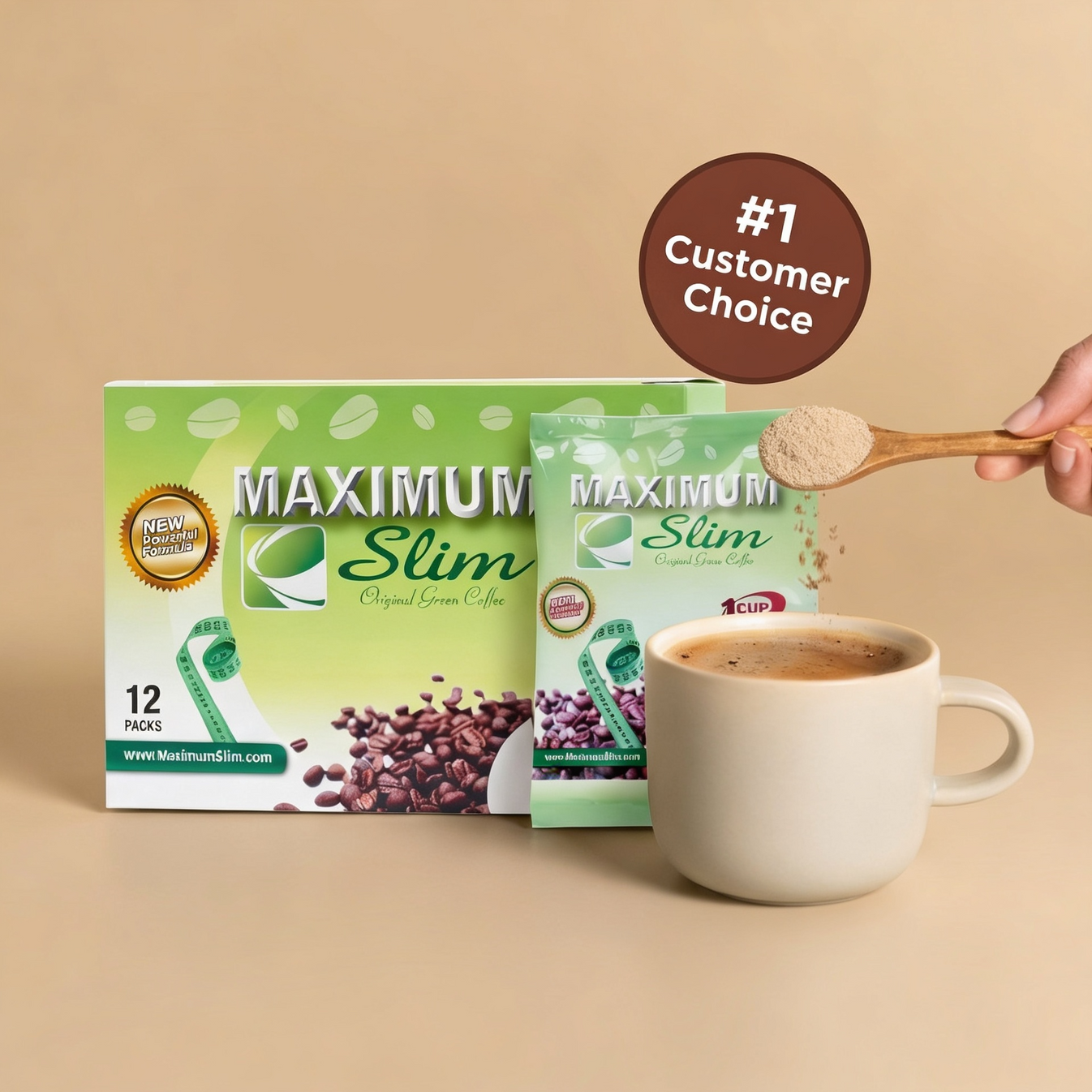
Maximum Slim Original Green Coffee | Premium Unroasted Arabica Blend (12 Ct)
Discover a delicious daily coffee crafted to complement your wellness routine. Enjoy one cup a day as part of a balanced lifestyle.
Shop Now →Why this matters for liquid L-carnitine
This science helps explain why product form matters less than marketing often suggests. Liquid L-carnitine may be easier for someone to take consistently, easier to split into smaller servings, and more practical before training or during travel. Those are convenience advantages.
They are not proof that liquid changes the underlying biology.
For a busy professional who skips breakfast and wants a quick routine, a measured liquid serving may be easier to use than carrying capsules. For a competitive athlete, the decision may come down to dose precision, stomach comfort, and whether the product includes unnecessary sweeteners or stimulant blends. The best form is the one you can use consistently, at an evidence-aware dose, without adding ingredients that work against your goal.
Your body makes some, but context changes the picture
Supplementation adds to an existing system. It does not create a brand-new pathway.
That is why responses vary. Someone with low dietary intake, high training demands, or a specific medical issue affecting carnitine metabolism may have a different experience than a healthy adult eating a mixed diet. This is also why L-carnitine should sit inside a bigger plan for sleep, meals, training, and recovery, not replace it. If you want that bigger context, this metabolism support guide from Maximum Health Products gives a useful overview.
If your main concern is day-to-day fatigue rather than gym performance, it can also help to compare L-carnitine with other supplements for low energy, since low energy can come from several overlapping causes.
Practical rule: L-carnitine supports fuel transport inside the cell. It does not replace good sleep, adequate calories, or smart training.
When carnitine status is clinically relevant
In clinical settings, low carnitine status can matter. It is usually evaluated through lab testing and medical context, not by symptoms alone. That distinction is useful because it reminds us that carnitine is a real biochemical compound with established functions, not just a fitness trend.
For a healthy reader choosing a liquid product, the takeaway is straightforward. Start with the mechanism. Then judge the supplement by practical trade-offs: dose, label quality, convenience, and whether the formula matches your goal without unnecessary extras.
Key Benefits for Metabolism and Performance
The appeal of l carnitine liquid usually comes down to two situations. One person feels mentally and physically flat by midday and wants support for daily energy. Another person wants better training support without adding a heavily sweetened pre-workout.
Those goals overlap, but they're not identical.
Energy and metabolic support in real life
If L-carnitine helps move fat toward energy production, the practical takeaway is that it may support how efficiently your body uses fuel. That doesn't mean it overrides sleep loss, low calorie intake, or poor meal timing. It means it may support one part of the energy system you already rely on.
For a busy professional, that can matter most during long workdays, travel, or periods when meals and movement are inconsistent. For an active person, the appeal is often around training output and recovery.

Three benefit buckets that make sense
Rather than treating L-carnitine as a cure-all, it helps to group expectations.
- Daily energy support: Some people use it when they want less of a heavy, stimulant-driven feel and more support for cellular fuel use.
- Metabolism support: It's often included in routines focused on body composition because of its role in fat transport.
- Training support: Active users often choose it for pre-workout routines or recovery-focused stacks.
Better expectations lead to better supplement choices. L-carnitine makes the most sense when you pair it with food quality, sleep, movement, and a realistic goal.
If fatigue is your main issue, it's also worth zooming out. A broader review of supplements for low energy can help you compare where L-carnitine fits relative to nutrients, adaptogens, and stimulant-based options.
Why some people like the liquid form
Liquid products often feel easier to use consistently. You can measure a flexible serving, mix it into water, or take it quickly before leaving the house. That matters more than people admit. The “best” supplement often fails because it's annoying to use.
If your bigger goal is overall metabolic support, the science-backed wellness products guide is useful for seeing how L-carnitine fits into a wider plan instead of acting like a standalone fix.
Liquid L-Carnitine vs Capsules and Other Forms
You're rushing out the door, coffee in one hand, gym bag in the other, and your supplement routine needs to fit real life. That is where form matters. With L-carnitine, the better choice is often the one you will use consistently, not the one with the flashiest label claim.
Liquid L-carnitine has clear practical advantages. You can measure a flexible serving, mix it into water, or take it quickly without swallowing pills. For a busy professional, that can make a daily routine easier to keep. For an athlete, it may fit more naturally into a pre-workout habit.
The main point is simpler than marketing makes it sound. Liquid changes the user experience more than it changes the biology.
What liquid does well
Liquid products are built for convenience.
Because L-carnitine dissolves well in water, companies can put it into drink-style formulas and shot formats. That makes it easier to adjust the amount than a fixed capsule serving. If pills are a barrier for you, liquid may be the better tool, even if the ingredient itself is the same.
That distinction matters. A form can be easier to take without being uniquely superior in the body.
L-Carnitine forms compared
| Form | Primary Use | Practical Trade-Off | Best For |
|---|---|---|---|
| Liquid L-carnitine | Flexible daily use, pre-workout use, drink-shot formats | Easy to take and easy to adjust, but taste and added ingredients vary a lot by brand | People who want convenience, adjustable dosing, or dislike pills |
| Capsules or tablets | Simple daily supplementation | More portable and cleaner-tasting, but less flexible for dose changes | People who want tidy travel use and consistent servings |
| Acetyl-L-carnitine | Often chosen for brain-focused routines | Different use case than standard L-carnitine, so it is not always the right substitute for workout goals | People whose main interest leans more cognitive than performance-oriented |
| Powder | Mix-your-own supplementation | Often cost-effective, but less convenient and not as grab-and-go as liquid | People comfortable measuring servings at home |
One helpful way to compare forms is to separate two questions. First, how easy is this product to use? Second, is this the right form for my goal? Those are not the same question.
A liquid can save time and remove friction. Capsules can travel better and often come with fewer flavoring agents. Acetyl-L-carnitine may make more sense for someone interested in mental performance than for someone focused on gym training. The form should match the job.
How to choose based on your goal
If your day is packed and you need a routine that survives traffic, meetings, and missed meals, liquid often wins on convenience alone.
If you compete, train hard, or stack supplements carefully, the label matters more than the format. You want to know the exact form used, the serving size, and what else is in the bottle.
If you care most about clean ingredients, capsules sometimes have an edge because they can avoid sweeteners, dyes, and preservatives. But some liquid products are well-formulated and straightforward, which is why label reading matters more than assumptions.
A better buying question is not “Which form is best?” It is “Which form fits my goal, schedule, and tolerance for added ingredients?” That shift usually leads to a smarter purchase. If you want a wider framework for comparing ingredient quality and label design, this science-backed wellness products resource is a useful reference.
How to Use L-Carnitine Liquid for Best Results
Using l carnitine liquid well is mostly about matching the routine to the person. The bottle doesn't know whether you sit at a desk all day, train after work, or rush through breakfast in the car.

For the busy professional
If your goal is steady support for daily energy and metabolism, keep it simple.
Take it at a time you'll remember. Many people do best with a morning routine or with a meal they rarely skip. If you've got a sensitive stomach, taking it with food is often easier than taking it on an empty stomach.
A good protocol looks like this:
- Start low: Begin with the smallest labeled serving.
- Stay consistent: Use it daily for a period long enough to judge how you feel.
- Track one outcome: Energy, appetite rhythm, workout readiness, or digestion. Pick one so you're not guessing.
For the competitive athlete or regular gym-goer
If your goal is training support, take it before your workout according to the product label. The reason is practical. You want it built into the part of your routine where fueling and effort matter most.
Some people mix it into water and sip it before training. Others pair it with a broader pre-workout plan that may also include food, hydration, and caffeine if they tolerate it well.
If your routine already includes several stimulants, L-carnitine may work better as the non-jittery part of the stack rather than another “energy hit.”
This walkthrough gives a visual overview of how people use it in practice:
What to avoid
A few common mistakes show up again and again:
- Chasing big servings too quickly: More isn't always better, especially if your stomach disagrees.
- Using it randomly: Inconsistent use makes it hard to tell whether it helps.
- Expecting it to replace basics: It won't fix poor sleep, low protein intake, or erratic eating.
The best protocol is the one you can repeat without friction.
Understanding Safety Side Effects and Interactions
L-carnitine has a fairly straightforward safety conversation, but it still deserves a careful one.
Healthline notes that up to 2 g per day is well tolerated by a majority of individuals, though mild gastrointestinal side effects can occur, and L-carnitine supplementation may increase blood levels of trimethylamine-N-oxide (TMAO), which has been linked to atherosclerosis risk in some studies, as explained in Healthline's review of L-carnitine.
Common side effects people notice
The most typical issues are practical, not dramatic.
- Stomach upset: This may show up as nausea, cramping, or loose stools.
- Taste fatigue: Some liquids are heavily flavored, which makes daily use harder.
- Tolerance issues at higher intakes: If you increase too quickly, your gut often lets you know.
Taking it with food is a reasonable starting strategy if you're sensitive.
The TMAO issue without hype
TMAO is where the conversation gets more nuanced. You'll sometimes see either extreme. One side ignores it completely. The other makes L-carnitine sound naturally dangerous.
Neither response is helpful.
The honest takeaway is that this is a valid consideration, especially if you're planning long-term use or already have cardiovascular concerns. That doesn't mean everyone should avoid it. It means you should use an appropriate dose, avoid casual megadosing, and speak with a qualified clinician if your health history is complicated.
A smart supplement routine doesn't just ask, “Can I take this?” It asks, “Does this fit my health picture and my actual goal?”
If you're also evaluating other wellness basics, your guide to 1000mg vitamin C is a useful example of how dose and tolerance matter with common supplements too.
Interactions and who should ask first
If you take prescription medication, have a diagnosed medical condition, or are pregnant or breastfeeding, check with your healthcare provider before starting. That's especially important if you're already managing metabolic, thyroid, or cardiovascular issues.
A bottle label can't account for your full medical context. Your clinician can.
Finding a High-Quality Clean-Label Supplement
A good liquid supplement should solve a problem, not create one.
With l carnitine liquid, label quality matters because the delivery format has strengths and weaknesses. One technical source notes that L-carnitine is highly soluble in water and can remain stable in acidic solutions at pH 3 to 6 for more than 1 year under controlled conditions. The same source also notes that it's hygroscopic and can absorb moisture readily, which is why sealing and packaging matter, according to ChemicalBook's overview of L-carnitine properties.
What to look for on the label
Use this checklist before you buy:
- Actual L-carnitine amount: Check the active amount per serving, not just the bottle size.
- Simple ingredient list: Fewer extras usually make troubleshooting easier if you react poorly.
- Packaging quality: A well-sealed bottle matters because moisture and storage conditions can affect a liquid product.
- Third-party testing or quality standards: Look for signs the brand verifies identity, purity, and potency.
What deserves extra scrutiny
Some liquids rely on a long list of sweeteners, dyes, and flavor systems to make the product more marketable. That can be fine for some buyers, but if you want a cleaner formula, read beyond the front label.
Watch for:
- Artificial colors
- Artificial sweeteners if you prefer to avoid them
- “Proprietary blends” that hide active amounts
- Packaging that looks casual or poorly sealed
Clean-label shopping is less about perfection and more about transparency. If a brand won't tell you exactly what's inside and how much you're getting, move on.
Frequently Asked Questions about L-Carnitine
Can you take l carnitine liquid on an empty stomach
You can, but not everyone should. If you tend to get nausea or stomach discomfort from supplements, taking it with food is usually the easier choice.
How long does it take to notice anything
That depends on what you're looking for. Some people mainly notice whether the routine feels easy to maintain. Others pay attention to workout readiness or steadier daily energy. Give yourself enough consistent use to judge it fairly.
Is liquid better than capsules
Not automatically. Liquid is often more convenient and easier to adjust by serving size. Capsules may be simpler for travel and routine. The better option is the one you will use as directed.
Is L-carnitine worth considering if you eat little or no animal food
It may be worth discussing with a clinician, especially if your dietary intake is low and you're dealing with fatigue or exercise recovery questions. That said, symptoms alone don't confirm a deficiency.
Can you mix it with other supplements
Often yes, but keep the stack simple at first. Add one thing at a time so you can tell what's helping and what isn't.
If you want clean-label wellness options built around metabolism, energy, and daily performance, Maximum Health Products is worth a look. Their catalog focuses on simple, science-informed nutrition without the clutter of artificial colors, flavors, fillers, added sugars, soy, gluten, or animal products, which makes it easier to build a routine you can consistently stick with.

