


You're probably doing what a lot of careful shoppers do. You pick up one tub that says “organic,” another that says “plant-based,” a third that says “gluten-free,” and then you flip each one over hoping the ingredient panel will somehow make the choice obvious.
Instead, it usually gets more confusing.
Some powders look clean from the front and messy on the back. Some are naturally gluten-free in theory, but not necessarily safe in practice. And some products that sound healthy turn out to be light on protein and heavy on fillers. If you're trying to find an organic protein powder gluten free option that supports your energy, digestion, recovery, or weight goals, the label matters more than the marketing.
Featured Product
Organic Protein Shake
Delicious mixed-berry Collagen Gummies promote glowing skin, strong nails, and healthy hair. Infused with biotin, vitamins, and collagen peptides, they support beauty, joint, and muscle wellness naturally.
Shop Now →Navigating the World of Clean Protein Powders
The search for cleaner protein isn't a niche habit anymore. The global gluten-free products market was valued at USD 7.23 billion in 2024 and is projected to reach USD 11.91 billion by 2032, with the U.S. accounting for over 35% of that revenue, according to Data Bridge Market Research on the global gluten-free products market.
That matters because it explains why the aisle feels crowded. Brands know shoppers want products that feel lighter, simpler, and easier to trust. They also know many people are looking for overlap: organic ingredients, plant-based protein, and gluten-free safety in one product.
Why the choice feels harder than it should
A lot of people start with a simple goal. They want a powder they can blend into a smoothie before work, shake up after a workout, or use in place of a snack when the day gets hectic. Then the labels start piling up:
- Organic
- Non-GMO
- Gluten-free
- Dairy-free
- Vegan
- No added sugar
None of those terms are useless. But none of them, by themselves, tell you whether the powder is well made.
Clean-looking packaging doesn't guarantee a clean formula.
One tub may use a simple blend of plant proteins and minimal flavoring. Another may rely on gums, sweeteners, and bulk ingredients that make the powder seem healthy while lowering its overall quality.
What most shoppers are really trying to solve
Usually, you're not shopping for protein powder just to own protein powder. You want something practical. Maybe you want steadier morning energy. Maybe you want an easier way to hit your protein needs without dairy. Maybe you need to avoid gluten and don't want to guess.
If that sounds familiar, it helps to think of your search as a filter process, not a hunt for the most impressive front label. A good starting point is learning how to separate buzzwords from useful quality signals. If you want a broader overview of what “clean” should mean in this category, this guide to the best clean protein powder is a helpful companion read.
Decoding the Labels What Organic and Gluten Free Mean
Two words often get bundled together on protein tubs: organic and gluten-free. They sound similar because both suggest a cleaner product, but they answer different questions.
Organic speaks to how ingredients were grown and handled.
Gluten-free speaks to whether the finished product is safe for someone avoiding gluten.
What organic tells you
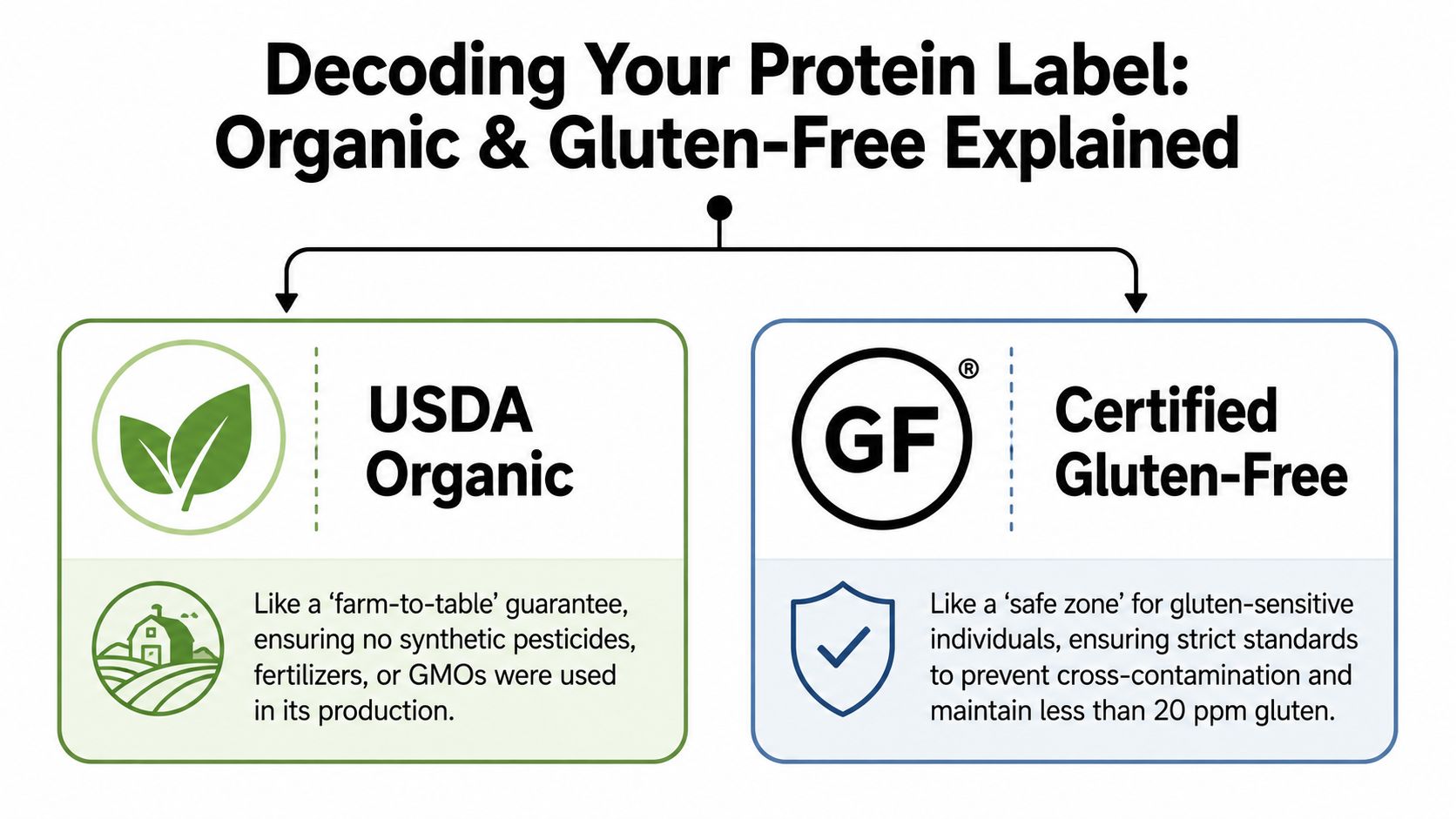
Think of organic as a farm standard. It tells you the ingredients were produced under stricter rules around synthetic pesticides, fertilizers, and GMOs. For a health-conscious buyer, that often lines up with the bigger goal of choosing fewer unnecessary inputs and more recognizable ingredients.
That doesn't automatically mean the powder is high in protein, easy to digest, or safe for gluten-sensitive people. It means the ingredient sourcing cleared one important quality bar.
A simple way to read it is this:
- Organic helps answer ingredient quality
- Gluten-free helps answer allergen safety
If you want examples of what stronger ingredient standards look like in this category, this roundup of the best organic protein powders can help you compare labels with a more trained eye.
What gluten-free really tells you
Here's where shoppers often get tripped up. A protein source can be naturally gluten-free and still become unsafe later.
Pea protein, brown rice protein, chia, and mung bean don't naturally contain gluten. But once those ingredients move through shared manufacturing equipment, storage areas, flavor systems, or packaging lines, cross-contact can happen.
For a product to be certified gluten-free, it must be verified to contain less than 20 parts per million of gluten, and that matters because even naturally gluten-free ingredients can be contaminated when processed on shared equipment with wheat, barley, or rye, as explained in this review of whether protein powders are gluten-free.
Labeled versus certified
This is the distinction that deserves more attention.
A front label that says “gluten-free” may reflect the brand's intent. A certified gluten-free seal tells you a third party has verified a specific safety standard. That's a much stronger signal, especially if you have celiac disease or react strongly to trace exposure.
Practical rule: If gluten avoidance is medical or highly sensitive for you, “gluten-free” wording alone isn't enough. Look for certification.
The easiest way to think about both labels
A useful mental shortcut:
| Label | Main question it answers | What it does not guarantee |
|---|---|---|
| Organic | Were the ingredients produced under stricter sourcing standards? | That the powder is high-protein, complete, or gluten-safe |
| Certified Gluten-Free | Was the finished product verified for low gluten exposure? | That the ingredients are organic or minimally processed |
When you separate those roles, labels become much easier to read.
Why a Quality Formula Matters The Protein Deficit Problem
A lot of people assume gluten-free automatically means healthier. In practice, it often just means gluten has been removed or avoided. What gets added back in is the bigger question.
Research published in this review on the nutritional quality of gluten-free products found that many standard gluten-free products show a 38% reduction in total protein content and a 35% higher carbohydrate content compared with gluten-containing equivalents.
Why this happens
Gluten gives structure and texture in many foods. When manufacturers remove it, they often rebuild texture with starches, gums, flavor systems, and low-cost fillers. That may improve mouthfeel, but it can also water down the part you want from a protein powder: protein.
In plain terms, some powders are sold as “clean” while delivering less of the main nutrient you're paying for.
What that means for your shake
If your goal is satiety, muscle support, or a more balanced meal, a weaker formula works against you. You may end up with:
- Less protein density than expected
- More carbohydrate-heavy bulking ingredients
- A sweeter taste profile that masks a thin formula
- More digestive frustration if the product relies on lots of additives
That's why “gluten-free” should be treated as a safety filter, not a quality verdict.
A protein powder should earn its place by what it delivers per scoop, not by what the front label promises.
What a better formula looks like
A stronger organic protein powder gluten free option usually keeps its priorities straight. It starts with a clear protein source, limits filler ingredients, and uses flavoring and texture support sparingly. The best labels are often less dramatic than the worst ones. They read more like food and less like chemistry homework.
A good habit is to scan the ingredient list before the nutrition panel. If the first few ingredients already look crowded, the formula usually is too.
How to Choose Your Protein The Ultimate Ingredient Checklist
Buying protein powder gets easier when you stop asking, “Does this look healthy?” and start asking, “What proof does this label give me?”
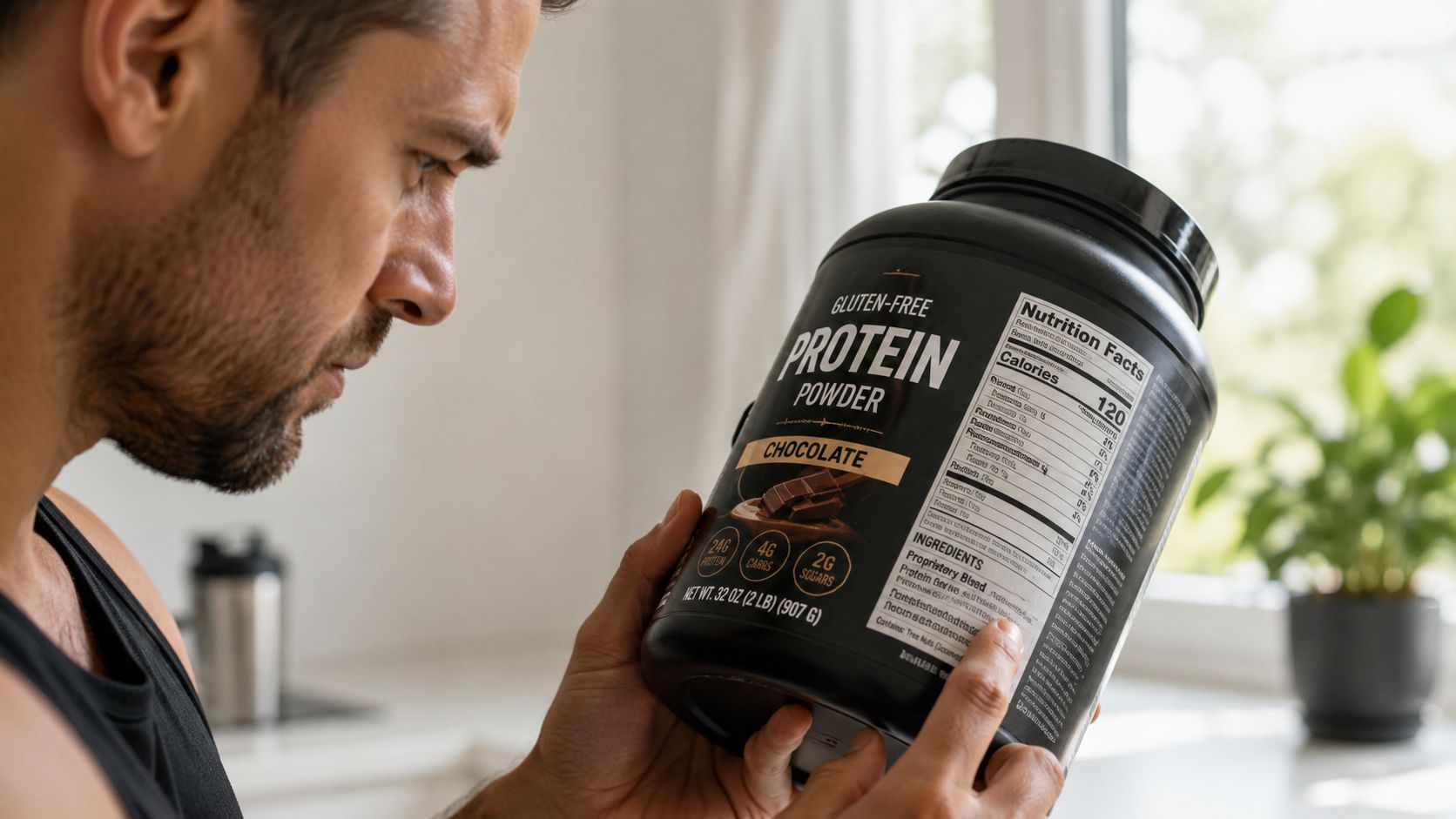
That shift matters most for gluten safety. Some products use a simple “gluten-free” claim on the package, but that isn't the same as third-party verification. The gap is important because hidden gluten can enter powders through flavorings like maltodextrin or through cross-contamination, and third-party certification is especially important for the 1.6 million Americans with celiac disease, as noted in this guide to gluten-free protein powder benefits.
Start with the seal, not the slogan
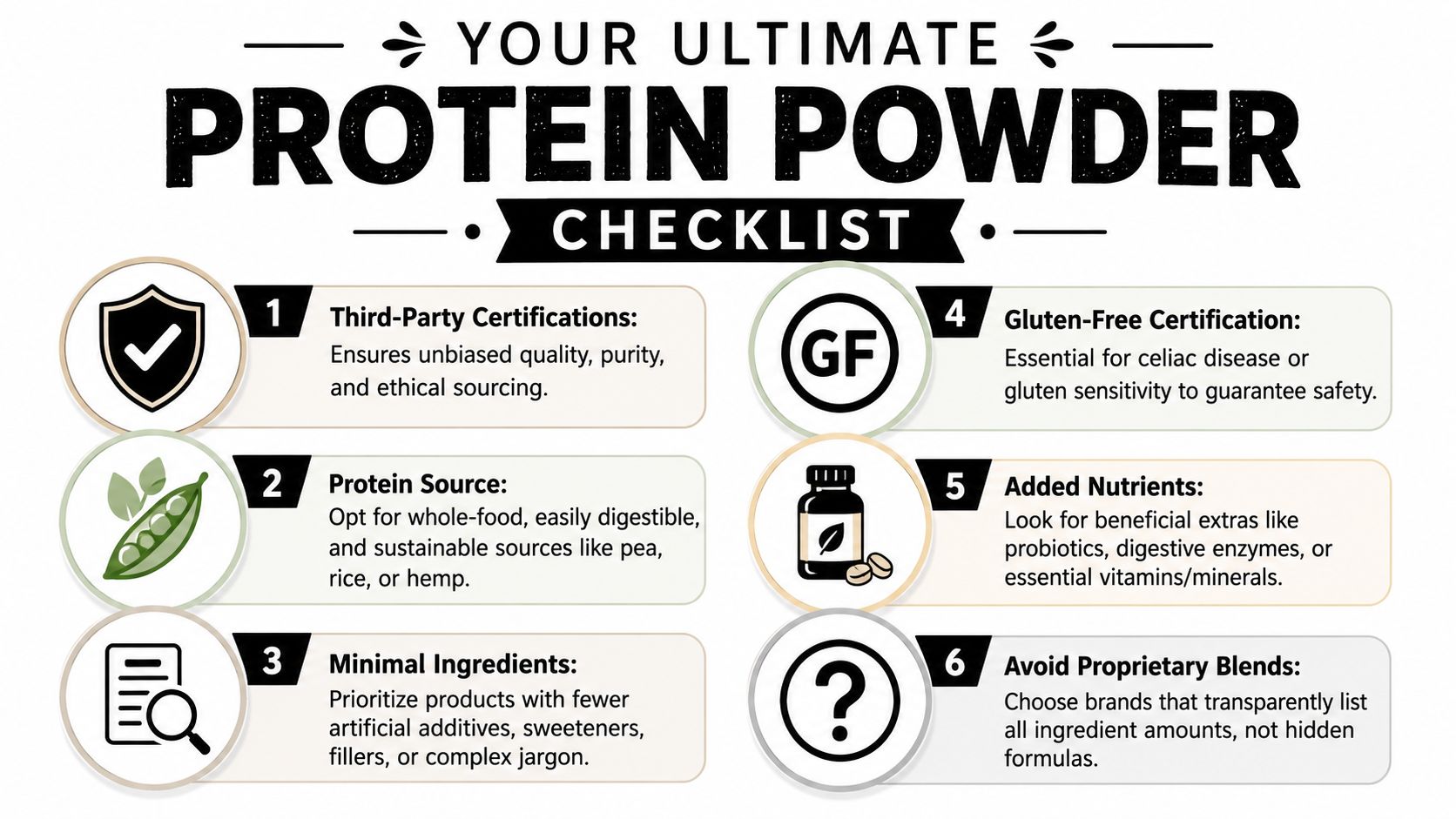
If gluten is a serious concern for you, your first scan should be for Certified Gluten-Free, not just “gluten-free.”
A slogan can be self-declared. A certification means the brand submitted to outside standards. That doesn't make every certified product perfect, but it does move you from marketing language to verification.
Here's the order I recommend when reading a tub:
- Check for third-party gluten-free certification
- Read the ingredient list from top to bottom
- Look at the protein source
- Review sweeteners, gums, and flavor systems
- Decide whether the extras help or distract
Green flags worth looking for
Some labels are reassuring right away. They use a short ingredient list, a clear plant-protein base, and recognizable add-ins.
Good signs include:
- Named protein sources such as pea protein, brown rice protein, hemp protein, or a blend that clearly lists each source
- Simple flavor support like cocoa, vanilla, or natural flavoring used modestly
- Useful extras such as digestive enzymes, prebiotic fiber, or probiotics if they make sense for your digestion
- Transparent labeling that tells you what's in the scoop without hiding behind vague blends
Red flags that deserve a pause
Not every additive is automatically bad, but a busy label usually signals a product designed around texture and sweetness before nutrition.
Watch for patterns like:
- Long lists of fillers that crowd out the core protein source
- Heavy gum systems that leave the shake thick but don't improve its nutrition
- Artificial sweeteners if you know they bother your digestion or taste preferences
- Proprietary blends that hide how much of each protein source you're getting
- Flavor-first formulas where cocoa, sweeteners, and texturizers seem to drive the product
If the ingredient list reads like a dessert mix with protein added as an afterthought, keep looking.
Questions to ask before buying
A smart buyer doesn't need to memorize every ingredient. You just need a few reliable questions.
- Can I identify the protein source quickly?
- Is the gluten-free claim certified or just printed on the front?
- Does this formula look food-based or lab-built?
- Would I feel comfortable using this every day?
A simple store or online checklist
| What to check | Why it matters | What you want to see |
|---|---|---|
| Certification | Protects against weak or vague gluten claims | A clear third-party gluten-free seal |
| Protein base | Determines nutrition and digestibility | Clearly named plant proteins |
| Ingredient length | Often reflects formula simplicity | A shorter, easier-to-read list |
| Sweeteners and fillers | Affect digestion, taste, and overall quality | Minimal and purposeful use |
| Transparency | Helps you compare products honestly | No vague proprietary wording |
This kind of checklist turns shopping into a filter. You don't need the “perfect” powder. You need one that proves what it claims.
Comparing Plant Protein Sources Pea vs Rice vs Hemp
Once you've checked for certification and a clean formula, the next question is the actual protein source. Many buyers struggle with this choice, because pea, rice, and hemp all sound healthy but don't behave exactly the same in a scoop.
High-quality organic gluten-free protein powders can deliver 20 to 22 grams of complete protein per serving with 4 grams of BCAAs, and sprouted plant proteins such as pea and brown rice can reach digestibility scores of up to 90%, according to this product reference for organic vegan plant-based protein.
A quick side-by-side comparison
| Protein source | What it does well | Possible downside | Best fit |
|---|---|---|---|
| Pea protein | Smooth texture, strong protein base, useful for recovery support | Some people notice an earthy taste | Fitness-focused buyers and everyday shakes |
| Brown rice protein | Usually gentle and simple, often used in hypoallergenic formulas | Can taste a little dry on its own | Sensitive eaters who want a mild plant option |
| Hemp protein | Whole-food feel, earthy flavor, often chosen by minimalists | Texture can be grittier | People who prefer less processed products |
| Blends | Better amino acid balance, more rounded taste and texture | Quality depends on how the blend is built | Most people seeking a complete daily protein |
Pea protein
Pea protein is popular for good reason. It usually gives a stronger protein hit per scoop and tends to blend better than many single-source plant proteins. It's often the backbone of formulas aimed at exercise recovery or meal support.
If you want a shake that feels substantial and works well after training, pea protein is often the easiest place to start.
Brown rice protein
Brown rice protein is often chosen for its simplicity. It can be a solid option for people who want a plant protein that feels lighter and less creamy than pea. On its own, though, it may not offer the most balanced amino acid profile or the best texture.
That's why you'll often see it paired with pea protein rather than used alone.
Hemp protein
Hemp has a loyal following because it feels close to whole food. It tends to appeal to shoppers who value minimal processing and a more natural texture. The tradeoff is that it can be more earthy and less smooth than a pea or rice formula.
Some people love that. Others try it once and go straight back to blends.
Why blends are often the smart choice
A blend often solves the weak spots of single-source proteins. Pea can improve the strength of the formula. Rice can soften the texture or broaden the amino acid mix. Hemp can add a more food-like quality when used carefully.
That's why many well-made products use combinations instead of one source only.
A blend is often easier to live with day after day because it balances texture, taste, and amino acid coverage.
If you want a deeper comparison of options for exercise and recovery, this guide to the best plant protein powder is useful.
Practical Tips for Daily Use and Simple Recipes
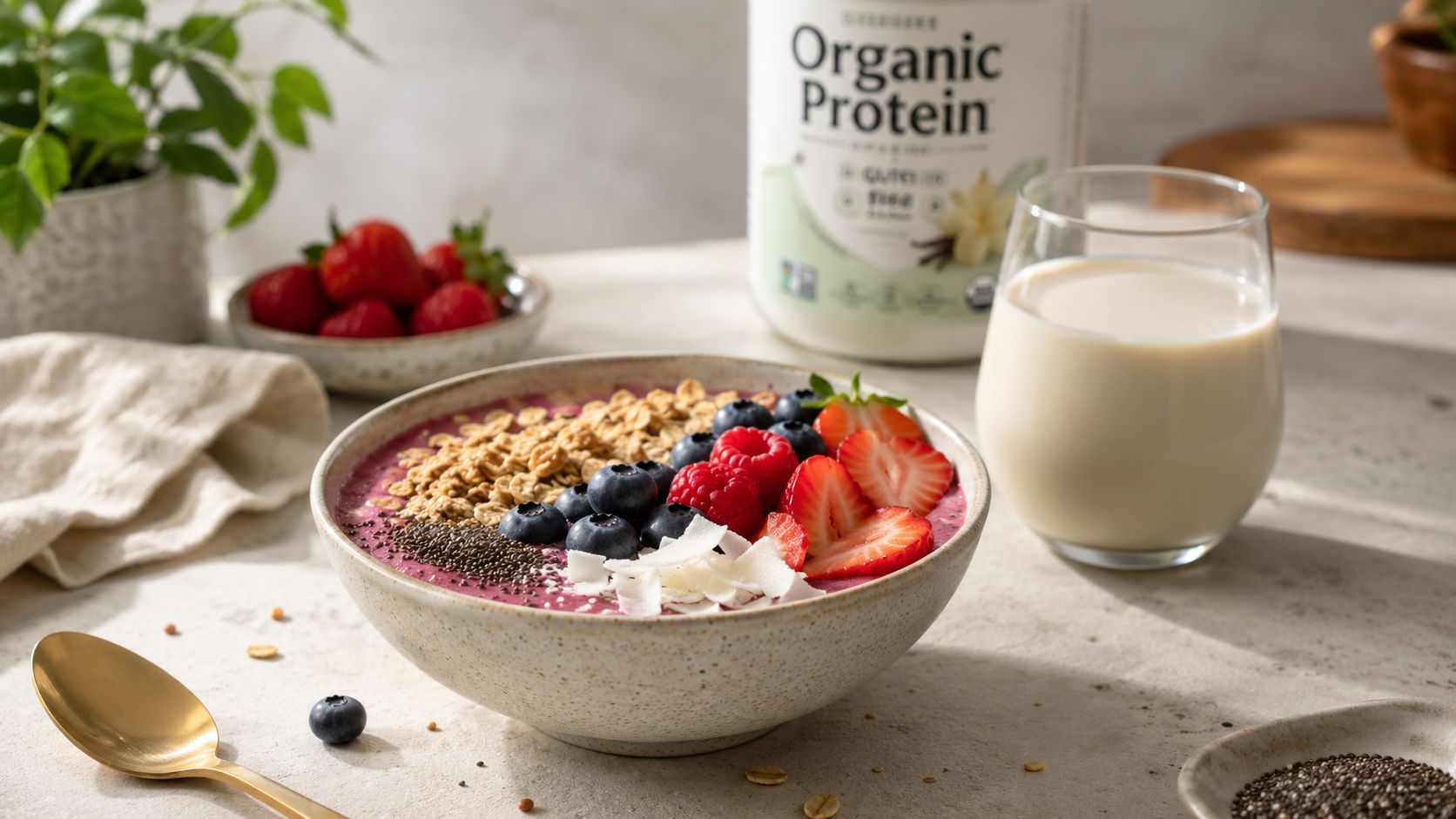
A good protein powder only helps if you'll use it. The easiest way to make an organic protein powder gluten free routine stick is to remove friction. Keep the scoop handy, decide your go-to liquid in advance, and have two or three repeatable uses so you're not reinventing breakfast every morning.
How to make it taste better and mix better
Most texture complaints come from technique, not just the powder itself.
Try these simple fixes:
- Add liquid first so powder doesn't stick to the bottom of the shaker
- Blend with frozen fruit if you want a smoother, creamier texture
- Use a shaker for simple mixes and a blender for thicker smoothies
- Let it sit briefly after shaking if the formula contains fiber or seeds
- Pair earthy powders with cocoa or cinnamon instead of extra sweetener
If you're looking for motivation to build a consistent routine, this piece on how to unlock your best self with protein gives useful context on making protein a practical daily habit.
Three easy ways to use it
Morning smoothie
Blend your protein powder with unsweetened milk alternative, frozen berries, chia seeds, and a spoonful of nut butter. This works well on rushed mornings because it gives you something more balanced than toast or coffee alone.
Post-workout shake
Shake the powder with cold water or a milk alternative, then add a banana on the side. This is the lowest-effort option and works well when you want something fast after training.
No-bake energy bites
Mix protein powder with nut or seed butter, gluten-free oats, cinnamon, and a small amount of maple syrup until the mixture holds together. Roll into small bites and refrigerate. They're handy when you want a grab-and-go snack that feels more satisfying than a plain bar.
A quick visual can help if you like seeing texture and prep ideas in action.
Small habits that make a big difference
You don't need to use protein powder in the same way every day. Some people do best with a shake after a workout. Others use it to round out breakfast. Parents may even blend a simple smoothie for the household and adjust toppings for different preferences.
The best routine is the one that feels easy enough to repeat.
Frequently Asked Questions about Organic GF Protein
Does plant protein always cause bloating
Not always. Bloating usually comes from the full formula, not just the protein source. Powders with lots of gums, sweeteners, or bulky filler ingredients tend to be harder for some people. Simpler blends often sit better, especially when you start with a smaller serving and mix it into a full smoothie instead of drinking a thick shake fast.
Is gluten-free protein powder useful if I don't have celiac disease
Yes, it can be. Some people choose it because they want a cleaner-feeling product or need to avoid common irritants in their routine. The bigger point is not that everyone needs gluten-free protein. It's that if you do choose it, the formula still needs to be nutritionally solid and clearly labeled.
Is certified gluten-free really necessary
If you have celiac disease or react strongly to trace gluten, yes. A label claim and a certification seal are not the same thing. Certification gives you a stronger layer of confidence around cross-contact risk.
The safest habit is to trust verification more than front-of-package language.
Should I choose a single-source protein or a blend
A blend is often beneficial. It usually gives a more balanced amino acid profile and a friendlier texture. A single-source powder can still work if it matches your digestion and taste preferences.
Can families use these powders
In many households, yes, but individual needs vary. Adults, teens, and active family members may all use protein differently depending on meals, activity, and sensitivities. If someone has a medical condition, specific allergy concerns, or special nutrition needs, it's smart to check with a qualified healthcare professional before making it a daily staple.
If you want a clean-label option from a brand focused on simple, allergen-conscious wellness, explore Maximum Health Products. Their approach centers on formulas without gluten, fillers, artificial colors, artificial flavors, or added sugars, which makes them a practical place to start if you're trying to build a more consistent daily nutrition routine.

