


You're probably doing what many careful shoppers do. You pick up a bottle, flip it over, scan the ingredient list, and look for words like clean, pure, natural, or doctor formulated. Then you pause, because none of those words tells you the one thing you want to know.
Is this supplement really what it claims to be?
That question matters whether you're buying protein powder, magnesium, greens powder, sleep support, or a pre-workout. Labels can look polished. Marketing can sound scientific. But unless someone independent has checked what's inside, you're still relying on trust alone.
That's where third party tested supplements come in. They give you a way to move from hope to verification. And once you know how to read the signs, check a certification, and review a lab report, shopping gets a lot less confusing.
Featured Product
Maximum Slim Original Classic Cocoa (30 Ct)
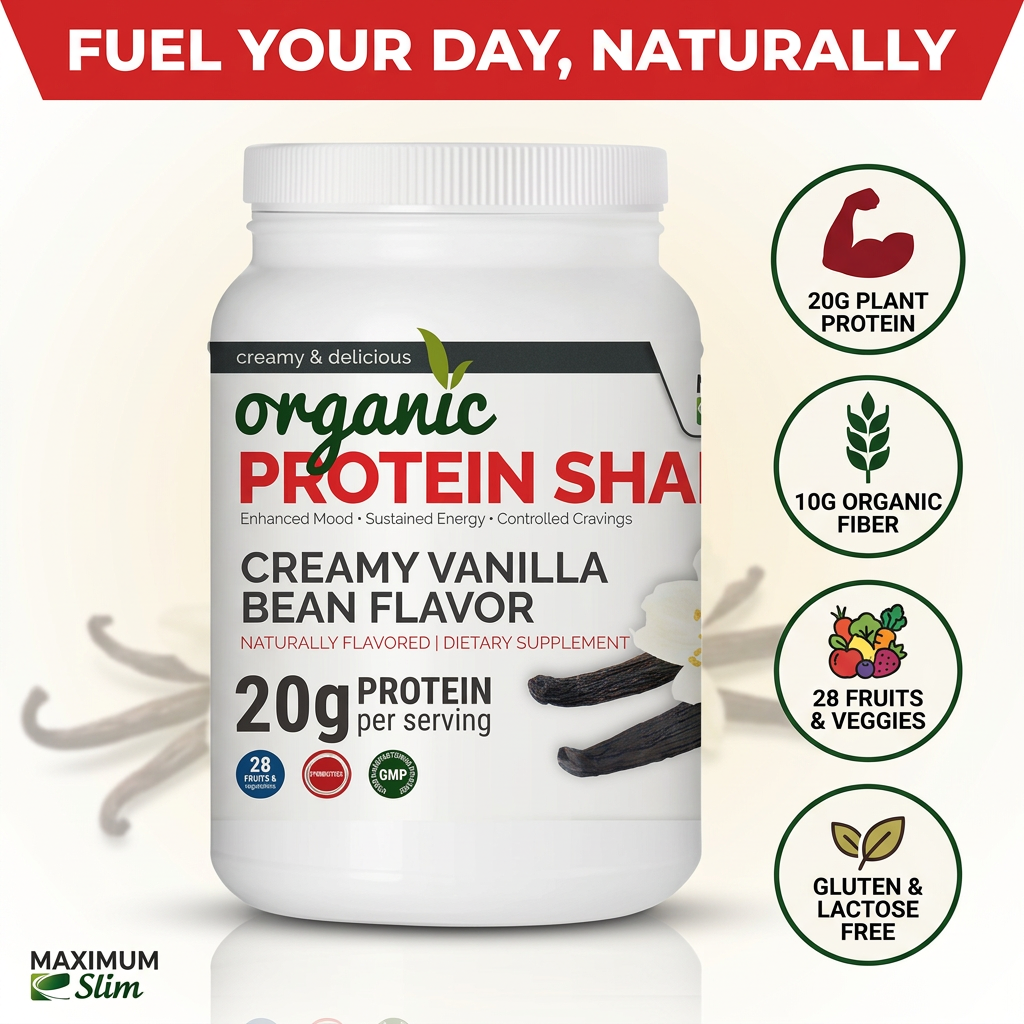
Maximum Slim Organic Protein Powder delivers 20g of organic plant-based protein and 10g of organic fiber per serving to support balanced nutrition and everyday wellness. Perfect for smoothies, shakes, or meal replacement support.
Shop Now →The Unregulated World of Supplements
You walk into a store or open a supplement website and see ten versions of the same product. One says “clean.” Another says “premium.” A third says “lab tested.” A fourth says “pharmaceutical grade.” All of them look convincing.
For most people, that's where uncertainty starts. Supplements don't go through the same kind of pre-market review people often assume exists for prescription drugs. That creates a marketplace where the label can feel more certain than the product itself.
Why shoppers feel stuck
The hard part isn't just choosing between brands. It's that many labels use quality language without giving you a simple way to verify it. A protein powder may promise purity. A mushroom blend may highlight potency. A sleep formula may mention advanced testing. But unless that claim is backed by independent verification, you still don't know if the bottle contains the listed ingredients at the listed strength, or whether unwanted contaminants were screened out.
That confusion shows up in everyday shopping decisions, especially with products people use daily. If you're comparing powders, this guide to finding the best clean protein powder is a good example of why clean-label claims need to be evaluated carefully, not just accepted at face value.
When a label gives you marketing language without proof, the burden shifts to you.
The real consumer problem
Most shoppers aren't chemists. You shouldn't need a lab background to buy a multivitamin or greens powder with confidence. But in practice, supplement buyers often have to act like investigators.
That's why third-party verification matters so much. It gives you an outside checkpoint. Instead of asking only, “Do I like this formula?” you can ask a much better question.
Who checked it, what did they test, and can I confirm that claim myself?
Once you start using that filter, the supplement aisle looks very different.
What Is Third-Party Supplement Testing
Third-party testing means an independent organization evaluates a supplement rather than taking the brand's word for it. This process resembles hiring a home inspector before buying a house. The seller can tell you the roof is solid and the wiring is fine, but an independent inspector checks the structure, looks for hidden problems, and gives you a more objective picture.
That same logic applies to supplements. A brand makes the product. A separate lab or certifying body tests it.

The three checks that matter most
At the technical level, third-party testing for dietary supplements follows ANSI/NSF 173 and requires independent laboratories accredited to ISO 17025 to test the finished product. That framework verifies identity, strength, and purity, while also screening for prohibited substances.
Here's what those terms mean in plain language.
- Identity means the ingredient is what the label says it is. If the bottle says magnesium glycinate, testing checks whether magnesium glycinate is present.
- Purity means the product is screened for things you don't want, such as heavy metals or other contaminants. Purity is like checking a glass of water not just for water itself, but for what might be floating in it that you can't see.
- Potency or strength means the amount on the label matches what's inside. If a capsule claims a certain dose, potency testing checks whether that dose is accurate.
Why “lab tested” isn't always enough
Readers often get tripped up here. A brand may say a product is “lab tested,” but that phrase doesn't automatically mean it was independently certified. Sometimes it means the company tested it internally. Sometimes it means only one part of the product was reviewed. Sometimes the claim is too vague to tell you much at all.
A stronger signal is an actual third-party certification or transparent batch-specific documentation.
If you want a simple parallel outside the supplement aisle, the same idea shows up in CBD products. This overview of the importance of CBD lab testing is useful because it shows why outside verification matters whenever product quality can't be judged by appearance alone.
Practical rule: A trustworthy supplement doesn't ask you to believe quality. It gives you a way to verify it.
What third-party testing is really doing
At its core, third-party testing answers a very practical question. Is the bottle telling the truth?
That doesn't make the product automatically right for your goals, and it doesn't replace thoughtful ingredient selection. But it does reduce the guesswork around what you're swallowing. For a health-conscious buyer, that's a major difference.
Why This Independent Seal of Approval Matters
An independent seal matters because supplements are products you put into your body consistently. If there's a mismatch between the label and the contents, the risk isn't abstract. It affects your health, your wallet, and your decision-making.
The basic value is simple. Third party tested supplements help you verify that you're getting what you paid for. If you buy magnesium for evening relaxation, protein for recovery, or a greens powder for daily nutrition, label accuracy matters. Without it, you can't judge whether the product itself is the issue or whether the formula wasn't what it claimed to be.
Consumer awareness is lower than many people think
A 2023 Journal of Nutrition study found that only 57% of consumers correctly stated that the dietary supplements they purchased had been third-party tested (Journal of Nutrition finding). That gap matters because people often assume a supplement has been independently verified when it hasn't.
If you're evaluating products for a specific goal, that's worth keeping in mind. For example, when reading recommendations for science-backed deep sleep aids, the ingredient discussion is useful, but product verification still deserves its own separate check.
What the seal does and does not prove
This is the nuance many articles skip.
A third-party seal can support confidence in identity, strength, and purity. It can help show that the label matches the contents and that the product has been screened in a meaningful way. What it does not prove is that the supplement will work for every person or that it's free from every possible adverse reaction.
That's an important distinction. Certification checks product content. It doesn't serve as a clinical trial proving a desired outcome.
A verified label and an effective supplement are related, but they are not the same thing.
Why that distinction still builds trust
Some people hear that and think, “So what's the point?” The point is that accuracy comes first.
Before you can even evaluate whether a supplement supports sleep, digestion, energy, or recovery, you need confidence that the formula in the bottle matches the formula on the label. Third-party testing doesn't answer every health question. It answers the foundational one.
And for athletes, military personnel, or anyone avoiding banned substances, that foundation becomes even more important because testing is the only objective way to confirm what's in the finished product.
Navigating Certifiers and Lab Reports
Not all quality claims mean the same thing. Some come from the brand itself. Some come from a testing lab. Some come from a certifying body with ongoing standards and audits behind the seal.
That's why it helps to know the major players and the role each one can serve.
How major certifiers differ
NSF is the name many shoppers recognize first, and for good reason. The National Sanitation Foundation was established in 1944, and it holds the distinction of being the first and only independent third-party testing organization globally to offer true laboratory testing of dietary supplements rather than only evaluating submitted test data. In 2004, NSF launched its Certified for Sport program, which became especially important for athletes and others who need stronger banned-substance assurance.
Other names you may see include USP, BSCG, Informed-Choice, and ConsumerLab.com. They're often discussed together, but they don't all operate in exactly the same way or communicate results in the same format.
Here's a simple consumer-level comparison.
Comparing Major Third-Party Certifiers
| Certifier | Primary Focus | Tests For | Athlete Safe? |
|---|---|---|---|
| NSF | Broad supplement certification and direct laboratory testing | Identity, strength, purity, prohibited substances | Often yes, especially with Certified for Sport |
| USP | Quality verification and standards alignment | Label accuracy and quality markers | Not specifically athlete-focused by default |
| BSCG | Banned-substance screening emphasis | Label claims and banned substances | Often used for athlete-sensitive products |
| Informed-Choice | Sports supplement screening | Banned substances and product verification | Commonly used for athlete-focused products |
| ConsumerLab.com | Independent product review and testing | Label accuracy and contaminants | Not primarily an athlete certification |
If you want a broader view of evidence-driven supplement selection, this article on science-backed wellness products can help you think beyond branding and focus on substantiated quality signals.
How to read a COA without getting overwhelmed
A Certificate of Analysis, usually called a COA, is a batch-specific lab report. Many shoppers open one, see rows of technical terms and numbers, and close it immediately. That's understandable. But you usually don't need to understand every line.
Start by looking for a few basics:
- Product identification. Does the report clearly match the exact product and batch?
- Date information. Is the report current enough to be relevant to the lot being sold?
- Identity or assay data. Does it show the main ingredients were checked?
- Contaminant screening. Look for heavy metals, microbial results, or banned-substance screening when relevant.
- Pass or specification language. The report should show whether results met the product's standard.
What a useful COA feels like
A good COA should feel like a receipt with detail, not like a mystery document. It should help you connect a specific batch to a specific set of test results.
If a brand says “we test everything” but can't show clear documentation for a batch, treat that claim cautiously.
One more point often gets missed. A seal on the front label is convenient, but a COA gives you a closer look at the evidence behind quality claims. The best consumer approach is to use both.
How to Verify Claims and Spot Red Flags
The most confident supplement shoppers don't rely on one signal. They stack signals. They look for a seal, confirm it, review the brand's transparency, and pay attention to wording that sounds impressive but avoids specifics.
That process doesn't take long once you know what to look for.

A simple buyer checklist
-
Look for the exact seal
A real certification mark should be identifiable, not just implied. “Third-party tested” is less useful than a visible certifier name you can independently check.
-
Confirm the claim outside the brand site
Go to the certifier's website and search their database if that option is available. A real listing is stronger than a logo printed on packaging.
-
Ask for batch-specific documentation
If the company shares COAs, review them. If it doesn't post them publicly, ask customer support. Brands that value transparency usually make this process straightforward. If you want to see how public reporting can ensure product transparency, that kind of lab-report library is a useful model.
After you've seen the basic process once, this short walkthrough can help reinforce what to watch for in real products.
Red flags worth taking seriously
Some warning signs show up again and again.
- Vague quality language. Terms like “lab tested,” “doctor approved,” or “premium purity” sound reassuring but may not tell you who tested the product or what was tested.
- Hidden dosages. Proprietary blends can make it harder to know how much of each ingredient you are taking.
- No documentation on request. If customer support can't explain testing clearly or won't provide meaningful proof, that's useful information.
- Miracle-style promises. If a label focuses more on dramatic outcomes than verifiable quality controls, slow down.
A good question to ask any brand
Ask one direct question: Can you show me independent verification for the exact product I'm buying?
That question cuts through a lot of marketing. Strong brands answer it cleanly. Weak brands dodge it.
Our Commitment to Transparency at Maximum Health
Everything discussed above comes down to one principle. People deserve to know what they're buying and why they should trust it.
At Maximum Health, that standard shapes how products are presented and how trust is earned. The focus isn't just on offering popular wellness categories like coffee blends, protein, greens, metabolism support, or daily supplements. The deeper commitment is to clean-label thinking, clear formulation choices, and a shopping experience built around confidence rather than hype.

What transparency looks like in practice
For consumers, transparency should feel concrete. You should be able to understand what a product is for, what's in it, and what standards shape the formula.
That's especially important in categories where shoppers often face clutter and confusion. A greens powder should make ingredient quality easy to understand. A protein formula should communicate clean-label priorities clearly. A coffee or cocoa blend should help the buyer understand what they're adding to a daily routine and why.
Why this matters for daily-use products
Daily-use supplements create a stronger need for trust because they become part of your routine. You aren't making a one-time purchase. You're choosing something that may sit on your kitchen counter and become part of your morning, workout, or evening rhythm.
That's why transparency isn't a marketing extra. It's part of responsible supplement education. And it's why learning to evaluate third party tested supplements is so valuable. Once you know how to check for proof, you stop shopping based on packaging alone.
If you want to understand the philosophy behind that approach, the Maximum Health About Us page gives a fuller view of the brand's mission, product categories, and clean-label values.
Smart supplement shopping starts with curiosity, but it ends with verification.
If you want supplements that fit a clean-label wellness routine and a brand experience centered on transparency, explore Maximum Health Products. Whether you're looking for functional coffees, greens, protein, or targeted daily support, start with products that make it easier to shop with confidence.

