


Third-party testing is when an independent organization with no financial stake in a product verifies that it meets specific standards for quality, purity, and label accuracy. In practice, that outside check matters because independent testing has become a mainstream control mechanism across industries, and in one related security market 75% of companies use penetration tests to measure security posture or meet compliance needs while 57% use them to support vulnerability management, showing how strongly buyers and regulators value independent verification.
You're probably here because you've stood in front of a shelf of supplements, read a label that sounded impressive, spotted a seal you half-recognized, and still felt unsure. The bottle says “clean.” The brand says “tested.” The front label promises support for energy, metabolism, focus, recovery, or gut health. But the key question is simpler: can you trust what's inside?
That confusion is reasonable. Several different ideas are commonly mixed together. They assume third-party tested means the product works. They assume it means a government agency approved it. They assume every seal means the same thing. None of those assumptions is safe.
A better way to think about third-party testing is this. It doesn't tell you everything. But it can tell you something very important. It can give you a verifiable baseline. That baseline is often about whether the ingredients match the label and whether the product was checked by someone who doesn't profit from the result.
Beyond the Hype in the Supplement Aisle
You pick up one tub of protein powder. It says “pure,” “clean,” and “advanced formula.” The next bottle says “doctor formulated.” A third has a gold-looking seal on the front. A fourth has no seal at all but makes bigger promises. After a few minutes, the shelf starts to feel less like a health decision and more like a marketing contest.
That's the moment when many smart shoppers get stuck. You're not asking for perfection. You just want answers to basic questions. Is what's on the label present in the bottle? Is the product free from obvious contamination concerns? Is this company careful, or just good at packaging?
For people shopping for protein, greens powders, or metabolism support, that uncertainty gets even sharper because categories overlap. One product is sold for fitness. Another for weight goals. Another for “wellness.” If you've been comparing options such as a clean protein powder, you've probably noticed that the language sounds precise even when the proof isn't obvious.
A polished label can tell you what a brand wants you to believe. Testing helps you ask what someone independent was able to verify.
Why supplement claims feel hard to decode
Part of the problem is that labels mix different types of information together:
- Marketing language that tries to persuade you
- Ingredient lists that may look scientific but don't explain quality
- Seals and badges that may be meaningful, or may appear official
- Health benefit claims that can sound stronger than the evidence behind them
When those are all packed onto one container, it's easy to assume they all carry equal weight. They don't.
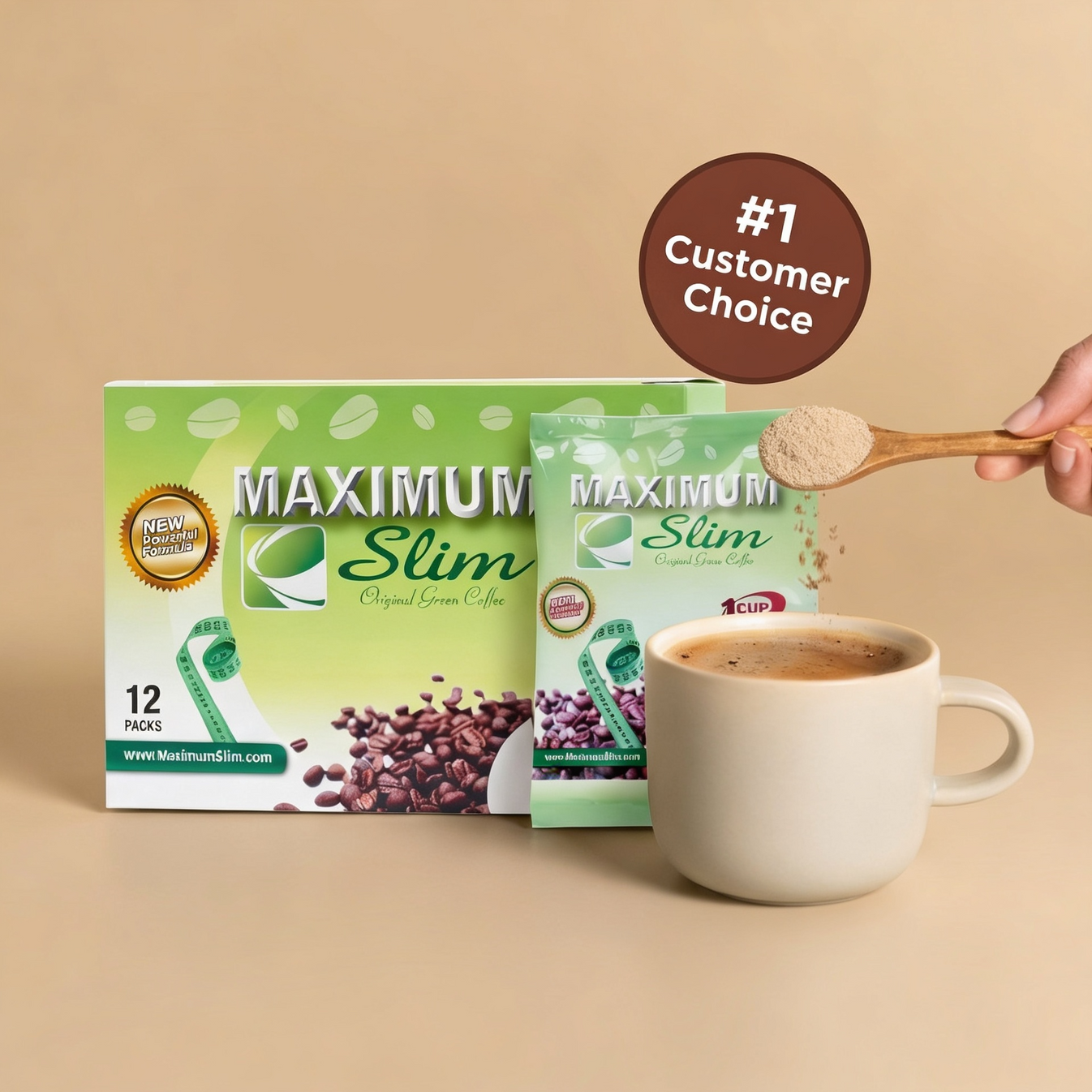
Featured Product
Maximum Slim Original Green Coffee | Premium Unroasted Arabica Blend (12 Ct)
Discover a delicious daily coffee crafted to complement your wellness routine. Enjoy one cup a day as part of a balanced lifestyle.
Shop Now →The trust problem shoppers are really trying to solve
Most health-conscious buyers aren't searching for hype. They're searching for a trustworthy shortcut. Since you can't test a capsule or powder yourself, you need some outside way to reduce guesswork.
That's where third-party testing enters the picture. Not as magic. Not as a blanket guarantee. As a tool that helps separate “the brand says so” from “an independent lab checked this specific thing.”
Defining Third-Party Testing for Product Purity
The clearest answer to what is third party testing starts with independence. According to the U.S. conformity assessment guidance on third-party conformity assessment, third-party testing is independent verification by a laboratory or inspection body that has no financial interest in the product or its manufacturer. That separation is what gives the result credibility.
Consider a home inspection. If the seller tells you the roof is solid, that's useful, but limited. If an independent inspector checks the roof, plumbing, wiring, and foundation, you have a more trustworthy baseline because the inspector doesn't own the house and doesn't profit from saying everything is perfect.

What an outside lab is usually checking
For supplements, third-party testing often focuses on practical quality questions such as identity, purity, potency, and contaminants. The exact scope depends on the lab and certification program, but the core idea is simple: verify that the product matches specific standards rather than relying only on the manufacturer's word.
A useful way to picture the process:
- The brand submits a product to an unaffiliated lab or certification program.
- The lab performs defined tests against stated standards.
- The results are reviewed to see whether the product matches those standards.
- The brand may receive documentation or certification if the product meets the requirements of that program.
That's the heart of it. Independent checks create distance between the claim and the company making the claim.
What purity means in plain language
Purity doesn't mean “perfect.” It usually means the product has been evaluated for whether it contains what it says it contains and whether unwanted substances are absent or controlled according to the standard being used.
That matters because “quality” can otherwise become a vague word. Third-party testing turns quality into something more concrete. Instead of asking only whether a brand sounds reputable, you can ask whether a qualified outside party verified important parts of the product.
Practical rule: If a product says it is third-party tested, the next question isn't “Great, what benefits will I get?” The next question is “Tested for what, by whom, and to what standard?”
Why independence matters more than the test itself
A manufacturer can and should test its own products. That's part of responsible quality control. But an internal test still has a built-in conflict. The company has money, reputation, and future sales tied to the result.
An independent lab changes that dynamic. It doesn't remove every limitation, but it reduces the most obvious conflict of interest. For a consumer, that's often the difference between a claim that sounds reassuring and a claim that's verifiable.
In-House Testing vs Independent Verification
A responsible supplement company should have internal quality controls. That's a good sign, not a bad one. But in-house testing and third-party testing aren't interchangeable.
The easiest analogy is homework. If a student grades their own assignment, they may be honest, careful, and well-intentioned. But the system still lacks distance. Independent verification adds that missing distance.
The broader principle isn't unique to supplements. As noted in this discussion of independent testing as a mainstream control mechanism, independent verification helps confirm that products or services meet stated standards without bias and reduces the conflict of interest that exists when a manufacturer tests its own output.
A side-by-side way to think about it
| Type of check | Who performs it | Main strength | Main limitation |
|---|---|---|---|
| In-house testing | The manufacturer or its own team | Fast, ongoing quality monitoring | The company has a stake in the outcome |
| Third-party testing | An outside lab or inspection body | Greater independence and credibility | Scope varies by program and product |
That table is why third-party testing carries so much weight with careful shoppers. It doesn't replace internal quality systems. It adds a more defensible layer on top of them.
Where people get confused about regulation
Many consumers also assume a product on the shelf has been individually approved before sale. That assumption can make people less skeptical than they should be.
A better mindset is to treat quality assurance as layers:
- Brand claims tell you what the company says
- In-house controls tell you what the company monitors itself
- Independent verification tells you what an outside party checked
- Your own review tells you whether the evidence is specific enough to trust
If you're already making careful choices in other wellness categories, such as supplements that support digestive health, this layered approach helps. You stop asking, “Is this brand good?” and start asking more useful questions about proof.
Why independent evidence sits higher in the trust stack
When money, health goals, and label claims are involved, outside evidence matters more than polished messaging. Independent verification doesn't tell you whether a product fits your needs, but it can help answer whether the product's basic claims were checked by someone who isn't selling it to you.
That's why third-party testing has become such a strong signal. Not because it makes products flawless, but because it gives consumers a more objective starting point.
Who Are the Watchdogs Decoding Supplement Labels
Once you understand the logic of outside verification, the next challenge is reading the seals correctly. Many shoppers see a badge and stop there. A better move is to ask what organization stands behind that seal and what, exactly, that organization evaluates.

Four names you're likely to see
NSF International
NSF is commonly associated with public health and safety standards. When shoppers see an NSF-related mark, they usually interpret it as a sign that the product has gone through an outside review process tied to defined quality criteria.
U.S. Pharmacopeia, or USP
USP is widely known for standards around identity, strength, quality, and purity. For consumers, the practical takeaway is that a USP-related mark points to standards-based verification rather than simple brand self-reporting.
ConsumerLab.com
ConsumerLab is known for independent product testing and publishing results for consumers. Its value is partly educational. It helps people compare products in a more evidence-oriented way instead of relying only on front-label claims.
Informed-Sport or Informed-Choice
These programs are especially relevant for athletes and anyone concerned about banned substances. Their focus is narrower than a blanket “health” promise, which is exactly why understanding the seal matters.
Not all seals promise the same thing
Many articles on the subject tend to be too vague. A seal doesn't mean “best supplement.” It means a particular organization checked for specific things under a particular program.
That's also true outside supplements. For some products, third-party testing isn't optional at all. The U.S. Consumer Product Safety Commission explains third-party testing for children's products, noting that federal law requires testing by a CPSC-accepted laboratory for nearly all children's products and that the agency has accepted more than 600 laboratories worldwide. That example shows how independent testing can function as a gatekeeping requirement, not just a trust signal.
The most useful question to ask about any seal is not “Is this impressive?” It's “What did this program actually verify?”
Why documentation habits matter behind the scenes
Strong testing programs depend on more than a badge on a label. They depend on records, methods, traceability, and disciplined lab practices. If you want a behind-the-scenes look at why paperwork quality matters so much, this guide to mastering GLP documentation is a solid resource. It helps explain how reliable lab work depends on careful documentation, not just lab equipment.
A simple filter for reading certification marks
When you see a certification body on a bottle, run it through this filter:
- Name recognition: Is it a real outside organization or a brand-created logo?
- Scope clarity: Does the program explain what it tests?
- Consumer verification: Can you look up the certified product?
- Relevance: Does the certification match your concern, such as purity, label accuracy, or sport-related screening?
That turns the seal from decoration into useful information.
How to Spot Authentic Quality and Avoid Red Flags
A third-party seal can be helpful. It can also be misunderstood, misused, or copied in ways that confuse shoppers. The smartest move is to treat a seal as the start of your review, not the end.

The biggest nuance most people miss
Here's the point that deserves much more attention. A third-party seal does not automatically mean a product was proven safe or effective for your health goal. The U.S. Department of Defense OPSS explains third-party certification for dietary supplements this way: the certification verifies that the contents match the label, but does not mean the product was evaluated for safety or effectiveness.
That distinction matters a lot.
If a bottle says it supports energy, focus, fat loss, immune function, or recovery, a third-party seal doesn't prove those results will happen for you. It doesn't mean the formula is the right choice for your body, your medications, your health history, or your goals. What it can do is support a narrower but still important claim: that the product was independently checked for baseline quality factors such as purity and label accuracy.
Important distinction: Third-party testing can help answer “Is this what it says it is?” It does not automatically answer “Will this work for me?” or “Is this universally safe?”
A practical checklist for smart shoppers
Use this when you're evaluating a supplement:
- Verify the seal itself. Don't just trust the logo on the front. Look up the certifier's official website and search for the brand or product if that option exists.
- Read the wording carefully. “Third-party tested” is broad. You want to know whether the test covered identity, purity, contaminants, banned substances, or another specific category.
- Ask for documentation. Some brands provide batch details or Certificates of Analysis, which can help you understand what was tested and how the results are presented.
- Watch for invented-looking badges. A seal that says something like “certified pure” without naming a real outside organization should make you pause.
- Separate quality from outcomes. A clean, accurately labeled supplement can still be a poor fit for your goal if the formula itself isn't appropriate.
A short explainer can make that review process easier to visualize:
Red flags that deserve a second look
Some warning signs are subtle. Others are obvious once you know what to watch for.
- A seal with no traceable organization behind it
- Big health promises paired with vague testing language
- No accessible proof when a company says the product is independently verified
- A reliance on buzzwords instead of naming what standard was used
If you're building a routine around science-backed wellness products, this is the mindset that protects you. Don't ask supplements to prove more than they can prove. Ask them to prove the right things.
Our Commitment to Verifiable Quality at Maximum Health
The supplement market gets easier to understand when a brand treats verification as part of the product, not a decoration added after the fact. That means clear standards, clean formulations, and evidence that can be checked.

Maximum Health Products approaches wellness with that kind of quality mindset. The brand emphasizes clean-label formulas without fillers, artificial ingredients, added sugars, soy, gluten, or animal products, and it builds products around a philosophy that values ingredient quality and consumer trust.
That focus matters because independent verification is no longer a niche idea. According to this market overview of third-party testing, the global third-party testing market is projected to reach about $50 billion in 2025 and grow to roughly $85 billion by 2033 at a 7% CAGR. The same source notes that buyers increasingly rely on independent evidence rather than supplier claims alone. For health brands, that trend reflects a simple reality. Trust now has to be demonstrated.
When a company invests in verifiable quality, it respects how informed customers shop. People want products that align with their goals, but they also want transparency, cleaner labels, and proof that goes beyond marketing. That's the standard serious wellness brands should aim for.
If you want supplements, protein, teas, and wellness support built around clean-label standards and a quality-first philosophy, explore Maximum Health Products. It's a practical place to shop when you want products that match the kind of informed, verification-minded approach you now know how to look for.

