


57% of U.S. adults consume pro-inflammatory diets, according to a 2023 study summarized by Forks Over Knives, which highlights how common this pattern has become across the population (https://www.forksoverknives.com/wellness/study-finds-57-percent-americans-consume-inflammatory-diet/). That number changes the conversation. An anti inflammatory diet meal plan is not a niche wellness trend. For many people, it is a practical reset for how they eat every day.
The good news is that anti-inflammatory eating does not require perfection, expensive ingredients, or separate meals for every family member. It works best when it is simple enough to repeat, flexible enough for real schedules, and satisfying enough that you want to keep going.
Why Your Body Is Asking for an Anti-Inflammatory Diet
Many people do not think of inflammation when they feel off. They think they are just tired, stressed, bloated, stiff, or not recovering well from daily life.
That is why this topic matters. Food choices can either add to that burden or help calm it down.

What inflammation can feel like day to day
Chronic inflammation is not always dramatic. Often, it shows up as patterns people learn to ignore.
Common complaints include:
- Low, flat energy: You sleep enough but still feel drained.
- Brain fog: Concentration takes more effort than it should.
- Aches and stiffness: Joints feel older than they are.
- Digestive irritation: Bloating, heaviness, and irregularity become normal.
- Unsteady appetite: You swing between cravings and feeling unsatisfied.
An anti inflammatory diet meal plan helps by lowering the daily load from highly processed foods, excess alcohol, heavy intakes of red meat, and low fiber eating patterns. In practice, that usually means more whole foods, better fats, more produce, and fewer meals built around convenience alone.
Why this shift feels better than strict dieting
Restrictive diets often fail because they focus on what to cut before they build what to eat. Anti-inflammatory eating works better when the priority is adding support.
Featured Product
Maximize Within Green Coffee Bean Extract | Premium Plant-Based Dietary Supplement
Elevate your wellness routine with Maximize Within Green Coffee Bean Extract. Crafted from high-quality plant-based ingredients, this premium supplement supports overall health and fits seamlessly into a balanced, active lifestyle.
Shop Now →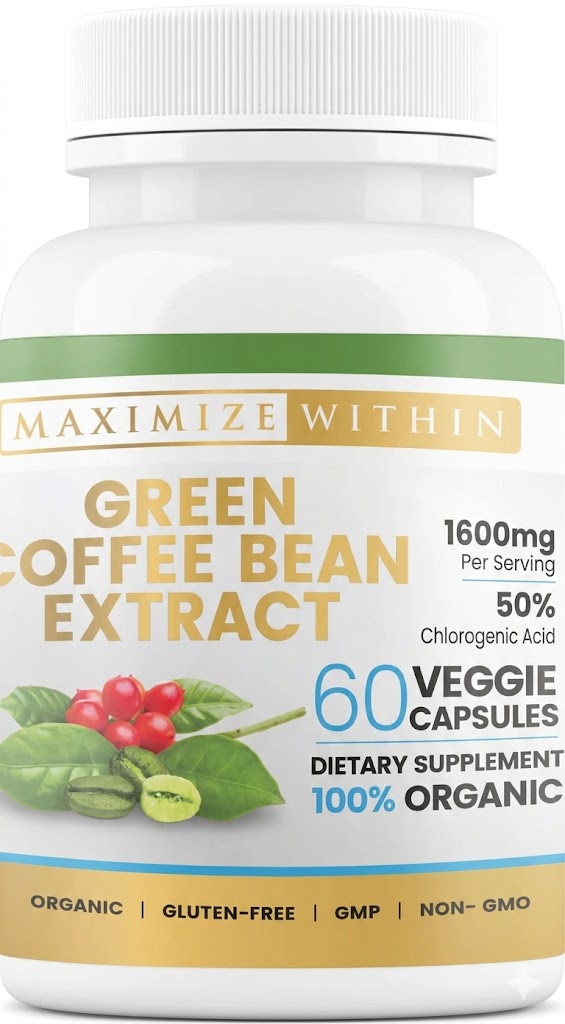
That means choosing meals that steady energy, improve fullness, and are easier on digestion. If digestive symptoms are part of the picture, this guide on how to support gut function can help: https://maximumhealthproducts.com/blogs/nutrition/how-to-improve-digestion-naturally-at-home
Key takeaway: Individuals often do better with a calming food pattern than with a punishment-based diet.
A simple place to start is your cooking fat. Extra virgin olive oil is a staple in anti-inflammatory eating, and this overview of olive oil's anti-inflammatory benefits gives useful background on why it shows up so often in practical meal plans.
The Core Principles of Anti-Inflammatory Eating
The strongest model for anti-inflammatory eating is the Mediterranean diet. According to a University of Wisconsin handout, it emphasizes an omega-6 to omega-3 ratio of 2-3:1, compared with the 14:1 ratio common in standard U.S. and European diets, and studies cited there associate it with a 17-34% risk reduction for head and neck cancers depending on adherence (https://www.fammed.wisc.edu/files/webfm-uploads/documents/outreach/im/handout_ai_diet_patient.pdf).
That does not mean you need to eat “Mediterranean” in a rigid way. It means the pattern matters. The winning pattern is consistent: plants, fiber, healthy fats, seafood, legumes, whole grains, and less processed food.
The rules that matter most
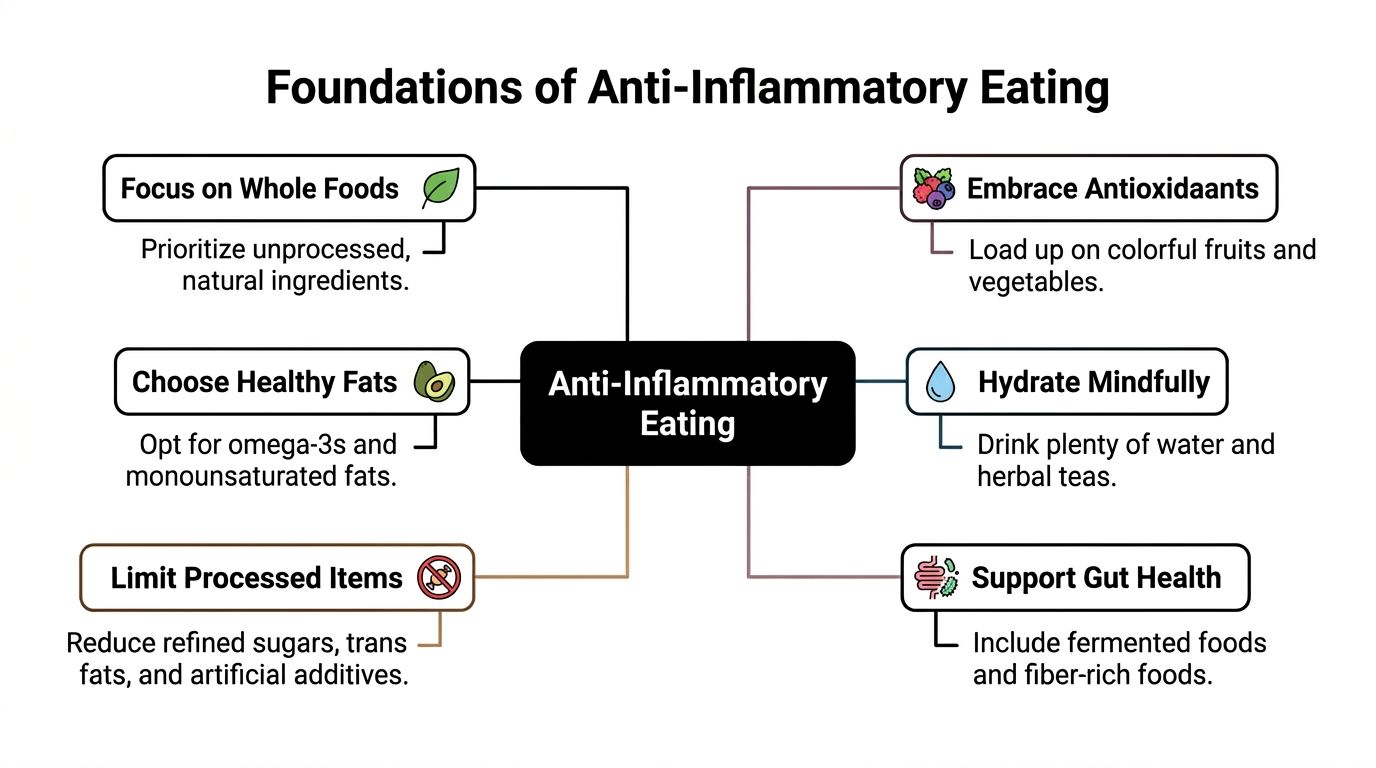
A practical anti inflammatory diet meal plan usually follows these principles:
- Build from whole foods: Start with foods that still look like food. Vegetables, fruit, beans, fish, oats, yogurt, eggs, nuts, and grains are easier foundations than packaged “health” snacks.
- Choose fats on purpose: Olive oil, nuts, seeds, avocado, and fatty fish support the overall pattern far better than heavily refined fried foods.
- Eat more color: Different colors usually mean different plant compounds. A plate with greens, orange vegetables, berries, tomatoes, herbs, and beans gives broader coverage than repeating the same few foods.
- Use protein to steady meals: Fish, beans, lentils, eggs, yogurt, tofu, and moderate amounts of poultry help meals feel complete.
- Limit what drives excess: Processed meats, sugary drinks, heavily refined snacks, and frequent takeout tend to crowd out better choices.
Anti-Inflammatory Food Guide
| Foods to Embrace | Foods to Limit or Avoid |
|---|---|
| Leafy greens, broccoli, carrots, tomatoes | Processed meats |
| Berries, oranges, apples | Sugary drinks |
| Salmon, sardines, tuna | Fried fast food |
| Beans, lentils, chickpeas | Refined snack foods |
| Oats, quinoa, brown rice, whole grains | Highly processed baked goods |
| Olive oil, nuts, seeds, avocado | Excess red meat |
| Plain yogurt, kefir, fermented foods if tolerated | Foods with long additive-heavy ingredient lists |
What works better than a perfect food list
People often ask for a “yes and no” list, but that misses the point. In real life, the better question is whether your usual pattern is moving toward a steadier, less processed, more plant-rich way of eating.
If you need meal inspiration that fits this style, this collection of Mediterranean Diet foods and recipes is useful for seeing how these principles look on an actual plate.
Practical rule: If a meal has a vegetable, a quality protein, a fiber-rich carbohydrate, and a healthy fat, you are usually on the right track.
Your 7-Day Anti-Inflammatory Meal Plan with Recipes
This anti inflammatory diet meal plan is built for busy weeks. Meals repeat ingredients on purpose, but the flavors change enough that the week does not feel repetitive.
Day 1
- Breakfast: Warm oats with berries, walnuts, cinnamon, and a spoonful of ground flax.
- Lunch: Quinoa bowl with chickpeas, cucumber, tomato, parsley, olive oil, and lemon.
- Dinner: Lemon-herb salmon with roasted asparagus and sweet potato.
- Snack ideas: Apple with almond butter, plain yogurt with berries.
Day 2
- Breakfast: Greek yogurt bowl with chopped pear, pumpkin seeds, and a sprinkle of cinnamon.
- Lunch: Leftover salmon flaked over greens with quinoa and olive oil dressing.
- Dinner: One-pan chicken, broccoli, red onion, and carrots roasted with garlic and herbs.
- Snack ideas: Hummus with cucumber, a handful of walnuts.
Day 3
- Breakfast: Smoothie with spinach, frozen berries, chia seeds, and unsweetened milk of choice.
- Lunch: Lentil soup with carrots, celery, onion, and a side salad.
- Dinner: Brown rice bowl with sautéed shrimp, zucchini, bell peppers, and avocado.
- Snack ideas: Orange slices, roasted chickpeas.
Day 4
- Breakfast: Avocado toast on whole-grain bread with a boiled egg and tomato.
- Lunch: Tuna and white bean salad with parsley, olive oil, lemon, and crunchy greens.
- Dinner: Turkey meatballs in tomato sauce over roasted spaghetti squash or a whole grain.
- Snack ideas: Plain yogurt, berries, almonds.
Day 5
- Breakfast: Overnight oats with chia, berries, and chopped walnuts.
- Lunch: Leftover turkey meatballs with mixed greens and roasted vegetables.
- Dinner: Baked cod with quinoa, steamed green beans, and olive oil.
- Snack ideas: Carrots and hummus, apple slices.
Day 6
- Breakfast: Vegetable scramble with spinach, mushrooms, and herbs.
- Lunch: Chickpea wrap with tahini, shredded carrots, cucumber, and greens.
- Dinner: Sheet pan tofu or chicken with Brussels sprouts and sweet potato.
- Snack ideas: Pear with nuts, yogurt with cinnamon.
Day 7
- Breakfast: Smoothie bowl with berries, spinach, and seeds.
- Lunch: Grain bowl using leftovers from the week with olive oil and lemon dressing.
- Dinner: Family-style salmon or bean patties, roasted vegetables, and brown rice.
- Snack ideas: Fresh fruit, a small handful of trail mix.
Simple recipe templates you can reuse
You do not need seven brand-new recipes every week. Repeating templates makes planning easier.
Try rotating these:
- Bowl meals: Grain + protein + vegetables + olive oil based dressing.
- Sheet pan dinners: Fish or chicken + two vegetables + seasoning.
- Soup and salad pairs: Lentil or vegetable soup with a protein-topped salad.
- Breakfast repeats: Oats, yogurt bowls, eggs, or smoothies.
Tip: If breakfast is your weak spot, repeat the same two options all week. Variety matters less than follow-through.
How to make the plan work with your appetite
This sample week is a structure, not a script. Some people need larger lunches. Others do better with a substantial breakfast and lighter dinner.
Adjust based on what helps you feel steady:
- If afternoons are rough: Increase protein and fiber at lunch.
- If nights are snack-heavy: Make dinner larger and more balanced.
- If mornings are rushed: Prep overnight oats or smoothie packs.
- If digestion is sensitive: Use cooked vegetables, soups, softer grains, mashed beans, and simple seasonings.
The biggest mistake I see is making meals too small and too virtuous. A salad with almost no protein and fat does not feel anti-inflammatory when it leaves you hunting for crackers an hour later.
A realistic repeat system
To keep this anti inflammatory diet meal plan manageable, choose:
- Two breakfasts
- Two lunches
- Three dinners
- Three snack combinations
That gives enough variety without turning the week into a full-time cooking project. If you want a broader system for repeatable meals that also supports body composition goals, this guide is a helpful companion: https://maximumhealthproducts.com/blogs/nutrition/weight-loss-meal-planning
From Plan to Plate Shopping Lists and Meal Prep
A meal plan only works if the food is in the house and ready when you need it. Structure matters here. Harvard’s Nutrition Source notes that structured meal prep plans can double adherence rates compared to unstructured dieting, and batch-cooking with pre-portioned meals can reduce inflammatory markers such as IL-6 by 35% within six weeks (https://nutritionsource.hsph.harvard.edu/healthy-weight/diet-reviews/anti-inflammatory-diet/).
Your master shopping list
Use one weekly list instead of deciding meal by meal.
Produce
- Leafy greens: Spinach, kale, mixed greens
- Colorful vegetables: Broccoli, carrots, bell peppers, zucchini, green beans, sweet potatoes
- Salad basics: Cucumber, tomatoes, red onion, lemons, garlic
- Fruit: Berries, apples, pears, oranges
Proteins
- Fish: Salmon, cod, tuna, or sardines
- Poultry or alternatives: Chicken, tofu
- Flexible staples: Eggs, plain Greek yogurt, chickpeas, lentils, beans
Carbohydrates and fiber
- Whole grains: Oats, quinoa, brown rice, whole-grain bread or wraps
- Add-ins: Chia seeds, flaxseed
Healthy fats and flavor
- Fats: Olive oil, avocado, walnuts, almonds, pumpkin seeds
- Seasonings: Cinnamon, turmeric, ginger, dried herbs, black pepper
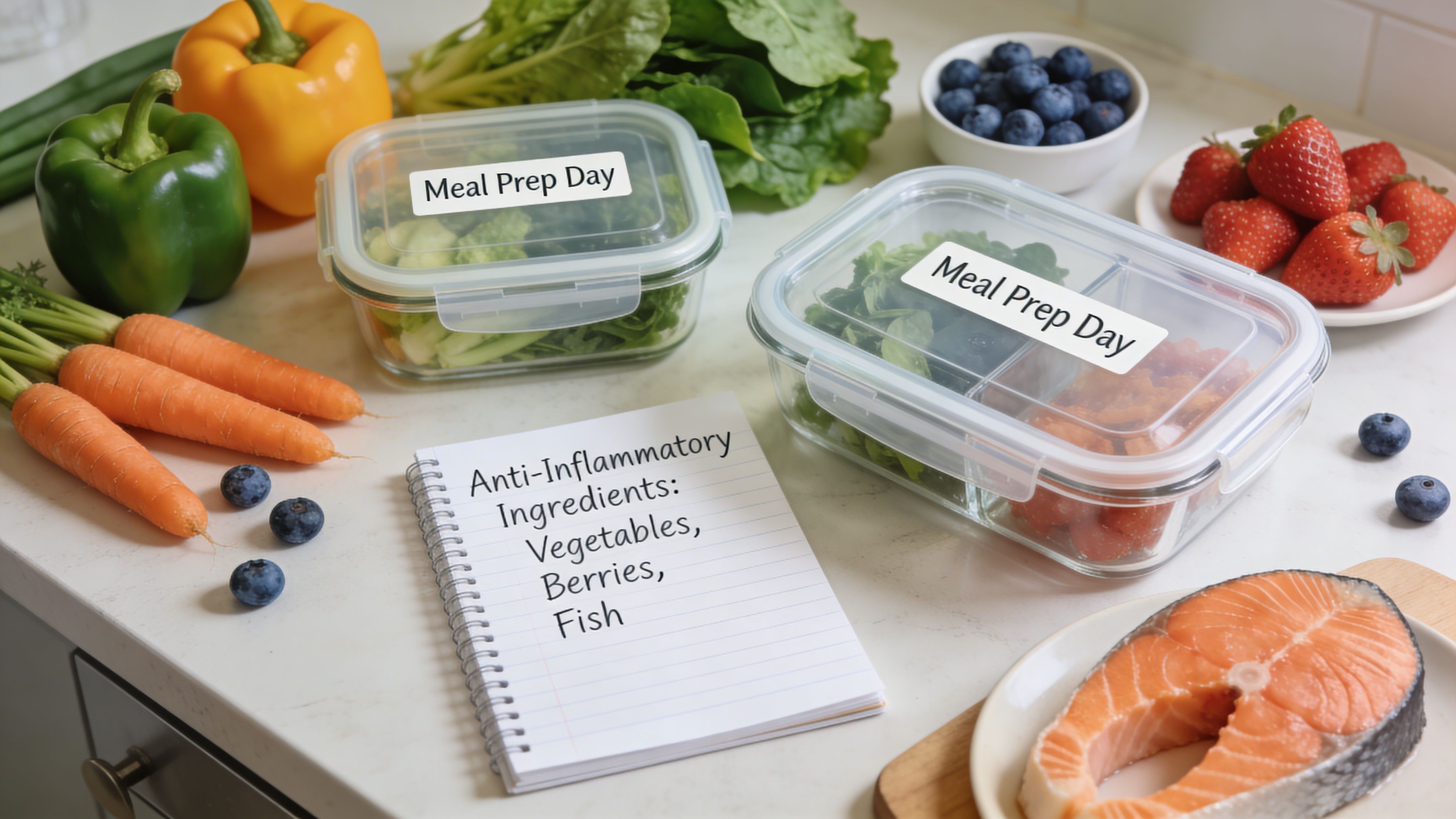
The prep session that saves the week
Many do not need an elaborate prep day. They need one focused session that removes friction.
Step 1 Cook one grain, such as quinoa or brown rice.
Step 2 Roast a tray of vegetables. Sweet potatoes, broccoli, onions, carrots, and zucchini all hold up well.
Step 3 Prepare two proteins. For example, bake salmon and cook lentils, or roast chicken and boil eggs.
Step 4 Wash salad greens and chop raw vegetables for snacks and bowls.
Step 5 Mix one dressing. Olive oil, lemon, herbs, and a little mustard works with almost everything.
Prep standard: Store food in visible containers at eye level. People eat what they can see and grab fast.
A short visual walkthrough can help if you like seeing the process in action.
What people usually get wrong
Meal prep fails when it becomes too ambitious. Cooking a fresh, complicated dinner every night sounds ideal. It usually collapses by midweek.
A better approach is to prep components, not finished “diet meals” only. That way you can turn the same ingredients into bowls, wraps, salads, soups, or plates based on what sounds good.
Common fixes:
- If leftovers bore you: Change the sauce or herbs.
- If produce goes bad: Buy some frozen vegetables and berries as backup.
- If evenings are chaotic: Make lunch and dinner partially interchangeable.
- If portions feel off: Plate meals once, then adjust next week based on hunger patterns.
Adapting Your Plan for Family Budget and Supplements
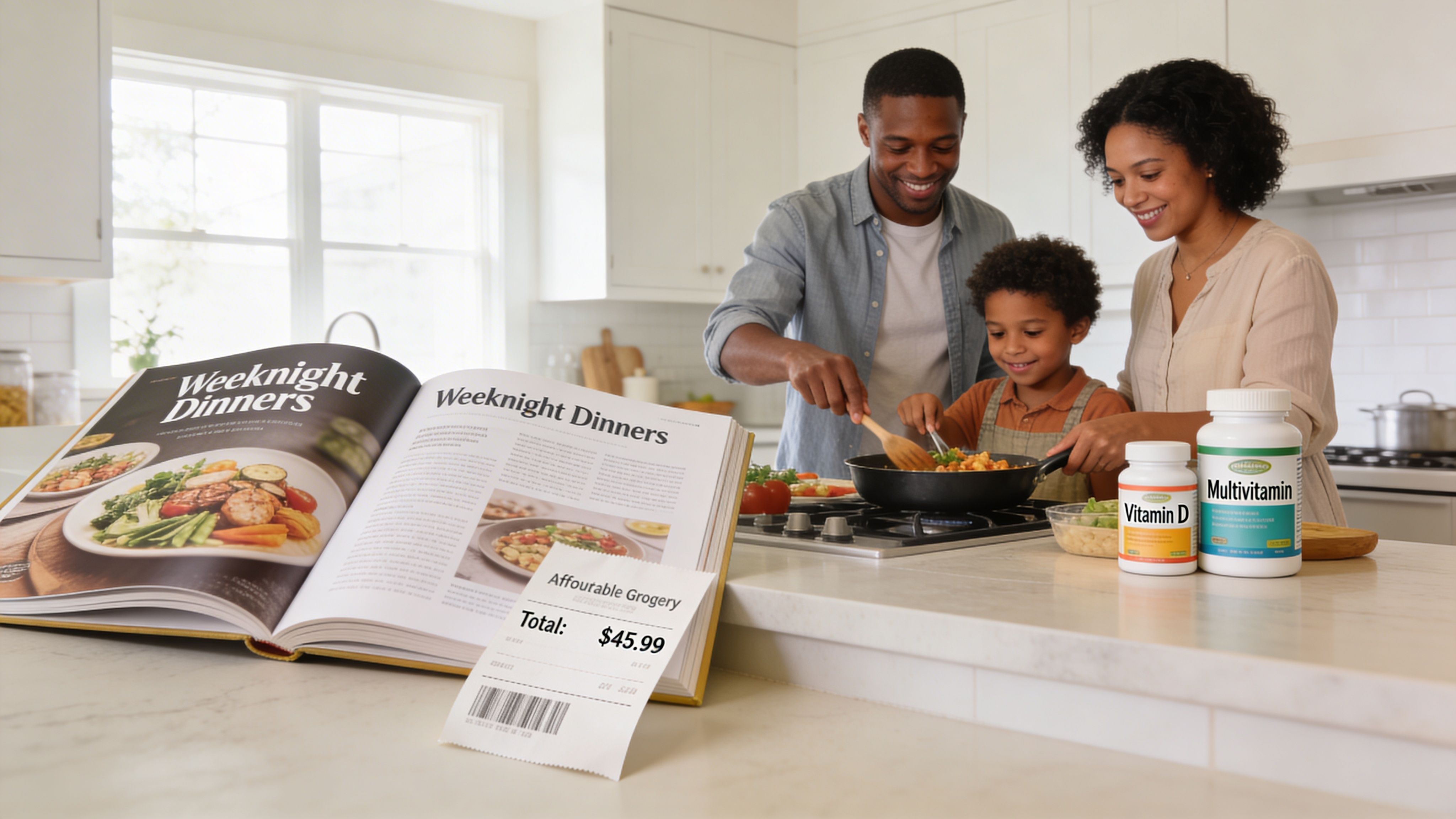
Most anti-inflammatory advice breaks down in two places. One is family life. The other is cost. For these reasons, a good anti inflammatory diet meal plan needs flexibility. It should feed more than one person without making you cook separate dinners, and it should work even when your grocery budget is tight.
How to feed a family without making three meals
The easiest family strategy is the build-your-own format. It gives choice without creating extra work.
Try these:
- Taco bowls: Brown rice, beans, shredded chicken or fish, avocado, lettuce, salsa, and roasted vegetables.
- Sheet pan dinners: One protein, two vegetables, and a grain on the side.
- Pasta night with upgrades: Whole grain pasta, olive oil or tomato-based sauce, white beans or fish, plus a salad.
- Snack boards: Fruit, cut vegetables, hummus, yogurt dip, hard-boiled eggs, nuts if appropriate for your household.
Kids and selective eaters often do better when foods are familiar and separated. The pattern can still be anti-inflammatory even if everyone assembles their plate differently.
Budget swaps that still work
A 2025 Fay Nutrition article notes that searches for “anti-inflammatory diet budget” are up 45% year over year, and it highlights affordable swaps like canned salmon, eggs, and frozen berries that can support anti-inflammatory meals for under $10 per person per day (https://www.faynutrition.com/post/21-day-anti-inflammatory-diet-meal-plans-3-weeks).
That matters because many people assume this style of eating requires specialty ingredients. It does not.
Smart lower-cost options include:
- Canned fish: Salmon or tuna for omega-3-rich lunches
- Eggs: Fast, versatile, budget-friendly protein
- Frozen berries and vegetables: Often more practical than fresh for busy homes
- Beans and lentils: Low-cost staples that add fiber and protein
- Rotisserie chicken: Useful when time is the bigger constraint than cooking skill
Budget rule: Spend money on your staples, not on trendy packaged “wellness” foods.
Where supplements fit
Supplements can help, but they should support the plan, not replace meals. That is especially true when appetite is inconsistent, produce intake is low, or mornings are rushed.
Clean-label greens powders, protein powders, teas, or functional beverages can be useful in three situations:
- Busy mornings when a smoothie is realistic and a full breakfast is not.
- Travel or workdays when regular meals are less predictable.
- Low appetite or picky eating when filling a gap is better than skipping nourishment.
If you are curious about greens powders specifically, this guide breaks down how they fit into a broader routine: https://maximumhealthproducts.com/blogs/nutrition/organic-super-greens
The best mindset is simple. Food first. Supplements second. Use them to make consistency easier, not to cover for a pattern built mostly on convenience foods.
Frequently Asked Questions and Your Next Steps
How long does it take to feel results
Some people notice steadier energy, less bloating, or fewer afternoon crashes fairly quickly. For others, progress is slower and more subtle. The important part is consistency. A calmer eating pattern works through repetition, not through one perfect week.
Is coffee allowed
Yes, coffee can fit. The main question is what goes with it. Coffee plus a pastry on an empty stomach feels very different from coffee with a balanced breakfast. If coffee is part of your routine, pair it with protein and fiber so it supports your day instead of setting up a crash.
Will I lose weight
Maybe, but that is not the only useful marker. Many people first notice better appetite control, fewer cravings, more stable energy, and improved digestion. Weight change often follows better habits, but it should not be the only reason to start.
What if I have an off day
Then you keep going at the next meal. One takeout dinner or one snack-heavy afternoon does not undo the plan. People get into trouble when they turn one off day into a week of giving up.
Best next step: Pick one breakfast, one lunch, and two dinners from this article. Shop for those first. Small consistency beats a dramatic reset.
A solid anti inflammatory diet meal plan is not built on intensity. It is built on meals you can repeat, ingredients you can afford, and routines your household can live with.
If you want clean-label support for your routine, explore Maximum Health Products. Their collection includes teas, protein, greens, coffee, and wellness supplements designed to complement practical nutrition habits, not replace them.

