


By 3 p.m., a lot of people start negotiating with their own body. Another coffee. Something sweet. Maybe a promise to “get back on track” after this busy week. Then cold and flu season rolls around, and the same person who feels drained also feels like they catch every little thing.
That pattern often gets blamed on stress alone. Stress matters, but it’s not the whole story. Two nutrients get overlooked again and again in that everyday mix of low energy, inconsistent resilience, and feeling slightly off: vitamin d and c.
They are often known separately. Vitamin D gets filed under bones and sunshine. Vitamin C gets filed under oranges and immune support. Useful, but incomplete. These vitamins don’t just work in parallel. They can work together, and that partnership matters if your goals include steadier energy, stronger immune support, better recovery, and a more reliable daily routine.
Think of them like a manager and a shield. One helps direct important body processes. The other protects the cells doing the work. That combination is practical, not just biochemical.
If your days feel stretched thin, your wellness routine doesn’t need to be more complicated. It usually needs to be more foundational. That’s one reason people who are trying to support metabolism often start by looking at basics before chasing exotic solutions. If that’s your focus, this guide on how to boost metabolism may help connect the bigger picture: https://maximumhealthproducts.com/blogs/nutrition/how-to-boost-metabolism
The Unsung Partnership for Your Health and Energy
A common mistake is treating vitamins like isolated tools. Take one for bones. Another for immunity. A third for stress. Real physiology doesn’t work that way.
Your immune system, muscles, mood, connective tissue, and recovery systems all overlap. When one basic nutrient is low, the effects can show up somewhere that seems unrelated. You feel tired, not “vitamin deficient.” You notice more soreness, not “suboptimal intake.” You get run-down, not “poor nutrient synergy.”
That’s where vitamin d and c become more interesting.
Vitamin D helps regulate major functions tied to immunity and whole-body balance. Vitamin C helps protect cells and supports repair. Together, they form a simple base layer for wellness. Not a magic trick. More like good wiring and good insulation in the same house.
Big idea: If vitamin D helps your body send the right signals, vitamin C helps protect the systems receiving those signals.
That matters in ordinary life.
If you’re a busy professional, the goal might be fewer “crash” days. If you exercise regularly, the goal might be better recovery. If you’re trying to manage weight, the goal might be supporting metabolism and staying consistent enough to make healthy habits stick. In all of those cases, foundational nutrients matter because they affect how well your body handles demand.
This is also why a lot of people miss the answer. They keep asking, “Should I take vitamin D or vitamin C?” The better question is often, “How do I use them together intelligently?”
Featured Product
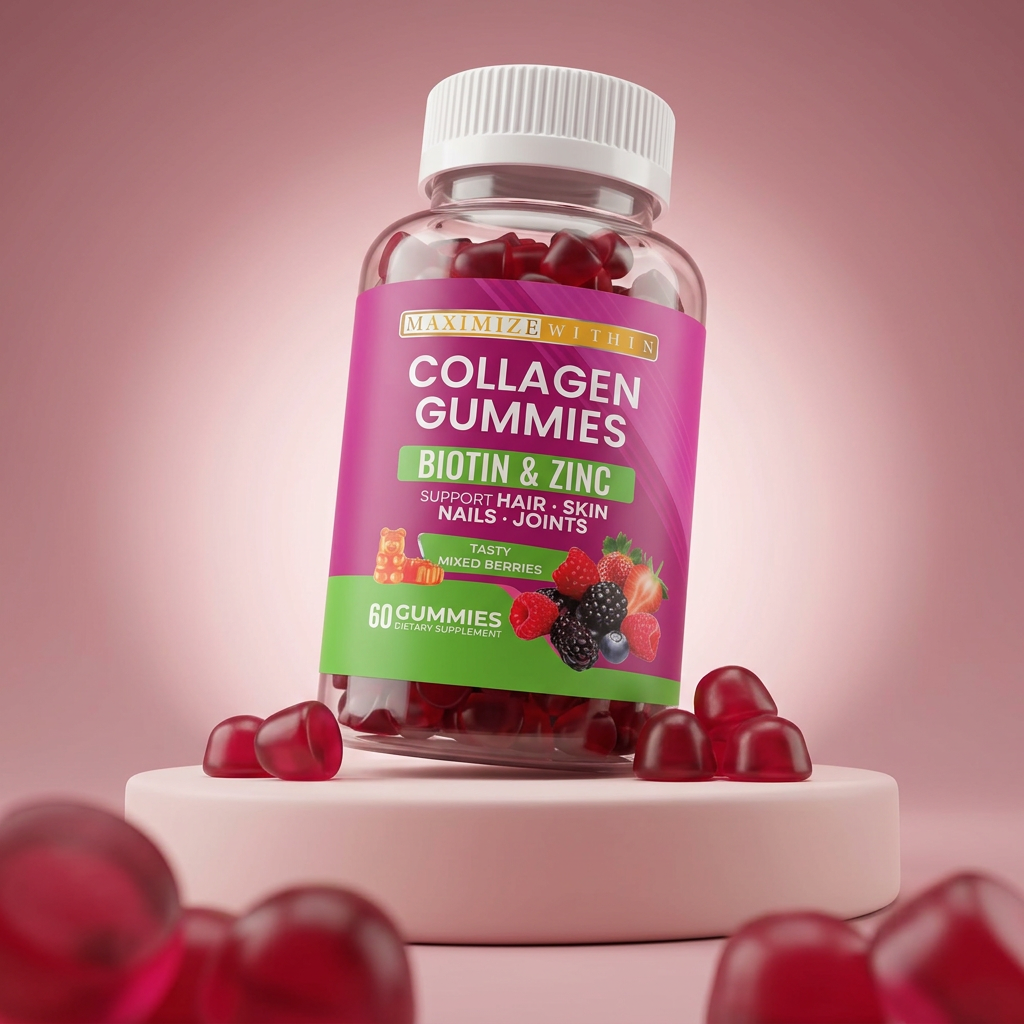
Collagen Gummies, Mixed Berries Flavor – Supports Hair, Skin, Nails, Joints
Support your beauty routine from within with delicious mixed berry Vegan Collagen Booster Gummies.
Shop Now →Meet the Vitamins The Sunshine and The Protector

Vitamin D as the sunshine switch
Vitamin D is often called the sunshine vitamin because your skin can make it after sun exposure. But that nickname can make it sound smaller than it is.
A better analogy is a master switch. Vitamin D helps regulate processes that influence bone health and immune function. It’s less like a one-purpose nutrient and more like a signal that helps the body coordinate important jobs.
A lot of confusion starts with testing. People hear “vitamin D test” and assume any D-related marker tells the whole story. It doesn’t. Vitamin D status is most accurately assessed by measuring serum 25-hydroxyvitamin D [25(OH)D], the main circulating form with a half-life of 2 to 3 weeks, because it reflects both sun exposure and intake. Standardized methods such as LC-MS/MS are considered the gold standard for accuracy, which matters because non-standardized testing can misclassify someone as low or sufficient (ADLM vitamin D standardization overview).
That sounds technical, so here’s the plain-English version: if you’re trying to understand your vitamin D status, the right test matters just as much as the result.
Vitamin C as the protector
Vitamin C has a different personality.
It’s water-soluble, which means your body doesn’t store it the way it handles fat-soluble nutrients like vitamin D. You need regular intake. Functionally, vitamin C acts like a cellular bodyguard.
It helps protect cells from oxidative stress. It also supports collagen production, which matters for skin, connective tissue, and repair. And when your immune system is active, vitamin C helps support the cells doing that work.
If vitamin D is giving instructions, vitamin C helps protect the workers and maintain the building they’re working in.
That’s why people often notice vitamin C during times of stress, travel, hard training, or seasonal illness. Those are all times when the body is using more of its protective resources.
Why they get confused
Many readers mix up three separate ideas:
- What a vitamin does
- Where you get it
- How you know if you’re low
Vitamin D is strongly associated with sunlight, but food and supplements still matter. Vitamin C is strongly associated with fruit, but regular intake matters more than a one-time healthy meal.
Another point of confusion is that “immune support” sounds vague. In practice, these vitamins support different parts of the same larger system. One doesn’t replace the other.
Vitamin D and vitamin C overlap in outcome, but not in job description.
Vitamin D vs. Vitamin C at a Glance
| Attribute | Vitamin D (The Sunshine Vitamin) | Vitamin C (The Protector) |
|---|---|---|
| Core role | Helps regulate bone and immune functions | Helps protect cells and supports repair |
| How people think of it | Sunshine, bones, winter wellness | Citrus, immunity, recovery |
| Solubility | Fat-soluble | Water-soluble |
| Main source pattern | Sun exposure, diet, supplements | Diet and supplements |
| Best-known body task | Supporting calcium-related bone health | Supporting antioxidant defense and collagen formation |
| Testing | Status is assessed with serum 25(OH)D | Usually judged more by intake pattern and diet context |
| Practical takeaway | Think signal and regulation | Think protection and maintenance |
A simple food-first view
If you’re aiming to eat with these vitamins in mind, think in pairs.
For vitamin D, people often rely on sunlight, fortified foods, and supplements when needed. For vitamin C, produce tends to do the heavy lifting.
A simple plate might include:
- For vitamin C: Citrus, berries, bell peppers, broccoli, or similar produce
- For vitamin D support: Foods or supplements used intentionally when sunlight and diet don’t cover the gap
- For absorption support: A meal with some fat when taking vitamin D, since fat-soluble nutrients absorb better that way
That’s the base. The more interesting part is what happens when D and C show up together.
Better Together The Science of Vitamin D and C Synergy
The strongest reason to think about vitamin d and c as a pair is simple. Their jobs are different, but complementary.
Vitamin D helps shape immune signaling. Vitamin C helps protect cells involved in immune work and tissue repair. One acts more like coordination. The other acts more like defense and maintenance.
A useful way to picture it
Think of your immune system as a response team.
Vitamin D is the planner. It helps the team know how to respond. Vitamin C is the field support. It helps protect the team from damage while they’re doing the job.
That’s why taking them together makes practical sense. You’re not doubling up on the same function. You’re covering two sides of the same process.

The data that makes this more than theory
This synergy isn’t just a neat idea. There’s a specific finding that stands out.
Supplemental vitamin C intake significantly enhances vitamin D efficacy. People taking 1,000 mg/day or more of vitamin C reached higher vitamin D levels for a given dose. Put another way, it would take 94% more supplemental vitamin D to reach 40 ng/ml (100 nmol/L) if a person is not also taking high-dose vitamin C (GrassrootsHealth analysis on vitamin C and vitamin D dose response).
That’s the kind of result that changes how you think about supplements.
Instead of asking only, “How much vitamin D should I take?” you also ask, “Am I creating the conditions for vitamin D to work efficiently?”
Why that matters in real life
Individuals seek outcomes, not nutrient trivia.
They want to feel less depleted. They want to support immunity during packed weeks, travel, family stress, hard training, or seasonal shifts. If vitamin C helps your body get more out of vitamin D support, then pairing them can be a smarter strategy than chasing a bigger dose of one nutrient in isolation.
This also helps explain why some people feel disappointed by random supplement habits.
They take vitamin D sporadically. They use vitamin C only when they already feel sick. They don’t build a steady pattern. Then they assume “supplements don’t work for me.”
Sometimes the issue isn’t the idea of supplementation. It’s the lack of coordination.
Synergy doesn't mean unlimited dosing
Better together doesn’t mean more is always better.
It means your body often responds better to thoughtful combinations than to brute-force dosing. That’s especially true with vitamins that have different absorption patterns and different biological roles.
To put it practically:
- Vitamin D needs the right intake pattern and absorption conditions
- Vitamin C needs consistency because it’s used regularly
- Together they can support a more efficient routine
Practical rule: Don’t treat vitamin d and c like emergency-only nutrients. They work better as part of a routine than as a last-minute reaction.
Where people oversimplify
Some online advice turns synergy into hype. That’s not helpful.
Vitamin D and C won’t replace sleep, protein, hydration, movement, or a balanced diet. They won’t fix every cause of fatigue. They won’t give you instant energy like caffeine does.
What they can do is support the systems behind resilience. And when your baseline is stronger, your day often feels easier to manage.
That’s the true value of synergy. Not drama. Better support with less guesswork.
Are You Getting Enough Deficiency Risks and Symptoms
A lot of deficiencies don’t feel dramatic at first. They feel ordinary.
You’re more tired than you used to be. Recovery seems slower. Your mood dips more easily. You keep telling yourself you just need a better schedule. Sometimes that’s true. Sometimes your body is also missing basic support.
Vitamin D deficiency is common enough to take seriously
In the United States, vitamin D deficiency affects about 1 in 4 people, and 25% have levels considered too low for bone and overall health. The prevalence is higher in some groups, including older adults and non-Hispanic Black populations (NIH Office of Dietary Supplements vitamin D fact sheet).
That number matters because it tells you this isn’t a niche issue. It’s common.

What low levels can feel like
Symptoms aren’t a diagnosis, but they can be clues.
With low vitamin D, people often describe a general sense of being run-down. Bone health is the classic concern, but day to day, the complaints are usually broader and less specific.
Possible signs people notice include:
- Persistent fatigue: You sleep, but don’t feel restored
- Low resilience: You feel more wiped out by routine stress
- Frequent dips in wellness: You seem to catch things more easily
- Low mood or flat motivation: Not always, but often enough to notice
Vitamin C shortfalls can be easy to miss too, especially when diet quality slips during busy periods. If produce intake drops for long stretches, the effects can show up as weaker day-to-day recovery.
Common warning signs may include:
- Slow repair: Scrapes, soreness, or training wear seem to linger
- Tiredness that pairs with a poor diet pattern: Especially when meals are convenience-heavy
- Rougher skin or gum sensitivity: Tissue support can be one of the earlier clues
Who should pay closer attention
Risk isn’t distributed evenly. Some people have a much easier time falling short.
You may want to look more closely if any of these sound familiar:
- You get little sun exposure: Indoor work, long winters, or covering up regularly can all reduce vitamin D production
- You’re older: Age is associated with lower vitamin D levels
- You have a limited diet: Restrictive eating can lower both vitamin D and C intake
- Your produce intake is inconsistent: Vitamin C depends on regular replenishment
- You’re trying to “eat clean” but under-eating overall: Low total intake can reduce nutrient intake too
If you want a straightforward overview of contributing factors, this guide on what causes low vitamin D levels is a useful companion because it lays out the common lifestyle reasons people miss the mark.
Don’t wait for a dramatic symptom. Nutrient gaps often show up as “I just don’t feel like myself.”
The tricky part about self-assessment
Fatigue, low mood, and frequent illness have many possible causes. That’s why self-diagnosing from symptoms alone can be misleading.
But symptoms still matter as pattern recognition. If your routine, diet, sun exposure, and recovery habits all point in the same direction, vitamin status becomes a reasonable part of the conversation with a healthcare professional.
The goal isn’t to panic over every low-energy afternoon. It’s to stop ignoring the basics when the same pattern keeps repeating.
Your Practical Guide to Dosing Sources and Absorption
Good nutrition advice should make daily decisions easier. With vitamin d and c, the key isn’t finding a perfect routine. It’s building a repeatable one.
Start with consistency, not intensity
One of the most useful findings in this area is that frequency of vitamin C and vitamin D supplementation can matter more for immune benefits than dose alone. A study found a positive relationship between how often people took them and their Immune Status Quotient, independent of the dose taken on those days (study summary on supplementation frequency and immune status).
That lines up with how these nutrients behave in practice.
A giant, irregular effort often loses to a smaller, steadier habit. If you only think about these vitamins when you already feel depleted, you’re always playing catch-up.
Know the baseline numbers
The FDA Daily Values listed in the verified data are:
- Vitamin C: 90 mg
- Vitamin D: 20 mcg (800 IU)
Those values are useful as label reference points. They are not a personalized prescription.
Some people need a more individualized plan depending on diet, age, sun exposure, medical context, pregnancy status, or clinician advice. If you like using tools to estimate intake needs before having that conversation, a Vitamin D intake calculator can help you organize your thinking.
Food sources first, then fill the gaps
For vitamin C, food is usually the simplest place to begin.
Vitamin C sources that fit normal life
You don’t need a perfect meal plan. You need repetition.
Easy vitamin C habits include:
- Citrus at breakfast: Orange, grapefruit, or kiwi
- Produce with lunch: Bell peppers, tomatoes, or broccoli
- Recovery-friendly snacks: Berries or fruit paired with protein
- Simple backups: A supplement when travel or work pushes fresh food aside
Because vitamin C is water-soluble, regular intake matters more than occasional bursts.
Vitamin D sources need more planning
Vitamin D tends to be less straightforward.
Sun exposure varies by season, location, clothing, work pattern, and skin tone. Food can help, but many people still rely on supplements for a dependable routine. If you use a supplement, take it with a meal that contains some fat because vitamin D is fat-soluble.
That’s also where a clean-label option can fit. For example, Maximum Health Products offers Max C 1000, a vitamin C supplement providing 1000 mg vitamin C with 100 mg lemon bioflavonoids, which can be one practical way to pair regular vitamin C support with a separate vitamin D routine when food intake is inconsistent.
Timing that makes sense
You don’t need a complicated clock-based protocol.
A simple pattern works for many adults:
- Take vitamin D with a meal that includes some fat.
- Take vitamin C daily in a way your stomach tolerates well.
- Use the same window most days so the habit becomes automatic.
Morning and lunch are common choices because people are less likely to forget. The best timing is the timing you’ll repeat.
Simple reminder: The body usually benefits more from a routine you can keep than from a plan that looks impressive on paper.
Absorption and the bigger routine
Nutrients don’t work in isolation from the rest of your digestion and eating pattern.
If your digestion is frequently off, your overall routine may need attention beyond vitamins alone. Things like meal regularity, fiber, hydration, and food tolerance shape how well a wellness plan works in practice. This guide to digestive support can help if that part of the puzzle keeps showing up for you: https://maximumhealthproducts.com/blogs/maximum-health-blogs/best-supplements-for-digestive-health
A few guardrails
More is not automatically better.
The verified data notes that high doses above 4000 IU/day of vitamin D can carry risks such as hypercalcemia, falls, and bone loss in large trials. That’s a good reason to avoid casual megadosing.
A better approach is to think in layers:
- Layer one: Improve food consistency
- Layer two: Use supplements to cover realistic gaps
- Layer three: Match your routine to your actual life, not an idealized one
- Layer four: Talk with a qualified professional if you’re in a higher-risk group or considering substantial supplementation
This approach is less flashy, but it’s more sustainable.
Tailoring Your Vitamin D and C Strategy for Your Goals
A useful supplement routine should fit your life. The right vitamin d and c strategy for a parent won’t look identical to the right strategy for a lifter, a desk worker, or an older adult.

If your priority is energy and immune support
In this context, the pairing feels most intuitive.
When your days are demanding, you want a body that handles stress better. Vitamin D supports broad regulation. Vitamin C supports protection and repair. Together, they help reinforce the basics behind steadier wellness.
That doesn’t mean either nutrient acts like a stimulant. You won’t swallow them and feel instant electricity. The effect is more foundational. Better support can mean fewer days where small stressors hit like big ones.
A practical routine here is usually simple:
- Keep vitamin C intake regular
- Take vitamin D in a meal-based routine you’ll remember
- Stop treating both as “only when I’m sick” supplements
If your goal is weight management
People often think weight support starts and ends with calories. Calories matter, but consistency depends on how you feel.
If low nutrient status leaves you flat, foggy, or more vulnerable to disrupted routines, your eating plan becomes harder to maintain. That’s why foundational support matters for metabolism-focused goals even when it isn’t the flashy part of the plan.
Vitamin D is often part of the metabolic-health conversation. Vitamin C can support the strain that comes with training, dieting, and day-to-day stress. Together, they make it easier to protect your baseline while you work on bigger habits like meal quality, movement, and sleep.
If you train regularly
Fitness goals reward recovery just as much as effort.
Vitamin C supports collagen-related tissue needs and cellular protection. Vitamin D supports broader physical function and bone-related health. If you’re lifting, running, cycling, or doing high-volume classes, this duo can make sense as part of the recovery layer of your routine.
For active people, the common trap is inconsistency. Training is scheduled. Nutrition support is random.
Try matching your vitamin habit to something that already happens every day:
- Breakfast after training
- A post-lunch supplement organizer
- The same smoothie or meal pattern on workdays
That pairing reduces friction.
You don’t need a more advanced routine first. You need one that survives busy weeks.
If you’re shopping for family wellness
In this context, nuance matters most.
Not everyone needs routine vitamin D testing or broad supplementation. Emerging late-2024 Endocrine Society guidance advises against routine vitamin D testing for most healthy adults, while focusing attention on specific groups such as adults over 75, pregnant women, and individuals with pre-diabetes (PubMed record for the guideline-related source).
That matters for parents because it pushes against the idea that every family member automatically needs the same supplement plan.
Instead, think in questions:
- Is this person in a higher-risk group?
- Is diet reliable?
- Is sun exposure limited?
- Is there a clinician-guided reason for supplementation or testing?
If you’re thinking specifically about children’s nutrition, this resource on https://maximumhealthproducts.com/blogs/nutrition/best-vitamins-for-kids can help frame age-appropriate questions without turning every snack into a medical decision.
If you want a cleaner supplement routine
Some people aren’t looking for more products. They’re looking for fewer variables.
In that case, choose formulas and habits that reduce guesswork. Prioritize products that fit your dietary preferences and routine, and keep the stack small enough that you’ll use it. A clean-label pattern can be especially helpful for adults who are already managing protein intake, digestion, caffeine use, or family meal logistics.
The best routine is often boring in the best way. It’s easy to remember, easy to tolerate, and easy to repeat.
A smart decision filter
Before adding vitamin d and c to your routine, ask yourself:
- What problem am I solving? Low energy, seasonal immune support, inconsistent produce intake, limited sun, or recovery?
- Can food cover part of this? Vitamin C often can. Vitamin D may be harder.
- Will I do this consistently? Daily habits beat ambitious intentions.
- Do I need professional guidance? Especially if you’re pregnant, older, managing pre-diabetes, or considering higher-dose vitamin D.
This keeps the conversation grounded.
Vitamin d and c work well together because the body works as a system. One nutrient helps direct. The other helps protect. When you use them with purpose, that partnership can support the goals people care about most: energy that lasts, resilience under stress, and a routine you can keep.
If you want a simple, clean-label way to build a more consistent wellness routine, explore Maximum Health Products. Their catalog includes vitamins, supplements, protein, and wellness staples designed to support daily energy, metabolism, digestion, and family health without unnecessary fillers.

