


The most popular advice about alpha GPC supplement benefits is also the least reliable: take it, and your focus, memory, motivation, and performance will all improve. The human evidence doesn't support that universal promise. Alpha-GPC has a meaningful clinical signal in people with cognitive impairment, while results in healthy adults remain smaller, mixed, and highly dependent on the task being tested.
There's another reason to be cautious. A large observational cohort identified a dose-responsive association between Alpha-GPC use and long-term stroke risk in older adults, although observational research can't prove that the supplement caused the outcome. A newer study reported a different result in a specific mild cognitive impairment population, so the cardiovascular question remains unsettled rather than settled in favor of either safety or harm.
Why Alpha GPC Supplement Benefits Are Often Overstated
Alpha-GPC is usually marketed as a general-purpose focus booster. That framing collapses very different types of evidence into one promise. A result in an older adult with dementia-related cognitive decline doesn't automatically predict the same result for a healthy professional trying to finish emails or a student preparing for an exam.
The strongest evidence is concentrated in cognitive impairment, not everyday enhancement in healthy people. A 2023 systematic review and meta-analysis found that Alpha-GPC improved Mini-Mental State Examination scores compared with placebo or other medications, with a mean difference of 3.50 points and a confidence interval from 0.36 to 6.63 (systematic review and meta-analysis). The same analysis found an ADAS-Cog advantage when Alpha-GPC was combined with donepezil rather than donepezil plus placebo.
That matters because pooled randomized evidence is more informative than a single enthusiastic trial. It also tells you exactly where the signal appears strongest, in people whose cognitive function is already impaired.
Healthy adults are a different test
Healthy-user evidence is less consistent. A recent randomized trial in healthy young men found that both a high and low dose significantly improved Stroop Total Score and completion time, suggesting an acute executive-function effect during a demanding attention task (randomized trial report). Yet earlier controlled research found no statistically significant benefit for mood, cognition, or physiological performance in healthy subjects, which points to a context-dependent effect rather than a universal nootropic response.
This distinction changes how you should read product claims. Alpha-GPC may help under specific cognitive load, but that isn't the same as reliably improving memory, productivity, or motivation throughout the day.
The useful question isn't “Does Alpha-GPC work?” It's “For whom, under what conditions, and for how long?”
The answer is more encouraging for medically relevant cognitive decline than for healthy adults seeking dramatic enhancement. That doesn't make Alpha-GPC irrelevant to healthy users, but it does make certainty an inappropriate selling point.
Featured Product
Alpha-GPC + Citicoline - Maximize Within
A premium nootropic formula pairing Alpha GPC and Citicoline — two of the most recognized cognitive-support ingredients — thoughtfully blended for adults who want to support a sharp, focused daily routine.
Shop Now →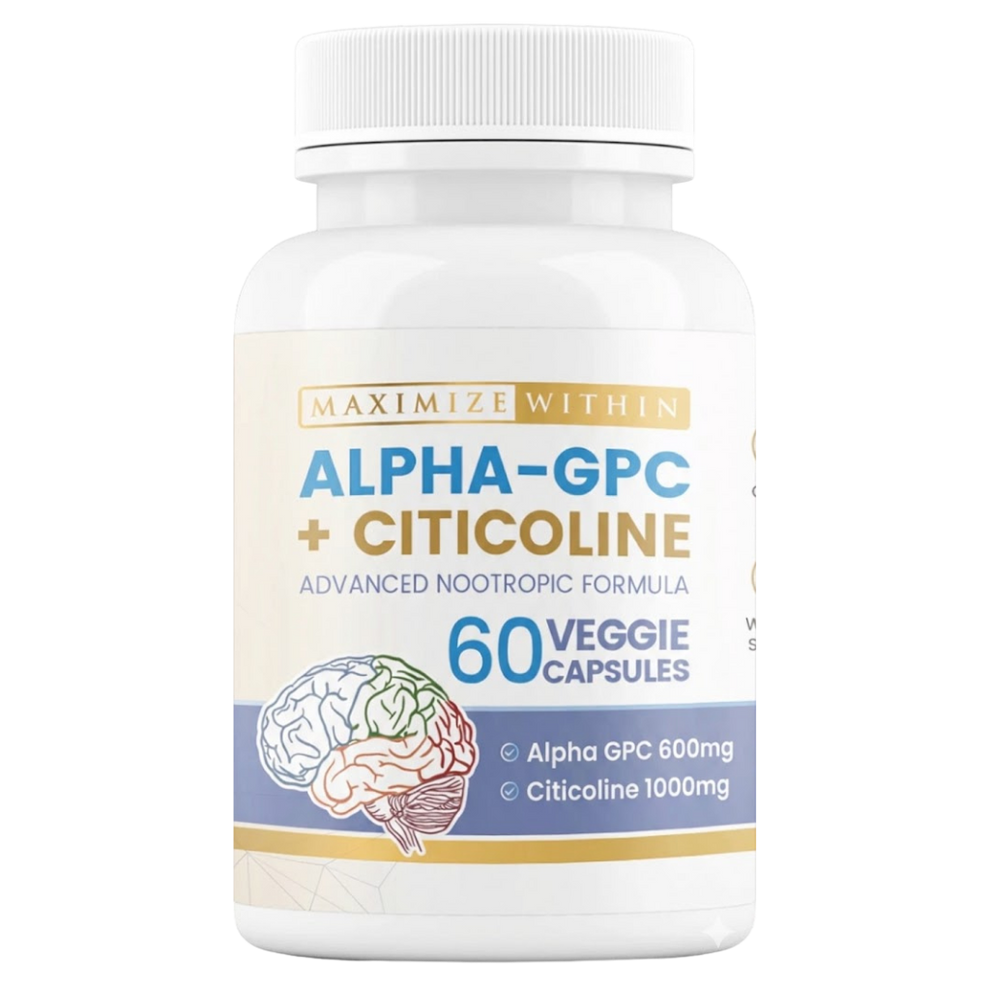
How Alpha GPC Works in the Brain and Body
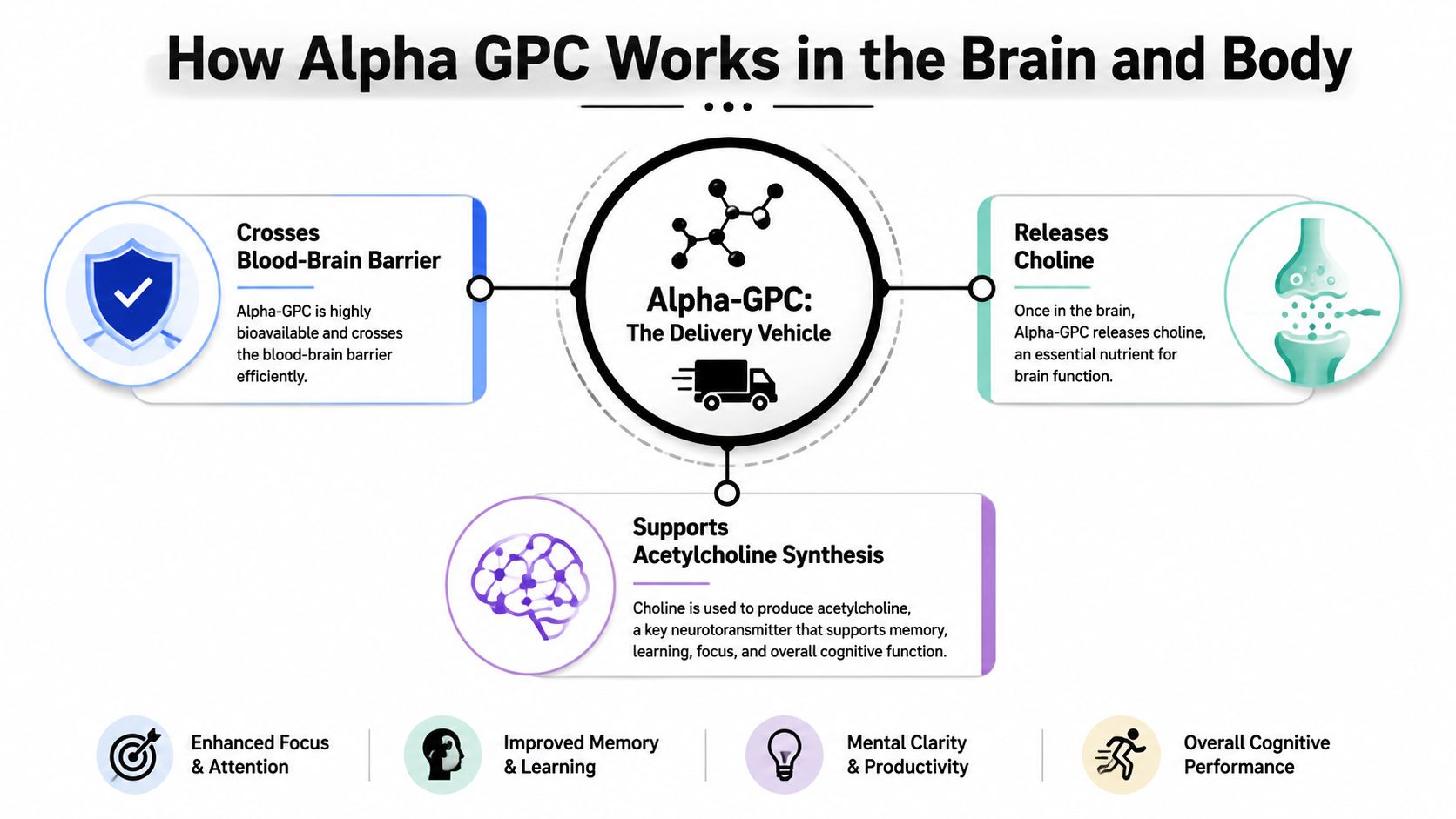
Alpha-GPC, or alpha-glycerylphosphorylcholine, is a high-bioavailability choline donor. Think of choline as raw material and Alpha-GPC as a delivery vehicle that can make that material available to the nervous system efficiently.
Once available, choline supports the synthesis of acetylcholine, a neurotransmitter involved in learning, memory, attention, and muscle activation. Alpha-GPC also participates in phospholipid turnover, which is relevant because phospholipids help form and maintain cell membranes. Those mechanisms create biological plausibility for cognitive and physical effects, but plausibility alone doesn't establish a meaningful benefit in every person.
From choline availability to neurotransmission
The body uses acetylcholine in several settings. In the brain, it contributes to attention and memory processes. At the neuromuscular junction, it helps transmit signals that produce muscle contraction. That dual role explains why Alpha-GPC appears in both nootropic formulas and sports-performance products.
A randomized human trial found that Alpha-GPC acutely raised serum free choline, with increases of 132% and 59% in two dose groups versus placebo, and the 250 mg group showed better countermovement jump outcomes (human trial data). The result supports a clear pharmacological point: Alpha-GPC can change choline availability quickly. It doesn't prove that every acute biochemical change will translate into better real-world performance.
Why the mechanism has limits
A supplement can provide more precursor without overcoming every factor that limits cognition. Sleep, vascular health, medication effects, neurological disease, stress, and the difficulty of the task all influence performance. More acetylcholine availability isn't automatically better, and a healthy person may have less room for improvement than someone with impaired cholinergic function.
For a concise explanation of the ingredient's identity and proposed role, see what Alpha-GPC is and how it functions. The practical interpretation is simple: Alpha-GPC has a credible mechanism, but the size and reliability of its benefit depend on the person and outcome being measured.
Cognitive and Physical Performance Benefits Backed by Research
Alpha-GPC's strongest case is not general enhancement. It is support for cognition in people whose cholinergic systems may already be impaired. In that setting, additional choline availability could address a biological limitation. Healthy adults usually have less room for measurable improvement, so acute test results should not be treated as equivalent clinical evidence.
The clinical pattern also depends on the measurement tool. Scales used in cognitive impairment capture memory, orientation, and broader daily function, whereas a laboratory attention task captures performance under a narrow condition. A change on a clinical scale therefore has a different meaning from a faster response during one demanding task. This distinction helps explain why evidence in impaired populations appears more consistent than evidence in healthy users.
A pooled analysis found benefits across established cognitive outcomes, including MMSE, and reported an ADAS-Cog advantage when Alpha-GPC was added to donepezil. The findings support use as an adjunct studied in selected clinical populations, not as a replacement for dementia treatment or medical supervision (pooled clinical evidence). The evidence is more persuasive for symptom measurement than for claims about preventing disease progression.
A separate randomized trial in mild cognitive impairment reported a greater ADAS-Cog improvement than placebo after 12 weeks, with no serious adverse events reported (trial findings). That result strengthens the clinical signal, but one trial cannot establish how durable the benefit is or which patients respond best.
Healthy users and athletes
Healthy-adult findings remain narrower. One controlled trial reported better Stroop performance with both tested doses, suggesting a possible effect during acute executive demand. Earlier controlled work did not show a universal improvement in mood, cognition, or exercise output, so the ingredient should be viewed as a targeted experiment rather than a dependable daily productivity aid (healthy-adult trial evidence).
For athletes, a possible pre-exercise effect answers a different question from recovery, training adaptation, or long-term health. People comparing Alpha-GPC with evidence-based recovery supplements should define the outcome before choosing a product. Readers evaluating focus-oriented options can also review natural focus supplements, while applying the same standards for population, endpoint, and study design.
The practical conclusion is selective. Clinical impairment provides the clearest rationale. Healthy adults and athletes have weaker, task-specific evidence, and the absence of immediate side effects does not resolve questions about prolonged exposure or cardiovascular safety.
| Population | What the evidence supports | Interpretation |
|---|---|---|
| Cognitive impairment | More consistent changes on established clinical scales | Stronger rationale for supervised adjunct use |
| Healthy adults | Possible improvement during acute executive tasks | Limited, task-specific evidence |
| Athletes | Possible short-term performance relevance | Insufficient evidence for recovery or long-term benefit |
Typical Dosages and How to Use Alpha GPC Effectively
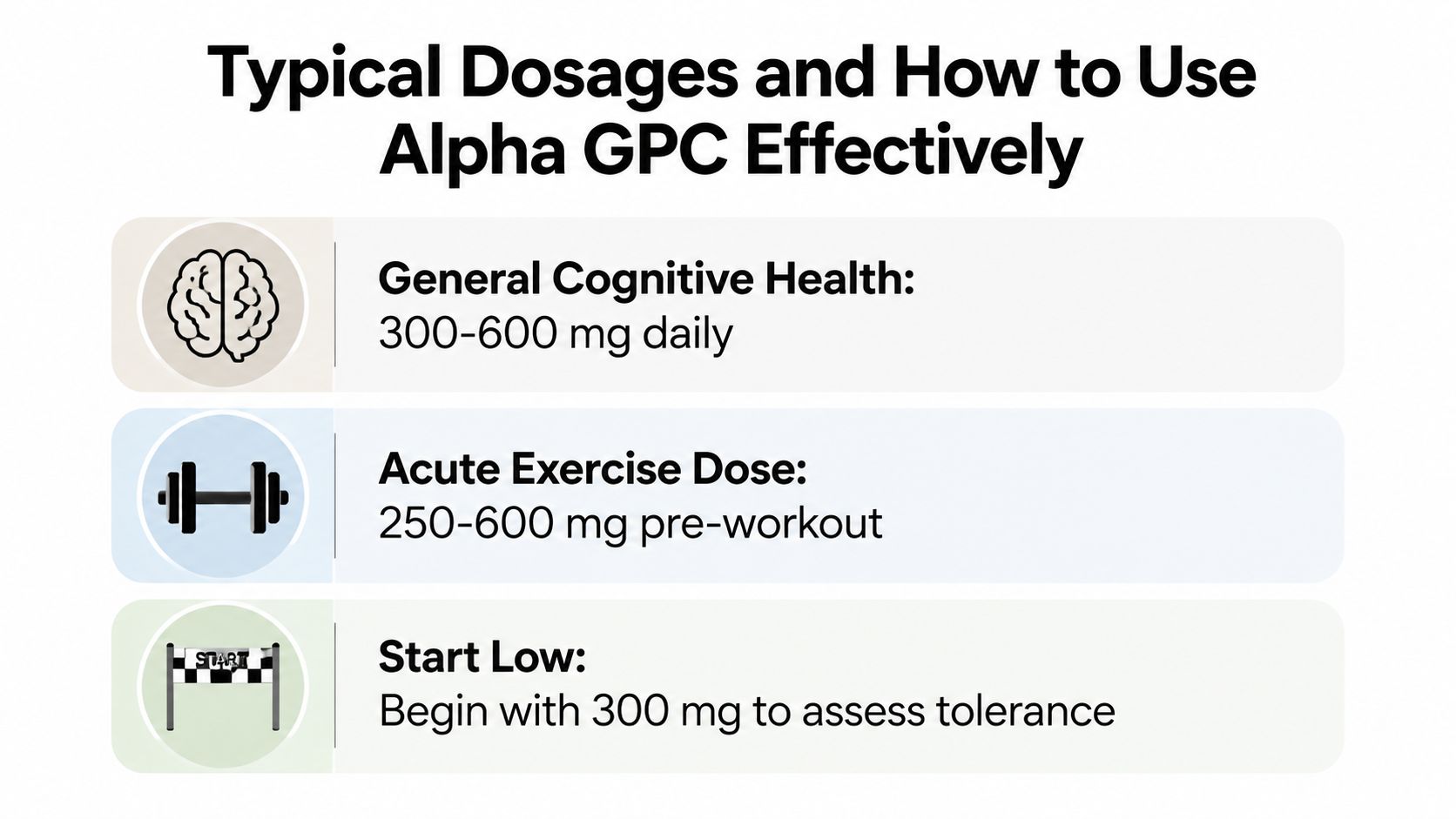
Alpha-GPC does not have one universal “standard dose.” Researchers use different protocols for acute performance, demanding cognitive tasks, and medically supervised cognitive support. The appropriate amount depends on the intended outcome and whether use is occasional or sustained.
Human studies have examined a 250 mg dose in relation to countermovement-jump performance, while clinical research has evaluated daily protocols from 600 mg to 1,200 mg (human study review). These amounts describe study designs, not personal prescriptions. Clinical protocols should not be copied by healthy adults seeking a subjective focus effect.
Acute use versus daily use
A single dose creates a clearer test of tolerance and task-specific response. Someone using Alpha-GPC before exercise or a demanding cognitive task can define the outcome in advance, then assess whether performance or perceived focus changes. This approach also avoids committing to prolonged use before there is a clear reason to continue.
Daily use requires a different standard. Studies involving cognitive impairment generally used sustained protocols under research or clinical conditions, often alongside medical treatment. A healthy person should not automatically adopt those regimens, particularly when the goal is only a subjective sense of concentration.
| Use case | Study-informed approach | Practical interpretation |
|---|---|---|
| Acute cognitive demand | Single-dose research has measured executive-function outcomes (trial evidence) | Evaluate only during a defined task |
| Exercise performance | A 250 mg dose produced a countermovement-jump finding in one trial | Do not assume one exercise result applies to every athlete |
| Cognitive impairment | Daily protocols up to 1,200 mg have appeared in clinical research (systematic review) | Use requires clinician involvement |
Timing can be adjusted to response. Taking Alpha-GPC earlier in the day may be appropriate if it feels activating or interferes with sleep. Avoid combining several choline sources without a defined reason, and do not assume combinations with Citicoline, caffeine, or other nootropics provide added benefit. A clinician or pharmacist can review the complete supplement and medication list before sustained use.
Safety Concerns and Long-Term Cardiovascular Risks
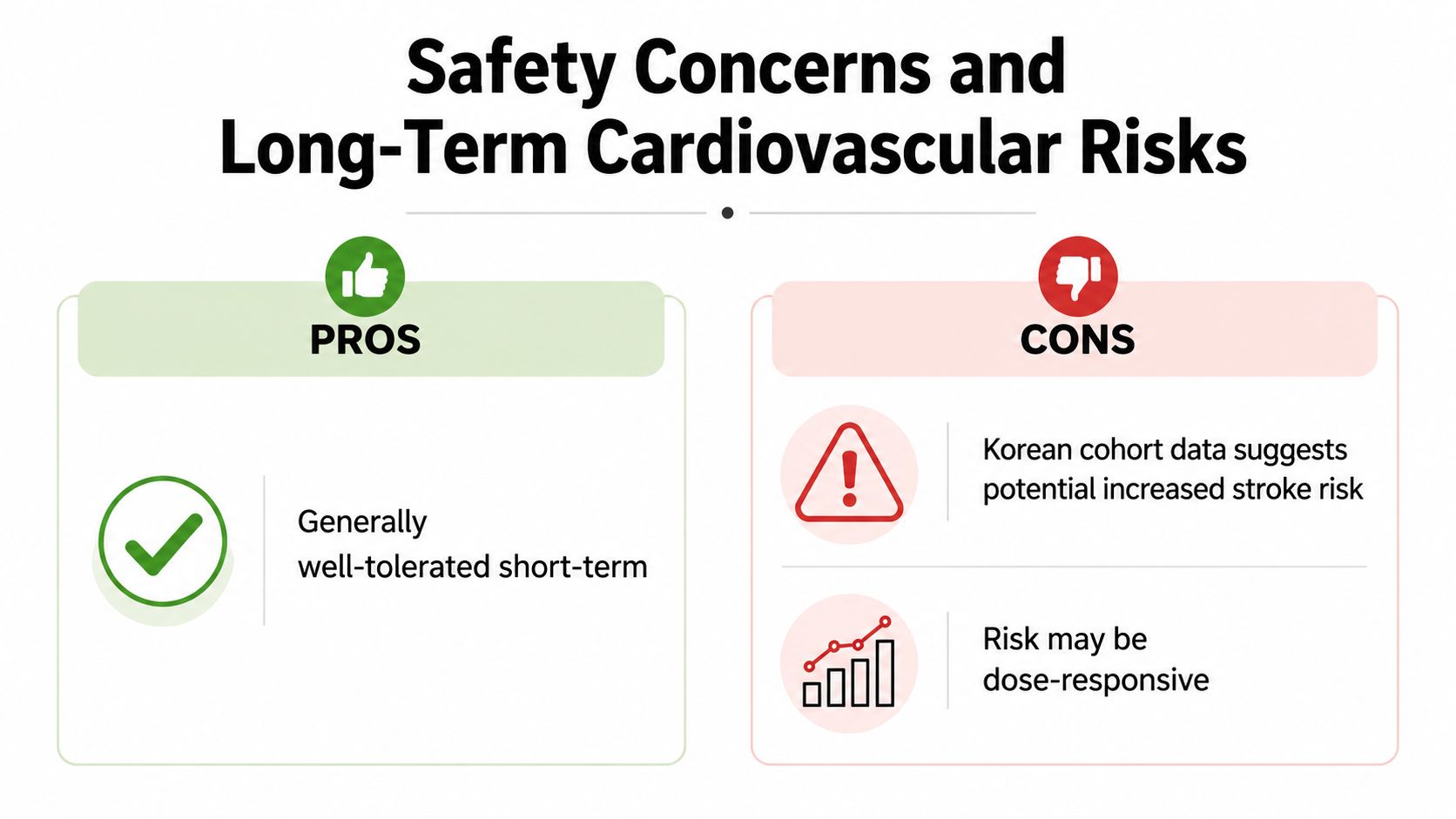
Short-term tolerability and long-term safety are different questions. The 2024 mild cognitive impairment trial reported no serious adverse events and no discontinuations because of side effects, which is reassuring for that study period (trial safety findings). It doesn't answer whether prolonged exposure is appropriate for every older adult or person with vascular risk.
The most important warning comes from an observational cohort of more than 12 million adults aged 50 and older. Researchers reported a dose-responsive association between Alpha-GPC use and a roughly 43% to 46% higher 10-year stroke risk (observational cohort summary). Because this was observational, it can identify an association but cannot establish that Alpha-GPC caused the strokes. Users may differ from non-users in health status, prescribing patterns, or other factors that influence risk.
Why the signal changes the decision
A newer 2025 Korean study in a specific mild cognitive impairment subgroup reported reduced stroke risk, creating a conflicting result rather than resolving the issue (review of the cardiovascular evidence). The contradiction may reflect differences in patient characteristics, exposure, clinical monitoring, or underlying disease. It means consumers shouldn't use either study as a blanket safety verdict.
The risk-benefit calculation is especially important for older adults. Someone with cognitive impairment under clinical supervision may have a substantial reason to consider Alpha-GPC, while a healthy adult seeking a small focus lift has less justification for accepting uncertain long-term exposure.
Practical safety screening
Potential concerns include headache, digestive discomfort, heartburn, dizziness, or sleep disruption, based on background clinical summaries, but side-effect rates and severity vary by product, dose, and individual response. People with cardiovascular disease, prior stroke, significant vascular risk, or complex medication regimens should speak with a clinician before using Alpha-GPC.
Product quality also matters, though testing can't eliminate ingredient-specific risk. Look for transparent labeling and a third-party testing explanation, then ask a pharmacist to check for interactions, particularly if you use medication affecting clotting, blood pressure, or neurological function.
A clean label answers what's in the capsule. It doesn't answer whether long-term Alpha-GPC is right for your cardiovascular profile.
Who Should Consider Alpha GPC and Who Should Avoid It
Alpha-GPC makes the most sense when the expected benefit is specific and the decision is supervised. The clearest candidate is an older adult with mild cognitive impairment or dementia-related decline whose clinician is tracking cognition and reviewing medications. The clinical evidence is concentrated in that population, so the rationale is stronger than it is for a healthy person chasing a generalized productivity boost.
Healthy adults can consider a carefully bounded, short-term trial only if they have a defined purpose, such as evaluating performance during a demanding cognitive task or workout. The standard should be observable usefulness, not a vague expectation that the supplement will make every day feel sharper.
A decision framework based on exposure and need
More reasonable to discuss with a clinician:
- Mild cognitive impairment: The randomized evidence gives this group a clinically relevant reason to ask about Alpha-GPC.
- Dementia-related cognitive decline: Pooled evidence supports discussing Alpha-GPC as an adjunct, not as a replacement for prescribed treatment.
- Specific athletic testing: A person may evaluate acute tolerance and task-specific performance, while recognizing that the evidence remains limited.
Reasons to pause or avoid unsupervised use:
- Prior stroke or vascular disease: The observational stroke signal makes casual long-term use difficult to justify.
- Multiple cardiovascular risk factors: A clinician can weigh the potential cognitive rationale against baseline risk.
- Blood-thinning or neurological medication: Interaction screening is more important than relying on a supplement label.
- Expectation of dramatic enhancement: Healthy-adult findings don't support universal, large improvements in focus or memory.
The central insight is that the same supplement can have different practical value in different populations. A measurable cognitive change in impairment may justify a supervised trial, while a subtle acute effect in a healthy adult may not justify chronic exposure. If you're considering it, define the outcome first, review your health history, and stop if adverse symptoms appear.
Key Takeaways and Frequently Asked Questions
Alpha-GPC has a credible mechanism and the clearest human support in cognitive impairment. The evidence in healthy adults is more limited and inconsistent, although acute executive-function and exercise findings remain scientifically interesting. Long-term use deserves caution because observational data associate exposure with higher stroke risk in older adults, while newer subgroup findings point in the opposite direction.
Is Alpha-GPC better than Citicoline?
Neither is universally better. Alpha-GPC is primarily discussed as a highly bioavailable choline donor, while Citicoline provides choline and cytidine-related substrates. The better choice depends on the intended goal, tolerance, formulation, and clinician guidance.
Can it be taken daily for the long term?
Clinical studies have examined sustained daily use, but that doesn't establish that chronic supplementation is appropriate for everyone. Older adults and people with vascular risk should review the decision with a healthcare professional before ongoing use.
What should you check on a label?
Look for the exact Alpha-GPC amount, avoid undisclosed proprietary blends, and check whether the manufacturer provides independent testing. Testing supports product identity and purity, but it doesn't guarantee a cognitive benefit or remove the need for safety screening.
Is a combination product automatically stronger?
No. A formula combining Alpha-GPC and Citicoline may offer more than one choline-related ingredient, but more ingredients don't guarantee better outcomes. Maximum Health Products lists Maximize Within, an Alpha-GPC plus Citicoline formula, as one example of a combination product for readers comparing options.
If you're considering Alpha-GPC, write down your goal, current medications, cardiovascular history, and the outcome you'll monitor. That short preparation will produce a more useful conversation with your clinician than asking whether the supplement “works.”
Maximum Health Products offers Maximize Within, an Alpha-GPC and Citicoline formula for people exploring choline-focused cognitive support. Review the formula and clean-label product information at Maximum Health Products, then discuss whether it fits your needs with a qualified healthcare professional.

