


The global nutricosmetics market reached USD 7.78 billion in 2025 and is projected to reach USD 15.98 billion by 2034, growing at an 8.50% compound annual growth rate, according to Fortune Business Insights' nutricosmetics market forecast. That scale changes the question. Beauty from within supplements are no longer a niche experiment, but their popularity still doesn't prove that every capsule, gummy, or powder works.
The useful question is more specific: Which ingredients have credible human evidence, how do they work, and what should you expect from a well-formulated product? A realistic approach focuses on skin hydration, elasticity, and barrier function rather than miracle transformations. It also treats supplements as one part of a routine that includes adequate nutrition, topical care, sleep, sun protection, and medical guidance when needed.
The Rise of Ingestible Skincare and Nutricosmetics
Nutricosmetics are ingestible products marketed to support appearance-related outcomes, including skin hydration, elasticity, hair quality, and nail strength. They may contain collagen peptides, hyaluronan, ceramides, vitamins, minerals, plant compounds, or combinations of these ingredients. Unlike a cream, an ingestible product is digested and absorbed before its components are distributed through the body.
That doesn't mean a supplement travels directly to a wrinkle or acts like an internal moisturizer. The body breaks ingredients down, uses them in different tissues, and regulates how they're processed. The relevant question is whether a specific compound, at a studied dose and in a suitable formulation, can influence a measurable endpoint such as stratum corneum water content, elasticity, or transepidermal water loss.
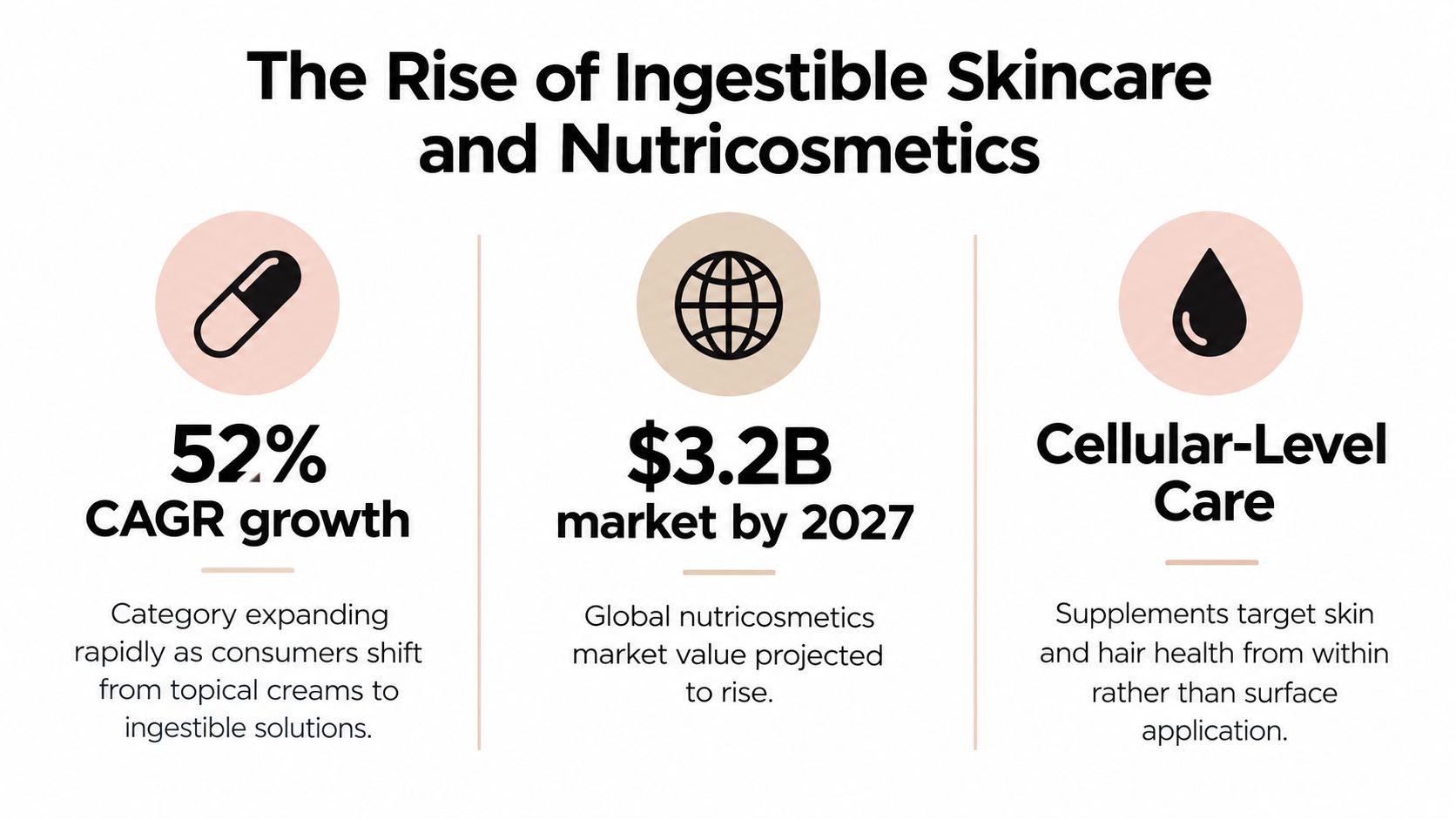
Why the category has staying power
The market forecast reflects sustained commercial interest across major regions, including North America, Europe, and Asia-Pacific. Fortune Business Insights also projects an increase from USD 8.32 billion in 2026 to USD 15.98 billion by 2034, indicating continued expansion rather than a brief spike in attention. Those figures describe market activity, not clinical effectiveness, but they show why consumers are encountering more products that connect nutrition with appearance.
The biology is also understandable. Skin needs structural proteins, lipids, water-binding molecules, and micronutrients to maintain its normal functions. A person with a highly restrictive diet, poor overall intake, or a specific nutritional deficiency may have different needs from someone whose diet already supplies adequate protein and nutrients.
Practical rule: Treat a beauty supplement as targeted nutritional support, not as a replacement for food, sunscreen, moisturizer, or treatment prescribed by a clinician.
Featured Product
Collagen Gummies, Mixed Berries Flavor
Made with a plant-based formula, these chewable gummies are designed to help support healthy hair, skin, nails, and lashes while fitting easily into your daily wellness routine.
Shop Now →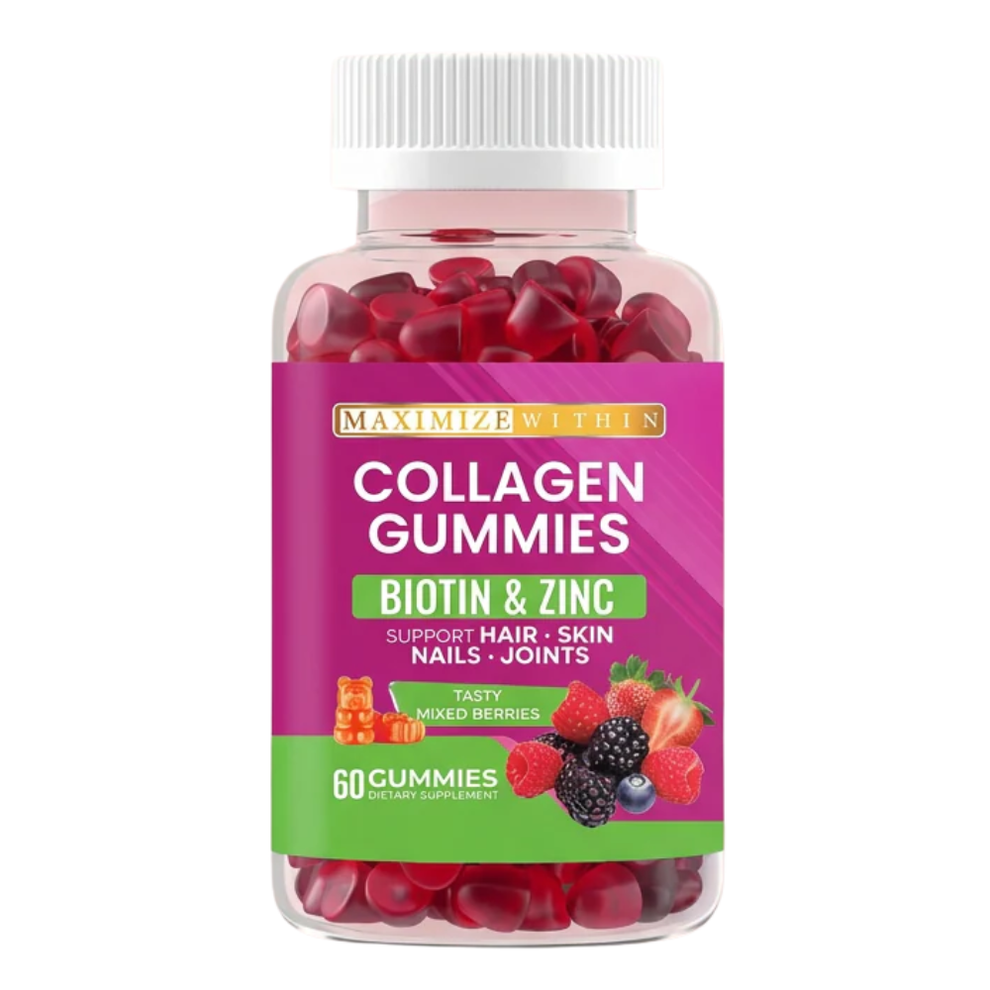
The gut-skin axis adds another layer. Digestion, nutrient absorption, inflammation, and immune activity can all influence general health, while skin responds to internal and external conditions. That doesn't justify broad claims that every gut-focused product will clear skin or reverse aging. It does explain why a systemic approach can complement topical care.
Readers comparing ingredients, formulations, and everyday use may find the ProMD Health Bel Air supplement guide useful as a starting point. The strongest buying decision, however, still depends on matching the formula to a defined goal and checking whether the active ingredient has relevant human evidence.
Evidence-Backed Ingredients for Skin and Hair Health
The most useful way to assess beauty from within supplements is to ask what the active compound does, what endpoint researchers measured, and whether the product resembles the tested formulation. A long ingredient list isn't automatically stronger. Often, a short formula with a clear purpose is easier to evaluate.
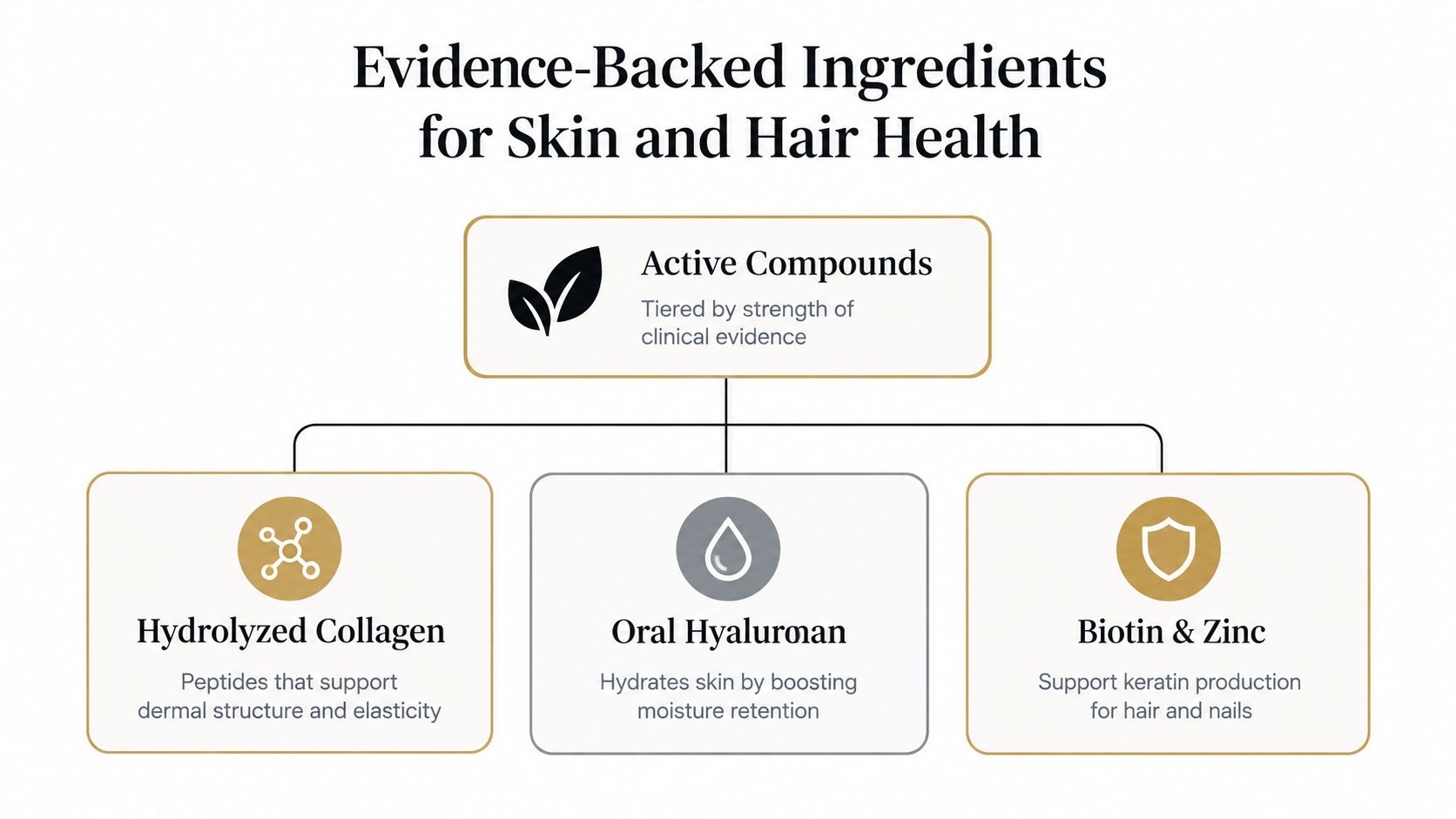
Hydrolyzed collagen supports structure
Hydrolyzed collagen consists of collagen broken into smaller peptides. Researchers have studied it most extensively for skin outcomes, particularly hydration and elasticity. A 2023 systematic review and meta-analysis examined 26 randomized controlled trials involving 1,721 participants and found that hydrolyzed collagen significantly improved both outcomes compared with placebo, with statistical significance at p < 0.00001, as reported in the NIH-hosted review.
A later umbrella review summarized 16 systematic reviews and 113 randomized controlled trials involving 7,983 participants. It reported substantial improvements in skin elasticity and hydration, although the size of an average research effect shouldn't be translated into a guaranteed visual result for every user.
Collagen is therefore the most established beauty-from-within ingredient class for skin, but the label still matters. Look for the word hydrolyzed or peptides, a clearly stated serving, and an identifiable source. A guide to the best multi collagen supplement can help explain how different collagen sources are presented, though consumers should still compare the actual ingredient panel.
Hyaluronan focuses on moisture retention
Oral hyaluronan, often called oral hyaluronic acid, is relevant to skin that feels dry or looks less supple. Its role is different from collagen's structural focus. It supports the body's broader moisture-retention systems, which researchers can assess through hydration measurements, elasticity, wrinkle assessments, and transepidermal water loss, or TEWL.
A randomized, double-blind, placebo-controlled trial in healthy adults used 120 mg per day for 12 weeks. The treatment group showed better wrinkle assessment, higher stratum corneum water content, lower TEWL, and improved elasticity compared with placebo. The wrinkle and hydration effects were already significant by eight weeks, according to the clinical trial record on PubMed.
Ceramides reinforce the barrier
Ceramides are lipids found in the outer skin barrier. They help the stratum corneum retain water, so they're particularly relevant when dryness and water loss are central concerns. A 2022 meta-analysis of seven studies found that single-ingredient oral ceramides increased stratum corneum water content and reduced TEWL compared with placebo, according to the published meta-analysis.
That mechanism supports a broader formulation lesson. A product doesn't need every popular beauty ingredient. It needs a transparent combination that fits the intended outcome, avoids unnecessary duplication, and provides amounts that can be compared with human research.
For readers focused specifically on combined hair, skin, and nail formulas, this hair, skin, and nails supplement resource offers another way to think about ingredient selection. Hair claims deserve extra caution because evidence is less consistent when collagen is used alone.
Realistic Timelines and Documented Biological Benefits
Visible change usually follows biological change. A moisturizer can make the surface feel smoother quickly because it alters water content and the way light reflects from the outer layer. A supplement has to be digested, absorbed, used by the body, and taken consistently before a measurable effect may emerge.
A 2025 review found that skin improvements in beauty supplement studies often appeared within four to 12 weeks, while hair findings were more commonly positive when collagen was combined with micronutrients and antioxidants rather than used alone, as summarized in the Frontiers in Nutrition review. This range is a research pattern, not a promise that every person will see a visible result on the same schedule.
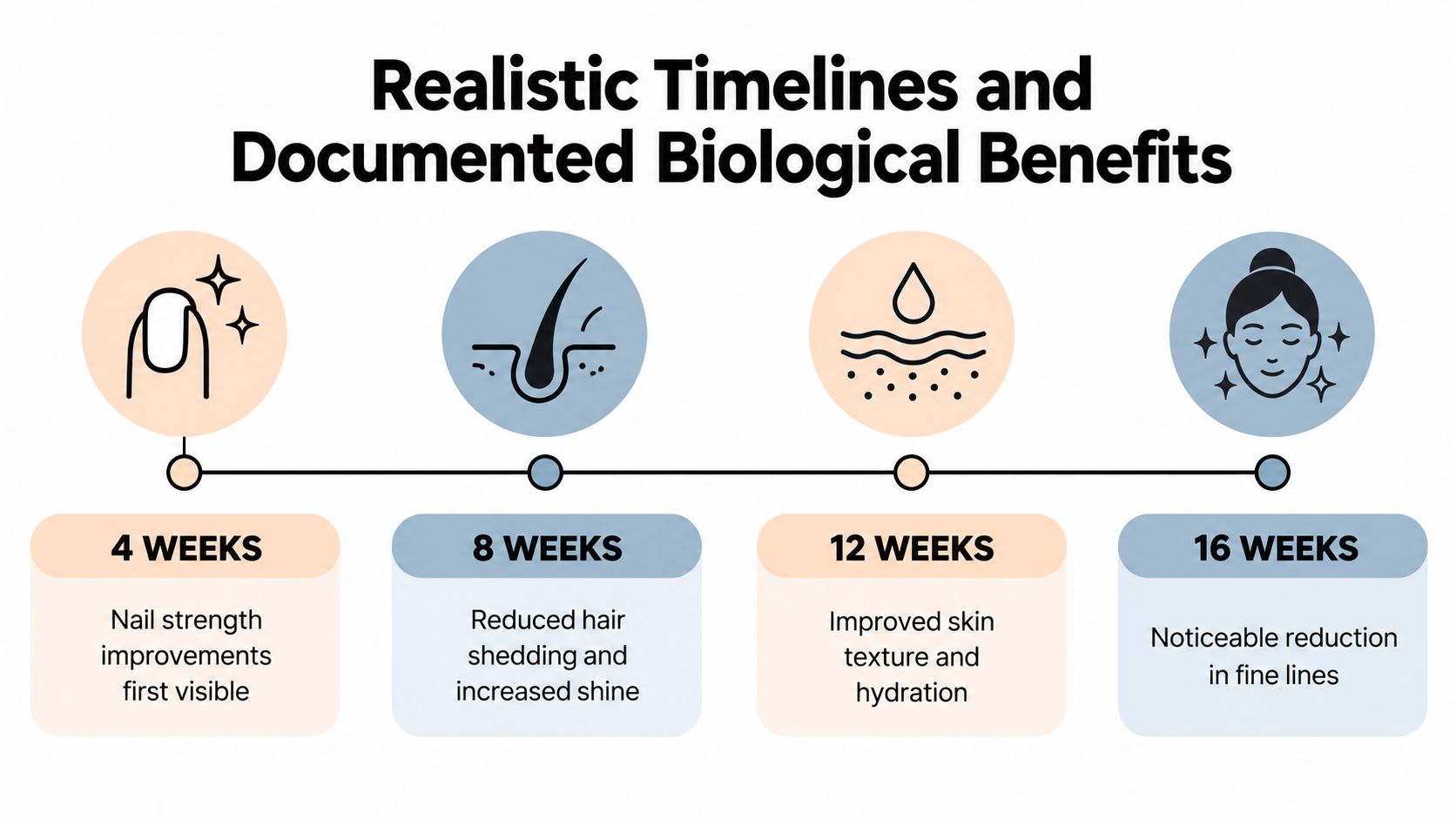
Read the endpoint, not just the advertising
Researchers may measure:
- Stratum corneum water content: How much water the outer skin layer retains.
- TEWL: How readily water escapes through the skin barrier.
- Elasticity: How the skin responds when stretched and returns toward its original shape.
- Wrinkle assessment: A clinical or instrument-based evaluation of surface lines.
- Hair outcomes: Changes such as shedding, density, shine, or strength, depending on the study.
These endpoints don't all move at the same pace. Hydration and barrier measures may change before you notice a major difference in a photograph. Hair appears slower because the visible strand is produced over time, and nail growth also requires patience. A formula that promises immediate transformation across skin, hair, and nails should be treated skeptically.
A practical observation plan
Choose one primary goal before starting. If dryness is the issue, track tightness, flaking, and how often you need to reapply moisturizer. If elasticity is the concern, use consistent lighting and the same facial position when taking comparison photos. Don't change several products at once, or you won't know what influenced the result.
Give the routine enough time to assess, but don't continue indefinitely if you develop symptoms or see no reason to persist. Supplements work best when the outcome is defined, the serving is consistent, and expectations match the evidence.
Evaluating Product Quality and Clean-Label Standards
A clean label isn't a magic word, and “natural” doesn't guarantee effectiveness. Product quality begins with identifying the active ingredient and confirming that the label tells you how much you're taking. A formula can be free from unnecessary additives yet still be poorly matched to your goal.
The ceramide evidence illustrates why targeted design matters. The 2022 meta-analysis of seven studies focused on single-ingredient oral ceramides and found improvements in water retention and TEWL compared with placebo. That doesn't mean every ceramide product will reproduce the result. It means the ingredient's identity and formulation deserve attention rather than being hidden inside a vague proprietary blend.
Compare the label before comparing the claims
| Quality Marker | Clean-Label Standard | Standard Mass-Market |
|---|---|---|
| Active ingredients | Clearly named compounds with stated amounts | Broad beauty blend or proprietary mixture |
| Serving information | Transparent serving size and directions | Amounts may be difficult to compare |
| Additives | Limited to functional, disclosed excipients | May include unnecessary colors, flavors, binders, or fillers |
| Allergen information | Clear disclosure of relevant sources | Source details may require extra investigation |
| Testing | Evidence of quality-control or third-party testing | Testing practices may be unclear |
| Clinical relevance | Ingredients selected for a defined outcome | Long ingredient list used as a marketing signal |
What “clean” should mean in practice
Look for a product that makes it easy to answer five questions:
- What is the active compound? “Collagen blend” is less informative than a named hydrolyzed collagen ingredient with a stated amount.
- What is the source? This matters for allergies, dietary preferences, and personal tolerance.
- What else is included? Check sweeteners, colors, preservatives, binders, and flavoring agents.
- Can you compare it with research? If the serving is hidden, evidence-based decision-making becomes difficult.
- Does the product suit your restrictions? A clean-label choice should account for allergens and dietary requirements, not just a short ingredient list.
The clean-label ingredients guide provides useful label-reading context. Still, no label can replace independent judgment. Third-party testing may support identity and purity, but it doesn't prove that the product will produce a particular cosmetic outcome.
Dosing Strategies and Practical Daily Routines
The best routine is one you can follow without creating unnecessary complexity. Start with the serving printed on the product and compare it with the human research when that information is available. Don't assume that doubling a serving will double the result.
For example, the oral hyaluronan trial used 120 mg per day, and a later randomized trial found that 120 mg per day outperformed 60 mg per day for certain skin outcomes after 12 weeks. Those findings provide a research benchmark for hyaluronan, not a universal prescription for every product or person.
Build the routine around a reliable cue
Take a powder with a breakfast smoothie if that's when you're already in the kitchen. Keep capsules beside a routine medication only if your clinician or pharmacist confirms there's no interaction and the storage conditions are appropriate. Gummies may be convenient, but check their full label, especially sweeteners and the amount of active ingredient per serving.
Collagen is often paired in marketing with vitamin C. A balanced diet that includes vitamin C supports normal collagen formation, but you don't need to turn the routine into a large stack of overlapping products. Choose a simple formula first, then reassess based on your defined goal.
- Morning: Use a product you'll remember with breakfast or another established habit.
- Midday: Keep hydration and meals consistent so changes in skin feel aren't confused with daily fluctuations.
- Evening: Use this slot if it's easier to maintain, unless the label or a clinician advises a different schedule.
- Weekly: Check whether you're following the serving consistently and whether another product duplicates the same ingredients.
The best time to take vitamins guide can help organize timing, but consistency matters more than chasing a perfect hour. If a supplement causes stomach discomfort, taking it with food may help, though persistent symptoms call for professional advice.
Safety Profiles and Common Formulation Misconceptions
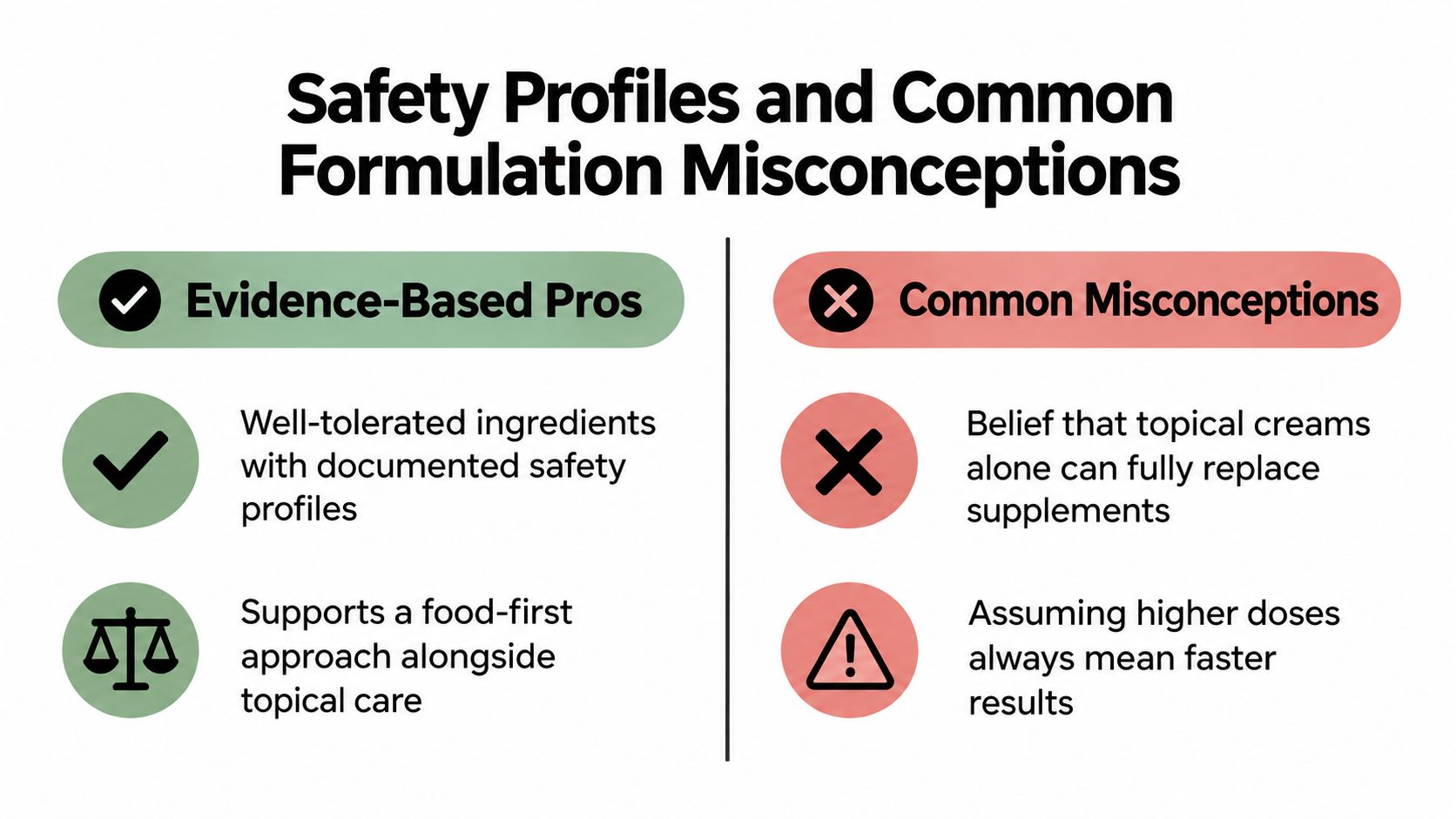
“Beauty supplement” doesn't mean risk-free, and “topical” doesn't mean interchangeable with nutrition. Supplements and skincare work through different routes. A cream can support the surface barrier, while an ingestible product may provide nutrients used throughout the body. Neither automatically replaces the other.
The food-first principle remains important. Adequate protein, varied plant foods, essential fats, and sufficient overall energy provide a foundation that a single ingredient can't replicate. Supplements may be useful when dietary intake is limited, when a targeted ingredient has relevant evidence, or when a clinician identifies a specific need.
Common assumptions that need revision
- “More is faster.” Higher doses can increase cost and may increase the chance of side effects without improving the outcome.
- “All collagen is equivalent.” Source, hydrolysis, serving size, and study design all influence how closely a product matches the evidence.
- “Vegan means ineffective.” Vegan alternatives may serve dietary needs, but they shouldn't be described as collagen unless they contain collagen. Their evidence must be assessed on its own terms.
- “A positive study settles the question.” The 2025 review noted that evidence is more consistent for some skin outcomes than for hair, where positive findings often involved combinations with micronutrients and antioxidants.
People who are pregnant, breastfeeding, preparing for surgery, managing a chronic condition, taking medication, or dealing with unexplained hair loss or skin changes should ask a qualified healthcare professional before starting a supplement. Allergies also matter, particularly with marine, bovine, porcine, or dairy-derived ingredients. Stop a product and seek advice if you develop a concerning reaction.
Building a Sustainable Routine with Maximum Health Products
A sustainable beauty-from-within routine starts with a narrow objective and a label you understand. Maximum Health Products offers a Beauty & Glow collection that includes collagen gummies marketed for hair, skin, nails, and joints, along with a collagen product associated with its Mesoderm RX beauty and skincare brand. Those products are one option among many, so compare their ingredients, serving information, source, dietary suitability, and quality controls with competing formulas.
The broader value of a targeted collection is convenience. Someone who wants a simple routine can select one relevant product rather than combining multiple overlapping blends, while still checking whether the formula matches the outcome they care about. Clean-label preferences should also be practical, including attention to fillers, artificial additives, allergens, and unnecessary duplication.
Supplements won't address every skin concern. Persistent acne, painful lesions, sudden hair loss, or changing pigmentation deserves clinical evaluation rather than a longer shopping list. For surface care and daily habits, a complete acne care guide can complement an internal nutrition strategy.
Start by writing down one goal, selecting a transparent formula, and setting a realistic review point within the evidence-supported timeframe. Keep your diet and topical routine steady, and judge progress by consistent observations rather than dramatic marketing promises.
Maximum Health Products offers targeted Beauty & Glow options, including collagen-focused products, alongside clean-label vitamins, supplements, and nutrition products for everyday routines. Visit Maximum Health Products to compare the available formulas and choose a beauty-from-within option that fits your ingredients, dietary, and routine preferences.

