


You're probably seeing the same pattern I see with clients all the time. You pick up a supplement bottle that says “clean,” “natural,” or “nothing artificial,” then you turn it over and find a list of ingredients you don't fully recognize. At that point, consumers often do one of two things. They either trust the front label, or they put the bottle back and feel frustrated.
That confusion makes sense. Supplement packaging often sounds simple while the actual rules behind those claims are anything but simple. If you want to choose clean label ingredients with confidence, you need more than marketing language. You need a practical way to verify what a product is really doing.
The Rise of the Clean Label Movement
Shoppers didn't create the phrase “clean label” by accident. It grew because people got tired of vague labels, artificial additives, and ingredient lists that felt impossible to decode. In food and supplements, that demand for transparency has become powerful enough to shape how products are formulated and sold.
This isn't a niche trend anymore. The global clean-label ingredients market reached about USD 57.3 billion in 2025 and is projected to reach USD 279.6 billion by 2036, according to Future Market Insights on the clean-label ingredients market. That projection reflects something very practical. More buyers want products made with transparent, minimally processed, and naturally sourced ingredients.
Why shoppers pushed this change
For many people, the old model no longer feels good enough. “Just trust the brand” doesn't work when the label is crowded with colorants, sweeteners, fillers, or preservatives that sound more like lab shorthand than food.
Three shopper instincts sit behind the movement:
- Clarity matters: People want to know what they're swallowing every day.
- Simplicity matters: Shorter, more recognizable ingredient lists feel easier to evaluate.
- Trust matters: Brands earn confidence when they explain ingredients instead of hiding behind buzzwords.
Clean label ingredients became popular because shoppers wanted proof, not just promises.
Why this matters for supplement buyers
Supplements create a special kind of confusion. A capsule may contain only a few active nutrients on the front panel, while the small print includes binders, anti-caking agents, flavors, sweeteners, or capsule materials that change how “clean” the product really is.
That's why understanding clean label ingredients matters more in supplements than many people realize. You're not just evaluating the headline ingredient, like magnesium, protein, greens powder, or collagen. You're also evaluating everything added to make that product taste better, flow better, mix better, or last longer on the shelf.
When you know how to separate marketing from substance, the label becomes less intimidating. It starts to read like useful information instead of fine print designed to wear you down.
Featured Product
Maximum Slim SuperGreens Powder | Plant-Based Nutrient Drink Mix
Maximum Slim SuperGreens delivers 27 organic superfoods in a single daily scoop — making it one of the easiest ways to fuel your body with real plant-based nutrition
Shop Now →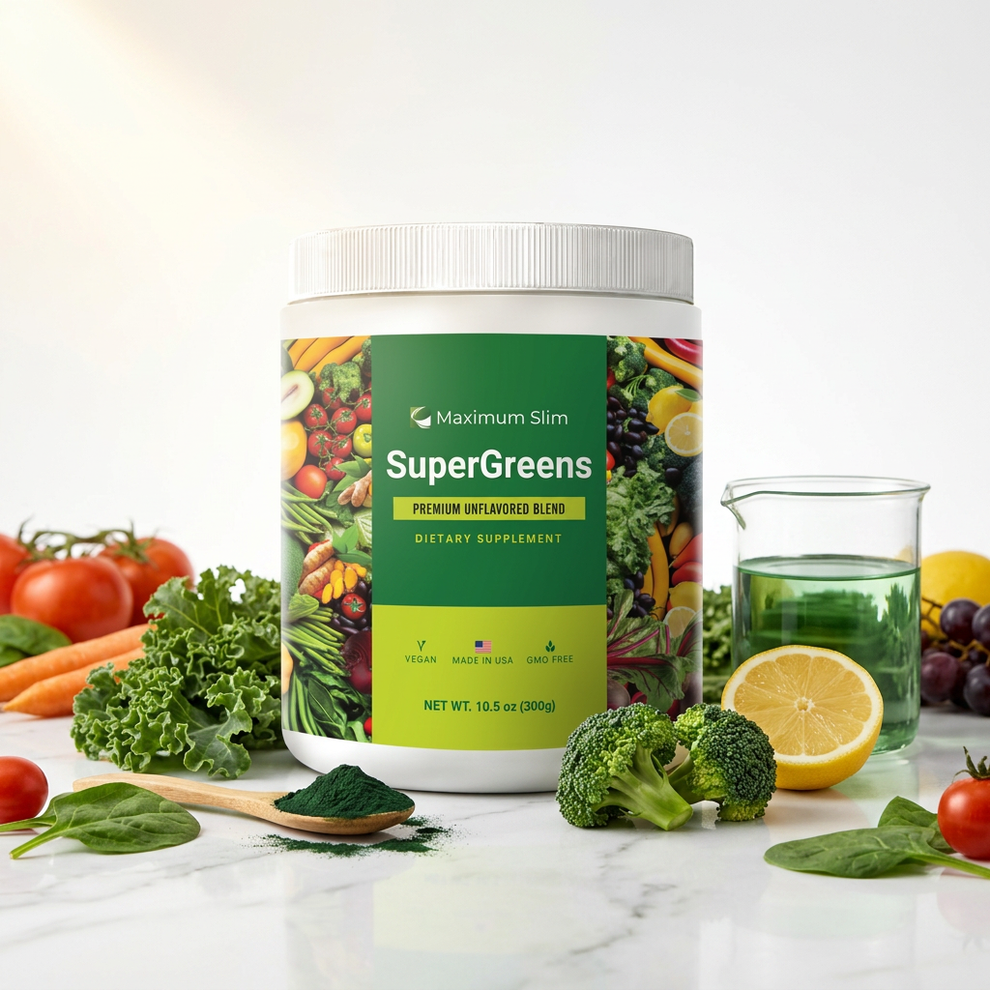
What Does Clean Label Actually Mean
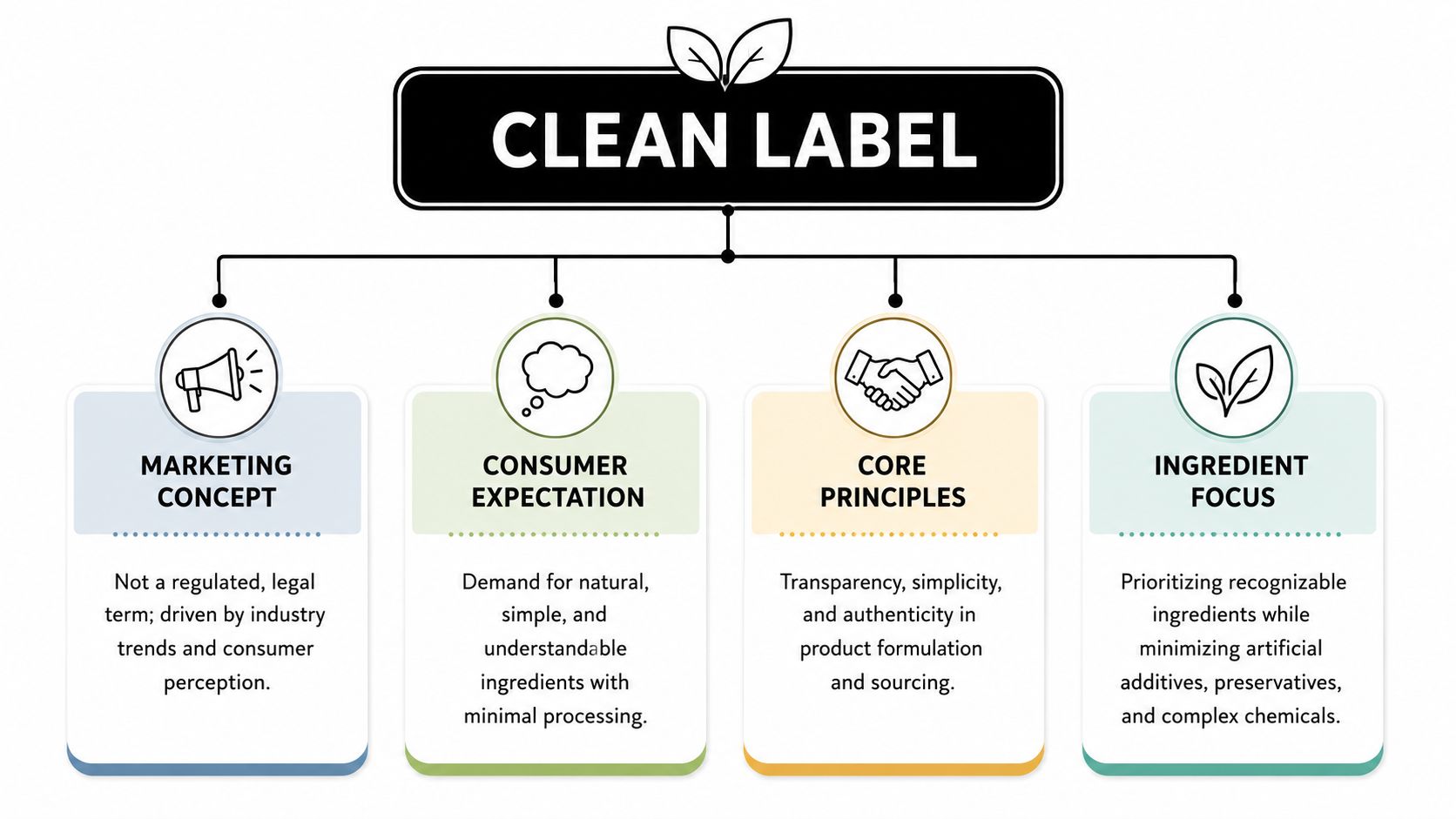
The most important thing to know is this. Clean label isn't a legal definition. It's a marketing concept shaped by consumer expectations, product formulation choices, and brand positioning.
A simple analogy helps. Think about the word “sporty” on a car ad. It suggests a certain feel, but it doesn't come from one official government standard. “Clean label” works in a similar way. It signals an idea, not a fixed legal category.
The practical definition most shoppers use
Clean label usually means a product aims for simpler ingredients, minimal processing, and fewer artificial additives, while presenting the label in a way shoppers can understand.
That sounds straightforward, but the details can vary from one brand to another. One company may focus on removing artificial colors. Another may emphasize plant-based excipients. Another may rely on third-party certifications to support broader claims about sourcing.
Why the lack of a legal definition matters
Because there's no formal legal definition, manufacturers often lean on certifications like USDA Organic, Non-GMO Project Verified, or Gluten-Free to support parts of their clean-label message. Puratos explains this cleaner-label issue and also notes that consumer perception plays a major role, especially in Europe, where chemical-sounding names and E-numbers can quickly turn buyers off.
That creates a gap many shoppers miss. A product can look “clean” on the front and still leave a lot open to interpretation. The label may be trying to match what buyers want to see, not necessarily what buyers assume has been independently defined.
What people usually expect when they hear “clean”
Most shoppers are looking for some version of these ideas:
- Recognizable ingredients: Names that feel familiar or at least understandable.
- Less artificial input: Fewer synthetic colors, flavors, sweeteners, or preservatives.
- More transparency: Clear labeling about sourcing, allergens, and verification.
- Minimal processing: Ingredients that feel closer to their original source.
You'll notice something important here. These are expectations, not legal guarantees.
That's why it helps to look beyond food and supplements for examples of how consumers apply the same logic elsewhere. If you've ever compared personal care products, you've seen the same pattern of buyers wanting gentler formulas and clearer ingredient decisions. Mouthology's insights on gentle toothpaste are a useful example of how people evaluate “cleaner” product claims by looking closely at what's included and what's left out.
The most useful mindset
Don't ask, “Is this officially clean label?”
Ask, “What exactly is this brand choosing to remove, replace, simplify, or verify?”
That question gets you much closer to the truth.
The Unofficial Rules of Clean Label Ingredients
Once you stop looking for an official seal, clean label ingredients become easier to judge. Most products that fit the spirit of clean labeling tend to follow a handful of informal rules. They're not laws, but they're useful filters.
Rule one is recognizability
If you read an ingredient and can picture what it is, that's often a good start. Beet powder, stevia leaf extract, rice extract, and cocoa are more readily identifiable with a source than a string of technical additives.
Recognizable doesn't automatically mean better. It means the brand has chosen ingredient language and ingredient types that are easier for consumers to understand.
A good question to ask is, “Can I explain what this ingredient is for?” If the answer is yes for most of the label, the product is often closer to clean-label expectations.
Rule two is fewer unnecessary extras
Many supplements contain active ingredients plus a long tail of support ingredients. Some of those extras are necessary for manufacturing. Others are mainly there for appearance, sweetness, texture, or shelf appeal.
Look carefully at ingredients that do these jobs:
- Sweetening the formula: This matters a lot in powders, gummies, and drink mixes.
- Adding color: Bright shades often come from dyes in conventional products.
- Improving texture: Binders, stabilizers, and gums can change mouthfeel or mixing.
- Extending shelf life: Preservatives help products last longer, but they also raise questions about what was chosen and why.
The unofficial clean-label approach isn't “remove everything.” It's “use only what's needed, and make those choices easier to justify.”
Rule three is minimal processing
Processing is not necessarily bad. Capsules, powders, and tablets all require processing. The clean-label idea usually points to less manipulation and fewer highly engineered additions.
Practical rule: A useful label often tells a simple story. You can see what the product is, what helps deliver it, and why those supporting ingredients are there.
Some brands do this well. Others hide behind broad terms that don't tell you much.
Rule four is fewer artificial additives
This is often the first rule that comes to mind. Artificial colors, flavors, and preservatives often trigger concern because they feel far removed from the original ingredient source. Many shoppers use this as a quick sorting tool. If a supplement contains multiple artificial additions, it usually feels less aligned with clean label ingredients.
That said, “artificial-free” alone doesn't settle the question. A product can remove one synthetic ingredient and replace it with a natural alternative that still deserves scrutiny.
Rule five is proof beats phrasing
A front label can say “clean,” “pure,” or “natural” without giving you much to verify. Third-party certifications, allergen disclosures, and clear sourcing information are stronger signals because they give you something concrete to check.
Here's a quick way to understand it:
| Label feature | What it tells you |
|---|---|
| “Clean” on front | A marketing message |
| Short ingredient list | A helpful clue, but not full proof |
| Third-party certification | A more verifiable standard |
| Clear explanation of other ingredients | A strong transparency sign |
The best clean-label products don't just sound better. They make it easier for you to confirm what they're doing.
Common Clean Label Ingredients in Your Supplements
The easiest way to understand clean label ingredients is to compare common swaps. In supplements, brands often replace synthetic or less consumer-friendly additives with alternatives that feel more familiar or less processed. These swaps can affect taste, texture, color, flow, and shelf stability.
Sweeteners and flavor support
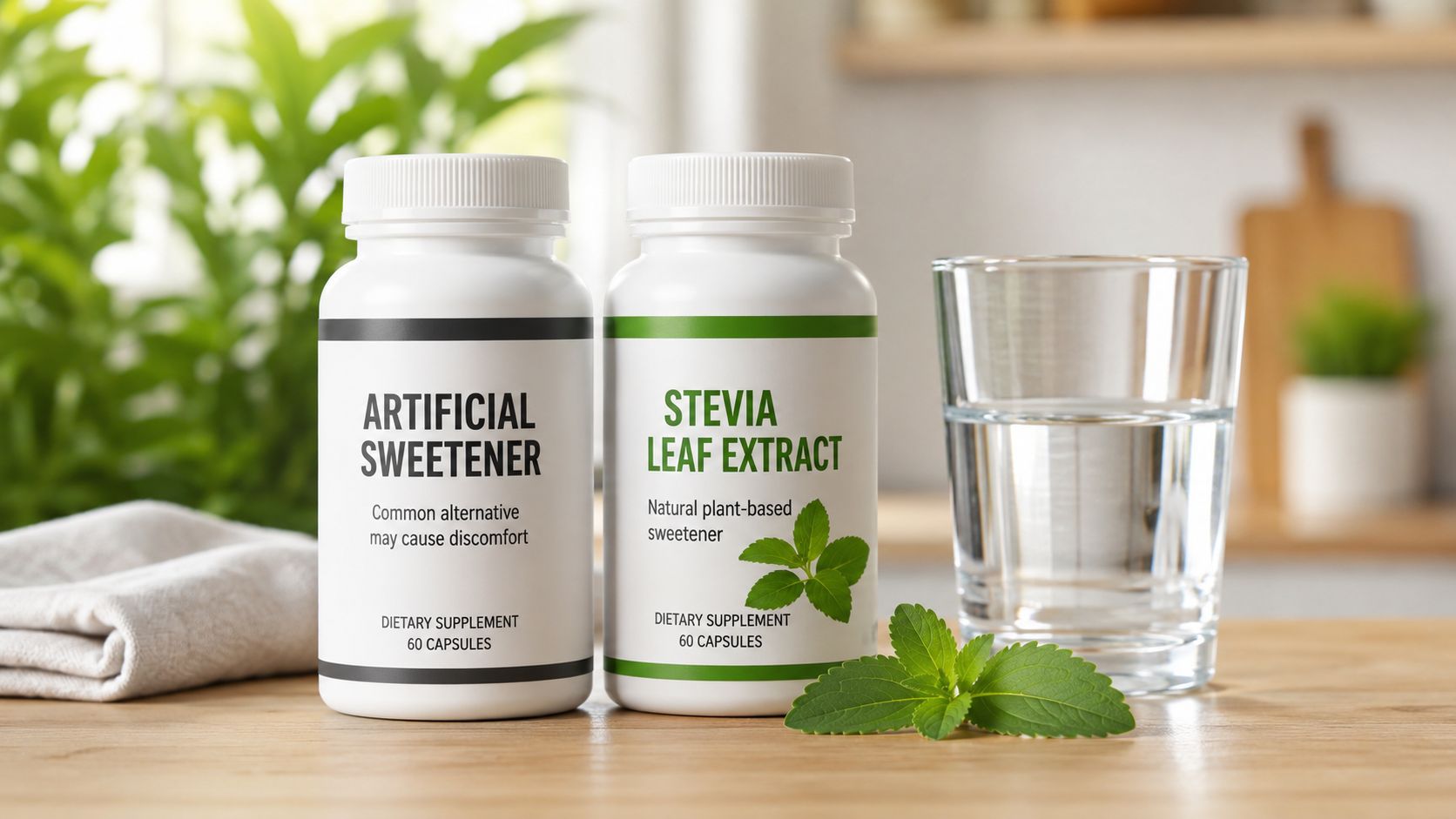
A common place to start is sweetness. Many conventional powders and gummies use synthetic sweeteners or highly engineered flavor systems. Clean-label versions often move toward plant-derived or simpler alternatives.
Swap this for that
- Instead of artificial sweeteners, you may see stevia or monk fruit.
- Instead of vague “artificial flavors”, you may see cocoa, vanilla, cinnamon, or fruit powders.
- Instead of heavily sweetened blends, some products keep sweetness low and let the core ingredient dominate.
This doesn't mean every “natural flavor” claim is automatically ideal. It means you should notice whether the formula moves toward simpler, more understandable flavor choices.
Colors and visual appeal
Color has strong marketing power, especially in gummies, hydration powders, and flavored drink mixes. Conventional formulas may use synthetic dyes. Cleaner formulations often use food-based color sources instead.
Examples shoppers commonly spot include:
- Beet powder for red or pink tones
- Turmeric for yellow tones
- Fruit and vegetable concentrates for broader color support
These swaps matter because color often adds visual excitement without adding nutritional value. If a product is very bright, ask what created that color.
Excipients and anti-caking agents
Consumers often find the topic of excipients perplexing. Excipients are non-active ingredients used to help manufacture a supplement. They can improve powder flow, prevent clumping, help tablet pressing, or fill a capsule consistently.
One important example involves anti-caking agents. In supplement manufacturing, replacing silicon dioxide with a plant-based option like rice extract requires careful validation so powder flow and dosage uniformity don't suffer, as explained in RIBUS's guide to clean-label ingredients in supplements.
That matters because “cleaner” swaps aren't just branding decisions. They affect how the product performs in the factory and in the finished capsule or scoop.
A quick comparison table
| Function | Conventional choice | Cleaner-label style alternative |
|---|---|---|
| Sweetness | Artificial sweetener | Stevia or monk fruit |
| Color | Synthetic dye | Beet powder or turmeric |
| Anti-caking | Silicon dioxide | Rice extract or fiber blend |
| Flavor profile | Artificial flavors | Cocoa, vanilla, spice, fruit-based ingredients |
What to do with this information
When you compare protein powders, greens blends, or wellness drinks, try looking at product types that already lean toward simpler formulas. If you want a practical example of what shoppers often look for in this category, this guide to best clean protein powder options can help you see how ingredient choices show up in real products.
The key is not to memorize every additive on the market. It's to notice the function. Once you know an ingredient is there to sweeten, color, preserve, or improve flow, you can judge whether the brand chose the simplest reasonable option.
How to Read a Supplement Label Like an Expert
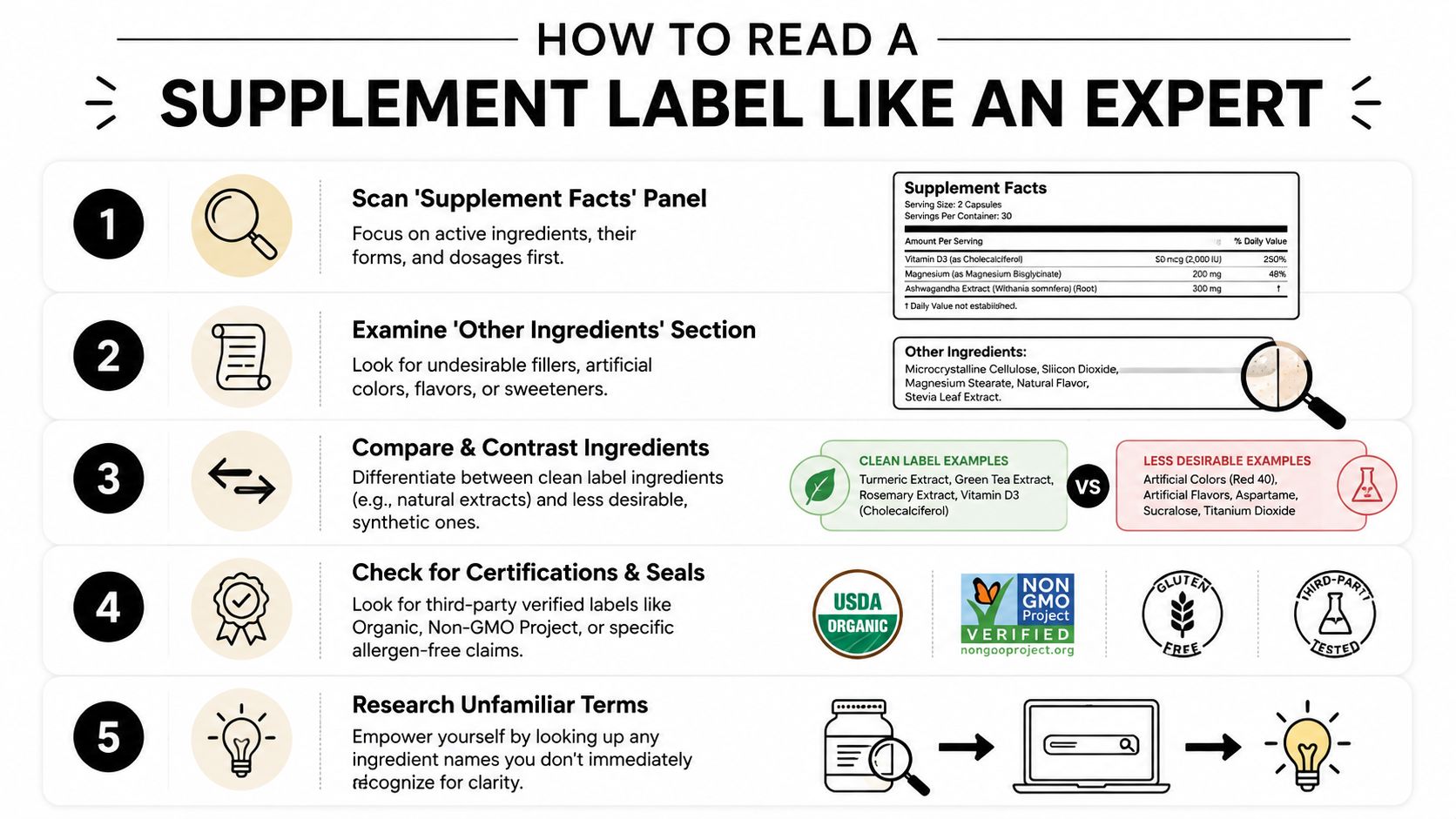
Most front labels are designed to sell. The ingredient list is designed to inform. If you want to verify clean label ingredients for yourself, start with the part of the package that companies know fewer people read carefully.
A smart label review takes only a few minutes once you know the order.
Start with the active ingredients
Check the Supplement Facts panel first. You want to know what the product is primarily trying to deliver before you get distracted by the “free from” language on the front.
Ask yourself:
- What are the main active ingredients
- What form are they in
- Does the formula make sense for the product's purpose
A clean-looking package doesn't help if the core formula itself is weak, mismatched, or vague.
Then read the other ingredients line by line
Fillers, sweeteners, flavor systems, anti-caking agents, colorants, and capsule materials usually appear here. Many shoppers skip this section, but it often tells you more about the product's real formulation philosophy than the front panel ever will.
Look for patterns, not perfection.
- Short and functional lists: These often suggest the brand kept supporting ingredients limited.
- Multiple cosmetic extras: Colors, sweeteners, and flavor enhancers may signal a more marketing-driven formula.
- Unclear umbrella terms: Phrases like “natural flavors” may be acceptable to some shoppers, but they don't tell you much on their own.
If the “other ingredients” section is doing a lot of work, the front label probably isn't telling the full story.
A short explainer can also help if you prefer to see the process in a more visual format.
Use a verification checklist
Don't rely on a single word like “clean.” Use a layered check.
Here's a practical shopping checklist:
- Ignore the first impression: Read past “pure,” “natural,” and “clean.”
- Check the support ingredients: See what helps with taste, texture, preservation, and manufacturing.
- Look for third-party cues: Certifications can support parts of the claim.
- Research what you don't know: Especially if an ingredient appears repeatedly across products.
- Ask whether the brand explains its choices: Clear explanations are a strong sign of transparency.
If you want a deeper look at how independent verification fits into smarter supplement buying, this overview of what third-party testing means is worth reading.
Don't confuse natural with automatically safe
This is one of the biggest blind spots in clean-label shopping. People often assume that if a brand removes synthetic preservatives and replaces them with natural ones, the new choice is automatically safer.
That assumption isn't always justified. A 2023 CSPI study found that 34% of new “natural” preservatives lack long-term toxicity studies, according to CSPI's clean-label analysis. That doesn't mean natural preservatives are bad. It means “natural” shouldn't end your evaluation.
The expert mindset
An expert label reader isn't someone who already knows every ingredient. It's someone who slows down, checks the support ingredients, and refuses to let the front panel do all the talking.
That's how you close the gap between marketing and reality.
The Real Benefits of Choosing Clean Label Products
When you choose supplements with cleaner formulations, the biggest benefit is often clarity. You can understand more of what you're taking, ask better questions, and avoid feeling like you're guessing every time you buy a new product.
That clarity can support health decisions in a few ways. You may find it easier to avoid ingredients you personally prefer not to use, such as artificial colors, certain sweeteners, or fillers that don't align with your routine. You also get a better sense of which brands are being transparent and which ones rely more on polished wording than specific evidence.

Why many shoppers feel more confident with cleaner formulas
The benefit isn't just about what's absent. It's also about how easy the product is to evaluate.
- More transparency: You can see what the brand included and why.
- Fewer surprises: Simpler labels reduce the chance of overlooking unwanted extras.
- Better alignment: Your purchase can match your values around food quality, ingredient simplicity, and trust.
That same preference for understandable ingredients appears beyond supplements too. If you're interested in how clean formulation ideas extend into personal care, you can discover clean ingredients for skin in a way that mirrors how many shoppers now assess wellness products overall.
A practical benefit people often overlook
A cleaner label can also save time. Once you know how to read ingredient lists well, you can compare products faster and filter out those that don't meet your standards.
If you want to explore products built around that broader philosophy, these science-backed wellness products show how many shoppers now look for formulas that balance efficacy with ingredient transparency.
Clean Label FAQs for Supplement Shoppers
Why do clean label supplements often cost more
Cost is one of the most common sticking points. Clean-label ingredients can cost 25 to 40% more than conventional counterparts because of certification, traceability, and lower processing volumes, according to IFT's reporting on clean-label ingredient costs. The same source notes that acacia gum costs 38% more than synthetic alternatives.
That price difference doesn't automatically make a product better. It does explain why cleaner formulations often come with a premium.
Is organic the same as clean label
No. Organic and clean label overlap, but they aren't the same thing. Organic refers to a defined production standard. Clean label is broader and usually focuses on simplicity, recognizability, and freedom from certain additives. A product can be organic and still contain ingredients a shopper doesn't personally view as “clean.” A product can also aim for clean-label expectations without being organic.
Are all chemical-sounding ingredients bad
No. Some ingredients sound technical because they're described by scientific naming conventions. A key question is what the ingredient does, why it's there, and whether the brand explains its role clearly. Don't judge only by pronunciation. Use context.
Are all E-numbers bad
Not necessarily. In some markets, E-numbers are a labeling system for approved additives. The reason many shoppers hesitate is perception. If a product relies heavily on coded or chemical-sounding additives, it may feel less transparent even when legally compliant.
What's the fastest way to judge a product
Start with the “other ingredients” section. That's usually where the truth about sweeteners, colors, fillers, anti-caking agents, and preservatives becomes visible. Then look for certifications or brand explanations that help verify the story the front label is telling.
If you want supplements that align with a cleaner, more transparent approach, explore Maximum Health Products. Their wellness formulas are built around clean-label standards with a focus on simple ingredient choices, no artificial colors or flavors, no added sugars, and targeted support for energy, metabolism, protein, and daily wellness.

