


Most advice about the best nootropics for ADHD starts with a shopping list. That's backwards.
A smarter starting point is this: why is the evidence for supplements so thin compared with ADHD medication? Once you understand that, the market gets much easier to read. You stop asking, “Which bottle promises focus?” and start asking, “Which claims are supported, which are speculative, and which might complicate my treatment?”
That shift matters because the ADHD standard isn't vague mental sharpness. Clinical summaries consistently point to prescription stimulants as the only clearly evidence-backed option, while over-the-counter nootropics show, at best, small and inconsistent effects in ADHD-specific research, as summarized by Healthline's review of nootropics for ADHD. To compare supplements accurately, that is the bar.
The practical takeaway isn't that supplements are useless. It's that they belong in the category of possible adjuncts, not proven replacements. For some adults, that may still be worth exploring. But the right mindset is measured, safety-first, and skeptical of marketing.
What Are Nootropics and How Might They Affect ADHD
“Nootropics” is a broad label. It includes prescription drugs, synthetic compounds, and plant-derived supplements that people use in hopes of improving focus, memory, alertness, or mental stamina.
A useful analogy is to think of nootropics as support staff for the brain, not star performers. They don't create attention out of nowhere. In theory, they may help the brain's existing systems run more smoothly, the way an operations team helps a company function better behind the scenes.

The neurotransmitter connection
ADHD is closely tied to attention regulation and executive function, and the most established medical treatments work directly on dopaminergic and noradrenergic signaling involved in attention control. That's one reason the supplement conversation often gets blurry. Many nootropics are discussed as if they target the same core systems with the same strength, but that hasn't been shown.
Instead, nootropics are usually framed more loosely. Some are marketed as supporting alertness. Others are said to support memory, reduce mental fatigue, or smooth out the effects of caffeine. Those are plausible categories, but plausibility isn't proof.
If you've seen broader wellness discussions around adaptogens and nootropics, that can be a helpful starting point for understanding the categories. It shouldn't be mistaken for ADHD-specific evidence.
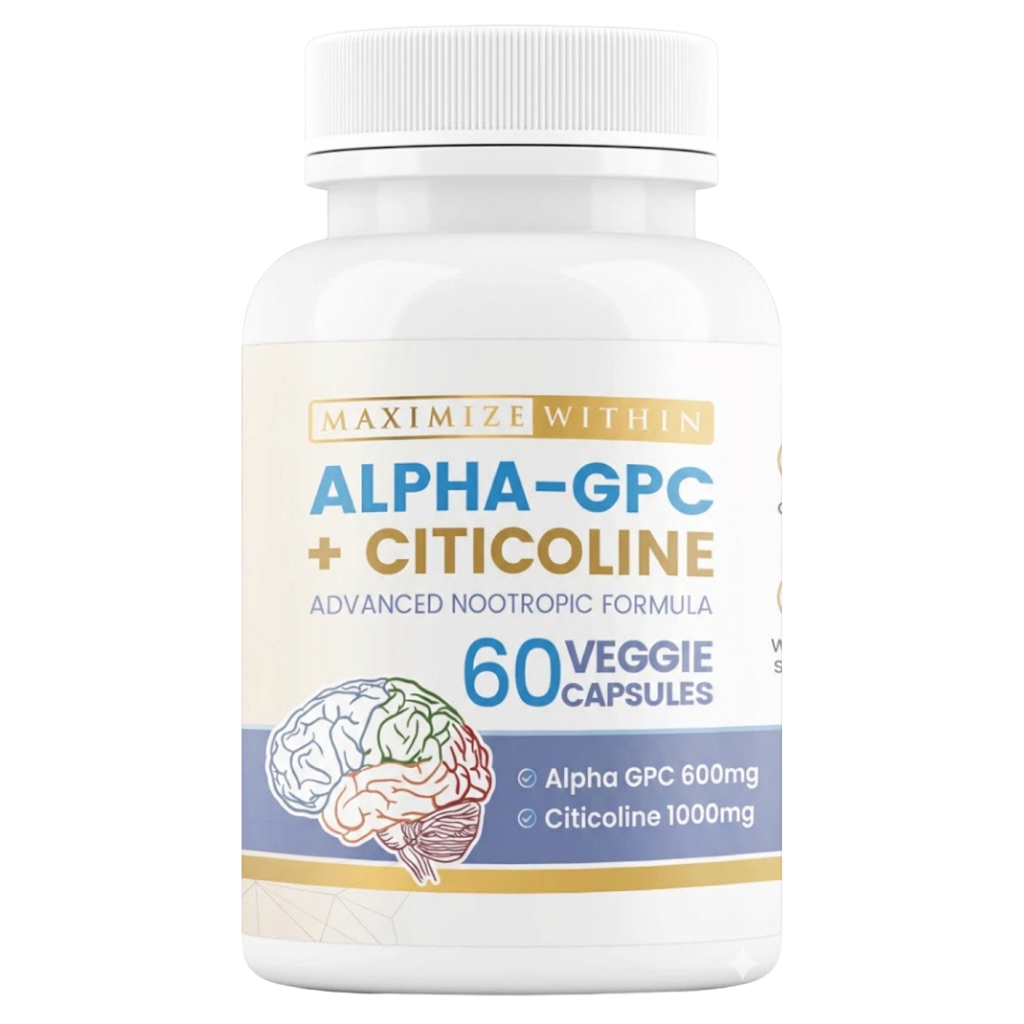
Featured Product
Alpha-GPC + Citicoline - Maximize Within | Advanced Nootropic Formula
A premium blend of Alpha-GPC (600mg) and Citicoline (1000mg), two well-known nootropic ingredients, in a convenient daily veggie capsule. Made in the USA. Gluten-free, soy-free, and preservative-free.
Shop Now →Why “might help” is the right phrase
The best nootropics for ADHD are hard to identify because the term “best” implies a level of certainty the research usually doesn't support. Supplements often get discussed based on mechanism first and outcomes second. In clinical care, that order is reversed. What matters is whether a substance measurably improves symptoms, whether those effects are reliable, and whether the tradeoff in side effects makes sense.
Clinical lens: A supplement can sound biologically reasonable and still fail the real-world test of ADHD symptom improvement.
That's why many ingredient profiles feel unsatisfying when you read them carefully. You'll see a proposed pathway, a theoretical cognitive benefit, and then very limited ADHD-specific data.
For a patient or consumer, that uncertainty isn't a dead end. It's a signal to lower expectations, avoid stacking multiple products, and judge any supplement by the same standard you'd apply to medication: what outcome are you trying to change, and how will you know if it changed?
Reviewing Clinically Studied Nootropic Ingredients
Most supplement roundups mix together ingredients with very different levels of relevance. Some have a little ADHD-related discussion behind them. Some are mainly extrapolated from general cognition research. Some are popular because they fit a story people want to hear.
The broad evidence pattern is consistent. Non-prescription nootropics have a much smaller and more inconsistent evidence base in ADHD, and one review notes that over-the-counter options may offer only small benefits, research quality is often low, and no non-prescription nootropic has shown effectiveness comparable to FDA-approved ADHD medication, according to Medvidi's review of nootropics for ADHD.
Evidence Snapshot for Common ADHD Nootropics
| Ingredient | Potential Benefit for ADHD | Level of Evidence |
|---|---|---|
| Citicoline | May support aspects of cognitive performance in some contexts | Preliminary and mixed for ADHD |
| L-theanine with caffeine | May improve alertness and aspects of cognitive performance | Preliminary and mixed |
| Ginkgo biloba | Sometimes discussed as an adjunct for attention support | Limited and inconsistent |
| Bacopa monnieri | Sometimes discussed for memory and restlessness | Limited and inconsistent |
| Rhodiola rosea | Marketed for mental fatigue and stamina | Speculative for ADHD |
| Omega-3 fatty acids | Often discussed for general brain health | Mixed and not clearly established for ADHD |
Ingredient by ingredient, what the uncertainty really means
Citicoline gets attention because it sounds mechanistic and “brain targeted.” That can make it appealing. The problem is that ADHD decisions shouldn't rest on mechanistic appeal. For ADHD, citicoline sits in the category of interesting but not clearly established. If someone tries it, they should treat it as an experiment, not as a validated intervention.
L-theanine with caffeine is one of the more practical combinations because many adults already use caffeine. The idea is easy to understand: caffeine may increase alertness, while L-theanine may soften the edgy side of stimulation for some people. ADHD-specific conclusions are still limited, but this combination keeps coming up because it mirrors a real-world question patients ask every day: “Can I improve focus without feeling overstimulated?” For a more clinical discussion of that pairing, Integrative Psychiatry of America's focus insights are a useful read.
Ginkgo biloba often survives in ADHD conversations because it has a long reputation in cognitive health more broadly. That reputation can make it seem more proven than it is. In ADHD, the issue isn't that the idea is absurd. The issue is that the evidence is not strong enough to treat it as a front-line option.
The more an ingredient is known for “brain health” in general, the more careful you should be about assuming it helps ADHD specifically.
Bacopa monnieri is similar. It has traditional use and some cognitive interest, which gives it a strong marketing life. But ADHD is a specific clinical condition, not just “poor concentration.” When evidence comes from small or limited settings, you should read that as hypothesis-generating, not decision-settling.
Rhodiola rosea is popular because many adults with ADHD describe mental fatigue, inconsistent drive, and burnout. That makes a fatigue-oriented herb feel relevant. But relevance is not the same as evidence. Rhodiola may fit the symptom story, yet ADHD-specific support remains speculative.
Omega-3 fatty acids are often the most acceptable supplement category because they feel low drama and broadly health-oriented. That makes them easy to recommend casually. But broad health value doesn't automatically answer the ADHD question. If someone takes omega-3s, they should do it with realistic expectations about the uncertainty around ADHD symptom change.
Why these ingredients stay popular despite limited proof
Three forces keep these products in circulation.
- The mechanism sounds persuasive. If a label mentions neurotransmitters, brain cell membranes, blood flow, or mental energy, it can sound more certain than the evidence is.
- The outcomes people want are subjective. “I felt more productive” is real to the person saying it, but it's not the same as strong evidence of ADHD symptom improvement.
- ADHD symptoms fluctuate. Sleep, stress, workload, caffeine intake, and routine all affect focus. That makes supplements hard to evaluate casually.
If you're comparing options, this overview of what Alpha-GPC is can help clarify how another commonly marketed cognitive ingredient is positioned. Just keep the same standard: interesting mechanism, but ADHD-specific proof still matters more than a compelling label.
Safety, Side Effects, and Medication Interactions
The biggest risk in this category isn't that a supplement fails. It's that a person with ADHD tries to solve one problem, only to worsen another. Focus improves a little, but sleep gets worse. Energy rises, but anxiety rises with it. A morning “stack” feels productive, but it complicates the effects of prescribed medication.
That's why safety comes before rankings.

The interaction problem most articles skip
A key unanswered question is how nootropics fit real-world ADHD management when people already use caffeine or prescription medication. Existing clinical commentary notes that this is a genuine gap, especially for adults trying to self-manage focus without worsening sleep, anxiety, or medication side effects, as discussed by Hudson Health's review of nootropics for ADHD.
That gap matters because many adults don't start from zero. They already drink coffee. They may already take a stimulant or a non-stimulant ADHD medication. They may already be dealing with appetite changes, insomnia, rebound irritability, or anxious activation. Add a supplement on top, and cause-and-effect becomes murky.
Common safety themes
Some risks are predictable even without precise ingredient-by-ingredient numbers.
- Stimulation overload: Caffeine-containing or stimulating products may push alertness into jitteriness, tension, or sleep disruption.
- Stacking confusion: If you start several compounds at once, you won't know which one helped or caused a problem.
- Quality variation: Supplements can differ in purity, standardization, and transparency.
- Medication overlap: A product may amplify side effects you already struggle with from ADHD treatment.
For people who notice that stimulant treatment increases nervousness or physical tension, Refresh Psychiatry's Adderall anxiety insights offer useful context for thinking through whether “more stimulation” is really the direction you want to go.
Who should be extra cautious
Some groups should have a lower threshold for talking with a clinician before trying anything marketed for focus.
If you already take ADHD medication, the question isn't just “Is this supplement safe?” It's “How will I tell whether it changes medication response, side effects, or timing?”
If sleep is fragile, even a mild-seeming product may become a bad trade.
If anxiety is part of your ADHD picture, a focus supplement that mainly increases alertness may feel helpful for a few hours and unhelpful by evening.
Safety rule: Don't judge a nootropic only by what you feel at noon. Judge it by the full day, including appetite, irritability, and sleep.
How to Read a Supplement Label and Choose Quality
Most bad supplement decisions happen before the first dose. They happen when someone confuses a polished label with a transparent one.
A quality label doesn't prove a product works for ADHD. It does something more basic and important. It tells you what you're taking.

Green flags on a label
Start with plain ingredient disclosure. You want each active ingredient listed clearly rather than buried inside a proprietary blend. If a company won't tell you how much of each compound is in the product, you can't compare it to research and you can't troubleshoot side effects.
Look for standardized extracts when herbs are involved. Standardization doesn't guarantee clinical benefit, but it does make the product less ambiguous.
Third-party testing is another strong sign. It helps answer a simple question that should matter to every buyer: does the bottle contain what the label says it contains?
Red flags that should slow you down
Be cautious with products that lead with marketing phrases and bury the supplement facts panel. “Neuro,” “limitless,” and “brain fuel” aren't evidence categories.
Watch for these warning signs:
- Proprietary blends: You can't evaluate a hidden formula intelligently.
- Kitchen-sink formulas: A long list of ingredients may look impressive, but it makes effects harder to interpret.
- Stimulant ambiguity: If the label is vague about caffeine or stimulating botanicals, expect uncertainty in how it feels.
- No quality language: If there's no mention of testing, sourcing, or standardization, that's information too.
A good supplement label reduces uncertainty. A bad one asks you to trust branding instead.
One practical way to sharpen your eye is to watch how clinicians and formulators discuss supplement transparency. This short video is a useful checkpoint before you buy:
A simple buying checklist
Before buying any product marketed as one of the best nootropics for ADHD, ask:
- Can I identify every active ingredient clearly?
- Can I see the amount of each ingredient?
- Is there any sign of standardization or third-party testing?
- Would I know what to stop if I had side effects?
- Am I buying this for a specific goal, or because the label sounds smart?
If you can't answer those questions, keep shopping.
Nootropics Within a Holistic ADHD Management Plan
The most useful way to place nootropics is in a pyramid of effectiveness.
At the base are the interventions that shape your day-to-day brain function most consistently: sleep, food timing, movement, routines, workload design, and appropriate medical care. Above that sit targeted tools such as therapy strategies, environmental changes, coaching, and medication when indicated. Supplements belong near the top. They may help some people at the margins, but they don't hold the structure up.
What the benchmark actually is
The historical benchmark matters here. A major review noted that about 60% of children with ADHD were treated with prescription stimulants, a reminder that the strongest historical and statistical foundation in this area is prescription stimulant medication, not supplements, according to the review archived in PubMed Central.
That doesn't tell you what you personally should take. It tells you how to think. If a supplement is being sold as if it sits on equal footing with established treatment, the claim is already overstated.
The base of the pyramid
Adults often search for the best nootropics for ADHD when the bigger leak is elsewhere.
Sometimes the most effective “focus intervention” is consistent sleep timing. Sometimes it's eating before the stimulant kicks in. Sometimes it's reducing task switching or using external structure so the brain doesn't have to generate organization from scratch.
These behavioral systems matter because ADHD is not just a chemistry problem. It's also a planning, timing, and environment problem. Practical tools like Chronoid's strategies for ADHD focus can be useful because they target the part supplements can't fix: the structure around attention.
Where supplements can fit without taking over
Supplements make the most sense when they're used narrowly and properly.
- As support, not rescue: They may be reasonable to test for a defined goal such as smoother alertness or less afternoon mental drag.
- As one variable: A single ingredient is easier to evaluate than a stack.
- As part of a broader plan: If routines, sleep, and treatment are unstable, a supplement won't compensate for that instability.
For readers who want a broader non-supplement starting point, natural ways to improve focus can help frame what belongs at the base of the pyramid.
A supplement can be helpful and still be small. That's often the most accurate way to think about it.
Frequently Asked Questions About Nootropics for ADHD
Can nootropics replace ADHD medication
Usually, that's not a safe assumption. The clinical gap between prescription ADHD medication and over-the-counter nootropics is large. If you're considering a change, make it with your prescribing clinician, not through self-substitution.
How long does it take to notice anything
It depends on the ingredient and what effect you notice. Some products may change alertness quickly, especially if caffeine is involved. Others are marketed for more gradual effects. The harder part is distinguishing a true ADHD benefit from a temporary shift in energy or mood.
Are nootropics safe for teenagers with ADHD
That's a situation for a pediatrician or child psychiatrist, not internet trial and error. Children and teens with ADHD should be managed more cautiously because side effects, dosing questions, and treatment tradeoffs need closer supervision.
Is caffeine a nootropic for ADHD
It's often discussed that way because it affects alertness and attention. But “more awake” isn't identical to “better controlled ADHD symptoms.” For some people, caffeine helps. For others, it mainly adds shakiness, worsens sleep, or muddies the picture if they're also using medication.
What's the smartest way to test one supplement
Pick one ingredient, one reason for trying it, and one way to measure whether it helped. If your goal is “better focus,” define what that means before you start. Fewer abandoned tasks, less afternoon drift, or better reading endurance are clearer targets than “feeling sharper.”
Your Next Steps for Safely Exploring Nootropics
If you want to explore nootropics without getting pulled around by hype, keep the process simple.
- Talk with your clinician first. This matters most if you take ADHD medication, use caffeine heavily, or already struggle with sleep or anxiety.
- Choose one ingredient only. Don't start with a stack.
- Pick a specific goal. Better morning task initiation is clearer than “better brain performance.”
- Use a transparent product. Skip proprietary blends and vague labels.
- Track the full-day effect. Note focus, mood, appetite, sleep, and any side effects.
- Stop if the tradeoff is poor. A little more alertness isn't worth worse anxiety or worse sleep.
- Don't change prescribed treatment on your own. Supplements should not become a backdoor medication adjustment.
The best nootropics for ADHD aren't the ones with the boldest claims. They're the ones you evaluate with the most discipline.
If you want clean-label wellness products that support energy, focus, and daily nutrition without the usual filler-heavy approach, explore Maximum Health Products. Their catalog includes targeted options for cognitive support, protein, teas, and supplements built around transparent formulation standards, which makes them a practical starting point for people who want to shop more carefully.

