


Your coffee is hot, your tabs are open, and your brain still feels half a step behind. You reread the same email twice. You walk into a room and forget why. You know you’re not “losing it,” but you also know your attention, recall, and mental stamina don’t feel as clean as they should.
That’s the gap a lot of adults are trying to solve with supplements. The problem is that the market is noisy. Some formulas are built around studied ingredients and plausible mechanisms. Others are built around good branding and wishful thinking.
From Brain Fog to Sharp Focus An Introduction
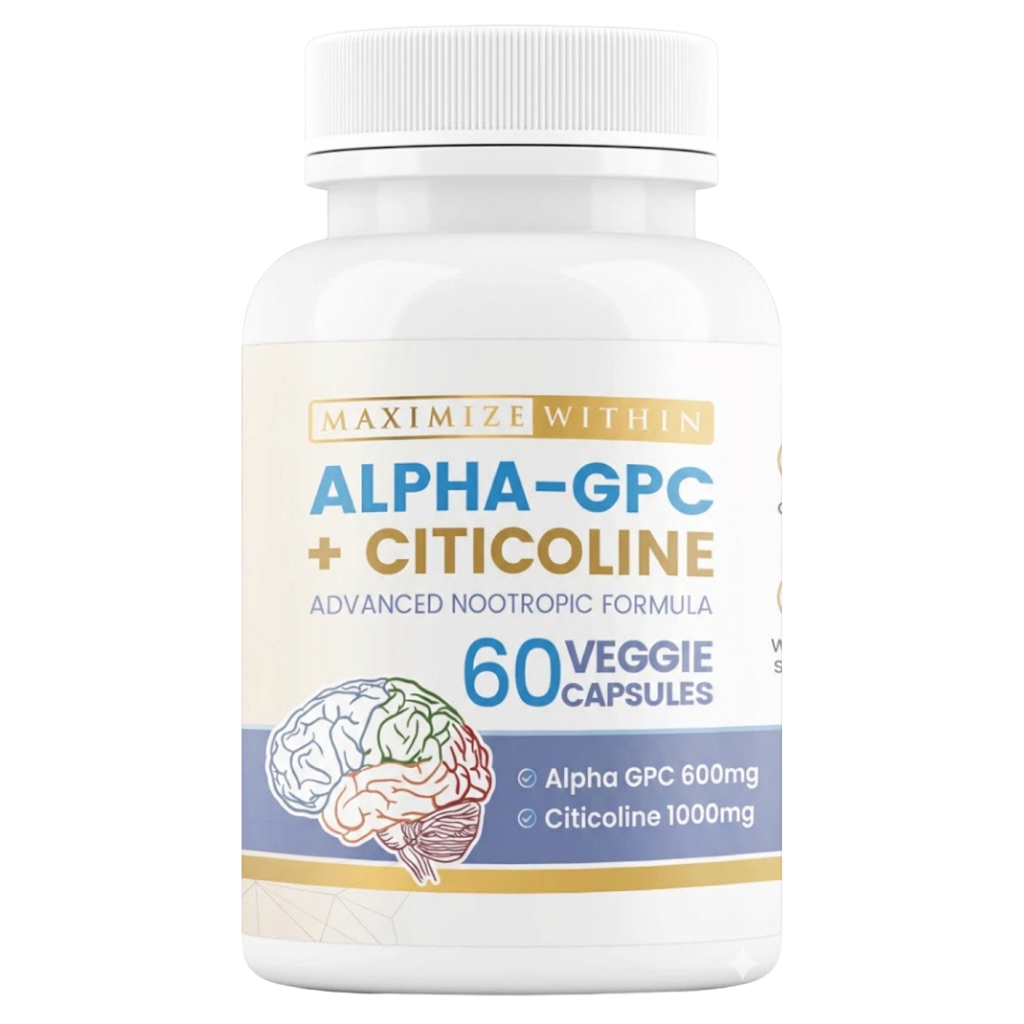
Featured Product
Alpha-GPC + Citicoline – Maximize Within | Advanced Nootropic Formula
A targeted nootropic blend formulated to support focus, memory, and mental clarity—helping you stay sharp, alert, and productive throughout the day.
Shop Now →A common pattern shows up in practice. Someone feels mentally dull by midmorning, starts searching for the best supplements for mental clarity, and gets hit with two extremes at once. One side promises sharper memory, laser focus, and “brain optimization.” The other side says it’s all nonsense.
The truth sits in the middle. Brain fog is real. The biology behind it is real. But not every product sold for “brain health” deserves your trust.
That distinction matters because supplement use is already widespread. According to Harvard Health on brain health supplements, approximately one in four adults over age 50 (25%) take at least one supplement to improve brain health, yet Dr. Pieter Cohen notes that there is no solid scientific proof that any brain health supplements work. That’s the tension consumers are living with. Demand is high, but evidence is uneven.
Bottom line: “Brain support” is not one category. It includes products with very different ingredients, mechanisms, and levels of evidence.
That’s why a useful guide can’t just be a shopping list. It has to answer three practical questions.
- What kind of fog are you dealing with? Stress overload, poor sleep, low nutrient intake, overstimulation, and mental fatigue don’t feel exactly the same.
- Which ingredients match that problem? A nutrient that supports brain energy isn’t the same as one that supports calm focus.
- How do you judge quality? Labels can look impressive while hiding weak dosing, filler-heavy formulas, or vague proprietary blends.
Mental clarity isn’t a single switch in the brain. It’s the result of steady signaling, adequate fuel, controlled inflammation, and enough resilience to handle modern cognitive load. When you understand those moving parts, supplement choices get much easier. You stop chasing hype and start matching ingredients to actual needs.
Why Your Mental Clarity Fades and How to Fight Back
Brain fog usually isn’t one failure. It’s several small bottlenecks happening at the same time. If you want to think clearly, you need to know where the slowdown is coming from.

Your neurotransmitters need raw materials
Neurotransmitters are the brain’s messaging system. They tell one cell when to fire, when to pause, and when to strengthen attention or memory. If that messaging gets sloppy, your thoughts can feel slow and scattered.
Choline-related compounds matter here because they help support acetylcholine, a neurotransmitter tied closely to focus, learning, and working memory. Think of acetylcholine as the “hold this in mind” signal. When that system is supported, reading, planning, and task-switching usually feel smoother.
Your brain burns energy constantly
Mental work feels abstract, but it’s still physical. The brain needs a constant supply of energy to maintain attention, decision-making, and recall. ATP is the cellular energy currency, and when energy availability dips, the first thing many people notice isn’t muscle weakness. It’s mental fatigue.
That’s why some people don’t describe brain fog as forgetfulness at first. They describe it as friction. Starting a task feels harder. Switching gears feels expensive. Staying focused feels like pushing through mud.
Inflammation and stress can blur signal quality
The brain works best when communication is clean. Ongoing stress, poor recovery, and inflammatory load can make that signaling noisier. You may still be awake, still functional, and still “on,” but not precise.
A useful analogy is static on a phone line. The message still goes through, but it takes more effort to hear it clearly. That’s often how stress-related mental fog feels in real life.
When people say they want more focus, they often mean one of two things. They either want more brain energy, or they want less internal noise.
Blood flow and oxygen delivery shape performance
Mental sharpness also depends on delivery. The brain needs oxygen and nutrients brought in efficiently. If circulation is suboptimal, or if your daily routine leaves you sedentary, dehydrated, and tense, cognitive performance can feel flatter than it should.
That doesn’t mean every focus problem is a circulation problem. It means clear thinking depends on infrastructure as much as chemistry.
The practical way to respond
Before adding supplements, identify the pattern.
| Brain fog pattern | What it often feels like | More likely support angle |
|---|---|---|
| Mental fatigue | Heavy thinking, slow processing | Brain energy support |
| Distractibility | Can’t hold a train of thought | Neurotransmitter support |
| Stress overload | Wired but unfocused | Calming focus support |
| Flat resilience | You fade fast under pressure | Stress adaptation and recovery |
| General nutritional gaps | Inconsistent focus day to day | Foundational nutrient support |
A smart supplement plan doesn’t try to “boost the brain” in a vague way. It targets the weak link. That’s the difference between buying a trendy bottle and choosing something with a reason behind it.
An Evidence-Based Review of Top Nootropic Ingredients
By the time someone reaches for a nootropic, they usually want one thing. A clearer head that holds up during real work.
The catch is that these ingredients do different jobs. Some support acetylcholine and mental organization. Some help the brain manage energy demand. Others are better suited to stress-heavy days or to shoring up a weak nutritional base. Reviewing them through that lens keeps the conversation practical.

| Ingredient | Primary role | Best fit | Main trade-off |
|---|---|---|---|
| Citicoline | Choline donor and membrane support | Focus, attention, working memory | Extra cholinergic support is not useful for everyone |
| Alpha-GPC | Choline support | Short-term focus support | Some people prefer citicoline’s broader profile |
| L-theanine plus caffeine | Calm alertness | Busy work, studying, overstimulation | Timing matters if caffeine affects sleep |
| Creatine monohydrate | Brain energy support | Mental fatigue, stress load, low dietary creatine | Can feel more subtle than stimulants |
| Omega-3s with zinc and multivitamins | Foundational support | Broad cognitive support and nutritional gaps | Does not act like a quick stimulant |
| Bacopa monnieri | Memory-oriented herbal support | Learning-heavy periods | Effects are usually gradual |
| Rhodiola rosea | Stress resilience support | Fatigue under pressure | Herb quality varies widely |
| Lion’s mane | Functional mushroom support | General cognitive wellness routines | Evidence is less direct than for core nutrients |
| B-vitamins | Nutrient adequacy | Low intake, broad support | Best when correcting a real gap |
Citicoline and Alpha-GPC
If the main problem is scattered attention or weak working memory, choline donors deserve a close look. They support acetylcholine production, which plays a central role in attention, recall, and mental sequencing.
Citicoline stands out because it contributes more than choline alone. According to Life Extension’s review of nootropics, citicoline has been associated with higher brain phosphatidylcholine levels within hours, and a randomized, double-blind, placebo-controlled trial in healthy women found improvements in secondary memory performance along with changes in frontal brain electrical activity linked to sustained attention. In practice, that broader profile is why citicoline often makes sense for adults who need focus support that also aligns with membrane health.
Alpha-GPC remains a common option for short-term focus support, especially for people who want a more direct choline-oriented ingredient. For a closer comparison of forms, this overview of Alpha-GPC and how it differs from other choline sources is a useful reference.
Practical use: Start here when concentration feels thin, recall slips during demanding work, or you are doing mentally heavy tasks that require sustained organization.
Trade-off: Higher doses do not automatically produce better clarity. Some people feel sharper with moderate cholinergic support and flat or overstimulated when intake climbs too high.
L-theanine plus caffeine
This combination earns its reputation for a simple reason. It fits a common modern pattern. The person who functions better with caffeine, but also gets tense, distracted, or mentally noisy from caffeine alone.
L-theanine is associated with a calmer attentional state. Caffeine increases alertness. Used together, they often produce steadier focus than coffee by itself, which is why I tend to view this pair as a performance tool for busy mornings, study blocks, and long work sessions rather than as a general wellness supplement.
Its advantage is the feel. Less jitter. Better control.
Practical rule: If caffeine improves energy but worsens composure, pair it before increasing the dose.
Some adults also compare this route with non-stimulant products used for stress support. If that is part of your decision process, this overview of the potential benefits of CBD gives broader context. CBD serves a different purpose, but the comparison comes up often when stress is part of the brain fog picture.
Creatine monohydrate
Creatine belongs in this conversation more often than it gets credit for. The brain burns through energy quickly, and creatine helps regenerate ATP, which is one reason it can be relevant when mental fog feels like depletion, slower processing, or reduced resilience under stress.
According to Vitaquest on supplements for brain fog, creatine monohydrate has been shown to increase cerebral phosphocreatine stores in certain groups, and a meta-analysis of randomized controlled trials found improvements in memory performance. That profile makes creatine especially interesting for vegetarians, adults under heavy workload, and anyone whose brain fog tracks more closely with fatigue than with overstimulation.
Trade-off: The effect is often quieter than a stimulant. People expecting a same-day “kick” may miss its value.
Omega-3s, zinc, and multivitamins
Foundational nutrients are less exciting to market, but they often solve the right problem. If mental clarity is inconsistent because meals are erratic, stress is high, or basic intake has been poor for months, correcting the baseline can do more than adding three trendy nootropics on top of a weak foundation.
A peer-reviewed study on nutraceutical combinations found that several combinations outperformed a control diet, with multivitamins, zinc, and omega-3 fatty acids emerging as the strongest option for memory and cognitive performance in that comparison. Mental clarity often improves when nutritional adequacy is restored first, especially in adults with hectic schedules or limited diet variety.
A few practical points follow from that evidence:
- Zinc supports brain signaling and is worth checking on labels, especially if a formula claims “cognitive support” without showing meaningful amounts.
- Omega-3s help cover a common gap, particularly in adults who rarely eat fatty fish.
- Multivitamins make the most sense when they correct inconsistency, not when they are used as a stand-in for sleep, hydration, and actual meals.
Bacopa monnieri, Rhodiola rosea, Lion’s mane, and B-vitamins
These ingredients are popular for good reasons, but expectations need to match their strengths.
Bacopa monnieri fits memory support better than immediate productivity. I usually place it in learning-heavy periods, exam preparation, or long-range cognitive support rather than in a stack designed for sharper output this afternoon.
Rhodiola rosea is more relevant when stress and fatigue are draining cognitive bandwidth. A well-made rhodiola product can be useful for people who fade under pressure, but standardization matters. Two bottles with the same plant name can perform very differently.
Lion’s mane gets plenty of attention in functional mushroom formulas. Some people like it as part of a general brain health routine, but its evidence base is less direct for day-to-day mental clarity than what we see with choline donors, creatine, or foundational nutrients.
B-vitamins are often underestimated because they do not sound exciting. They support energy metabolism and nervous system function, so they can help when intake or status is poor. When status is already adequate, the difference may be modest.
What tends to work and what tends not to
The ingredients with the best practical value usually fall into three lanes:
- Foundational support such as multivitamins, zinc, and omega-3s for people with nutritional gaps or inconsistent routines.
- Targeted focus support such as citicoline, alpha-GPC, and l-theanine with caffeine for attention, working memory, and smoother alertness.
- Energy and resilience support such as creatine and selected adaptogens for fatigue-heavy brain fog.
The weakest products are usually the ones that try to be everything at once. Long ingredient lists, proprietary blends, and vague “brain boost” claims make it hard to match the formula to the actual cause of mental fog. If a supplement cannot tell you what problem it is built to solve, it is usually label theater.
Strategic Stacking for Your Lifestyle Goals
By the time many adults start looking for a nootropic stack, the problem is already obvious. Work feels harder to organize, studying takes longer than it should, or a normal day with kids leaves attention scattered by noon. The right stack starts with the pattern behind the fog, then matches ingredients to that pattern.

The busy professional
Professionals usually need steady cognitive output across meetings, writing, decisions, and constant context switching. The complaint I hear most often is not “I have no energy.” It is “I can function, but my brain feels cluttered.”
Start with a reliable base if meals are inconsistent, stress is high, or sleep is uneven. A multivitamin, omega-3s, and zinc can make sense here, especially for people whose mental drag reflects nutritional gaps rather than a lack of stimulation. As noted earlier, foundational support often determines how well targeted ingredients perform.
Then build around the bottleneck:
- For smoother focus: L-theanine plus caffeine
- For executive function support: Citicoline or Alpha-GPC
- For mental fatigue under workload: Creatine monohydrate
This approach works in real life because it respects trade-offs. Citicoline may suit a desk-heavy knowledge worker better than another cup of coffee. Creatine can help when the day feels cognitively expensive, but it is not a quick jolt. L-theanine with caffeine often improves alertness quality, especially for people who get sharp and jittery from caffeine alone.
Build your stack the way you would build a calendar. Cover the recurring demands first, then add one tool for the pressure point that keeps showing up.
The diligent student
Students need a different shape of support. The usual strain is long reading blocks, memory load, and the need to stay attentive without feeling overstimulated during classes or late study sessions.
Citicoline fits well when the challenge is holding information in mind and staying organized through dense material. L-theanine with caffeine is useful for students who want cleaner alertness and fewer ups and downs. Bacopa is a longer-horizon option for memory support, but it asks for patience. It is better suited to a semester mindset than a cram-session mindset.
Recovery also matters here. A student under sleeping badly and running on stress often gets less from nootropics than expected, because the core issue is poor restoration between study blocks. This discussion of Ashwagandha with Magnesium shows how some people address the sleep and stress side of next-day mental performance.
Later in the day, educational media can be useful when people are trying to simplify choices instead of layering random products.
The multitasking parent
Parents often deal with fragmented attention more than classic “focus” problems. The day gets broken into short bursts. Meals can be rushed, sleep can be light, and the nervous system rarely gets a clean reset.
That is why a gentle, repeatable stack tends to hold up better than an aggressive one. Start with broad nutrient coverage if eating is inconsistent. Add omega-3s and zinc if the baseline diet is thin. Use l-theanine with caffeine when coffee helps but also makes patience and steadiness worse. Consider creatine when the dominant problem is drained mental energy rather than distractibility.
Stress chemistry can also be part of the picture, especially when the mind feels tired and wired at the same time. This guide to adaptogens and nootropics helps clarify where stress-support ingredients may fit, and where they are being oversold.
The best stack is usually the smallest one that clearly solves your actual problem. If a formula adds complexity without changing how your day feels, it is extra noise, not strategy.
How to Choose a Clean and Effective Supplement
A good ingredient can still be buried in a weak product. That’s why buying supplements is partly a science question and partly a label-reading question.

What a trustworthy label looks like
The cleanest products tend to make evaluation easy. You should be able to identify the active ingredients, the amount of each, and the form used. If a formula hides behind a proprietary blend, you can’t tell whether the headline ingredient is meaningfully dosed or just sprinkled in for marketing.
Look for these signs:
- Transparent dosing: Every active ingredient is listed with its amount.
- Recognizable forms: Citicoline, creatine monohydrate, zinc, and other ingredients should be named clearly.
- Simple excipients: Fewer unnecessary fillers, colors, and flavoring agents usually means a cleaner build.
- Allergen awareness: If you avoid soy, gluten, or animal ingredients, the label should say so plainly.
What to question immediately
Some products are all promise and no precision. Be cautious when you see very broad claims paired with very little detail.
A few red flags matter more than flashy packaging:
- Proprietary blends: They make comparison difficult and often hide underdosing.
- Stim-heavy formulas: If a product depends on a harsh stimulant feel, it may create a short-term impression without supporting real clarity.
- Kitchen sink ingredient lists: More isn’t always better. It can mean less of each useful ingredient.
- No testing information: Clean-label claims carry more weight when a company also emphasizes quality control and testing.
If a supplement label makes it hard to understand what you’re taking, that’s already useful information.
Clean-label claims should mean something
“Clean” gets overused, so verify it. A brand should tell you what it avoids, not just what it includes. That’s especially important for people with sensitivities or those who want a routine they can tolerate consistently.
If you want a more practical framework for evaluating ingredients commonly used for daily energy and focus support, this guide to natural energy and focus supplements is a helpful reference point. For readers comparing combo products, this article on l-theanine and caffeine for sharper focus is also worth reviewing because it shows how ingredient pairing can matter as much as the ingredient itself.
The best product is rarely the one with the loudest label. It’s the one you can understand, justify, and use consistently without second-guessing what’s inside.
Your Path to Lasting Mental Clarity
Mental clarity gets better when you stop treating it like a mystery and start treating it like a set of inputs. Neurotransmitter support, brain energy, stress load, and nutrient status all shape how sharp you feel from one day to the next.
That’s why the best supplements for mental clarity aren’t one universal list for everyone. A person who feels overstimulated and scattered may do better with calm-focus support. A person who feels depleted may respond better to brain energy support. Someone with an inconsistent diet may benefit most from foundational nutrients before anything more specialized.
A good routine also has limits. Supplements can support attention, memory, and resilience, but they don’t replace sleep, hydration, protein intake, movement, or stress control. They work best when they’re reinforcing a system that already gives the brain something to work with.
Keep the goal modest and concrete. Better concentration during work blocks. Less afternoon mental drag. Cleaner recall. More stable focus under pressure.
That approach usually works better than chasing a dramatic “brain hack.” Real mental clarity often looks less exciting than marketing suggests. It also tends to be far more sustainable.
Frequently Asked Questions About Nootropic Supplements
How quickly do mental clarity supplements work
It depends on the ingredient and the reason you’re using it. Some compounds, especially stimulant-adjacent combinations like l-theanine with caffeine, can feel noticeable the same day. Others are more gradual and may fit better as part of an ongoing routine.
If you don’t know what “better” should feel like, track one or two outcomes. Focus span, task completion, and afternoon mental energy are easier to judge than vague feelings about productivity.
Should you take nootropics every day
Some people do best with daily foundational support such as multivitamins, omega-3s, or creatine. More targeted products may be better used around work demands, study blocks, or periods of high stress.
Daily use makes the most sense when the ingredient supports a stable need, not when you’re using it to override poor sleep or constant overload.
Do you need to cycle them
Cycling depends more on the ingredient and your personal response than on a universal rule. A foundational nutrient formula usually isn’t treated the same way as a high-stimulation focus product.
If you notice that a supplement only “works” when you keep increasing it, that’s often a sign to reassess the product, your timing, or the underlying cause of your fog.
Are there side effects or interactions to think about
Yes. Even simple supplements can be inappropriate depending on medications, health conditions, caffeine sensitivity, or pregnancy and breastfeeding status. Herbs, stimulating blends, and cholinergic compounds deserve extra care if you’re already taking medication that affects mood, focus, blood pressure, or neurological function.
When in doubt, bring the exact label to a pharmacist or qualified clinician. “Natural” doesn’t automatically mean low risk.
Can supplements replace a healthy diet
No. They can help fill gaps and support specific functions, but they don’t substitute for adequate calories, protein, micronutrients, hydration, and sleep. If your basics are poor, even strong ingredients won’t perform well.
Supplements should make a healthy routine work better. They shouldn’t be asked to rescue an unsustainable one.
If you want a cleaner way to support daily focus, energy, and cognitive performance, Maximum Health Products offers science-backed formulas built around transparent, clean-label standards. Their lineup includes targeted wellness support for adults who want practical ingredients, simple routines, and products that fit real life rather than supplement hype.

