


You drink coffee for energy, but are you getting a meaningful amount of chlorogenic acid for weight support, or are you just drinking a roasted beverage with an unknown dose? That distinction is easy to miss. A regular morning coffee and a standardized green coffee extract may come from the same plant, yet they can deliver very different exposures.
Interest in chlorogenic acid weight loss has grown because people want practical metabolic support without extreme diets or stimulant-heavy routines. CGA is worth understanding as a plant compound studied in relation to body weight, glucose handling, lipid metabolism, and energy balance. It isn't a miracle ingredient, and the human evidence points to a modest adjunct rather than a stand-alone fat-loss solution.
The most useful question, then, isn't whether chlorogenic acid works. It's whether the product you're considering provides a studied amount, clearly identifies its extract, controls caffeine, and fits your wider eating and activity habits.
Introduction to Chlorogenic Acid and Weight Loss Interest
A busy professional might start the day with coffee, skip breakfast, eat quickly between meetings, and later search for a supplement that can support metabolism. The appeal is understandable. Weight management often depends on many small decisions, and shoppers naturally look for tools that can fit into an existing routine.
Green coffee enters that conversation because unroasted coffee beans contain chlorogenic acids. These compounds are reduced during roasting, while the amount in a brewed cup can vary with the coffee, preparation method, and serving. A capsule or powder made from green coffee extract approaches the question differently, because the manufacturer can standardize the extract around its chlorogenic acid content.
That doesn't make every green coffee product effective. A label can say “green coffee” without telling you how much CGA you receive. It may also fail to make the caffeine level clear, which matters if you already drink coffee, tea, energy beverages, or use pre-workout products.
The practical question: Don't ask only whether a product contains green coffee. Ask how much chlorogenic acid it delivers and whether the caffeine content is transparent.
The clearest controlled human signal comes from a 2023 systematic review and meta-analysis. It found that green bean coffee extract containing at least 500 mg of CGA per day was associated with an average body-weight reduction of 1.30 kg versus control, based on three randomized controlled trials involving 103 participants (systematic review in PMC). That result is meaningful, but it isn't a promise for every person or every product.
This guide separates the chemistry from the marketing. You'll learn what CGA is, how researchers think it may affect metabolism, what human trials measured, how to read a supplement label, and who should be cautious.
What Chlorogenic Acid Is and Where You Find It
Start with the bean rather than the supplement bottle. A green coffee bean is the unroasted seed of the coffee plant. It contains naturally occurring plant compounds, including a family of substances commonly called chlorogenic acids, or CGAs.
A useful food-chemistry analogy is to think of CGA as a collection of ingredients packed into a plant matrix. Quinic acid and caffeic acid act like two building blocks joined together in different arrangements. The result isn't one perfectly uniform molecule in every food or extract, but a group of related compounds.
The name has a long history. The term “chlorogenic acid” was first used in 1846, and researchers later obtained pure white crystals from which quinic acid and caffeic acid could be released through alkaline hydrolysis, as described in the historical account summarized by PubMed's review record.
Featured Product
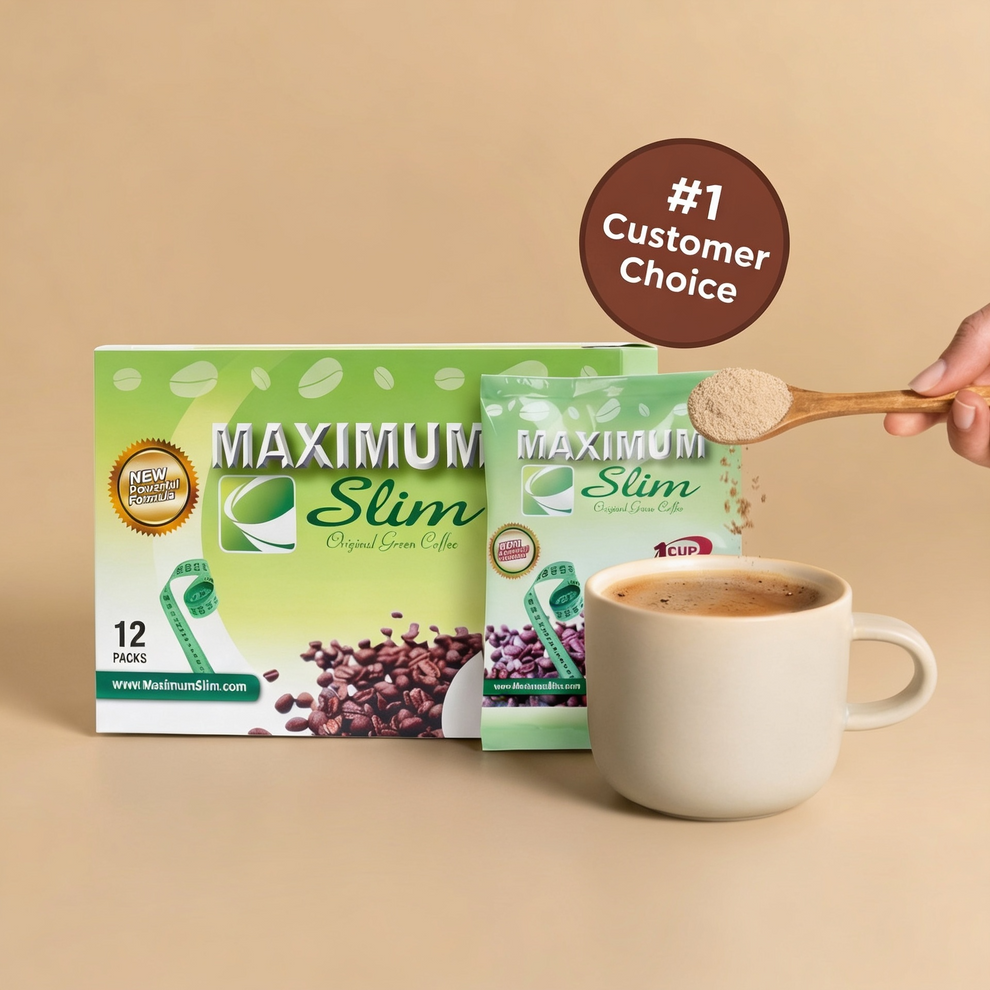
Maximum Slim Original Green Coffee
Science-backed formula to support metabolism, curb appetite, and help you reach your goals faster.
Shop Now →Green coffee differs from roasted coffee
Roasting changes coffee chemistry. Heat can substantially reduce the chlorogenic acids present in the original green bean, which is one reason green coffee extract attracts separate research interest. Your brewed coffee may still contain some CGA, but the amount isn't automatically equivalent to the standardized amount listed on a supplement label.
Food sources extend beyond coffee. Apples, artichokes, and other plants contain related phenolic compounds, although the concentration and chemical profile vary. Eating these foods supports a varied diet, but it doesn't let you assume that you're receiving the same exposure used in a green coffee extract trial.

Extracts, food, and caffeine aren't interchangeable
A standardized extract concentrates selected compounds from green coffee. Some products retain caffeine, while others use processing designed to reduce it. “Green coffee” doesn't automatically mean “decaffeinated,” and “chlorogenic acid” doesn't automatically describe the entire extract.
Before buying, distinguish among:
- Whole foods: Apples, artichokes, and other plants provide complex nutrition, not a defined CGA serving.
- Roasted coffee: It can contain chlorogenic acids, but the dose is difficult to infer from the beverage alone.
- Green coffee extract: The label may state a total CGA amount or a standardization percentage.
- Decaffeinated green coffee extract: This may suit people who want CGA without adding much caffeine, but the label should still disclose what was removed and what remains.
For a straightforward explanation of the compound and its food origins, see what chlorogenic acid is. The key lesson is simple: the plant source gives you context, while the extract label tells you whether a product can be compared with the human evidence.
How Chlorogenic Acid May Influence Metabolism and Appetite
CGA isn't best understood as a single “fat-burning switch.” Researchers have examined several connected pathways, and the most reasonable interpretation is that small changes in food intake, glucose handling, energy expenditure, and lipid metabolism could add up over time.
Glucose handling resembles traffic control
After you eat carbohydrate-containing food, glucose enters the bloodstream and the body manages that rise through insulin and other processes. Mechanistic discussions often examine whether CGA can influence this flow, making glucose handling more like traffic control than a floodgate.
That doesn't mean CGA blocks all carbohydrate absorption, and it doesn't mean a supplement cancels out a high-calorie diet. It means researchers are interested in whether the compound can affect how the body processes nutrients after eating.
Lipid metabolism involves storage and release
The body stores energy as fat and releases it when energy demand rises. Laboratory research has examined whether CGA can influence lipogenesis, the process involved in forming and storing fat, as well as circulating lipid patterns.
Animal findings offer clues but not guarantees. In a high-fat-diet mouse study, CGA supplementation reduced body weight and food intake, increased body temperature and thermal dissipation, increased brown adipose tissue activity, and improved glucose intolerance. The same research reported suppressed lipogenesis and improved plasma lipids (study record on PubMed).
Thermogenesis is the body's heat engine
Brown adipose tissue produces heat rather than storing energy in the same way as ordinary white fat. Think of it as a small furnace. The mouse findings suggest that CGA may affect energy balance through thermal dissipation and brown-fat activity, not just by reducing appetite.
Human translation remains uncertain. A pathway can explain why researchers are interested in an ingredient, but it can't establish that a particular capsule will produce a noticeable result for you.
Mechanistic evidence explains possibility, not personal outcome.
Appetite and gut signals add another layer
Food intake matters because even a modest reduction in daily energy intake can influence body weight over time. The mouse study reported lower food intake alongside metabolic changes, which suggests that appetite-related effects may work together with energy expenditure rather than operate alone.
The four proposed levers fit together like a household budget. You may spend slightly more energy, take in slightly less, process nutrients differently, and alter how the body handles stored fat. None of those ideas should be treated as proof of dramatic human fat loss.
For a consumer-focused discussion of green coffee extract, including its relationship to metabolism support, green coffee bean extract benefits provides additional context.

The animal study is useful for understanding possible biology, but the human question depends on controlled trials. The next step is to examine those results without turning a modest signal into a headline promise.
What Human Clinical Trials Show
Can a measurable result in a trial translate into a meaningful change for someone choosing a green coffee product? Human research suggests a modest answer, with the dose and study design doing much of the work.
A 2023 systematic review and meta-analysis pooled randomized controlled trials of green coffee bean extract providing at least 500 mg of CGA daily. Across three trials and 103 participants, the analysis found an average body-weight reduction of 1.30 kg versus control, with a 95% confidence interval from -2.07 to -0.52 kg and p = 0.001 (full review).
How to read that result
The average difference is the study's central estimate. The confidence interval describes the range of effects compatible with the available data under that analysis. Since the interval remained below zero and the p-value was small, the result met the researchers' statistical threshold for a difference between groups.
That result does not mean every participant lost 1.30 kg. Group averages work like the average temperature across a week, they describe the whole set without predicting each individual day. Responses can vary, and the trials were short, so the findings do not show whether the effect would continue over a longer period.
The analysis found no detected heterogeneity, reported as I² = 0% with p = 0.904. In practical terms, the included trial estimates did not show detectable statistical inconsistency in that pooled analysis. That makes the result easier to interpret within this small evidence base, but the modest sample and short study windows still limit confidence about broader use.
A broader review gives a more mixed picture
An earlier review of human evidence pooled 13 papers and 16 randomized trials. It found a statistically significant BMI reduction of 0.403 kg/m², with a 95% confidence interval from -0.800 to -0.005 and p = 0.047. Overall body-weight change, however, was not consistently significant in that broader review (PubMed record).
The distinction matters because BMI and body weight measure different things. A statistically significant BMI result does not automatically mean a large, visible change on the scale. The broader review also combined products, doses, and study designs that differed, so its finding should not be treated as interchangeable with the more specific 2023 CGA analysis.
The evidence has boundaries
Most published human studies in this area lasted only 4 to 12 weeks, according to the trial summary and safety discussion (discussion of forms, dosing, and side effects). Long-term safety, durability, and whether an early change persists therefore remain uncertain.
A careful reading separates three conclusions:
- What appears supported: Adequately dosed CGA-containing green coffee extract has shown a modest short-term weight signal in controlled human research.
- What remains uncertain: Whether lower-dose products, different extracts, or longer use produce the same result.
- What isn't justified: Calling CGA a guaranteed fat burner or presenting it as a replacement for calorie control, movement, sleep, or medical care.
Statistical significance isn't the same as a life-changing effect.
For shoppers, the 500 mg daily CGA finding is a practical filter. A low-dose coffee or extract may contain some CGA yet provide less exposure than the products studied. The label must show the amount of CGA itself across the daily serving, not merely the total extract weight. That turns a promising research result into a question you can check before buying.
Finding Effective Doses Foods and Supplement Options
The most actionable detail in the human evidence is the apparent dose threshold. The 2023 meta-analysis found its pooled result in products providing at least 500 mg of CGA per day, while the available evidence doesn't establish that lower doses will reproduce the same signal (dose-focused meta-analysis).
That doesn't mean 500 mg is a universal prescription. It means shoppers should compare the amount of CGA itself, not just the total weight of a green coffee extract.
Read the label in the right order
Suppose a bottle lists “green coffee bean extract” but doesn't state total chlorogenic acids. You can't confidently compare it with the extract used in the human evidence. The same problem appears when a label lists a large extract serving but only a small amount of standardized CGA.
Check these details:
- Total daily CGA: Look for the amount supplied across the full daily serving, not only per capsule.
- Standardization: A percentage is useful only when paired with the extract weight and serving size.
- Caffeine disclosure: Determine whether the product contains caffeine and whether the amount is stated clearly.
- Serving instructions: Confirm how many capsules or scoops deliver the listed amount.
- Other ingredients: Identify fillers, stimulant blends, or additional caffeine sources that could change the product's practical effect.
A simple calculation helps. If an extract is standardized to a stated CGA percentage, multiply the extract amount by that percentage to estimate the CGA contribution. If the label doesn't provide both pieces of information, ask the manufacturer rather than guessing.
Compare products by exposure, not appearance
Roasted coffee is familiar and convenient, but its CGA exposure is difficult to calculate from the cup. Food sources such as apples and artichokes contribute valuable nutrients, yet they aren't standardized supplements. A decaffeinated green coffee extract may be more suitable for a caffeine-sensitive person who still wants a defined CGA amount.
Take the label to your daily routine. If you drink coffee in the morning and use a pre-workout later, a caffeinated green coffee product may add more stimulation than expected. If your goal is metabolic support rather than alertness, a transparent decaffeinated option may make more sense.
Weight management also improves when you understand your overall food intake. A smart macro calculator for results can help turn a vague calorie goal into a clearer plan for protein, carbohydrates, and fats.
The best use of the dose finding is practical, not promotional. Choose a product that discloses meaningful CGA exposure, then judge it as one small component of a sustainable routine.
Safety Side Effects Interactions and Who Should Be Cautious
“Green coffee” sounds gentle, but it isn't automatically decaffeinated or risk-free. Product names often describe the botanical source, not the stimulant profile. A person who tolerates a morning coffee may still notice problems after adding an extract to other caffeine sources.
Reported caffeine-related effects can include insomnia, jitteriness, headache, and gastrointestinal discomfort, especially when total intake rises or the user is sensitive (safety and dosing discussion). Extract variability adds another concern. Different products can deliver different amounts of CGA, caffeine, carriers, and other coffee constituents.
A cautious shopper's checklist
- Check caffeine first: Don't assume green coffee means caffeine-free. Look for a declared amount or a clear decaffeination specification.
- Count the whole routine: Include coffee, tea, energy drinks, pre-workout products, and other stimulant supplements.
- Start with tolerance in mind: If you're sensitive, choose a lower-stimulation or decaffeinated formulation and monitor sleep, mood, digestion, and heart sensations.
- Review medical factors: People who are pregnant, managing anxiety or hypertension, or taking medication should ask a qualified clinician before using a concentrated extract.
- Stop when symptoms persist: Ongoing insomnia, palpitations, severe digestive discomfort, or unusual headaches deserves medical attention rather than dose escalation.
Human research also has a time limitation. Published studies summarized in the safety commentary generally lasted 4 to 12 weeks, so evidence for long-term safety and continued weight effects remains uncertain. That doesn't prove extended use is harmful, but it does mean consumers shouldn't treat short trials as a complete safety record.

For a plain-language review of potential reactions and product considerations, see green coffee extract side effects. A clean label helps, but it doesn't replace checking caffeine exposure or discussing supplements with a clinician when health conditions or medicines are involved.
Making Chlorogenic Acid Work in Your Daily Routine
A sensible CGA decision starts with your goal. If you want a modest aid alongside calorie control, regular movement, and a consistent eating pattern, a standardized extract may be reasonable to investigate. If you're hoping to offset an unchanged diet or produce rapid weight loss, the human evidence doesn't support that expectation.
Use this decision sequence:
- Define the target: Decide whether you're supporting appetite awareness, daily structure, or a broader weight-management plan.
- Assess stimulation: Review your current caffeine routine before adding green coffee extract.
- Verify the product: Choose a label that identifies daily CGA exposure, extract details, caffeine status, and serving instructions.
- Pair it with meals and movement: Treat CGA as an adjunct, not the foundation of your plan.
- Track practical outcomes: Watch your weight trend, hunger, sleep, digestion, and energy over several weeks rather than judging one day.
Maximum Health Products offers green coffee products, including Maximum Slim Original Green Coffee, within its weight-management range. The product is positioned as a green coffee option for metabolism and weight-management support, so compare its label and caffeine information with your own needs before deciding.
You don't have to use CGA. A clear label, realistic expectations, and a routine you can sustain matter more than any single ingredient. If the dose isn't disclosed or the caffeine profile is unclear, skipping the product is a sound choice.
Maximum Health Products offers green coffee and other clean-label nutrition products designed for energy, metabolism, and broader daily wellness support. Visit Maximum Health Products to review the available options and choose a product that fits your caffeine tolerance and weight-management routine.

