


A single 100 mg dose of caffeine raised resting metabolic rate by 3% to 4% over 150 minutes, and repeated doses increased total daytime energy expenditure by 8% to 11% in a classic human study, with a daily bump of 150 kcal in lean volunteers and 79 kcal in post-obese volunteers (PubMed). That's the cleanest way to frame a coffee metabolism boost. The effect is real, but it's modest, dose-dependent, and far less dramatic than marketing copy usually suggests.
That gap between reality and hype matters because you don't need another promise. You need a clear read on what coffee can do, why the response differs so much from person to person, and when the benefit fades into tolerance or poor sleep.
For readers who already want broader metabolism habits, metabolism tips from Nutrition Geeks can be useful background. The more important point is this, coffee belongs in the category of small, measurable supports, not miracle fixes.
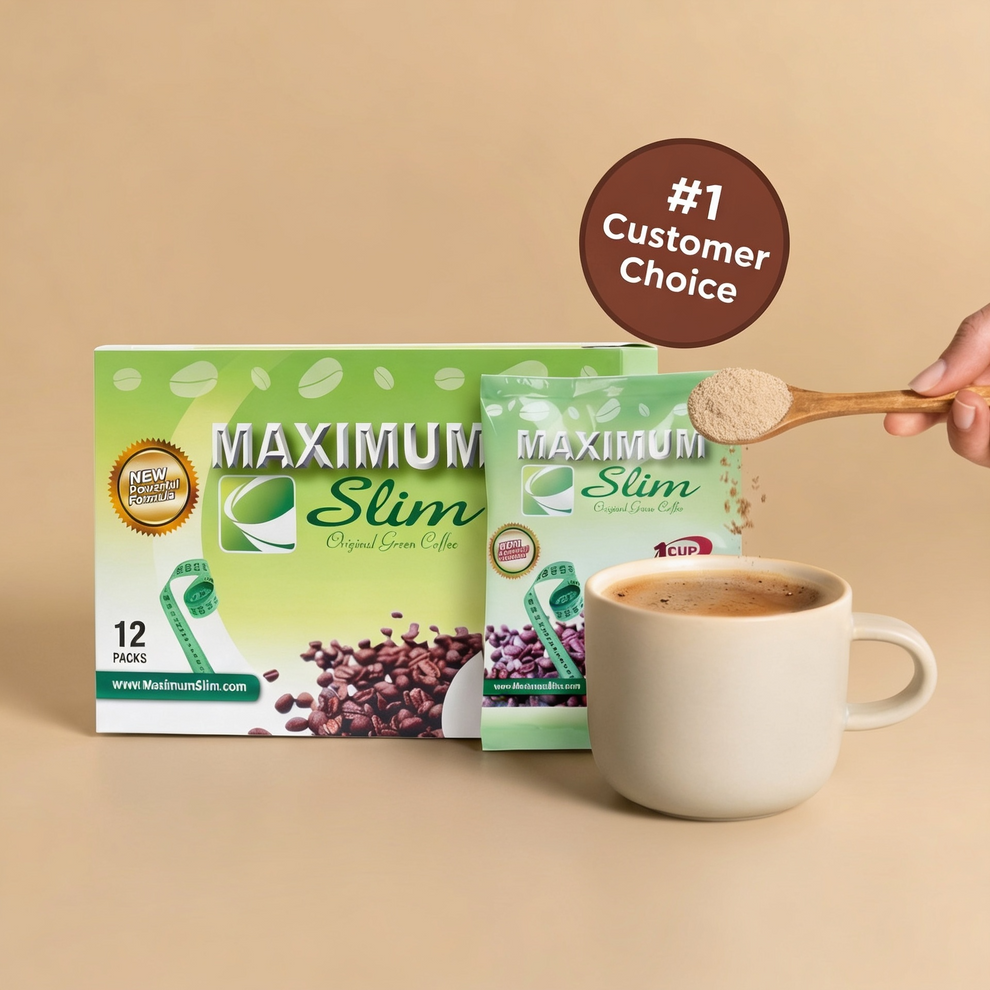
Featured Product
Maximum Slim Original Green Coffee
Science-backed formula to support metabolism, curb appetite, and help you reach your goals faster.
Shop Now →Understanding the Real Science Behind Coffee and Metabolism
A lean volunteer in the 1980 study didn't suddenly become a fat-burning machine after coffee. He or she got a small, measurable nudge, roughly 150 kcal more energy expended across the day after repeated 100 mg caffeine doses every 2 hours for 12 hours (PubMed). That's useful, but it's not the kind of number that erases a poor diet or replaces exercise.
The same study also found a 3% to 4% rise in resting metabolic rate over 150 minutes after a single 100 mg dose (PubMed). In plain terms, coffee can make the body spend a little more energy for a few hours. It doesn't rewrite metabolism, it nudges it.
What that means in daily life
A lot of people hear “coffee boosts metabolism” and mentally convert that into guaranteed weight loss. That's the wrong translation. The better mental model is that coffee can act like a small thermostat adjustment, not a furnace upgrade.
Practical rule: if a claim about coffee sounds dramatic, it's probably overselling the evidence.
The honest version is more restrained. Coffee can support energy expenditure, but the effect depends on dose, timing, and the person drinking it. That's why one person feels a noticeable lift and another notices almost nothing.
If you want a consumer-friendly overview of related products, green coffee bean extract benefits is worth reading alongside the research, but product marketing should never outrun the science. The science says coffee's metabolic effect is real, yet modest enough that the rest of your routine still matters far more.
How Coffee Compounds Influence Your Metabolic Engine
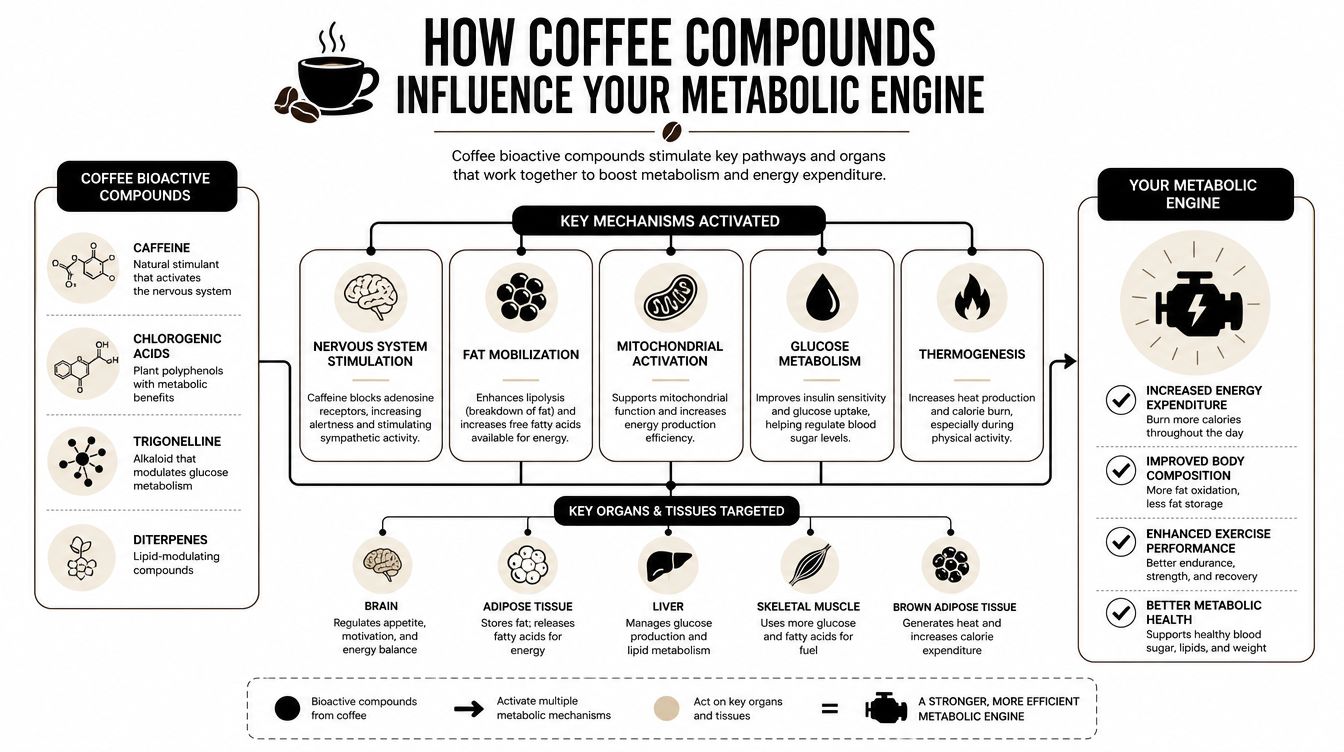
Think of caffeine as a gentle accelerator for the body's metabolic engine. It doesn't build a new engine. It signals the one you already have to run a little hotter for a short window, which is why the effect shows up as increased thermogenesis and changes in fuel use.
The most useful detail is that coffee doesn't just change calorie burn, it also shifts substrate utilization, meaning the body pulls from a mix of lipid and carbohydrate fuel during that window (PubMed). That's a more precise description than saying coffee “burns fat.” It changes which fuel gets used, and under some conditions that can include more fat oxidation.
Why the next-day story is different
Controlled human work reported that coffee's stimulation of energy expenditure was driven by both lipid and carbohydrate oxidation, and that the next day's thermogenic effect had faded even though lipid oxidation remained high (PubMed). That pattern matters. It suggests coffee's short-term calorie-burning push and its fuel-shifting effects don't behave exactly the same way.
The newer meta-analysis helps explain why this gets confusing. It found caffeine significantly increased fat metabolism across 94 studies, 105 independent groups, and 984 participants, with an overall effect size of 0.39 (Humankinetics review). That supports the idea that coffee does something measurable, but not something huge.
A better interpretation is that coffee changes how the body allocates energy, then the effect tapers. That's why some people notice appetite changes, a little more training drive, or a sharper morning start, while others mainly notice jitters or no visible metabolic difference at all.
What the Research Evidence Shows
Coffee has carried a metabolism-boosting reputation for a long time, and that reputation did not appear out of nowhere. A 2024 PubMed review notes that coffee has been associated for nearly 100 years with a rise in metabolic rate of 5% to 20% for at least 3 hours (Humankinetics review). That history supports the idea that coffee has a measurable acute effect, but it does not show that the effect is large enough to drive meaningful long-term fat loss on its own.
The strongest modern summary is the 2023 systematic review and meta-analysis, which pooled 94 studies across 105 independent groups and 984 participants. It found that caffeine ingestion increased fat metabolism, with an effect size of 0.39 and a 95% CI of 0.30 to 0.47. That is a real signal, but it is a moderate one, and it should be read as evidence of a repeatable short-term shift rather than proof of dramatic body-composition change. The same review reported effects both at rest and during exercise, and it did not find clear subgroup differences by sex, fitness level, habitual caffeine use, fasting state, or dosage (Humankinetics review).
Measurement method matters here. Human studies do not always line up neatly because some designs track blood markers of fuel use, while others rely on whole-body gas exchange. The review found stronger evidence from blood biomarkers than from gas exchange, which suggests the underlying effect is detectable, but not always equally visible across test methods (Humankinetics review). That kind of mismatch is one reason coffee-metabolism claims often sound simpler than the underlying research.
A historical human study helps show how the effect was first described. In that work, 100 mg caffeine raised resting metabolic rate by 3% to 4% over 150 minutes, and repeated doses increased daytime energy expenditure by 8% to 11% (PubMed). Those findings fit the broader pattern seen in later reviews, but they are still acute responses. They do not tell you how much, if at all, coffee changes long-term weight trajectories.
| Study | Key Finding | Limitation |
|---|---|---|
| 1980 human study (PubMed) | 100 mg caffeine raised resting metabolic rate 3% to 4% over 150 minutes, and repeated doses increased daytime energy expenditure 8% to 11% | Acute design, not a long-term weight-loss trial |
| 2023 meta-analysis (Humankinetics review) | Caffeine increased fat metabolism, with an effect size of 0.39 | Short-term studies with mixed methods |
| 2024 review summary (Humankinetics review) | Coffee has been linked with a metabolic rise of 5% to 20% for at least 3 hours | Historical summary, not proof of durable fat loss |
For readers who want a practical adjacent example of how stimulant timing can matter, chocolate and sleep science is a useful comparison because sleep disruption can make a small metabolic benefit harder to notice. The cleanest reading of the evidence is simple, coffee can raise metabolism, but the effect is modest and mostly short term.
Why Coffee's Metabolic Effect Varies So Much Between People
Two people can drink the same coffee and walk away with very different metabolic responses. That's not a contradiction in the research, it's part of the biology. Coffee's active compound, caffeine, is metabolized mainly in the liver by CYP1A2, so clearance speed varies with genotype, smoking, medications, and habitual intake (PubMed).
Recent review literature says coffee can raise metabolic rate by roughly 5% to 20% for at least 3 hours, but about half of that effect is still unexplained, and response appears to differ by caffeine clearance rate, genetic polymorphisms, age, sex, and body composition (PubMed). That is the gap in most coffee-metabolism content. People want a single answer, but the body doesn't cooperate that way.
Why your friend's coffee routine may not match yours
A fast metabolizer may feel a shorter, cleaner lift. A slow metabolizer may feel the same cup longer, sometimes as irritability, sleep disruption, or a stronger subjective buzz. Neither person is “doing coffee wrong.” They're just processing it differently.
Coffee is less like a universal switch and more like a personalized signal.
That helps explain why generic advice falls apart. Age, sex, and body composition all matter, but they don't fully predict the outcome. Habitual intake matters too, because repeated exposure can change how noticeable the effect feels even when the biology still exists.
The practical move is to track your own response. If coffee helps you feel more alert without wrecking sleep or appetite, that's a meaningful benefit. If it pushes you toward jitters or late-day wakefulness, the metabolic upside may be outweighed by the cost.
Timing, Dosing, and Safe Use Guidelines
The cleanest evidence for dose comes from the classic human data. A 100 mg dose produced measurable metabolic changes, and repeated 100 mg doses every 2 hours for 12 hours increased daytime energy expenditure, but that doesn't mean more is always better (PubMed). In real life, the goal is the smallest amount that gives you the response you want without side effects.
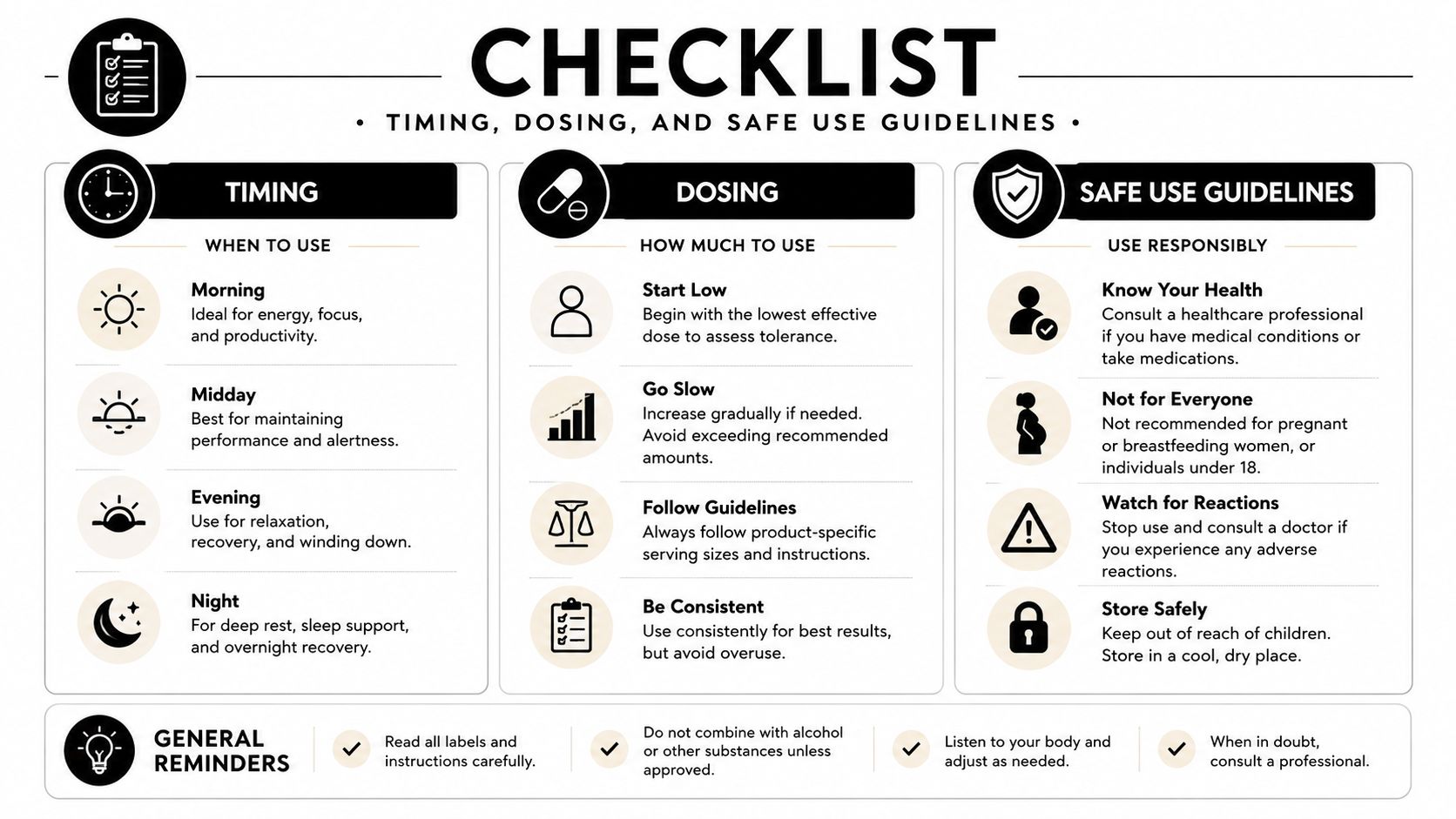
A simple decision framework
- Start low: Use one modest serving first, then watch how your body reacts over the next few hours.
- Pair the timing with your day: The metabolic window is short, so coffee works best when it supports a specific goal, like a morning routine or pre-activity boost.
- Protect sleep: If caffeine disrupts sleep, the net effect on metabolism and appetite can easily turn negative.
- Be cautious with medications: Because caffeine uses the CYP1A2 pathway, medications and smoking status can change how strongly you respond (PubMed).
The biggest long-term issue is tolerance. Current expert commentary says the long-term effects are not well known and there isn't enough evidence to recommend a specific caffeine dose for fat loss (Henry Ford Health). That means daily users shouldn't expect the same “first cup” effect forever.
People with cardiovascular conditions, caffeine sensitivity, or medication interactions should be especially careful. If you're using coffee as a metabolic tool, treat it like one part of a broader plan, not a standalone strategy. For a general overview of how product choices fit into metabolism habits, green coffee extract side effects is worth reading before you add any coffee-based supplement.
Maximizing Metabolic Benefits with Smart Strategies
Coffee works best when it supports an actual routine. If you drink it and then sit still, the effect is modest. If you pair it with movement, sleep discipline, and a steady intake pattern, it becomes a more useful lever instead of a random stimulant.
The strongest strategy is to think in layers. Coffee gives a small metabolic nudge. Exercise, protein adequacy, sleep, and consistent meal timing do the heavy lifting. That logic fits the clean-label approach used by Maximum Health Products, where products are built around straightforward ingredients rather than noisy formulas, and one coffee-based option in that lineup is Maximum Slim Original Green Coffee.
Ways to make the effect more useful
- Use coffee before planned activity: The metabolic rise is temporary, so align it with a walk, workout, or focused work block.
- Avoid chasing the buzz: If you keep increasing intake because you no longer feel it, tolerance is already shaping the result.
- Choose cleaner add-ons: Products without artificial colors, flavors, added sugars, or fillers keep the routine simpler, which makes it easier to see what helps.
- Keep your baseline strong: Coffee can't compensate for poor sleep or chronic inactivity.
The 2023 meta-analysis is helpful here because it found the caffeine effect on fat metabolism at rest and during exercise, which makes movement a logical partner to coffee rather than a separate topic (Humankinetics review). That doesn't mean coffee is a workout replacement. It means the body is already primed to use fuel differently during activity, and caffeine can modestly reinforce that.

A strategic approach also respects diminishing returns. If you rely on coffee to cover fatigue that really comes from short sleep, the metabolism benefit gets buried under the cost of worse recovery. That's why the smartest users treat coffee as a helper, not a rescue plan.
If you want a broader metabolism routine that goes beyond caffeine, how to boost metabolism is a relevant companion resource. Coffee fits better inside a stable habit stack than it does as a stand-alone fix.
Frequently Asked Questions About Coffee and Metabolism
Does decaffeinated coffee boost metabolism?
Not in the same way caffeinated coffee does. The metabolic effect in the research is tied to caffeine, so decaf won't deliver the same thermogenic signal.
Can coffee help with intermittent fasting?
Yes, it can fit into many fasting routines because it's often used for alertness without calories, but the metabolic effect is still modest and depends on the person. If it worsens sleep or causes jitters, it can undermine the bigger goal.
Do green coffee bean extract supplements work better?
The evidence doesn't support treating them as a magic fat-loss fix. They may be marketed for metabolism support, but the long-term human evidence remains limited, and caffeine-related responses still vary widely.
What are signs I've had too much caffeine?
Common warning signs include nervousness, increased heart rate, and nausea (Henry Ford Health). If coffee starts causing those symptoms, the dose is no longer helping your routine.
If you want metabolism support grounded in clean-label ingredients and practical dosing, explore Maximum Health Products for coffee-based options, supplements, and daily wellness tools. The right product should fit your routine, not push it off balance.

