


The average adult in the United States gets just 15 g of fiber per day, which is only about 40% of the recommended Adequate Intake and well below the 25 to 35 g/day targets used in European guidance, according to this review of fiber intake patterns and health effects. That single number changes how individuals should think about fiber. The issue usually isn't whether you're taking fiber seriously. It's that modern eating patterns make it surprisingly easy to miss the mark.
I want to reframe fiber intake recommendations in a more useful way. The official targets matter, but for many adults they work best as a minimum floor, not the finish line. If your goals include steadier digestion, better fullness between meals, or more intentional weight management, it helps to understand both the standard recommendations and the more ambitious intake levels now being discussed for gut microbiota support.
Fiber can feel confusing because advice often skips the practical part. People hear "eat more plants" or "choose whole grains," but they don't get a clear roadmap for what that looks like across a normal day. That's what this guide is for.
Why Most People Are Falling Short on Fiber
Most fiber shortfalls don't happen because people are careless. They happen because low-fiber foods are convenient, familiar, and everywhere. Breakfast turns into toast or a pastry. Lunch is built around refined bread or white rice. Snacks come from a wrapper. Dinner may include some vegetables, but not enough to carry the whole day.
Why the gap happens so easily
Fiber lives mostly in foods that are minimally processed. The more a food gets stripped down, the more likely it is to lose the bulky plant parts that help with fullness and regularity. That means a day can feel "pretty healthy" and still end up low in fiber.
A common example looks like this:
- Breakfast gets rushed: Coffee and a quick refined carb don't provide much staying power.
- Lunch stays light on plants: A sandwich can be convenient, but if it lacks beans, vegetables, fruit, or whole grains, fiber stays low.
- Snacks lean ultra-processed: Chips, crackers, and sweets are easy to grab, but they don't close the fiber gap.
- Dinner does all the work: One salad at night usually can't make up for an entire low-fiber day.
Practical rule: Don't treat fiber as a dinner goal. Spread it across the whole day.
Why this matters beyond digestion
Fiber is often first thought of as a constipation nutrient. That's part of the story, but it's not the whole story. Higher fiber intake is also tied to broader health outcomes, including cardiovascular support and healthy metabolic function. The good news is that this gap is fixable with ordinary foods and a few smarter defaults.
You don't need a perfect diet. You need a repeatable pattern. Once you understand what fiber does and how much you're aiming for, the recommendations start to feel much more manageable.
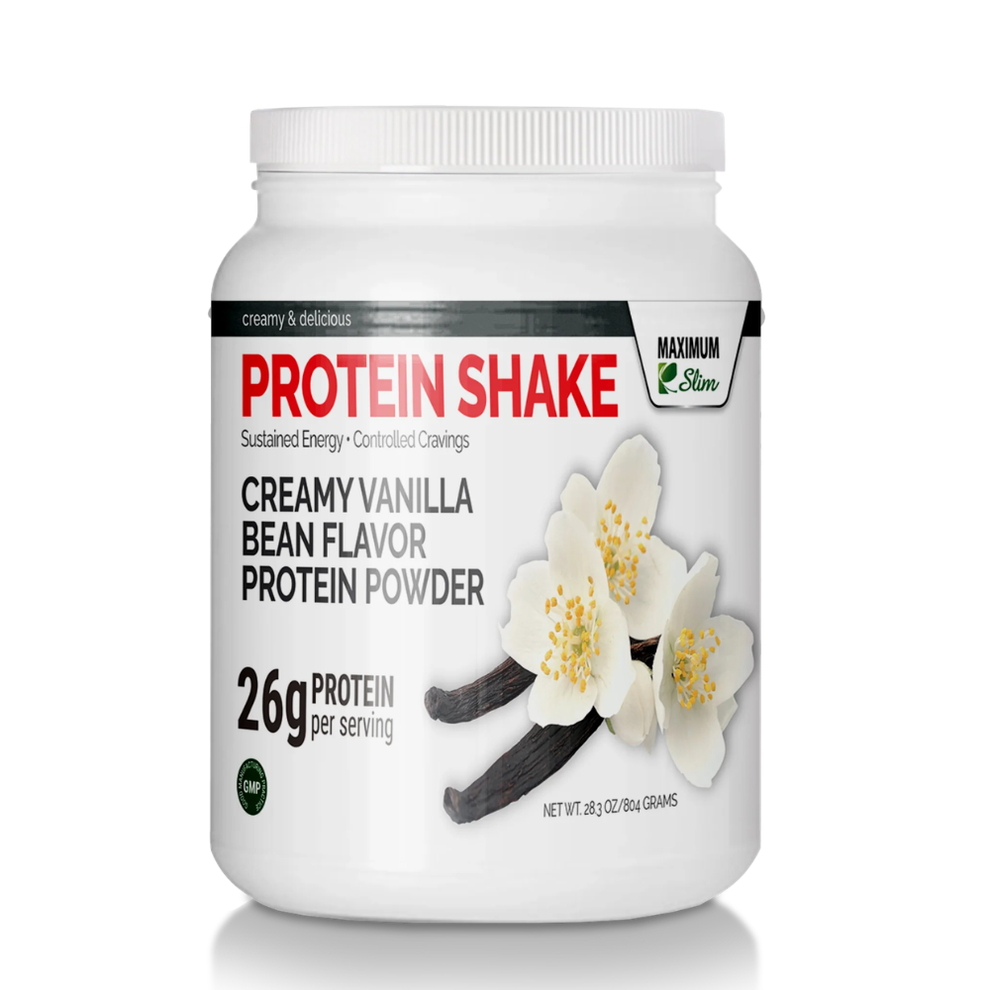
Featured Product
Organic Protein Shake - Maximum Slim
Each serving provides 20g of organic plant-based protein and 10g of organic fiber, making it a convenient option for smoothies, shakes, and meal replacement support.
Shop Now →Understanding Fibers Role in Your Health
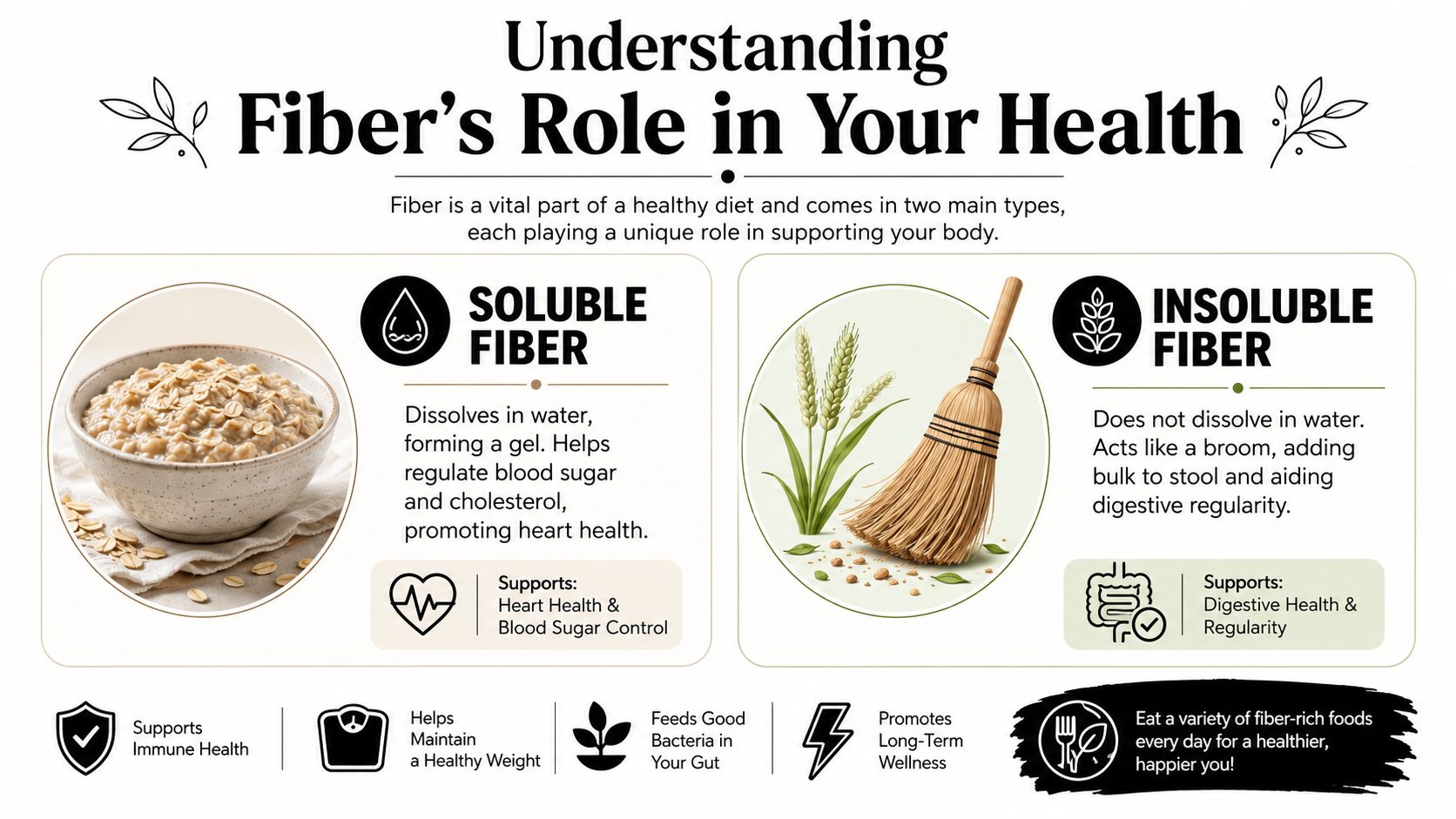
Fiber isn't one single substance. It's a category of plant components that your body doesn't fully digest. The easiest way to remember the two main types is this: soluble fiber acts more like a gel, while insoluble fiber acts more like a broom.
Soluble fiber works like a gel
When soluble fiber mixes with water, it forms a softer gel-like texture in the digestive tract. That slower movement can help support a steadier release of nutrients from a meal. In plain language, meals with soluble fiber often feel more satisfying and less abrupt.
Foods that naturally supply more soluble fiber include oats, beans, lentils, apples, citrus, chia, and flax. Many people who are trying to manage appetite do especially well when these foods show up earlier in the day.
Insoluble fiber works like a broom
Insoluble fiber doesn't dissolve in water. It helps add bulk and supports movement through the digestive tract. That's why it gets the broom analogy. It helps keep things moving.
You'll find more insoluble fiber in vegetables, bran, nuts, seeds, and many whole grains. Most plant foods contain a mix of both types, which is one reason variety matters more than obsessing over a single ingredient.
If you want a broader digestion strategy, this guide on how to improve digestion naturally at home is a helpful companion to fiber basics.
Why some experts think the standard target may be only a starting point
Standard fiber intake recommendations were designed largely around outcomes such as gastrointestinal function and heart health. But newer thinking asks a different question: how much fiber does your gut microbiota need to thrive?
One review suggests that the ideal intake may be closer to 50 g/day to properly nourish the colonic microbiota and potentially help prevent conditions like colitis, which is substantially higher than standard advice focused on laxation and heart health, as described in this review on dietary fiber and the gut microbiome.
That doesn't mean everyone should jump straight to that amount tomorrow. It means the official recommendation may be a baseline target, while an optimal target for some people could be higher if it's built gradually and comfortably.
A useful mindset is this: hit the minimum consistently first, then decide whether your body does well with more.
For readers interested in the broader food pattern that supports digestive resilience, this piece on balanced gut microbiome support adds good context around overall gut-friendly eating.
Your Daily Fiber Intake Recommendations
The official fiber intake recommendations come from a simple rule set by the Institute of Medicine: 14 grams per 1,000 calories. That guidance comes from epidemiological data linked to protection against heart disease and support for gastrointestinal function, as summarized in this Institute of Medicine fact sheet.
That calorie-based rule matters because fiber needs aren't random. They're tied to how much energy a person typically needs. More food intake usually means more room, and more need, for fiber-rich plant foods.
Daily Fiber Recommendations by Age and Gender
| Group | Age | Recommended Daily Fiber (grams) |
|---|---|---|
| Men | 50 and under | 38 g/day |
| Women | 50 and under | 25 g/day |
| Men | Over 50 | 30 g/day |
| Women | Over 50 | 21 g/day |
How to think about these numbers
These targets are useful, but many readers get stuck on one question: "Do I need to calculate every gram?" Usually, no. The better approach is to use the numbers as a direction, then shape your meals so fiber shows up naturally several times a day.
Another point that often gets missed is that research summarized in the same source also points to a dose response. Intakes in the 25 to 29 g/day range appear to act as a minimum threshold for reducing noncommunicable disease risk, while 35 to 39 g/day is associated with statistically significant reductions in all-cause mortality. That helps explain why many nutrition professionals encourage people not to stop at the bare minimum if they can comfortably eat more.
A simple way to personalize the target
Use your official recommendation as your minimum daily target. Then ask:
- Are you currently far below it? Focus on consistency, not perfection.
- Are you active or eating more total food? The calorie-based rule helps explain why a higher intake may fit naturally.
- Is digestion your main concern? Start steady and build slowly.
- Is optimal gut support your goal? You may eventually aim above the minimum, if your body tolerates it well.
A Food-First Strategy to Meet Your Fiber Goals
Food should do most of the work. Whole foods bring fiber packaged with texture, water, and plant compounds that supplements can't fully replicate. They also make fiber easier to distribute across the day, which tends to feel better than cramming it all into one meal.

Breakfast that actually helps
A low-fiber breakfast sets up the rest of the day to struggle. A better morning meal usually includes one whole grain, one fruit, and one seed or legume-based addition.
Try options like these:
- Oatmeal with berries and chia: This gives you the "gel" type of fiber that often supports fullness.
- A smoothie with fruit, greens, and ground flax: Useful when mornings are busy, as long as the smoothie includes whole plant ingredients rather than just juice.
- Whole-grain toast with nut butter and fruit: Simple, but more effective than refined toast alone.
If you're also working on weight management, pairing fiber with protein and meal structure matters. This guide to weight-loss meal planning can help you build meals that are more satisfying without feeling rigid.
Lunch and dinner that build momentum
Fiber adds up fastest when you stop treating vegetables as a side note. Lunch and dinner should include a clear fiber anchor. That might be beans, lentils, whole grains, or a larger serving of vegetables than you're used to.
A few easy upgrades:
- Add beans or lentils to salads and soups: This is one of the most practical ways to increase fiber without changing the whole meal.
- Swap refined grains for intact grains: Brown rice, barley, or other whole grains usually offer a better fiber profile than white rice or refined pasta.
- Build bowls, not just sandwiches: A grain bowl with vegetables, beans, and seeds often delivers more fiber than a standard deli-style lunch.
Build meals around the fiber source first, then add the rest. That small mental shift changes what ends up on the plate.
For visual learners, this short video gives helpful ideas for bringing more fiber-rich foods into everyday meals.
Snacks that close the gap instead of widening it
Snacks can either support your fiber target or work against it. The easiest fix is to choose snacks that still look like real food.
Good examples include fruit with nuts, vegetables with hummus, roasted chickpeas, or a small bowl of high-fiber cereal with simple ingredients. If you'd like to grow more produce at home, the Shopifarm blog for home gardeners has practical ideas for low-maintenance vegetables that can make fiber-rich eating easier and cheaper.
Make progress without digestive backlash
The biggest mistake people make is going from very low fiber to very high fiber overnight. That's when bloating and discomfort tend to show up. Increase gradually, drink enough fluids, and let your gut adjust.
A steady routine usually works better than a dramatic reset. One higher-fiber breakfast, one upgraded lunch, one produce-based snack, and one legume or whole-grain dinner can change your daily total more than you think.
When and How to Use Fiber Supplements
Food comes first. That's still the standard I recommend because whole foods do more than deliver isolated fiber. They also improve meal quality and tend to support better eating habits overall.
Still, supplements have a legitimate role. For some people, they're not a shortcut. They're a practical tool.
When supplements make sense
The clearest example is a calorie-restricted diet. When someone is eating less food overall, it gets harder to reach fiber targets from meals alone. In that setting, supplementation can help bridge the gap.
A review in Nutrition Reviews reported that for people on calorie-restricted diets, fiber supplementation can significantly enhance weight loss and reduce obesity risk by about 30%, as discussed in this review on fiber supplements and body weight.

Supplements can also help when:
- Your schedule is chaotic: Travel days, long work shifts, and skipped meals can make food-only consistency tough.
- You have dietary restrictions: Some people avoid common fiber-rich foods because of allergens or ingredient sensitivities.
- You need appetite support: A well-chosen fiber supplement may help some adults feel more satisfied between meals.
What to look for in a clean-label product
If you're going to use a supplement, keep the standard high. Look for simple formulas with recognizable fiber sources and minimal extras.
Useful things to prioritize:
- Psyllium or acacia: These are common choices when people want a straightforward fiber source.
- Few ingredients: The shorter the label, the easier it is to evaluate.
- No unnecessary fillers or artificial additives: If clean-label matters to you, many products often fall short.
- Allergen awareness: If you avoid soy or gluten, check the full label rather than assuming a fiber product is automatically simple.
This guide on choosing a fiber supplement for weight loss is useful if you're comparing options for appetite support and daily routine fit.
Supplements work best when they support a solid routine. They don't replace produce, legumes, or whole grains. They reinforce them.
How to use them wisely
Start with a small amount. Take it with plenty of fluid. Pay attention to how your digestion responds. If a product causes obvious discomfort, that's feedback, not failure.
The best use case is strategic. Use supplements to fill a realistic gap, not to excuse a low-quality diet. When people keep that perspective, supplements can be helpful without becoming the whole plan.
Common Questions About Fiber Intake
What if I'm pregnant
Pregnancy is a time to be especially thoughtful with digestion, hydration, and food tolerance. Fiber can support regularity, which many pregnant people need, but the practical approach is still gradual. Increase fiber through meals first, drink enough fluids, and ask your prenatal clinician for personalized guidance if constipation, nausea, or supplementation questions come up.
What about children
Children need fiber too, but the approach should stay food-based and age-appropriate. Think fruit, vegetables, beans, oats, and whole grains in forms they can comfortably eat. Instead of chasing a supplement right away, parents usually do better by making fiber a normal part of family meals and snacks.
I have IBS and fiber seems to make things worse
This is common, and it doesn't mean fiber is wrong for you. It often means the type, amount, or speed of increase needs adjustment. Many people with sensitive digestion tolerate soluble fiber better than rough, bulky additions all at once.
A gentle plan often works best:
- Start with softer sources: Oats, chia, or certain fruits may feel easier than large raw salads.
- Change one thing at a time: That helps you identify what works.
- Keep portions modest at first: More isn't always better when your gut is reactive.
Why do I get bloated when I try to eat more fiber
Usually because the increase happened too fast. Your digestive system, including your gut microbes, needs time to adapt. Slow down the pace, spread fiber through the day, and make sure fluids come along with it.
If fiber makes you uncomfortable, the answer usually isn't "quit." It's "adjust the dose and the form."
Can fiber affect medications
It can. Fiber may change how some medications are tolerated or absorbed depending on the timing. If you take prescription medication regularly, ask your pharmacist or clinician how to space fiber supplements from your dose. Food-based fiber matters too, but supplement timing is the issue that most often needs special attention.
Should I aim for the minimum or the optimal goal
Start with the official recommendation that fits your age and sex. Once that feels easy and your digestion is comfortable, you can decide whether a higher intake helps you feel better. For many people, the smartest path is gradual progress, not chasing an ambitious target immediately.
If you want clean-label wellness tools that fit a food-first routine, explore Maximum Health Products. Their collections focus on weight management, daily energy, digestion support, and simple nutrition options for people who want formulas without preservatives, artificial colors or flavors, added sugars, soy, gluten, fillers, or animal products.

