


A bottle labeled “heart support” can sound like a simple solution to a complicated problem. It isn't. The right heart health supplement depends on who you are, what risk factor you're addressing, which outcome matters, and what medicines you already take.
That distinction matters because supplement use is common even among people with diagnosed cardiovascular disease. A 2024 American Heart Association study found that 17.9% of adults with atherosclerotic cardiovascular disease reported taking at least one supplement specifically for heart health (American Heart Association study). Yet widespread use doesn't prove broad benefit.
The evidence is more useful when treated as a decision aid rather than a shopping list. Omega-3s may help with triglycerides and selected cardiovascular outcomes, CoQ10 has a narrower role in heart failure, and minerals or cholesterol-focused ingredients make the most sense when a deficiency or measurable risk factor exists. The question isn't “Which supplement protects the heart?” It's “Which intervention fits this person and this outcome?”
Why Most Heart Health Supplements Overpromise
The popular advice is simple: take fish oil, CoQ10, magnesium, or a multivitamin and give your heart extra protection. Clinical evidence is much less forgiving. A supplement can change a laboratory marker without preventing a heart attack, stroke, hospitalization, or rhythm problem.
That gap explains why the phrase “heart health” can mislead. Marketing language often leaves out the details that determine whether a result applies to you. It may not identify the study population, the formulation, the dose, the duration of use, or the outcome researchers measured. “Supports cardiovascular wellness” can therefore describe almost anything, while telling you very little about clinical usefulness.

The market is growing, but growth isn't proof
The global cardiovascular health supplements market was estimated at USD 10.24 billion in 2024 and is projected to reach USD 16.72 billion by 2030, with a projected compound annual growth rate of 8.6% from 2025 to 2030, according to Grand View Research's cardiovascular health supplements market report. The U.S. market alone was estimated at USD 2.11 billion in 2024, while omega-3 fatty acids held a 37.2% share in one 2025 market report from the same source.
Those figures describe demand, not effectiveness. Aging populations and the rising prevalence of heart-related disease can increase interest in preventive nutrition products, but a popular product category still needs to be judged by controlled evidence.
Practical rule: A supplement claim isn't complete until it names the population, the outcome, and the risk.
The rest of the evidence should be read through that filter. Does the ingredient help someone with established coronary disease, heart failure, high triglycerides, low magnesium, or high LDL? Does it improve a symptom, a blood test, a hospitalization rate, or survival? And what can it interfere with?
Readers looking for broader context on how to assess wellness products can also review this guide to science-backed wellness products. The useful goal isn't to find a universal heart pill. It's to identify a specific gap and avoid paying for a promise the evidence doesn't support.
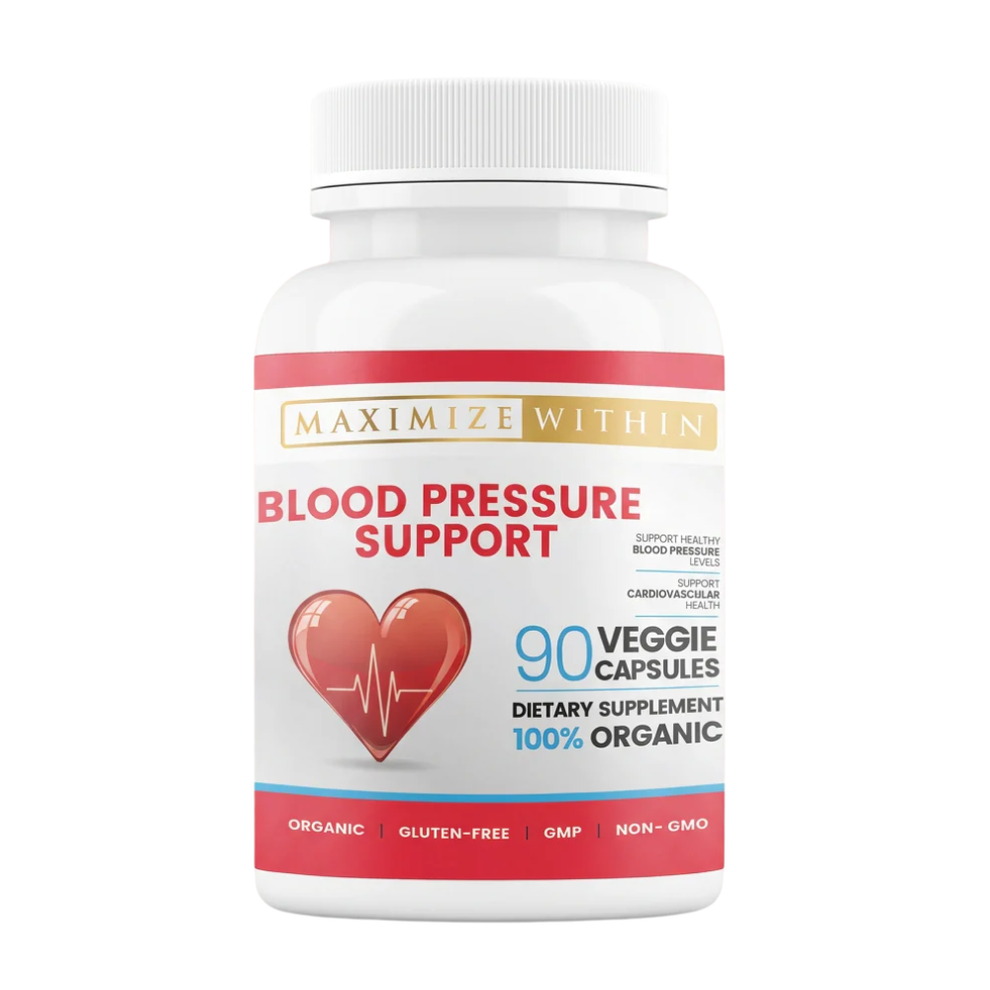
Featured Product
Maximum Within Blood Pressure Support Supplement
A plant-based dietary supplement made with a thoughtful blend of herbal extracts, formulated for adults who want to include cardiovascular wellness support as part of their daily routine.
Shop Now →Omega-3 Fatty Acids and the Fish Oil Question
Omega-3s have the deepest cardiovascular evidence among common supplements, but “fish oil” still isn't a single treatment. The two fatty acids most often discussed are EPA, or eicosapentaenoic acid, and DHA, or docosahexaenoic acid. Products may contain both, while some prescription products use EPA-only formulations.
That difference matters. Recent reviews and guideline summaries describe the strongest benefits for prescription EPA-only icosapent ethyl in people with high triglycerides and high cardiovascular risk. Mixed EPA and DHA supplements have produced more variable results, particularly among well-treated patients. Routine omega-3 supplementation isn't generally recommended for low-risk adults as a primary-prevention strategy (recent review and guideline summary).
What the large meta-analysis found
A 2021 meta-analysis covering 149,051 participants reported lower cardiovascular mortality, non-fatal myocardial infarction, and coronary revascularization among people receiving omega-3 supplementation. The reported relative risk was 0.93 for cardiovascular mortality and 0.87 for non-fatal myocardial infarction, with confidence intervals of 0.88 to 0.98 and 0.81 to 0.93, respectively (2021 omega-3 meta-analysis00277-7/fulltext)).
A broader dose-focused analysis covering 134,843 participants found pooled relative risks of 0.95 for cardiovascular disease events, 0.87 for myocardial infarction, 0.90 for coronary heart disease events, 0.65 for fatal myocardial infarction, and 0.91 for coronary heart disease mortality. These results are modest and outcome-specific, not evidence that every fish-oil capsule prevents heart disease.
| Outcome | Risk reduction, relative risk | Evidence strength |
|---|---|---|
| Cardiovascular mortality | 0.93 | Modest benefit in pooled evidence |
| Non-fatal myocardial infarction | 0.87 | Modest benefit in pooled evidence |
| Cardiovascular disease events | 0.95 | Small pooled reduction |
| Fatal myocardial infarction | 0.65 | Larger signal, but not a universal effect |
| Coronary heart disease mortality | 0.91 | Modest pooled reduction |
The same literature identified increased atrial fibrillation and gastrointestinal adverse events, especially as dose and patient selection become more important. This is why high-dose EPA should involve a clinician, particularly for someone with a history of atrial fibrillation or a complex medication list.
What omega-3s reliably do
The most consistent practical effect is lowering triglycerides. An updated NIH fact sheet states that omega-3 supplements lower triglycerides but generally don't significantly reduce most cardiovascular events, with stronger evidence in people who already have coronary heart disease (NIH omega-3 fact sheet).
That makes omega-3s a targeted triglyceride tool, not a replacement for cholesterol treatment, blood-pressure control, smoking cessation, or a dietary pattern built around minimally processed foods. Before buying an over-the-counter product, ask whether the label provides the actual EPA and DHA amounts, whether the goal is triglyceride management, and whether a prescription product is more appropriate.
CoQ10, Magnesium, and Other Targeted Ingredients
Heart-health supplements make more sense when matched to a measured problem or a defined illness. An ingredient may correct a nutrient gap, affect a risk marker such as LDL cholesterol, or support treatment in a particular disease state. That is a narrower claim than general protection for every healthy adult.

CoQ10 belongs in a narrower conversation
Coenzyme Q10, or CoQ10, participates in cellular energy production, which makes it biologically relevant to a high-energy organ such as the heart. The clinical question is who benefits, and from what outcome. A Cochrane review found moderate-quality evidence that CoQ10 probably reduces all-cause mortality and hospitalization for heart failure. A pooled trial analysis reported a mean net improvement in left-ventricular ejection fraction of 3.67 percentage points versus placebo, with a 95% confidence interval of 1.60 to 5.74 percentage points (recent CoQ10 evidence).
These findings support discussion of CoQ10 as an adjunct to standard heart-failure care, not as a universal prevention product. The studies focus on people with symptomatic cardiac disease and outcomes such as heart function, hospitalization, or survival. They do not show that a healthy adult gains broad cardiovascular protection merely by taking CoQ10.
The statin question belongs with patient-specific decisions about symptoms and treatment, rather than as a reason to add CoQ10 automatically.
For a plain-language comparison of the two most discussed ingredients, readers can consult Omega-3 and CoQ10 for heart wellness, then discuss questions with a pharmacist or physician.
Minerals and cholesterol-focused tools
Magnesium is most relevant when dietary intake is low or a deficiency is plausible. It supports muscle and nerve function and may relate to blood pressure and rhythm. A large dose does not explain palpitations or poor sleep by itself, and kidney disease or medication use can change the safety calculation.
Potassium requires the same caution. Someone taking an ACE inhibitor, an ARB, or a potassium-sparing diuretic may need laboratory monitoring rather than an over-the-counter potassium product.
For high LDL, psyllium and plant sterols have a more defined role. Soluble fiber can support LDL management alongside diet and exercise, while plant sterols can reduce cholesterol absorption. Neither has the same role as a statin when prescription treatment is indicated.
Ingredients with narrower or less settled roles
Garlic may affect blood pressure or cholesterol, but findings are inconsistent, and it can increase bleeding concerns. Beetroot products are promoted for nitric oxide and blood flow. The practical question is whether they improve an outcome that matters to the individual, not merely whether they affect a biological pathway.
Hawthorn has traditional use, but its overall evidence is less compelling and its medication interactions matter. Red yeast rice contains a compound structurally identical to lovastatin, so it acts more like a drug than a risk-free food product, with variable potency and statin-type muscle, liver, and interaction risks.
Vitamin D and B vitamins are best reserved for defined nutritional needs. Lowering homocysteine with B6, B12, or folate has not established these vitamins as universal cardiovascular prevention tools. Multivitamins also have poor evidence for preventing cardiovascular disease in well-nourished adults.
Who Actually Benefits From Heart Health Supplements
The most useful question is not which ingredient has the most enthusiastic advertising. It's which reader has a defined reason to consider one.
The older adult with a possible magnesium gap
An adult aged 60 or older who eats little magnesium-rich food, has a condition affecting absorption, or takes a medicine that may affect nutrient status should discuss evaluation with a clinician. The purpose is correction of a likely gap, not taking a large dose because palpitations or poor sleep feel concerning.
A pharmacist can review kidney function, current medicines, and the form of magnesium. Gastrointestinal effects are common enough that tolerability matters.
The person with elevated triglycerides
Someone with triglycerides above 150 mg/dL has a measurable issue to address, but the next step isn't automatically an over-the-counter fish-oil product. The clinician should assess overall cardiovascular risk, existing coronary disease, current treatment, diet, and whether prescription EPA-only therapy is appropriate.
Mixed EPA and DHA products don't carry the same evidence as prescription icosapent ethyl. Product selection and risk classification matter more than the phrase “high potency” on a label.
The person living with heart failure or after a cardiac event
A person with heart failure should never use CoQ10 to replace guideline-based treatment. CoQ10 may be discussed as an adjunct when the treating team is already managing symptoms, ventricular function, and hospital-risk factors.
Someone recovering after a myocardial infarction also needs coordinated care. Omega-3 decisions depend on triglycerides, coronary disease, bleeding risk, rhythm history, and the exact formulation.
The statin user with muscle symptoms
A statin user who develops muscle pain, weakness, or fatigue needs a structured medication review. That may include checking other causes, reviewing the statin and dose, and deciding whether CoQ10 is worth a monitored trial. It isn't evidence-based to assume every statin user needs it.
The adult with elevated LDL
Psyllium, plant sterols, and a food-first dietary pattern may help someone working on high LDL. They can complement exercise and prescribed treatment, but they don't erase the need to discuss statin therapy when overall risk warrants it.
The best candidate for a supplement usually has a measurable problem, a plausible mechanism, and a plan for checking whether the intervention helps.
Drug Interactions Every Reader Should Know
A supplement can act like a medicine even when the bottle says “natural.” Before starting a heart health supplement, give a pharmacist or physician the full list of prescriptions, over-the-counter products, and herbal ingredients.
Blood-thinning combinations
High-dose omega-3 products may require caution with warfarin and direct oral anticoagulants, particularly when a person already has bleeding risks or a history of atrial fibrillation. Garlic, ginkgo, and high-dose vitamin E can also add to bleeding concerns.
The practical action is simple: don't start a high-dose product without clinical review. A clinician may decide that no change is needed, or may recommend monitoring based on the entire treatment plan.

Duplicate statin effects
Red yeast rice can contain monacolin K, a compound structurally identical to lovastatin. Combining it with a prescribed statin can duplicate cholesterol-lowering activity while increasing concern about muscle and liver adverse effects.
Don't combine red yeast rice with a statin unless the prescribing clinician specifically directs it. Its variable content also makes self-dosing difficult.
Potassium and blood-pressure medicines
Potassium supplements can be hazardous with ACE inhibitors, ARBs, and potassium-sparing diuretics, because the combination may raise blood potassium. Kidney function changes the risk further.
The appropriate safeguard is a medication review and, when indicated, a laboratory check. Don't assume a product is safe because the label describes potassium as a mineral.
Absorption and other medication issues
Psyllium can interfere with absorption of some medicines if taken too closely together, so ask a pharmacist about spacing. Calcium can also affect absorption of certain drugs, including levothyroxine, and timing should follow the prescriber's instructions.
Hawthorn can interact with digoxin, while CoQ10 deserves discussion when a person has complex cardiac treatment or is receiving chemotherapy. For readers evaluating vitamin products, this guide to methylated B vitamins and their side effects offers additional label-reading context.
How to Choose a Clean, Clinically-Studied Formula
A clean label doesn't prove that a supplement works. It does make it easier to identify what you're taking, whether the dose is visible, and whether an independent organization has checked manufacturing quality.
Start with independent verification
Look for third-party programs such as USP, NSF, ConsumerLab, or Informed Sport. These seals can support confidence that the product contains what the label says and meets specified quality standards. They don't guarantee that the formula prevents heart disease.
Read the Supplement Facts panel instead of relying on the front label. With fish oil, the important information is the amount of EPA plus DHA per serving, not merely the total weight of fish oil in a capsule. A product can advertise a large fish-oil number while providing far less of the fatty acids used in clinical research.
Audit the formulation
Prefer a product that clearly identifies its form, source, serving size, and testing approach. Fish oil may appear in triglyceride, phospholipid, or ethyl ester forms, and the label should make the formulation transparent rather than hiding behind a proprietary blend.
Check for heavy-metal testing and oxidation controls in fish-oil products. Avoid blends that list ten ingredients without showing meaningful amounts. A long ingredient list often spreads the serving across too many compounds to deliver a clinically relevant amount of any one ingredient.
Label test: If you can't identify the active ingredient, its amount, and its quality verification in under a minute, choose a clearer product or ask a pharmacist to review it.
Use your personal standards consistently
People who avoid preservatives, artificial colors or flavors, added sugars, gluten, soy, fillers, or animal products should verify each of those claims on the actual product label. “Natural” doesn't answer questions about contamination, dose, interactions, or evidence.
The same approach applies when comparing supplements for other health needs, including nutritional support for HRT. The indication may differ, but the label questions remain useful: What is in it, how much is present, how was it tested, and does the person taking it have a clear reason?
For a deeper explanation of how independent verification works, review this guide to third-party supplement testing. Then confirm that the product's certificate or seal applies to the specific item, not only to the company.
A Clinician's Closing Perspective on Heart Health
A sensible heart-health plan has layers. The broad base includes a Mediterranean-style eating pattern, regular movement, adequate sleep, weight and stress management, and control of blood pressure and lipids. Prescription therapy comes next when risk or disease makes it appropriate.
Supplements sit at the top because their best uses are narrower. Omega-3s may fit selected high-risk patients with high triglycerides, CoQ10 may be considered as an adjunct in heart failure, magnesium may help when deficiency is relevant, and plant sterols or psyllium may support LDL management. None of those examples turns a supplement into a universal shield.
Age can change blood vessels, heart muscle, rhythm, and medication needs, so readers interested in the broader topic can review this resource on age-related heart changes. Those changes reinforce the need for individualized care rather than a fixed supplement stack.

Three reminders should guide any decision:
- Talk before starting: Ask a clinician or pharmacist to review the product, dose, kidney function, and medication interactions.
- Treat symptoms as symptoms: Chest pain, unexplained shortness of breath, fainting, or new palpitations need medical evaluation, not a supplement experiment.
- Use evidence selectively: A supplement should fill a defined gap or support a defined treatment plan, not replace prescribed therapy.
Maximum Health Products offers clean-label vitamins, supplements, protein, and wellness products, including formulas designed around specific daily nutrition goals rather than a substitute for cardiovascular treatment. Visit Maximum Health Products to review its product categories and compare labels with the evidence-based questions in this guide.

