


You can feel it the first time your favorite jeans sit a little tighter even though you're eating “better,” walking more, and trying to be disciplined. The old playbook from your 30s stops working, and the scale seems to ignore your effort. After 50, that usually means the goal has to change, from just losing pounds to losing fat while keeping muscle, strength, and energy.
That shift matters because muscle loss and metabolic slowdown are real biology, not a motivation problem. A better plan uses food, training, recovery, and medical checks in the right order. If you want a clinically guided example of that philosophy in practice, clinically guided weight loss for men over offers a useful parallel for how older adults can approach fat loss without treating the body like it's 25.
The roadmap below is built around four moves, assess, fuel, train, recover. It also gives you a 12-week structure you can follow without guessing, over-restricting, or burning out.
Why Weight Loss After 50 Feels Different
By midlife, many people are putting in more work and seeing less on the scale. They cut calories, add walks, and still watch their weight stall or swing from week to week. The usual reason is physiological. Calorie burn tends to drop, muscle mass tends to fall, and for many women, menopause changes where fat is stored.
The actual target is body composition
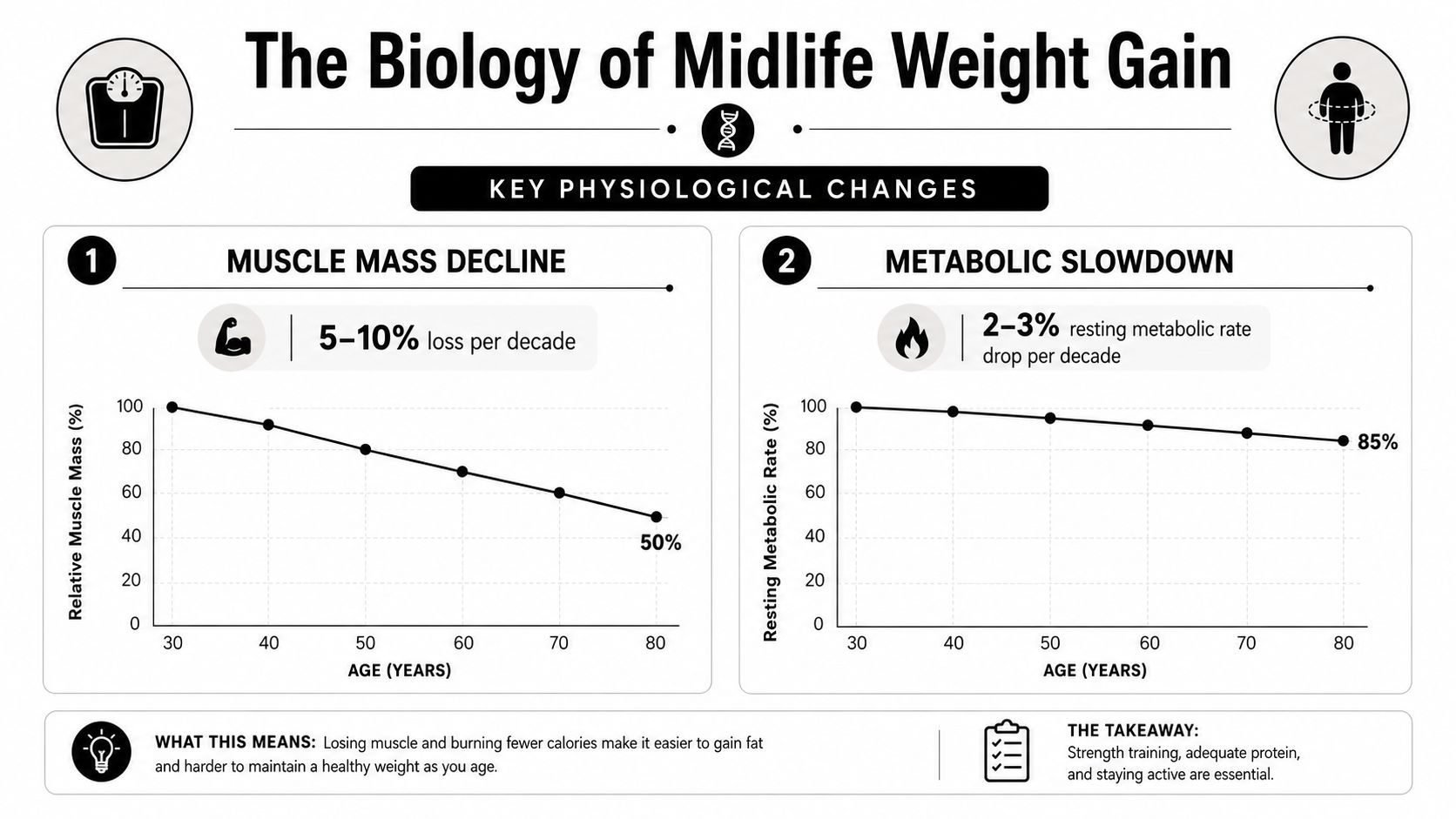
A useful fat-loss plan after 50 protects lean mass on purpose. Adults commonly lose 5% to 10% of muscle mass per decade after age 50, and resting metabolic rate declines about 2% to 3% per decade at the same time. Because muscle burns calories at rest, losing it changes how much food a person can eat before weight starts to creep up. Preserving or rebuilding muscle has to stay at the center of the plan. The broader public-health picture is just as clear, because 71% of Americans age 60 and older were overweight or obese in one major review of older adults, according to AARP's summary of weight loss after 50.
That is why a midlife plan needs a different standard than a quick-fix diet. A lower scale number matters only if strength, waist size, and daily energy hold up with it.
A better lens for progress
The four-part system here is simple, though it does require discipline. Assess first, then fuel with a modest deficit, train to keep muscle, and recover well enough to repeat the cycle. That order keeps people from making the common mistake of eating less while doing too little resistance work. It also gives you a way to judge whether the plan is working before you add more restriction.
Practical rule: If your plan makes you lighter but weaker, it is a poor fit after 50.
For men, women, and anyone in midlife, the question is still whether fat loss is possible. It is. The important question is whether the method protects the body you still need to live in. A useful example of that approach in practice is clinically guided weight loss for men over, which reflects the same basic priority, keeping muscle while reducing fat.
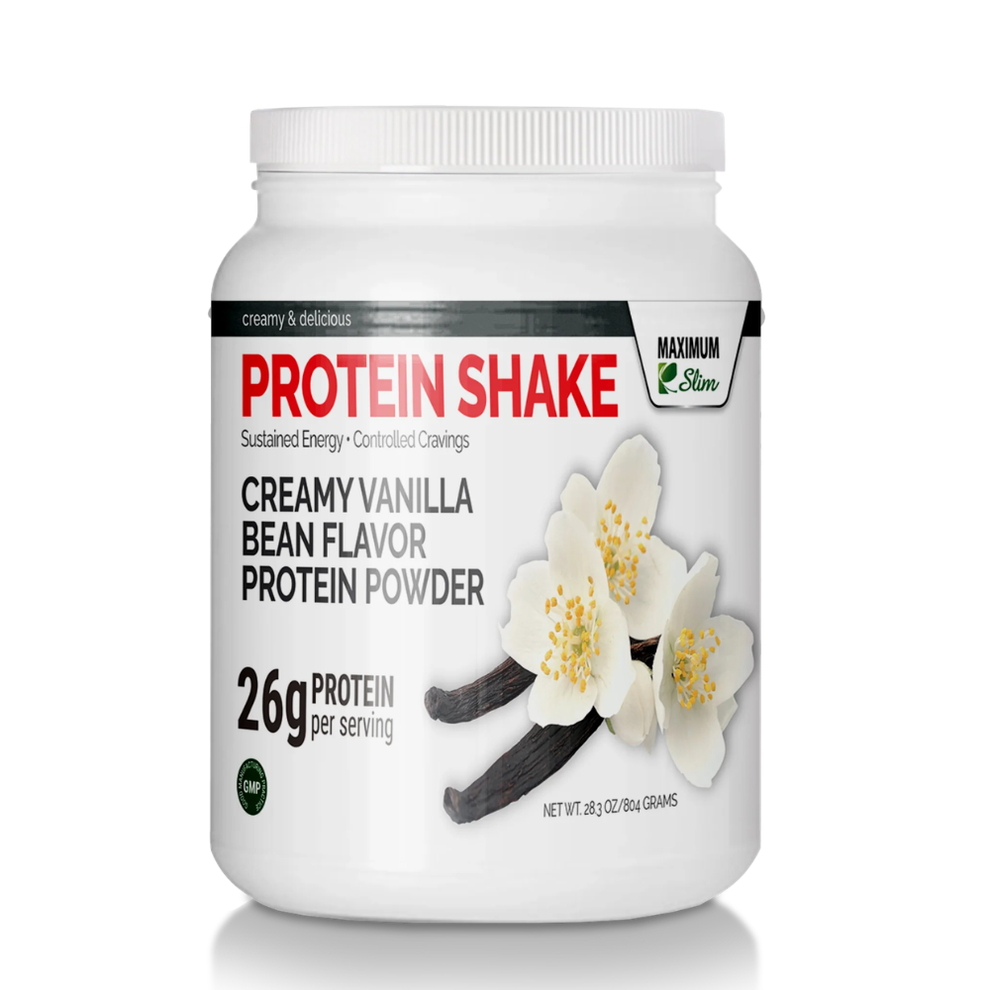
Featured Product
Organic Protein Shake - Maximum Slim
Each serving provides 20g of organic plant-based protein and 10g of organic fiber, making it a convenient option for smoothies, shakes, and meal replacement support.
Shop Now →The Biology of Midlife Weight Gain
The phrase “slow metabolism” gets used loosely, but the underlying biology is straightforward. After 50, muscle tissue usually shrinks, daily energy expenditure drops, and hormonal shifts can make fat distribution change, especially around the midsection. That combination lowers the calorie floor you can eat at without gaining weight.
Muscle loss changes the math
When people lose muscle, they don't just lose strength. They lose metabolically active tissue. The AARP-cited guidance notes that older adults burn about 200 fewer calories per day, which is why a plan that used to maintain weight may now slowly add it. That doesn't mean your body is broken. It means the same plate of food now lands on a different metabolic setup, and the setup has to be respected if you want stable results. A useful reference point for anyone wanting to understand that shift further is how to speed up metabolism after 40, because the principles carry forward into the 50s and beyond.
Hormones can change where fat shows up
Menopause adds another layer for many women. Clinical reporting on the “menopause belly” describes a predictable move toward abdominal fat, not a lack of willpower. That's why so many women notice that the waist changes first, even when body weight hasn't moved much. The answer isn't to blame food cravings alone. It's to address the muscle loss, the sleep disruption, and the lower recovery capacity that often come with midlife hormonal changes.
The big lesson is simple. Anything that protects muscle also protects metabolism. That's why strength training, enough protein, and a small calorie deficit matter more after 50 than they did at 30.
This is widespread, not rare
Weight management after midlife is a broad public-health issue, not an edge case. In older adults, excess weight is tied to higher rates of hypertension and diabetes risk factors, which makes muscle-preserving fat loss about function and health, not aesthetics alone. For a deeper plain-language look at why the age-related slowdown matters, AARP's overview of why weight loss gets harder after 50 gives a solid framework for the practical changes that matter most.
Your body isn't failing you, it's adapting to a new baseline. The plan has to adapt too.
Medical Checks Before You Start
A serious fat-loss plan after 50 starts with a health check, not a food rule. That's especially true if your weight gain feels sudden, your energy has changed, or you're dealing with symptoms that don't fit the usual pattern. Before you tighten calories or increase training, it pays to know what's driving the weight change.
Start with the basics
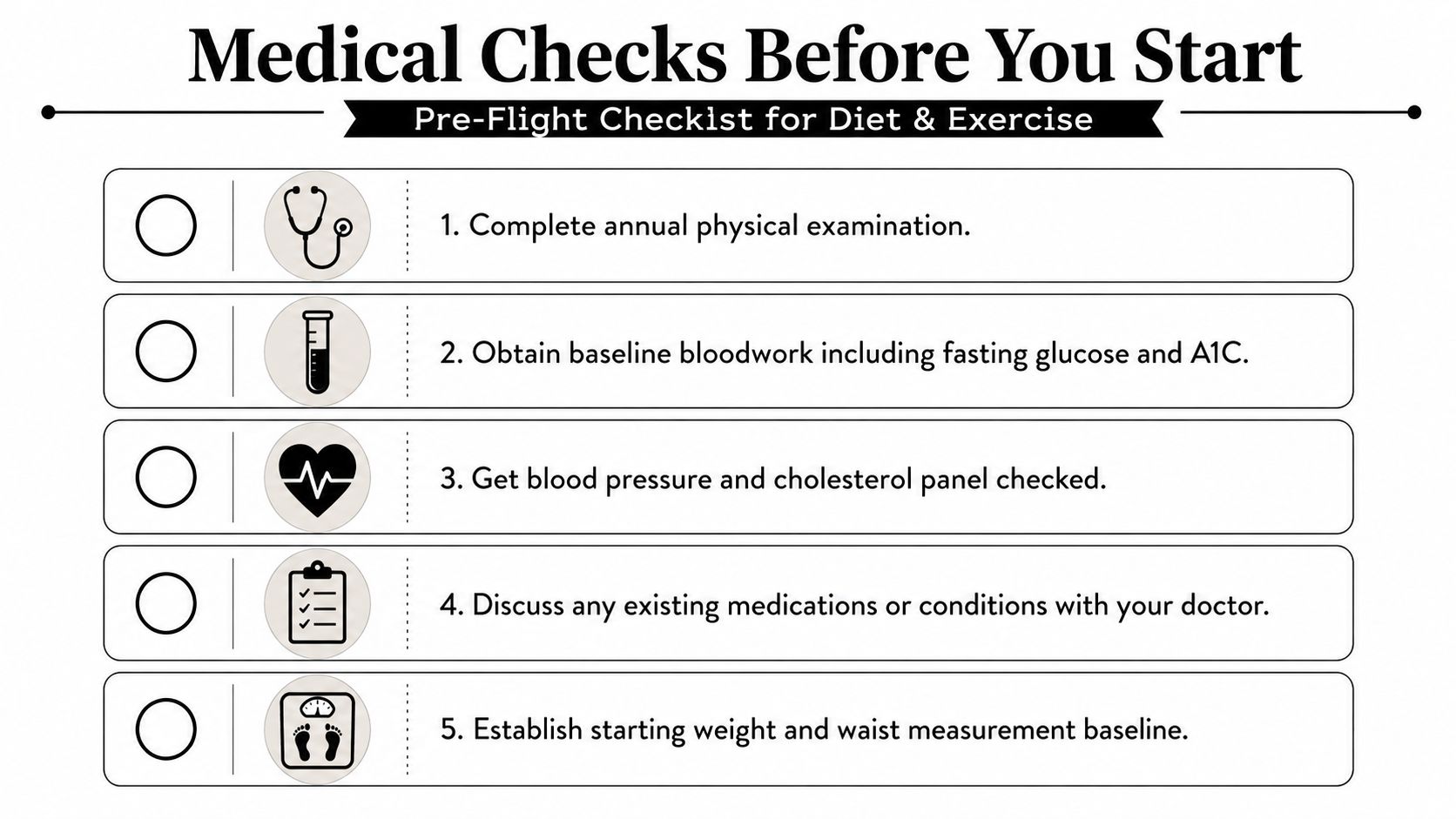
An annual physical is the place to begin. So is a real baseline, blood pressure, weight, and waist measurement, because you can't manage what you never measured. If your clinician recommends bloodwork, the usual place to start is fasting glucose, A1C, lipids, thyroid markers, and vitamin D, especially when fatigue, body-composition changes, or low activity have been part of the picture.
Medication review matters just as much. Some antidepressants, steroids, and diabetes medications can affect weight, appetite, or fluid retention, and that can make a standard diet plan feel strangely ineffective. You don't need to guess at that. You need a clear list and a conversation with the prescribing clinician.
Know the red flags
Don't “push through” chest pain, dizziness, or unexplained joint pain before starting a new program. Recent surgery is another reason to get a medical green light before lifting, walking more aggressively, or adding a calorie deficit. If menopause symptoms are driving sleep problems, mood shifts, or body-composition changes, that's also worth a dedicated conversation rather than treating everything like ordinary aging.
If the body is giving you new symptoms, the first move is evaluation, not restriction.
A registered dietitian can also be a smart referral when food choices are complicated by diabetes, blood pressure concerns, gastrointestinal issues, or a history of yo-yo dieting. The goal is to separate “I need a better plan” from “I need medical care.” Those are not the same problem.
Baseline beats guesswork
Take a starting photo, note how your clothes fit, and record your waist. Those non-scale markers will matter more than daily fluctuations once you begin. The job here is to create a starting line you can trust.
Eating for Fat Loss Without Losing Muscle
The right post-50 diet is not a crash diet. It's a modest calorie deficit paired with enough protein and enough food quality to keep your training, digestion, and recovery intact. That's the balance many miss. They cut too hard, lose muscle along with fat, and then wonder why the same body feels weaker.
Keep the deficit small enough to sustain
AARP's guidance notes that adults over 50 burn about 200 fewer calories per day, which is why that amount is a smart starting point for a deficit rather than an aggressive slash. In practice, a modest deficit often lands in the 200 to 400 calorie range depending on the person, but the key is that it should still allow you to train and recover. If you want a practical meal-planning structure that makes that easier, weight loss meal planning shows how to organize the week so you're not deciding everything at the last minute.
Protein timing matters too. Spread protein across three meals, and make each meal protein-forward enough to support muscle retention. For runners and active adults who need extra recovery support after training, post-run protein needs for runners is a helpful reminder that protein isn't just for bodybuilders, it's for anyone trying to preserve lean tissue while body fat drops.
What a day can look like
You don't need to eat blandly to lose fat. You need meals that make the deficit feel normal. That usually means lean protein, vegetables, fiber-rich carbs, and measured fats.
| Meal | Example | Protein (g) | Calories |
|---|---|---|---|
| Breakfast | Greek yogurt, berries, and oats | 25 | 350 |
| Lunch | Chicken salad bowl with vegetables and beans | 30 | 450 |
| Snack | Protein shake or cottage cheese with fruit | 20 | 200 |
| Dinner | Salmon, roasted vegetables, and potatoes | 35 | 550 |
That structure is useful because it keeps appetite steadier than skipping meals and then overeating at night. It also leaves room for a clean-label support product such as Maximum Slim, which can fit into a routine as an appetite-support or meal-replacement option when a person needs structure, not magic.
What usually backfires
Severe restriction often backfires after 50 because it can strip away muscle, increase fatigue, and leave nutrient gaps. It also tends to make the plan feel hard in ways that are hard to maintain. A smaller deficit may feel slower, but it's often faster in the long run because you can keep doing it.
Strength Training and Cardio That Actually Work
Exercise after 50 should be boring in the best way. Repeatable. Joint-friendly. Progressive. The goal is not to punish the body into shrinking. It's to give it a reason to keep muscle while fat comes off.
Build the week around two anchors
A strong weekly pattern is two full-body strength sessions and 150 minutes of moderate cardio, usually walking or equivalent aerobic work. The AARP guidance points to 2 to 3 weekly weight-training sessions and the CDC target of at least 150 minutes of moderate-intensity cardio per week, and that combination is the sweet spot for protecting lean mass while improving energy use. If you want more quick meal ideas to support that training rhythm, quick high protein meals can save a lot of weeknight friction.
Choose compound lifts that are easy to learn and simple to load. Goblet squats, push-up variations, rows, dumbbell deadlifts, and overhead presses cover most of the major movement patterns. Start with reps before load. If form is solid, then add weight slowly.
Keep it beginner-friendly and joint-aware
A warm-up doesn't need to be elaborate. Five to ten minutes of brisk walking, marching, light cycling, or mobility work is enough to get started. If a movement hurts a joint, swap the pattern, not the whole program. A goblet squat can become a sit-to-stand. A push-up can become an incline push-up. A dumbbell deadlift can become a hip hinge from blocks.
Simple rule: Progress the exercise only when the previous version feels controlled and repeatable.
Home training works fine too. Bands, dumbbells, and bodyweight movements can maintain and build strength if you keep the sessions consistent. The machine doesn't matter nearly as much as the habit of asking the muscles to do a little more over time.
Why skipping strength work is the biggest mistake
If you only walk and diet, you may lose weight, but you're more likely to lose muscle with it. That's the trap. Muscle preservation is the difference between looking smaller and functioning better.
Sleep, Stress, and the Recovery Stack
Most midlife weight-loss plans fail in the spaces between workouts and meals. Sleep gets short, stress stays high, and daily movement drops. That's why recovery has to be treated like a training variable, not an afterthought.
The hidden calorie burn is daily movement
Non-exercise movement, often called NEAT, is the stuff that doesn't look like exercise at all. Taking the stairs, standing more, pacing during phone calls, and adding short walks can meaningfully raise daily energy use without needing a formal workout. In a midlife plan, that matters because the body doesn't always tolerate more intensity, but it usually tolerates more movement.
Sleep and stress shape appetite too. Poor sleep can make hunger harder to manage, and chronic stress can push the body toward abdominal fat storage. Good sleep supports hunger regulation, recovery, and the energy you need to keep lifting. Good stress management does something similar, it lowers the background noise that drives random eating and skipped workouts.
Use a recovery routine you can repeat
A consistent bedtime helps more than a perfect bedtime once a week. Morning light helps anchor your day. Short mobility work can make training feel less intimidating if your joints are stiff. Breathing drills, even brief ones, can downshift the nervous system after a stressful afternoon.
The health-library guidance at How to Improve Sleep Quality fits well here because sleep is often the first recovery lever to fix. Keep the room dark, keep caffeine earlier in the day, and give yourself enough time in bed to sleep, not just collapse.
Supplements should support, not replace, the plan
Supplement choices should be practical and boring. Whey or plant protein can help you hit daily protein targets when food alone falls short. Vitamin D is relevant for bone and muscle support, especially if labs show low levels. Omega-3 can be a useful add-on for inflammation support. Creatine monohydrate is one of the simplest options for strength and lean-mass support. Caffeine can help energy and appetite control when used carefully.
Skip the noise, especially fat burners, detox teas, and hoodia blends that promise more than they deliver. Clean-label products like Maximum Slim and Original Green Coffee fit naturally as support tools in a structured plan, but they're still support tools, not substitutes for food discipline, lifting, and sleep.
Sleep, stress, movement, and recovery either make the plan easier or make it collapse slowly. There isn't much middle ground.
Your 12-Week Roadmap From Assessment to Results
A 12-week plan works because it gives your body time to adapt without drifting into “I'll start again Monday” mode. It also keeps the focus on body composition, not just scale weight. The first half is about building the base. The second half is about repeating it well enough to see change.
Phase 1, weeks 1 to 2, assessment
Start with the measurements that matter. Get your medical checks done, record your waist, take baseline photos, and test a few strength markers, such as how many controlled squats or rows you can do with good form. If you don't know your baseline, you won't know whether the plan is helping.
Use this phase to identify friction. Are you under-sleeping? Skipping breakfast and overeating at night? Sore in the knees? Those answers shape the next 10 weeks more than wishful thinking does.
Phase 2, weeks 3 to 4, nutrition foundation
Set your calorie target and protein target, then repeat the same meals often enough to make them easy. Meal prep matters here because decision fatigue is real. The goal is consistency, not culinary creativity.
A simple weekly template looks like this.
| Day | Training | Nutrition focus |
|---|---|---|
| Monday | Strength session | Protein at every meal |
| Tuesday | Walk | Planned lunch and dinner |
| Wednesday | Mobility and steps | Tighten snack choices |
| Thursday | Strength session | Protein-forward breakfast |
| Friday | Walk or cardio | Repeat easy meals |
| Saturday | Active recreation | Flexible but structured eating |
| Sunday | Recovery and prep | Plan next week's meals |
Phase 3, weeks 5 to 8, active building
Now the work becomes progressive. Add a little weight, a few reps, or one more set when form stays strong. Keep cardio consistent rather than heroic. If you've been good for four weeks and the scale pauses, don't panic. Water, glycogen, sleep, and sodium can all blur the picture.
Many people give up too early. They expect the body to change on command, then mistake a plateau for failure. The smarter move is to keep the structure and let the trend catch up.
Phase 4, weeks 9 to 12, review and adjust
By the final phase, the question isn't only “Did I lose weight?” It's “Did I get smaller at the waist, stronger in the gym, and steadier in my energy?” Those are the metrics that matter. If the answer is yes, you now have a repeatable method. If the answer is mixed, the fix is usually small, not dramatic.
Most common traps are easy to name. Cutting calories too aggressively. Skipping strength work. Under-eating protein. Ignoring sleep. Quitting during week 3 or 4 when the scale stalls. Returning to old habits the moment the number drops. The win after 50 is keeping your muscle, strength, and energy while losing fat, because that lasts long after a single diet ends.
If you're ready to make this practical, Maximum Health Products offers clean-label support options that fit a fat-loss plan built around protein, energy, and consistency. Visit Maximum Health Products to explore products that can complement a post-50 routine focused on fat loss, muscle retention, and better daily habits.

