


You're probably here because regular coffee feels too harsh, too jittery, or too locked into one flavor profile, and green coffee sounds like a cleaner option. Then you make a cup and realize it doesn't taste like coffeehouse coffee at all. It's lighter, more herbal, sometimes grassy, and far more sensitive to how the bean was processed before it ever reached your kitchen.
That's the part most guides skip.
When people ask me how to make green coffee, I don't treat it like a simple steep-and-drink recipe. I treat it like a processing-dependent beverage. The way the beans were washed, dried, steamed, or prepared before brewing can change the cup you get and the compounds you're trying to emphasize. If your goal is energy and focus, that matters. If your goal is a gentler wellness drink, that matters too.
Featured Product
Maximum Slim Original Green Coffee
Made with green coffee and carefully selected herbal ingredients such as green tea leaf and ginseng root, this unique blend is designed to complement a balanced lifestyle.
Shop Now →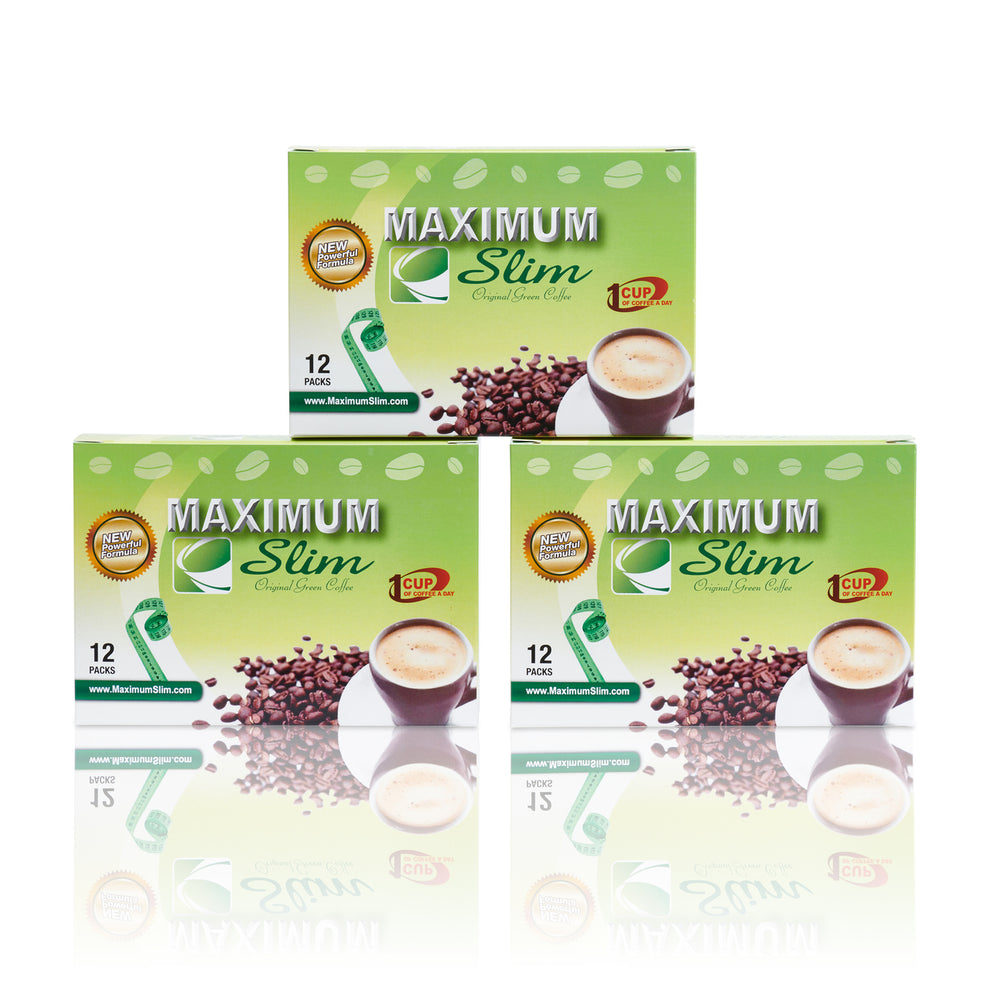
What Green Coffee Is and Why Brewing It Is Different
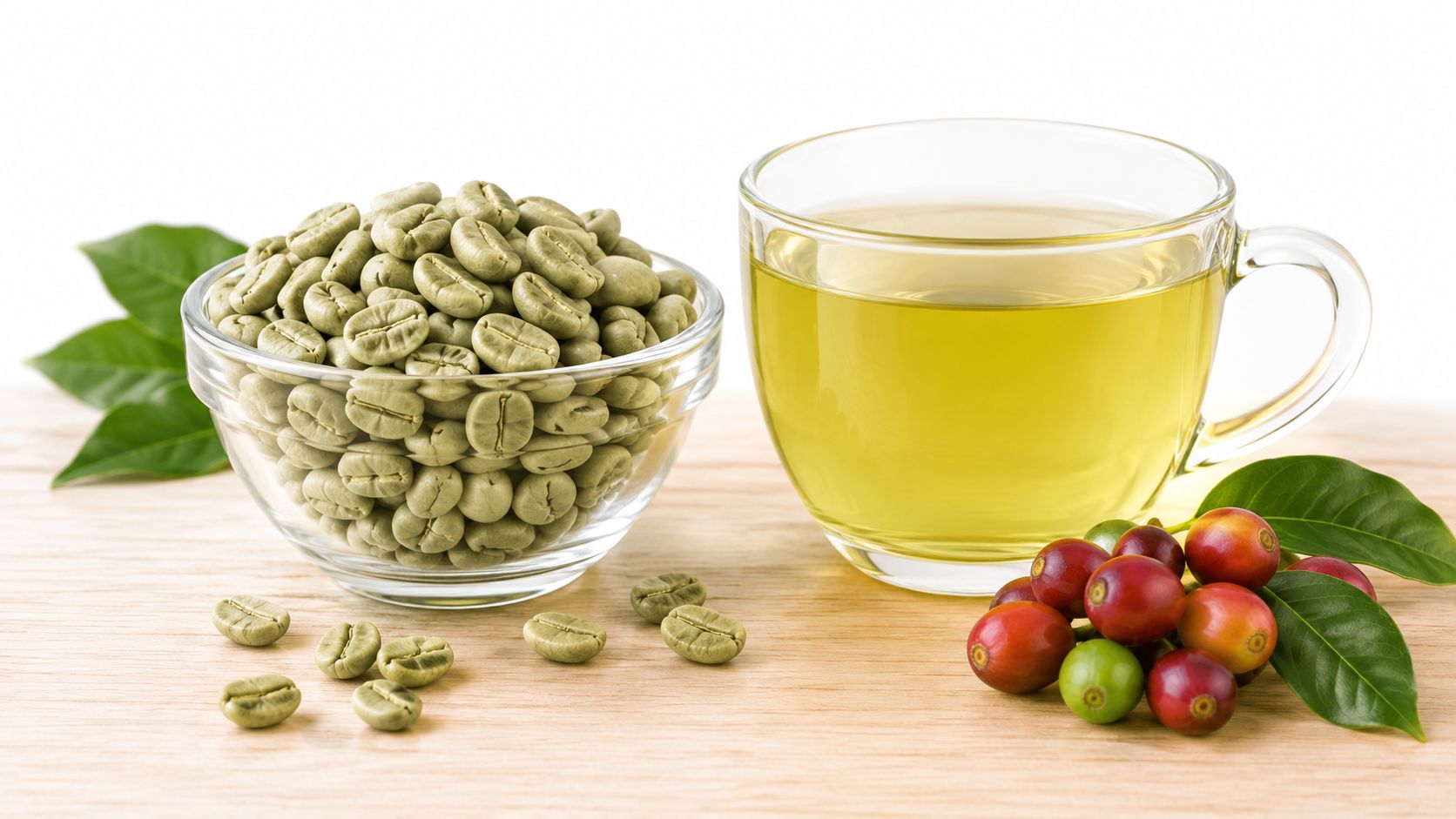
Green coffee is the unroasted seed of the coffee cherry. In the trade, coffee production is tracked in 60-kilogram bags, and the scale is huge. The International Coffee Organization's database tracks coffee across the world, and coffee is produced in 79 countries and territories in 2023 according to the International Coffee Organization World Coffee Statistics Database. That matters because green coffee isn't a novelty ingredient. It sits at the start of a global agricultural process built around harvesting, drying, grading, and export.
Why the cup tastes so different
Roasting creates the familiar aroma associated with coffee. Green coffee doesn't go through that step, so the brew comes out paler, leaner, and more plant-like. Expect something closer to an herbal infusion than a dark breakfast roast.
That catches people off guard. They think they did it wrong.
They usually didn't.
Green coffee works best when you stop asking it to taste like roasted coffee and start choosing a method that fits what you want from it.
The overlooked part most people miss
A lot of wellness readers focus on compounds like chlorogenic acids, but the starting bean and its processing matter before the kettle even goes on. If you want a quick background on that family of compounds, this overview of chlorogenic acid is a helpful place to start.
Recent discussion around green coffee has moved beyond casual steeping. Research summaries note that washing, blanching, steaming, fermentation, and drying can alter green coffee chemistry, including chlorogenic acids and caffeine, which is why two cups made from different green coffees can feel noticeably different even when the home brewing method looks similar on paper, as discussed in this green coffee processing and extraction overview.
Who usually likes it most
Green coffee tends to fit people who want:
- A lighter morning drink with less roasted intensity
- A more adjustable routine where method changes matter
- A wellness-focused beverage chosen by goal, not just flavor
- A gentler flavor base for ginger, lemon, mint, or cinnamon
If you go in expecting espresso-like richness, you'll be disappointed. If you go in expecting a clean, functional cup you can tune with process and brewing, it makes a lot more sense.
Sourcing Grinding and Dosing Green Coffee at Home
The easiest way to ruin green coffee is to buy the wrong form, grind it the wrong way, and eyeball the dose. Green coffee is less forgiving than roasted coffee because flavor is subtler. Small mistakes show up fast.
What to buy
You have two practical options at home:
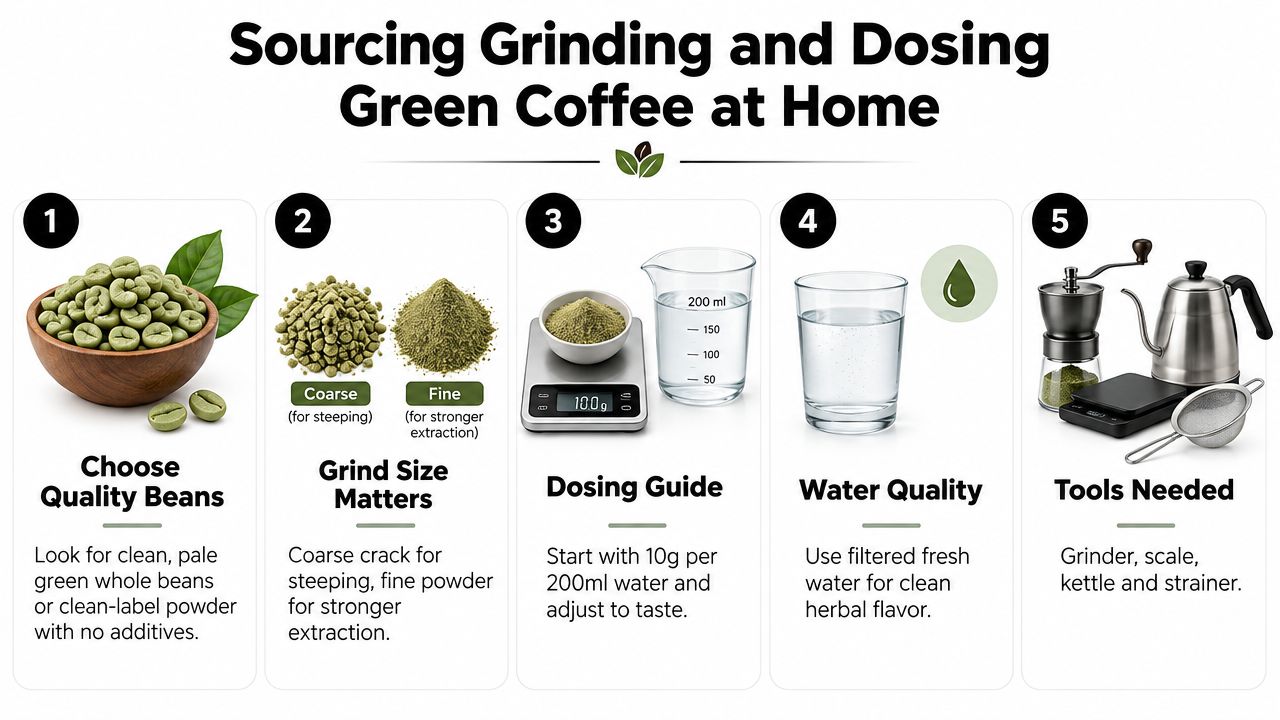
- Whole green coffee beans if you want more control over grind and freshness
- Green coffee powder if you want speed and less effort
Whole beans are better for people who like to tweak extraction. Powder is simpler for busy mornings, but quality matters more because you can't inspect the beans yourself. Look for a clean-label product with no unnecessary additives. If you want to compare formats, this guide to green coffee powder is useful.
One straightforward product-format option in this category is Maximum Slim Original Green Coffee, which is described by the publisher as a premium unroasted Arabica blend. That kind of format suits people who want convenience over hands-on bean prep.
Grind size changes the result
Green coffee beans are hard. Much harder than roasted beans. Some home grinders struggle with them, so don't force your regular burr grinder if it sounds strained.
Use this as your baseline:
- Coarse cracked grind for hot steeping
- Coarse to medium for cold brew
- Fine powder only if you're working with a method that can handle dense extraction and solid filtration
If the drink tastes flat and watery, the grind is often too coarse. If it turns muddy or unpleasantly sharp, the grind may be too fine for the method.
Practical rule: Change one variable at a time. Either adjust grind, or adjust dose, or adjust brew time. Don't change all three at once or you won't know what fixed the cup.
A sensible starting dose
A reliable place to begin is:
- 10 g green coffee per 200 ml water for a single hot cup
- Increase slowly if you want a stronger brew
- Decrease if you're sensitive to caffeine or the drink feels too dense
That ratio is simple enough to remember and consistent enough to troubleshoot. If you don't like working in grams and milliliters, keep a conversion guide handy. I like this piece on kitchen measurement help by Recipe One because it makes everyday measuring less clumsy.
Tools that actually help
You don't need a lab setup. You do need a few basics:
- Digital scale for repeatable dosing
- Kettle for controlled hot water
- Strong grinder or mortar for cracking beans
- Fine strainer or filter for a cleaner cup
- Glass jar if you're making cold brew
Filtered water helps because green coffee has a lighter profile. Off flavors in the water are easier to notice.
How to Brew Green Coffee Three Proven Methods
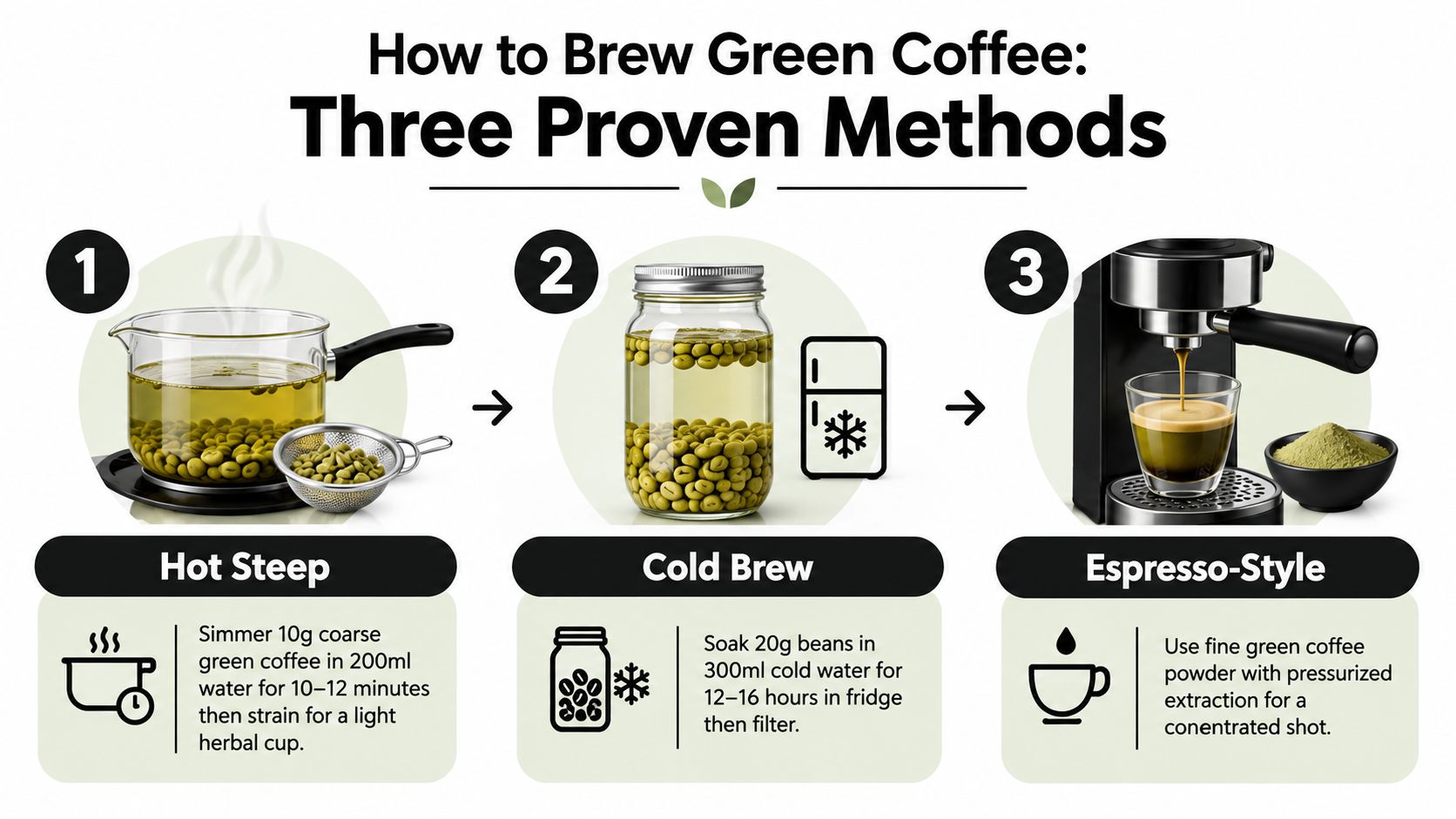
There isn't one best way to make green coffee. There's a best way for the result you want. I keep three methods in rotation because they solve different problems: speed, smoothness, and concentration.
Hot steep for a quick daily cup
This is the simplest method and the one you should start with.
- Measure 10 g of coarsely cracked green coffee.
- Heat 200 ml water until hot, not aggressively boiling.
- Add the coffee to a small pot or heatproof brewer.
- Steep gently for about 10 to 12 minutes.
- Strain well and drink warm.
The cup should look light and smell mild, not roasty. If it tastes weak, extend steeping slightly or tighten the grind a little. If it tastes rough, shorten the contact time.
A thin slice of ginger works well here. It adds warmth without burying the base flavor.
Cold brew for a smoother profile
Cold brew gives green coffee a softer edge. It's useful if hot steeped versions feel too sharp or if you want something ready in the fridge.
- Add 20 g green coffee to a jar.
- Pour in 300 ml cold water.
- Refrigerate for 12 to 16 hours.
- Filter through a fine strainer or paper filter.
This version usually tastes cleaner and calmer. It also handles lemon or mint well.
For offices, consistency matters more than people think. If your workplace setup is awkward, an office kitchen hot water tap can make repeat brewing easier for the hot method, while cold brew solves the same problem with advance prep.
A quick visual refresher helps if you want to see the flow of the methods in action:
Espresso-style adaptation for a concentrated shot
This is the trickiest option and the least forgiving. Green coffee doesn't behave like roasted espresso coffee, so think of this as a concentrated adaptation, not a café-style replica.
Use a fine green coffee powder and a pressurized device that can handle very fine material and strong filtration. Keep expectations realistic. You're aiming for concentration, not crema and roast depth.
This method suits people who want a shorter, more direct serving. It can be useful mixed with hot water to make a small Americano-style drink or blended with a little cinnamon.
When roasting enters the picture
Some people asking how to make green coffee are curious about buying green beans and roasting them at home before brewing. That's a different process. One practical workflow for home roasting is to preheat the roaster to about 350°F (175°C), use a small batch commonly around 200 to 300 g, watch for first crack around 6 to 8 minutes, and cool the beans immediately once the roast reaches the point you want, based on guidance from Coffee Crafters on roasting green coffee beans at home.
If you go further down that route, consistency matters. Roasting references also place classic roasting around 180 to 230°C for 12 to 15 minutes, with specialty roasts often finishing in 8 to 14 minutes, and warn that running too far into second crack can push flavor toward bitterness, as outlined in this green coffee sample roasting protocol.
Choosing Your Best Brewing Method by Goal and Taste
Some people want a fast morning cup. Others want something smoother on the stomach. Others want the shortest, strongest serving they can manage. The method should follow the goal.
There's another layer too. Green coffee beans are widely recognized as a source of chlorogenic acids, reported at roughly 6 to 12% of dry weight, and research also notes that steaming can reduce 5-CQA while only minimally affecting caffeine, which is why processing choice matters before you ever choose hot or cold brewing, according to this review on green coffee composition and processing.
If your goal is caffeine feel, one bean lot may suit you better. If your goal is chlorogenic-acid-focused brewing, another processing style may make more sense. Brewing method alone doesn't tell the full story.
Which Green Coffee Method Fits Your Goal
| Method | Best For | Flavor Profile | Time and Effort |
|---|---|---|---|
| Hot steep | Morning energy, simple routines, single cups | Herbal, light, direct | Low effort, quick |
| Cold brew | Smoother taste, make-ahead use, gentler sipping | Soft, rounded, cleaner | More planning, easy once prepped |
| Espresso-style | Short concentrated servings, minimal volume | Dense, sharper, less nuanced | Highest effort, more finicky |
How I match method to real life
If you're rushing out the door, hot steep wins. It doesn't ask much from you, and it gives clear feedback when you adjust dose or grind.
If you want something you can sip through work, cold brew is usually the easiest habit to sustain. It also tends to be friendlier for people who dislike the more vegetal edge of hot green coffee.
If your main interest is sharper alertness in a smaller serving, the espresso-style route can work, but only if you enjoy tinkering. You don't need that much friction in the morning.
For readers thinking about mental performance more broadly, this piece on coffee for focus adds useful context around choosing a coffee ritual for concentration rather than just taste.
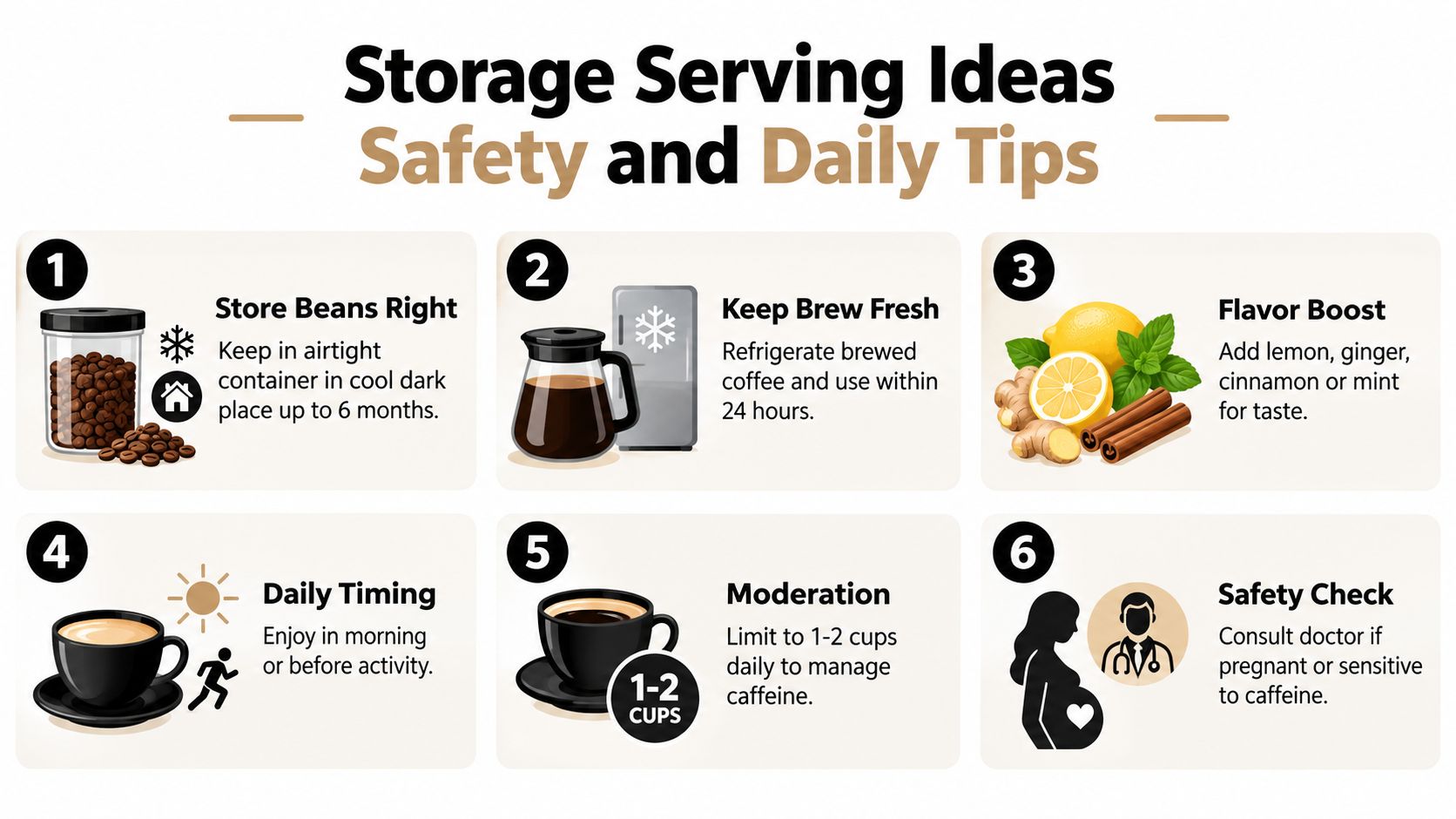
Storage Serving Ideas Safety and Daily Tips
Green coffee gets easier once you stop treating it like a project and start treating it like a routine. Good storage, simple flavor additions, and a few safety boundaries make the difference.
Keep the beans and brew stable
Store whole green beans in an airtight container in a cool, dark cupboard. Keep them away from steam, sunlight, and frequent temperature swings.
For brewed green coffee, refrigerate what you won't drink soon. Don't leave it sitting out all day and expect it to stay fresh and pleasant. Reboiling usually flattens the cup and makes it taste tired.
Easy serving ideas that don't bury the drink
A few additions work well because they support the profile instead of fighting it:
- Lemon for brightness
- Fresh ginger for warmth
- Cinnamon for a rounder finish
- Mint for a cleaner cold version
Keep it light. Green coffee doesn't need heavy sweetening to be drinkable, but it does benefit from thoughtful pairing.
Brew it clean first. If you like the base cup, then build on it.
Safety and daily use
Pay attention to how you feel, not just how the cup tastes. Since green coffee still contains caffeine, timing matters. Morning or earlier daytime use usually works better than a late-day cup if sleep is sensitive.
A few practical boundaries help:
- Start small if you're caffeine-sensitive
- Don't over-steep trying to force strength
- Choose consistency over chasing an ultra-strong cup
- Check with a clinician if you're pregnant, highly caffeine-sensitive, or managing a medical condition
The biggest mistake I see is people assuming more extraction automatically means more benefit. It often just means a rougher cup and a less sustainable routine.
Your Simple Plan to Make Green Coffee Part of Your Routine
The most useful way to learn how to make green coffee is to stop searching for a perfect universal recipe. There isn't one. There's a method that fits your goal, your palate, and your tolerance.
Start with one clean baseline. Use a simple hot steep if you want the fastest learning curve. Use cold brew if you already know you prefer smoother drinks. Only try the espresso-style route if you enjoy experimentation and don't mind a narrower margin for error.
A workable one-week approach
For the first few days, keep everything steady except one variable.
- Use the same beans
- Use the same water
- Keep the same brewing vessel
- Adjust only dose or grind, not both at once
By the end of the week, you should know whether you prefer a lighter herbal cup, a smoother cold version, or a shorter concentrated serving.
Signs you've dialed it in
You're close to the right routine when:
- the cup tastes clean rather than muddy
- the effect feels predictable rather than erratic
- you don't feel the need to hide it under sweeteners
- making it fits naturally into your morning
That's the point where green coffee becomes useful instead of interesting.
Stick with the method that you'll repeat. A simple daily cup made well beats a complicated setup you abandon after three tries.
Maximum Health Products offers clean-label wellness products that fit naturally into routines like this, including green coffee options and broader support for energy, focus, and metabolism. If you want to pair a practical brewing habit with products built around simple daily use, visit Maximum Health Products.

