


Green coffee powder is unroasted coffee beans ground into a powder, and its defining feature is chlorogenic acid rather than caffeine alone. Green coffee has been reported at 543.23 ± 8.92 mg/L of chlorogenic acids, compared with 90.53 ± 12.97 to 270.93 ± 10.76 mg/L after roasting, showing why the raw form attracts attention.
That difference changes how you should think about the ingredient. It isn't just a lighter coffee or a new way to get energy. It's a botanical powder whose value depends on the green bean's phenolic compounds, how carefully the beans were processed, and whether the amount promised on the label matches the amount in the product.
The label deserves special attention. A 2025 HPLC survey summarized in an independent industry report found an average of 157 mg of chlorogenic acid per labeled dose versus 233 mg claimed, and only 28% of products met the marketed 50% specification. That gap makes green coffee powder a useful lesson in supplement literacy: the front of the package tells you what the marketer wants you to notice, while the supplement panel and laboratory testing reveal what you're buying.
What Green Coffee Powder Actually Is
The global green coffee market was estimated at USD 32.86 billion in 2025 and projected to reach USD 44.39 billion by 2030, representing a 6.20% CAGR, according to Mordor Intelligence's green coffee market analysis. Green coffee powder sits inside that broad ingredient market, alongside whole beans, extracts, beverages, and health products.
At its simplest, the production journey looks like this:
- Harvesting: Coffee cherries are collected, then the fruit is removed from the seeds.
- Drying and cleaning: The beans are dried and prepared without the roasting step.
- Sorting: Producers remove damaged material and separate beans by quality and specification.
- Milling: The pale green beans are ground into a powder suitable for brewing, blending, or encapsulation.

Roasting is the key dividing line. Think of green coffee as the pre-toast version of your morning coffee. Toasting creates the familiar aroma, brown color, and roasted flavor, but heat also changes the bean's chemical profile. Keeping the bean unroasted helps retain more chlorogenic acids, the compounds that give green coffee its functional identity.
Featured Product
Maximum Slim Original Green Coffee
Made with green coffee and carefully selected herbal ingredients such as green tea leaf and ginseng root, this unique blend is designed to complement a balanced lifestyle.
Shop Now →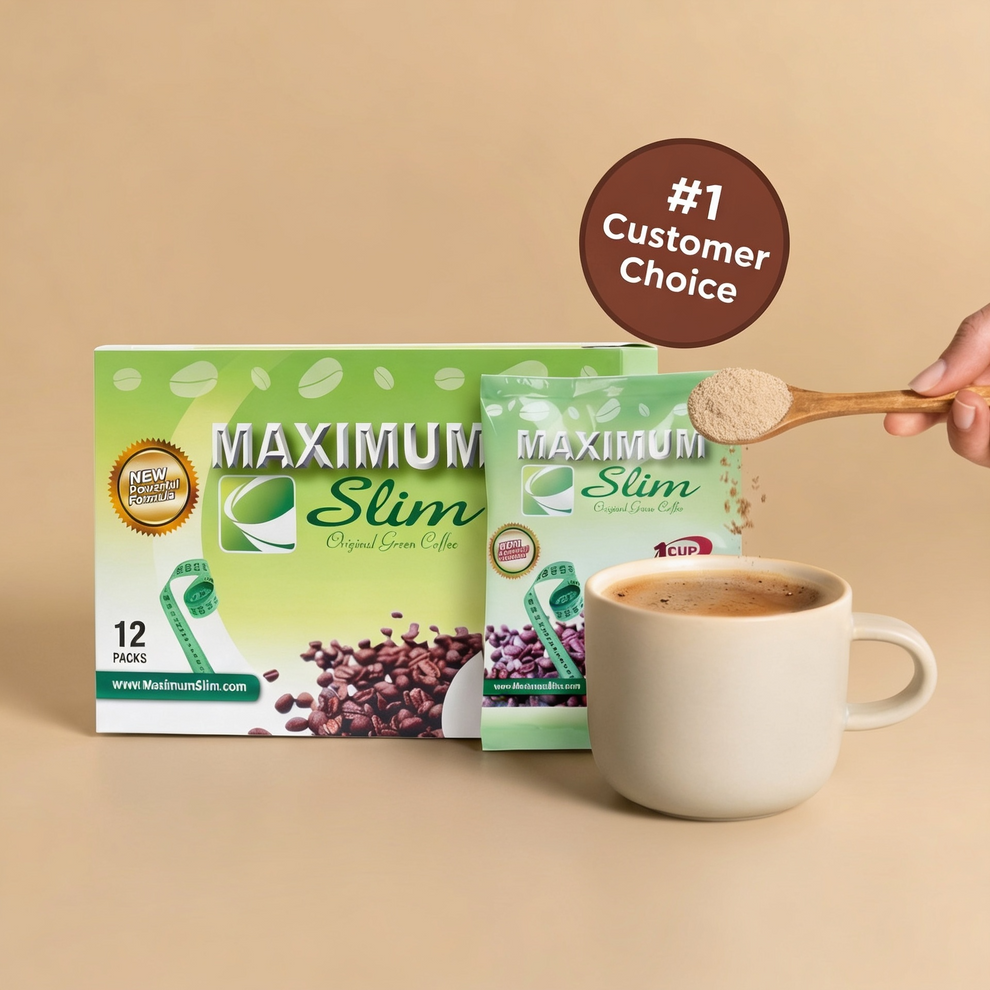
Powder is not the same as extract
Whole-bean green coffee powder usually contains the ground bean itself. Its concentration can vary with species, origin, cultivar, harvest conditions, and milling. An extract, by contrast, is processed to concentrate selected compounds and may be standardized to a stated chlorogenic acid percentage.
The sensory experience is also different from ordinary coffee. Green coffee powder tends to look pale green or tan and tastes grassy, herbaceous, earthy, and mildly bitter. A finely milled powder can feel chalky if whisked into water, while instant, freeze-dried, or spray-dried products are processed for easier dissolution and may have a smoother mouthfeel.
For a fuller explanation of the distinction between raw beans and concentrated products, see this guide to what green coffee bean extract is. The next question is why this raw form has attracted so much interest. The answer begins with its chemical blueprint.
The Chemistry Behind the Buzz
Green coffee's headline compounds are chlorogenic acids, or CGAs. Chemically, these are esters formed from caffeic acid and quinic acid. The family includes several related molecules, with 5-caffeoylquinic acid, commonly called 5-CQA, as the dominant isomer in many green coffee samples.
A review reported CGAs at roughly 6% to 10% of green coffee's dry matter, while another analysis found 5-CQA at about 100 mg per gram on a dry basis, representing 76% to 84% of total CGAs in the measured material. Roasting sharply reduces this profile. In one experiment, total CGAs fell from 34.181 mg/g to 2.584 mg/g during roasting at 220°C for 40 minutes, while caffeine changed more modestly, from 9.880 mg/g to 11.87 mg/g. These findings are reported in the RSC review of green coffee chemistry.
A nutrient blueprint, not just a caffeine source
Caffeine still matters, but it shouldn't be the only compound you evaluate. Green coffee also contains trigonelline, ferulic acid, and dicaffeoylquinic acids. Together, these compounds create a broader polyphenol profile than a simple stimulant powder.
| Compound | Green coffee per 100g | Medium-roast coffee per 100g | Function |
|---|---|---|---|
| Chlorogenic acids | Green coffee commonly retains a high CGA profile | Roasting substantially reduces CGAs | Polyphenol activity and green coffee's functional identity |
| Caffeine | Varies by bean and sample | Changes more modestly during roasting | Stimulation and alertness |
| Trigonelline | Present in the unroasted bean | Changes during roasting | Contributes to coffee chemistry and aroma development |
| Ferulic acid | Present as a phenolic compound | May change with thermal processing | Antioxidant-related chemistry |
| Dicaffeoylquinic acids | Present among the CGA family | Reduced with intensive roasting | Polyphenol contribution |
The table intentionally avoids pretending that every powder has one universal composition. One multi-sample analysis found CGA levels from 2.80 to 5.42 g per 100 g dry weight and caffeine from 0.85 to 1.73 g per 100 g, demonstrating meaningful variation between beans. The same research is available through this peer-reviewed analysis of green coffee composition.
Your body also processes these compounds rather than absorbing every molecule unchanged. Pharmacokinetic work in healthy adults found that a decaffeinated green coffee extract containing 170 mg of CGA was absorbed and metabolized over 8 hours, with more than 30% of cinnamic acid moieties recovered in plasma, as described in the RSC research report.
For product verification, formulators commonly use high-performance liquid chromatography, or HPLC, to measure chlorogenic acids and caffeine. That testing is more informative than phrases such as “antioxidant-rich” or “detoxifying,” because it connects the product claim to a measurable chemical marker.
Real Benefits Backed by Evidence
Green coffee's most defensible benefits are modest and context-dependent. It may support metabolic or cardiovascular goals, but it shouldn't be treated as a standalone weight-loss solution or a substitute for medical care.
The strongest consumer interest centers on weight management. The available evidence points toward a possible small supportive effect, especially when an extract has a defined CGA content and the person is also following a sensible eating and activity pattern. That isn't the same as a dramatic transformation from adding powder to an unchanged routine.
What the evidence supports
- Metabolic support: CGAs may influence glucose handling and related metabolic pathways, but product strength and study design vary.
- Blood pressure support: A 2024 systematic review and dose-response meta-analysis found that green coffee bean extract significantly lowered systolic and diastolic blood pressure in adults, without affecting heart rate, according to the published review.
- Antioxidant positioning: The high CGA content gives green coffee a plausible polyphenol-based antioxidant role, although laboratory activity doesn't automatically translate into a large clinical outcome.
- Alertness: Caffeine can support wakefulness and focus, but the effect depends on the product's actual caffeine content and your individual sensitivity.
Many clinical studies use standardized extracts rather than ordinary whole-bean powder. That distinction matters because an extract can deliver a defined CGA quantity, while a raw powder may vary considerably between batches.

Hype needs a measurement
A product can be marketed as supporting fat burning, energy, blood sugar, and appetite at the same time. Those phrases don't tell you whether the product contains enough CGA to resemble the research, how much caffeine it supplies, or whether the study used powder or extract.
Evidence rule: Treat green coffee as an adjunct. The realistic question is whether a verified product can complement your existing routine, not whether it can replace nutrition, movement, sleep, or clinical treatment.
For a plain-language explanation of the central compound, read what chlorogenic acid is. The most useful benefit claim is usually the most specific one: a product with identified compounds, measured potency, and a clearly stated intended use.
How to Use Green Coffee Powder Day to Day
Start with the format that fits your routine, not the one with the most dramatic marketing. Green coffee powder can be whisked into a drink, blended into food, or included in a capsule or shake, but the taste and potency may differ substantially between products.
Three practical preparation options
Warm water drink: Add the amount listed on the product label to warm water and whisk thoroughly. Warm, not boiling, water is more comfortable to drink and may help you avoid clumps. Lemon, cinnamon, or a small amount of plant milk can soften the earthy bitterness.
Smoothie or breakfast bowl: Blend the powder with fruit, plant milk, oats, or yogurt. This approach works well if you dislike the direct grassy flavor because the other ingredients distribute it through the serving. Stir it into oats or yogurt only after the food has cooled slightly.
Cold preparation: Shake the powder with cold water and ice, then add lemon or unsweetened plant milk. A shaker bottle may disperse the powder better than a spoon, although some sediment is normal with a whole-bean product.

An easy beginner routine is to use one morning serving first, then observe your energy, digestion, and sleep. If you exercise, you might test the same product earlier in the day rather than introducing it late in the evening. Don't combine it immediately with several other caffeinated drinks, because that makes it difficult to identify what your body is reacting to.
Keep the container airtight, dry, cool, and away from direct light. Moisture can cause clumping and may compromise freshness. Use a clean, dry spoon each time, and follow the product's storage instructions instead of transferring the powder into an unlabelled jar.
The following video offers a visual preparation reference:
Dosage, Timing, and What the Science Says
Dosage is where green coffee powder becomes confusing, because a teaspoon is not a measure of chlorogenic acid. Two powders can have similar serving sizes but very different CGA concentrations, depending on the bean, grind, extraction process, and assay method.
A label stating “standardized to 50% chlorogenic acids” means that half of the stated extract weight is intended to be chlorogenic acids. It doesn't mean half of an ordinary whole-bean powder automatically contains that amount. The product should also identify whether the percentage was verified by HPLC.
Compare the format before comparing the dose
| Format | Typical daily serving | Approx. chlorogenic acids | Best use case |
|---|---|---|---|
| Whole-bean powder | Follow the manufacturer's serving guidance | Variable, because the bean is not necessarily standardized | Food or beverage use |
| Standardized extract powder | Follow the labeled extract amount | Defined by the stated percentage | Research-aligned formulation |
| Capsule | Follow the capsule panel | Depends on extract strength and serving size | Convenience and repeatability |
| Decaffeinated extract | Follow the product label | CGA can remain the primary marker | Users limiting caffeine |
The pharmacokinetic study discussed earlier used 170 mg of CGA in a decaffeinated extract and tracked absorption over 8 hours. That finding describes one research preparation, not a universal daily recommendation for every powder.
Morning use is usually easier for caffeine-sensitive people to manage than evening use. If you're testing a product, start with the lowest labeled serving, keep the rest of your caffeine intake consistent, and record sleep, stomach comfort, alertness, and any jitteriness. A single serving gives you cleaner feedback than changing the serving repeatedly.
Practical rule: Choose a product by its measured CGA and caffeine information first, then decide whether the format suits your routine.
Side Effects and Who Should Skip It
Green coffee powder can cause caffeine-related effects even though it may taste lighter and less roasted than ordinary coffee. Sensitive users may notice restlessness, jitteriness, stomach discomfort, sleep disruption, or a temporary rise in heart rate or blood pressure.
The risk depends on the product's caffeine content, your personal tolerance, and what else you consume that day. Coffee, tea, energy products, pre-workout formulas, and some medicines can all contribute to the total stimulant load.
Use extra caution if you
- Are pregnant or breastfeeding: Discuss use with a qualified clinician before taking a caffeinated or concentrated botanical product.
- Have anxiety or caffeine sensitivity: A stimulant can intensify restlessness or interfere with sleep.
- Have blood pressure concerns: The evidence on blood pressure is nuanced, so personal medical guidance matters.
- Take medication: Ask a pharmacist or clinician if you use glucose-lowering medicines, blood thinners, MAOIs, or other treatments that could interact with a supplement.
- Have a chronic condition: Don't assume that “natural” means risk-free or clinically appropriate.
Pairing the powder with food may make it easier on your stomach. Drink enough fluids, avoid stacking multiple stimulant products, and reduce or stop the serving if symptoms appear. Seek medical advice for persistent or severe reactions.
Most healthy adults tolerate moderate use, but the available evidence is clearer for short-term tolerance than for long-term use in every population. The guide to green coffee extract side effects provides another practical safety reference.
Smart Buying and Clean-Label Checklist
The cheapest jar isn't automatically the best value. If its CGA content is unclear, the ingredient list is crowded, or the label makes claims without a test method, you may be paying for uncertainty.
Use these checkpoints before buying:
- Identify the raw material. Look for the botanical name, whether the product uses Coffea arabica or Coffea canephora, the origin, and whether the beans are unroasted. Origin and cultivar can affect composition, so “green coffee” alone is incomplete.
- Find the active marker. A stated chlorogenic acid percentage is more useful than “high antioxidant” language. Ideally, the label or certificate identifies HPLC testing and gives the amount per serving.
- Read every ingredient. A single-ingredient powder makes dose interpretation easier. Blends containing maltodextrin, sweeteners, flavorings, or proprietary stimulants can obscure how much green coffee you're receiving.
- Look for quality controls. GMP manufacturing disclosure and credible third-party verification can add confidence. Organic certification and solvent-free water extraction may also matter if those standards fit your priorities.
The survey data discussed in the opening shows why this process matters. Measured content ranged from zero to 61.3% by weight in the products examined, so a green coffee label shouldn't be treated as proof of potency without supporting documentation.
If you're comparing clean-label nutrition products more broadly, this guide to buying hemp protein in Ireland offers a useful example of the kind of ingredient and sourcing details shoppers can look for across supplement categories. Apply the same discipline here: verify the botanical, active compound, serving amount, testing method, and complete ingredient panel before comparing prices.
Putting It All Together
The simplest mental model is this: green coffee powder is unroasted coffee in powdered form, and chlorogenic acids are its defining actives. Its potential value lies in a measurable polyphenol profile, while its main practical limitation is variation between products.
The evidence supports a cautious position. Green coffee extract may offer modest support for metabolic markers and blood pressure in some adults, but results depend on preparation, potency, individual response, and the rest of the person's routine. It isn't a shortcut around balanced meals, regular movement, adequate sleep, or professional care when a health condition is present.
Before you buy, check three things:
- Active content: Look for a stated CGA amount or percentage, preferably supported by HPLC testing.
- Product identity: Confirm whether you're buying whole-bean powder or a standardized extract.
- Safety fit: Consider caffeine sensitivity, medications, sleep, pregnancy, breastfeeding, and blood pressure concerns.
Start conservatively, use the product earlier in the day, and track how you respond instead of escalating the serving because a label promises more. Consistent, informed use is more sensible than chasing a stronger dose from an unverified powder.
Maximum Health Products offers green coffee products alongside targeted options for weight management, coffee, tea, protein, and daily wellness support. To compare clean-label formulas and find an option that fits your routine, visit Maximum Health Products.

