


Most advice on green coffee gets it backwards. People treat it like a fast fat burner, then quit when the scale doesn't drop in a few days. That's the wrong mindset. How to use green coffee for weight loss comes down to using a modest adjunct with realistic expectations, not chasing a miracle that the evidence never promised.
Green coffee is just unroasted coffee beans, usually Coffea arabica or Coffea canephora, so it keeps more of its chlorogenic acid intact than roasted coffee. That's the compound researchers keep circling back to because it may help with post-meal glucose handling and fat metabolism, but the effect is small. In a 2023 systematic review and meta-analysis, green coffee bean extract with at least 500 mg/day of chlorogenic acid was linked to a body-weight reduction of 1.30 kg versus control, with 0% heterogeneity across the included studies (systematic review and meta-analysis).
That number matters because it tells you what green coffee is and what it isn't. It's not a replacement for food choices, sleep, or activity. It's a nudge.
For a broader look at how this fits into a weight-management stack, the weight loss medication comparison is a useful reality check, because it highlights just how different prescription-level tools are from a supplement like green coffee. And if you want a product-specific overview, the brand's own article on green coffee bean extract benefits helps you see how the category is usually positioned.
Featured Product
Maximum Slim Original Green Coffee
Science-backed formula to support metabolism, curb appetite, and help you reach your goals faster.
Shop Now →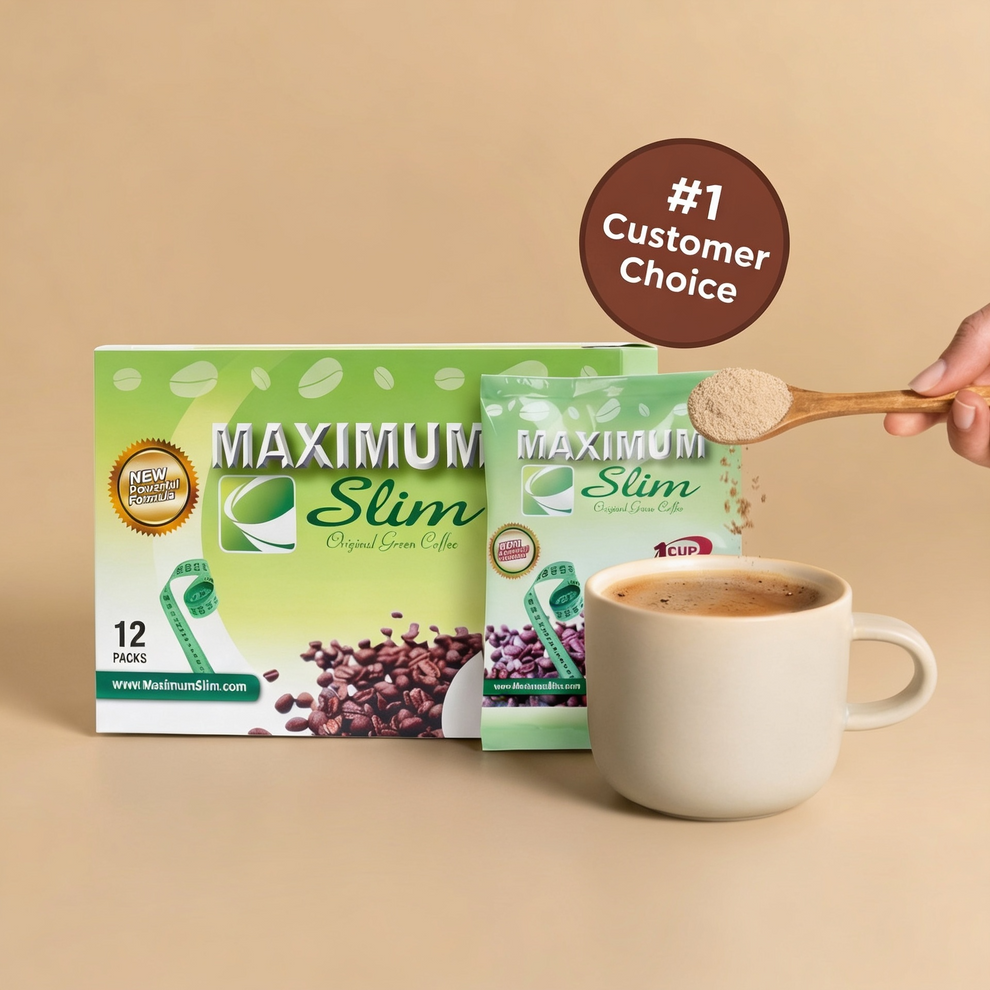
What Green Coffee Does and Why the Hype Is Misleading
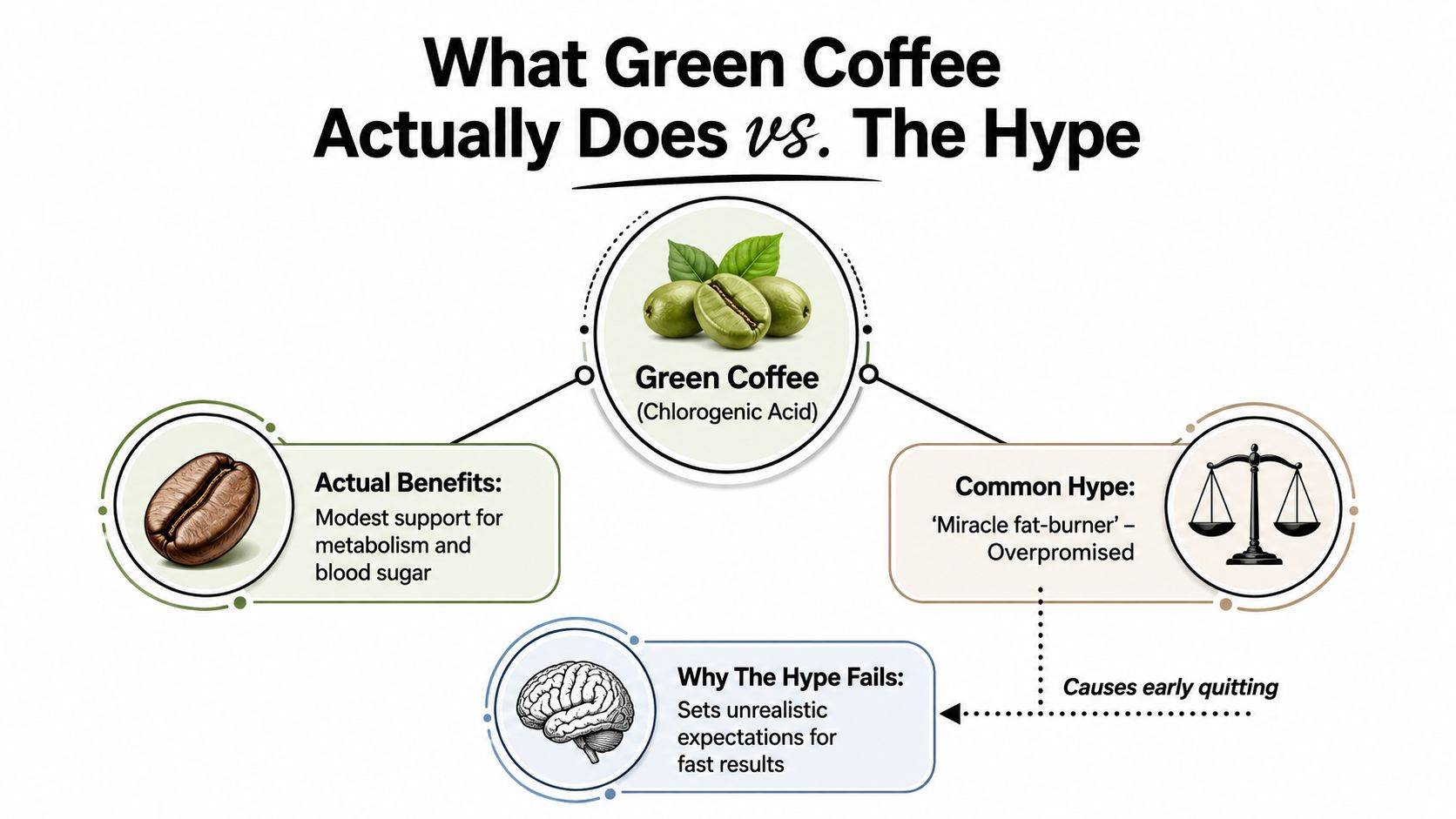
Green coffee gets oversold as a fast fat burner, and that is the first thing to ignore. The story is smaller and slower. People buy it expecting a dramatic before-and-after, then quit when the scale barely moves over the first few weeks.
What's inside green coffee
Green coffee beans are coffee beans that haven't been roasted. Skipping roasting preserves chlorogenic acid, the compound most often studied in this category. That is why green coffee is not just regular coffee with a different label. It is a different product with a different chemical profile.
The clinical story is also more modest than the marketing. Human trials have mostly been short-term and small, and the reported effects are usually measured in kilograms, not dramatic body-composition changes. A 2023 review found a statistically significant body-weight reduction of 1.30 kg in the chlorogenic-acid group, which is real, but not flashy (2023 systematic review and meta-analysis).
Practical rule: If a green coffee product promises rapid fat loss, it is selling expectation, not evidence.
Why the mechanism sounds better than the result
Researchers usually point to two main ideas. One is that chlorogenic acid may affect glucose absorption after meals. The other is that it may have a mild influence on fat metabolism. Those mechanisms are interesting, but they do not turn the supplement into the kind of aggressive fat-loss tool some ads imply.
The 2011 meta-analysis that helped popularize the topic found an average placebo-adjusted weight difference of −2.47 kg, but the trials were only 4 to 12 weeks long and used chlorogenic acid doses from 81 to 400 mg (earlier meta-analysis context). Later reviews have been more cautious, which is exactly what you would expect when the underlying studies are short and inconsistent.
Green coffee belongs with mild dietary helpers, not dramatic obesity treatments. Used as a side tool, it can make sense. Used like a miracle, it usually disappoints, and the buyer blames the supplement instead of the promise.
For a broader look at how this fits into a weight-management stack, the weight loss medication comparison is a useful reality check, because it shows how different prescription-level tools are from a supplement like green coffee. If you want a product-specific overview, the brand's own article on green coffee bean extract benefits shows how the category is usually framed.
Brewing Green Coffee at Home and Choosing Your Format
If you want to drink green coffee instead of swallowing capsules, keep the process simple. The biggest mistake people make is overcomplicating it with strange prep methods, then abandoning the routine because it feels like a science project. You want a format you can repeat on a sleepy weekday morning without thinking.
The three formats that actually make sense
Raw green coffee beans can be brewed like a light, earthy tea. Start with 1 tablespoon of raw beans per 8 oz of water, then steep 10 to 12 minutes. I'd use that only if you enjoy the ritual and don't mind the flavor being a little grassy and sharp.
Pre-ground green coffee is easier if you want less friction. It works well in a French press or as a cold brew-style steep, and that route is useful if you're more likely to stick with a drink than a capsule. If you want a smoother cold option, a smooth cold brew coffee recipe from Allied Drinks Systems can help you adapt the drink format without turning it into a sugary dessert.
Capsules or standardized extract are the cleanest option if your priority is dose consistency. That's the route I'd pick for those who care more about the protocol than the ritual. It removes taste fatigue and makes it much easier to compare your intake with the clinical literature.
My honest take: If you're buying green coffee to “use it right,” a standardized extract is usually the least annoying option.
Making the taste livable
If the flavor turns you off, don't force yourself to sip something you hate. A squeeze of lemon can brighten the cup, and a dash of cinnamon makes the drink feel less flat. If you're using the drink format, pair it with your own routine the way you'd pair any morning beverage, not as a punishment.
The key decision is easy. If you want taste and ritual, brew the beans. If you want measured intake and zero guesswork, use a standardized extract. If you're comparing product forms, the internal guide on organic instant coffee is useful for seeing how convenience changes daily adherence, even though it's a different product category.
Green coffee should fit your life. If the format feels annoying, you won't stay with it long enough to matter.
The Dosing Protocol That Matches the Research
The cleanest protocol is the one that follows the evidence instead of a bottle's marketing copy. You do not need a complicated stack. You need a dose you can repeat, a timing rule you can remember, and enough time for the effect to show up.
The protocol I'd follow
Use a standardized green coffee extract at 500 mg/day total, split into 250 mg twice daily. Take it 30 minutes before breakfast and dinner, and keep the run going for at least 7 weeks, ideally 7 to 12 weeks. That matches the umbrella review that found the strongest effects when supplementation was ≤600 mg/day and lasted more than 7 weeks, with pooled reductions of 1.22 kg in body weight, 0.48 kg/m² in BMI, and 0.55 cm in waist circumference (umbrella review).
Short stints usually disappoint. A course shorter than 4 weeks is too brief to expect much, which is the kind of timing mistake that makes people quit early (trial-based review). If you stop before the evidence window, you are not testing the supplement fairly.
Dosing by sensitivity level
| User Profile | Daily Dose | Timing | Duration |
|---|---|---|---|
| Caffeine-sensitive | Lower end of your product's serving, taken earlier in the day | Morning only, skip the dinner dose if sleep gets shaky | At least 7 weeks |
| Typical stimulant-tolerant adult | 250 mg twice daily | 30 minutes before breakfast and dinner | 7 to 12 weeks |
| Already drinking regular coffee | Keep green coffee away from your usual coffee window | Separate from regular coffee to reduce jitteriness | 7 to 12 weeks |
What to skip
Do not assume more is better. The evidence does not support the idea that pushing far above the studied range will lead to better fat loss. Do not expect capsule strength alone to save a sloppy routine. Green coffee works, if it works for you, as a small adjunct, not a replacement for consistency.
If you want a bottle you can understand, check the label for standardization, not just a big milligram number. A smaller dose of a well-described extract beats a vague proprietary blend every time.
Pairing Green Coffee With Diet and Movement
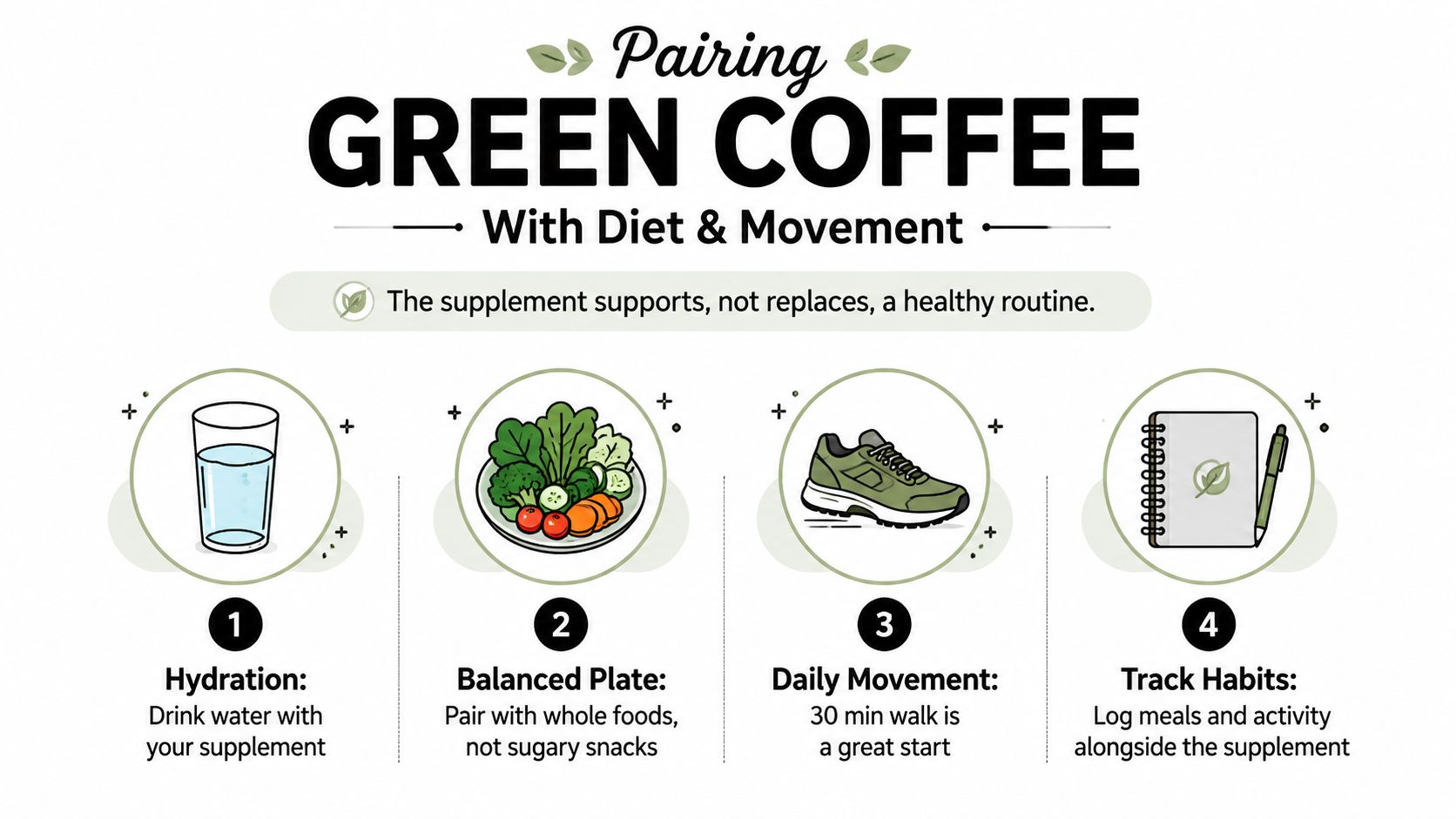
People usually blame the supplement when the issue is the rest of the day. If breakfast is sugary, lunch is random, movement is rare, and sleep is off, green coffee has no room to help. Use it as a support tool and give it a routine worth supporting.
Build the meal and movement context
Start with protein at breakfast. I'd aim for 20 to 30 g so the first meal holds you for a few hours instead of kicking off a snack spiral. Take the green coffee before that meal, not with a pile of syrupy extras, because the whole point is to keep the routine light and consistent.
Keep added sugar low. Chlorogenic acid may be useful around meals, but it's not going to cancel out a high-glycemic breakfast. That's why the supplement should sit inside a steady eating pattern, not an erratic one.
Movement doesn't need a gym membership to count. A simple starter week can look like three 25-minute brisk walks and two short resistance sessions. That gives your body a reason to use energy well, and it makes the supplement feel like part of a plan instead of a random pill.
Simple rule: If your habits don't change, your green coffee routine probably won't either.
The weekly baseline I'd use
Hydrate when you take it. Sleep on a regular schedule. Keep meals predictable enough that you can notice whether appetite shifts. If you're tracking anything, track waist measurement, energy, and cravings alongside body weight, because the scale alone can miss early progress.
The point is not to micromanage your life. The point is to remove the obvious friction that makes modest tools look ineffective. Green coffee can fit a real routine. It just can't rescue a chaotic one.
Side Effects, Contraindications, and Who Should Skip It
Green coffee is still coffee-adjacent, so caffeine matters. A lot of articles hide behind “natural” and act like that makes a supplement gentle for everyone. It doesn't. The stimulant side is real, and for some people that is the main effect.
Common reactions to watch for
The usual complaints are jitteriness, insomnia, acid reflux, a faster heart rate, and digestive upset. Those problems show up more often when green coffee is stacked with regular coffee, energy drinks, or pre-workout formulas. A modest supplement stops being modest once your total stimulant load climbs too high.
Timing matters too. If green coffee keeps you awake, the issue is the schedule, not discipline. Move the dose earlier or cut the later serving. If it irritates your stomach, stop forcing it on an empty stomach just because the label suggests it. That turns a simple routine into something you resent.
Who should skip it
Skip green coffee if you're pregnant or breastfeeding, have uncontrolled anxiety, arrhythmias, GERD, active ulcers, or a history of being very sensitive to stimulants. It can also interact with MAOIs and certain blood pressure or diabetes medications, so anyone on prescription therapy should clear it with a clinician first. Children should not be using it.
People who are already lean usually should not expect much either. The signal looks more useful in adults with a baseline BMI ≥25 kg/m², especially if they are willing to stick with the protocol for 7 to 12 weeks. A shorter run is usually too brief to judge fairly, but impatient users often quit before any meaningful change shows up (trial-based review; BMI-focused review).
If caffeine already makes you edgy, do not try to tough it out. A supplement that wrecks your sleep or pushes your anxiety up is not helping your waistline, no matter how clean the label looks. If you are comparing products and trying to keep the ingredient list simple, a clear guide to third-party testing is a better filter than marketing copy.
Choosing a Clean-Label Green Coffee You Can Trust
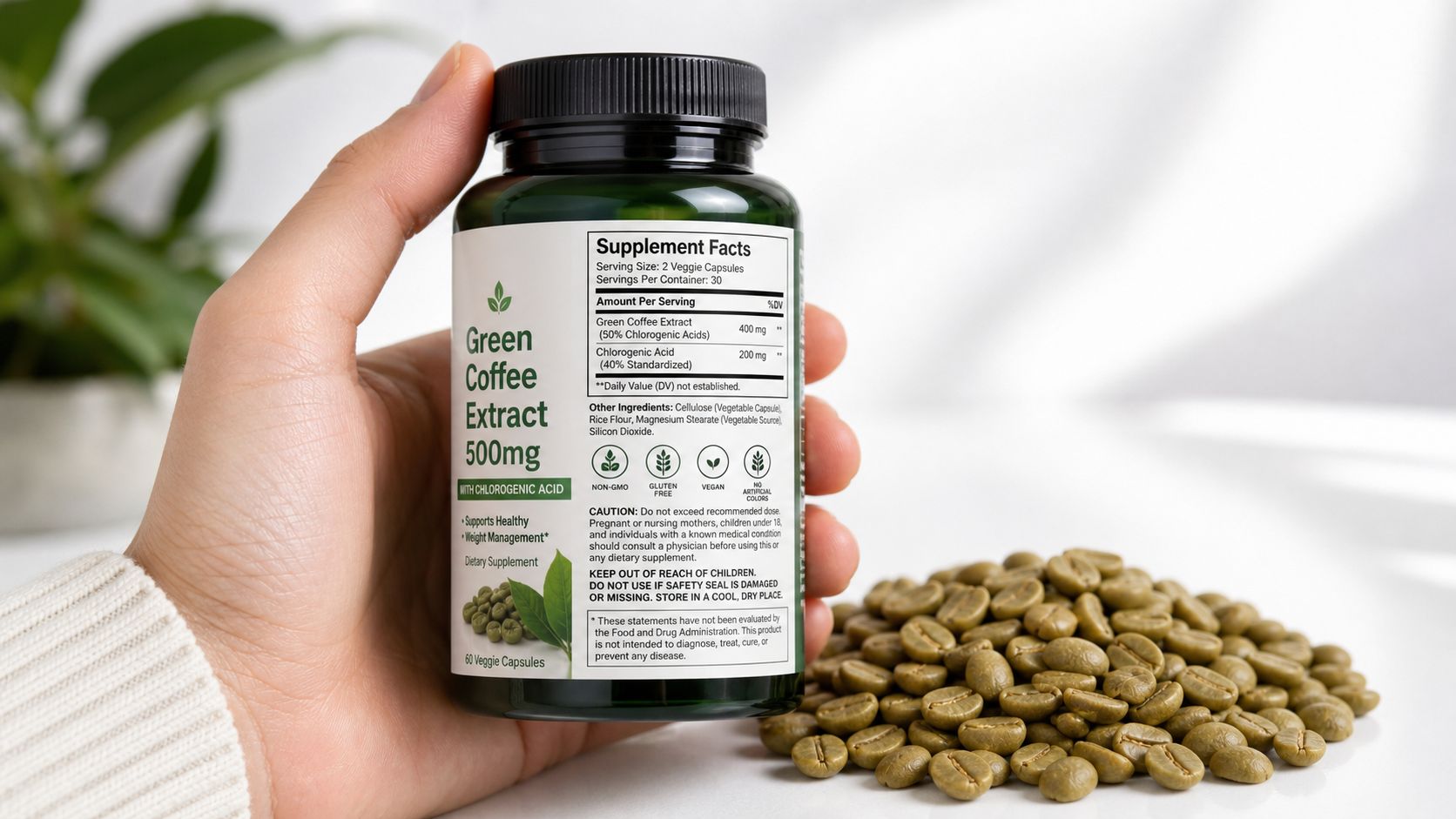
Many green coffee bottles use similar front-panel design, so the back label is the key differentiator. That is the part that tells you whether you are buying a straightforward extract or a padded blend with mystery extras. If you want something usable, read the panel like you are checking a food label for someone you care about.
What to look for
Start with chlorogenic acid standardization. I would want a product that clearly states the extract percentage, ideally around 40% to 45% CGA, because that at least tells you what you are getting. Look for third-party testing, a short ingredient list, and no fillers, artificial colors, added sugars, soy, gluten, or animal-derived flow agents.
One concrete example is Maximum Health Products' Original Green Coffee, which is positioned as a green coffee supplement for weight management and fits the clean-label style the brand uses across its products. Its value is simple. It gives you a clearer label to work with than a vague thermogenic blend.
You can also use the brand's guide on third-party testing to see why that mark matters when you are comparing supplements online or in a store.
Red flags to avoid
- Proprietary blends: If the label hides the chlorogenic acid amount, skip it.
- Thermogenic mashups: If the bottle piles in stimulants under the green coffee name, you are not buying a clean protocol.
- Long filler lists: If you need a dictionary to decode the capsule, keep moving.
A clean green coffee product should be easy to explain in one sentence. If the label makes you squint, it is probably not the product you want.
Realistic Timeline, Troubleshooting, and Your First 12 Weeks
People quit green coffee because they expect week one to look like week ten. That is a bad bet. The better move is to judge the routine in phases, then fix the obvious mistakes before you decide it failed.
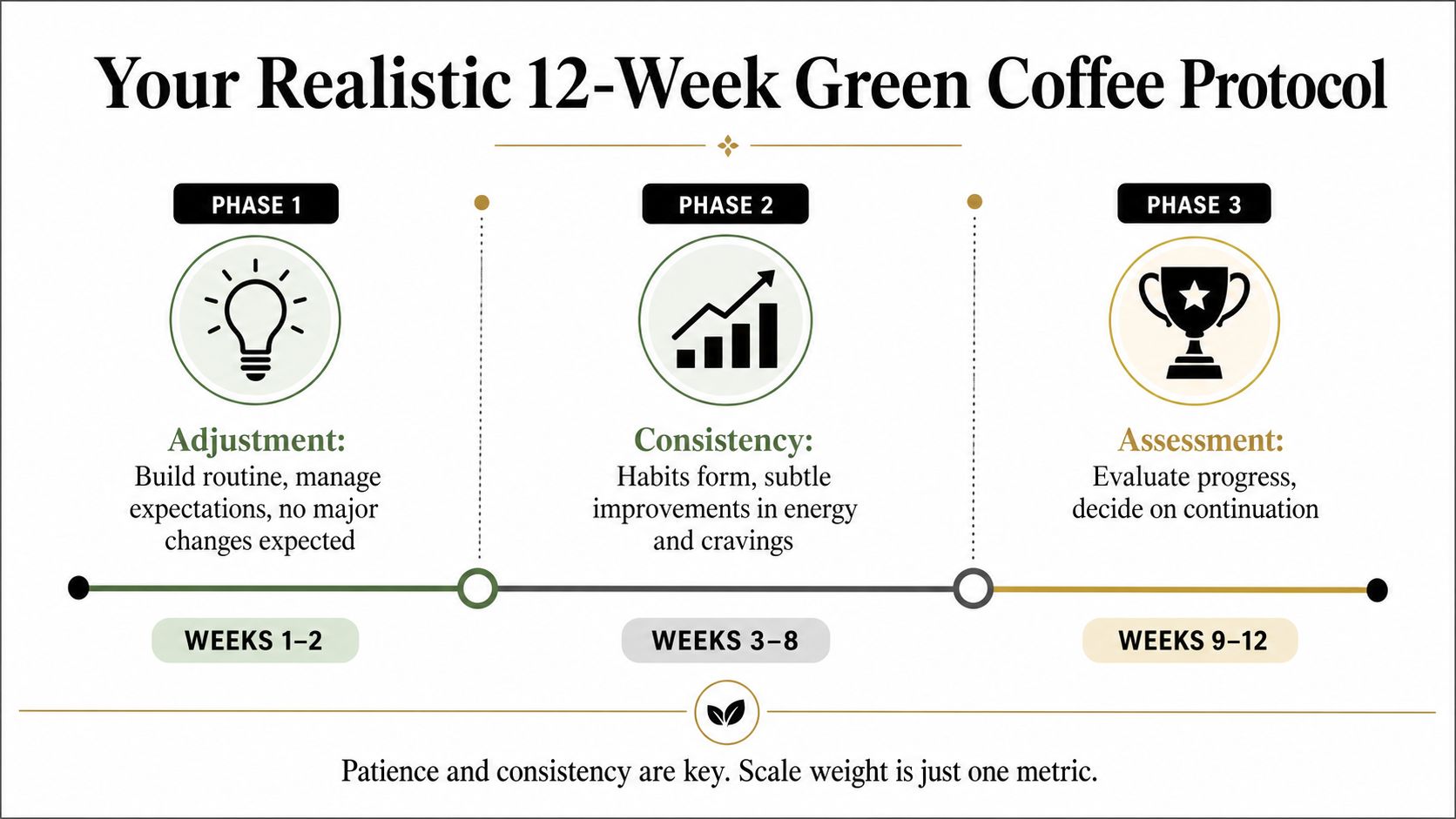
Weeks 1 to 2
The first two weeks are the adjustment period. You are building the habit, checking whether the timing feels good, and seeing whether the caffeine bothers your sleep or stomach. Do not expect major scale movement yet.
Weeks 3 to 8
The routine starts to feel familiar here. Appetite may settle a bit, your morning energy may feel smoother, and waist measurements can tell you more than scale weight. Keep the protocol steady during this stretch, because consistency matters more than enthusiasm.
Weeks 9 to 12
The assessment window starts here. You are looking for a modest change, not a dramatic one, and that is the right mindset for a supplement like this. If the scale and measurements have not budged by then, green coffee is probably not doing enough for you, or the rest of the routine needs tightening.
Troubleshooting is usually plain, and that is the point. You may be taking it with food instead of before meals. You may have stopped before the routine had time to settle in. You may be stacking too much caffeine from other sources. You may be ignoring protein and sleep. Fix those first before you write off the whole plan.
Use this checklist for the first 12 weeks. Take the dose consistently, keep the food simple, move your body every week, and track something besides body weight. That is the cleanest way to know whether green coffee deserves a place in your routine.
Maximum Health Products offers clean-label options like Original Green Coffee, plus meal-planning and smoothie guides that make a routine easier to follow instead of harder to maintain. If you want a straightforward supplement and practical support materials, visit Maximum Health Products and build a weight-management setup you can stick with.

