


Some days your digestion feels fine. Other days, you eat a normal lunch and end up bloated by mid-afternoon, or you realize it's been far too long since your last comfortable bowel movement. If that sounds familiar, you're not alone. Busy schedules, rushed meals, stress, travel, and inconsistent eating habits can all leave your gut feeling unpredictable.
Individuals often respond by looking for a quick fix. They try a probiotic, cut out random foods, or start drinking more water and hope for the best. Sometimes that helps. Often, it doesn't solve the underlying issue, which is that your gut bacteria need the right food to do their job well.
That's where prebiotic foods for digestion come in. They don't work like a magic reset button. They work more like steady support. If you've been trying to improve digestion while also keeping an eye on energy, appetite, weight, or blood sugar, that detail matters. Some prebiotic foods are excellent for gut health but come with more sugar than you may want. Others support digestion in a way that fits metabolic goals better.
Your Gut Is a Garden That Needs Tending
Think about a typical weekday. You grab coffee, answer messages, eat lunch at your desk, and by evening your stomach feels tight and heavy. Maybe you're gassy. Maybe things feel sluggish. Maybe your digestion is inconsistent enough that you never quite know what to expect.
A helpful way to understand this is to stop thinking of your gut as a machine and start thinking of it as a garden.
Your gut is home to a huge community of microbes. Some of them help break down food, support regular bowel movements, and contribute to a healthy gut lining. Others are less helpful when they become too dominant. Just like in a garden, the goal isn't sterile perfection. The goal is balance.
Why the garden analogy works
Plants don't thrive because you stare at them and demand results. They thrive because the soil gets the right support over time. Your gut works the same way. Beneficial microbes need nourishment. When they get it, they grow better and do more of the work that supports comfortable digestion.
Prebiotics are like fertilizer for the good parts of your gut garden. They feed the microbes you want more of.
That comparison isn't just cute. It's practical. If you've ever read about the benefits of soil organisms, the idea feels familiar. Healthy soil depends on the right microbial life, and your digestive system does too.
A gut-friendly diet isn't about removing everything. It's about feeding the helpful organisms consistently enough that they can keep the system running smoothly.
When people get confused about digestion, it's often because they focus only on what they should avoid. Avoid sugar. Avoid gluten. Avoid dairy. Avoid processed food. That can have a place, but your gut also needs something positive. It needs fuel for the microbes that support regularity, stool quality, and overall digestive comfort.
Featured Product
Maximum Slim SuperGreens Powder | Plant-Based Nutrient Drink Mix
Maximum Slim SuperGreens delivers 27 organic superfoods in a single daily scoop — making it one of the easiest ways to fuel your body with real plant-based nutrition
Shop Now →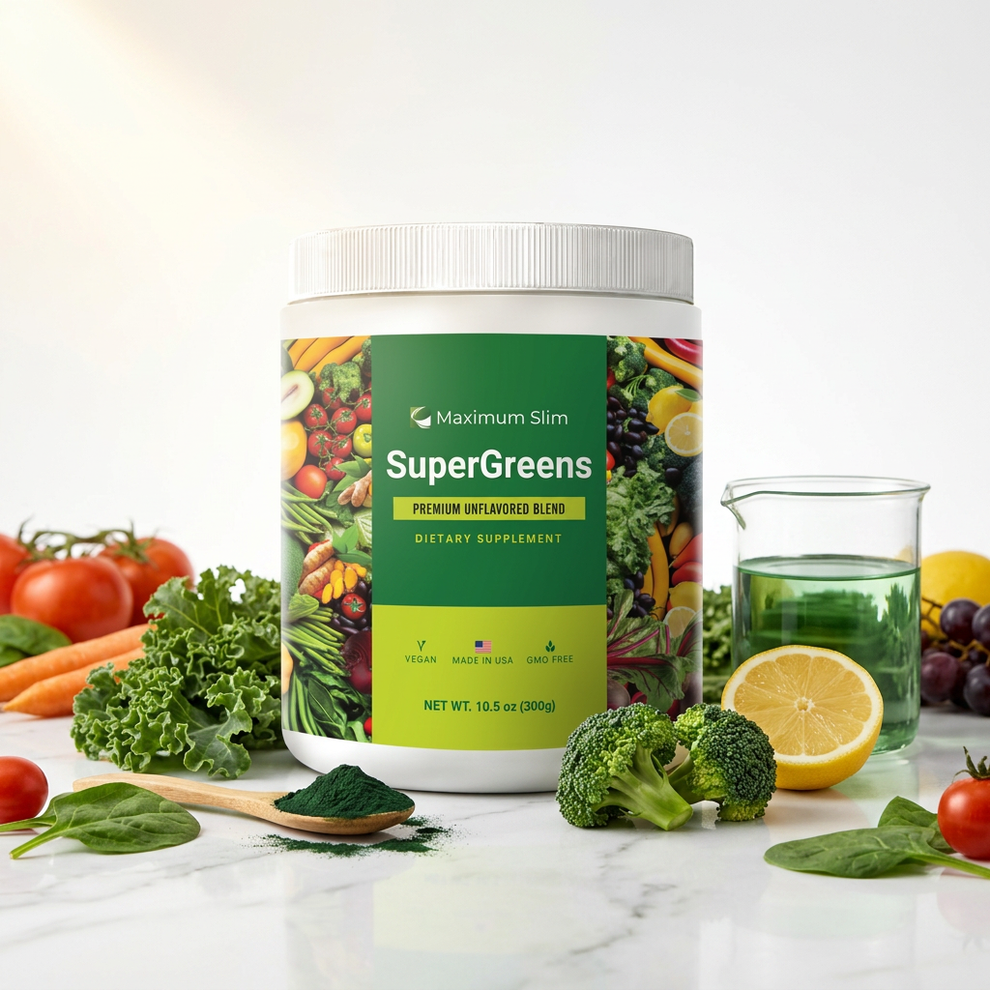
What Are Prebiotics Really
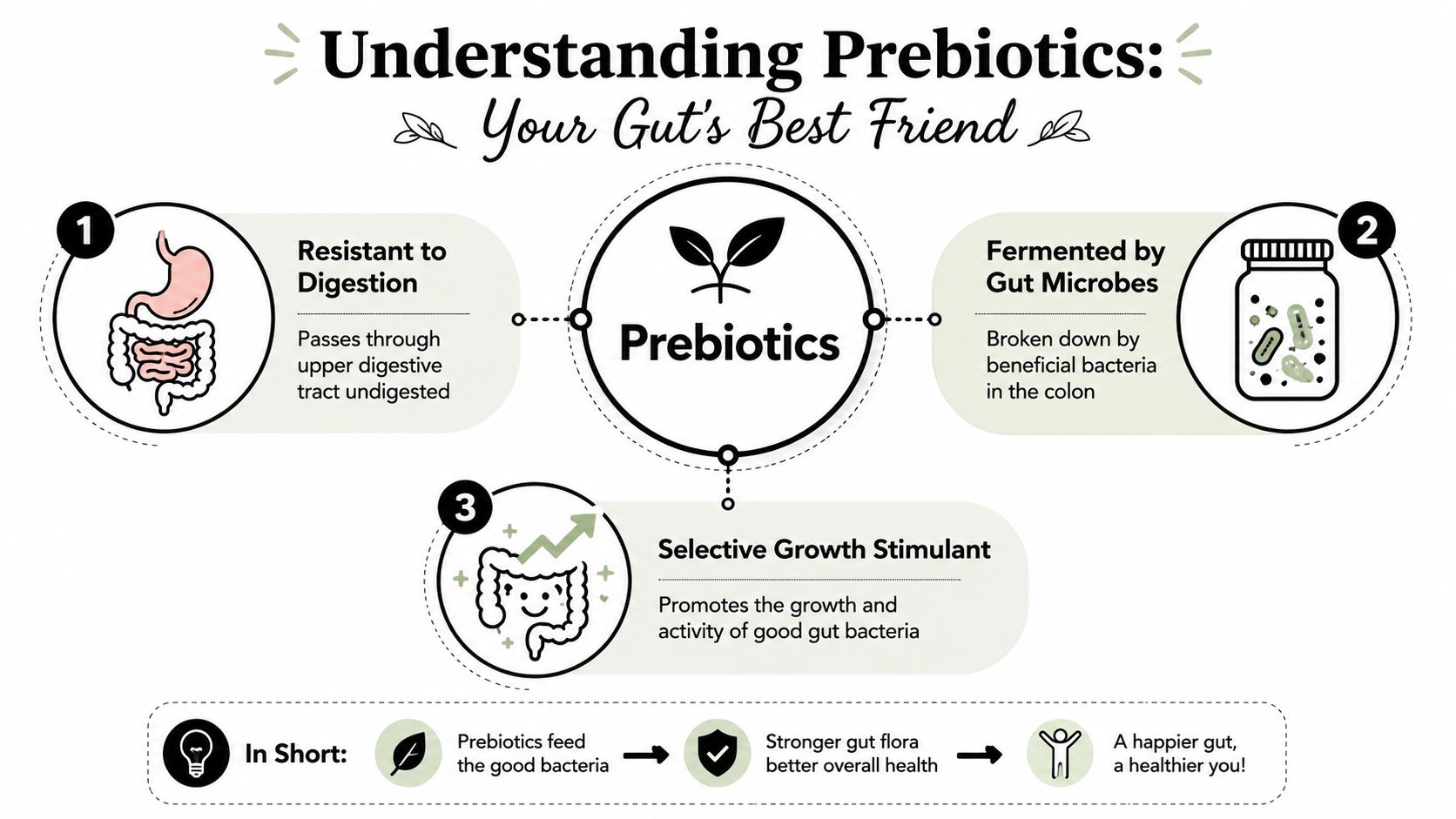
Prebiotics are compounds in food that your body does not fully digest, but your beneficial gut microbes can use as fuel. If probiotics are the live bacteria, prebiotics are what help those bacteria settle in and do useful work.
The formal definition is narrower than many readers expect. A compound qualifies as a prebiotic only if it survives digestion in the upper gut, reaches the colon, and is used by helpful microbes in a way that benefits human health, according to a scientific review on prebiotic criteria.
The simple version
A true prebiotic has to make it far enough through digestion to reach your gut microbes, and it has to feed the helpful ones more than the less helpful ones.
That is why "fiber" and "prebiotic" are not interchangeable. Some fibers mainly add bulk. Some slow digestion. Some do both. Only certain fibers act as selective food for beneficial bacteria.
Prebiotics versus probiotics versus fiber
It is common for people to get turned around, especially if they are trying to improve digestion and manage blood sugar at the same time.
Prebiotics
Prebiotics are the food source for beneficial microbes.
Probiotics
Probiotics are the live microbes themselves, often found in yogurt, kefir, and fermented vegetables.
General fiber
Fiber is the broader category. Prebiotics sit inside that category, but they are a specific subgroup with a more targeted job.
A practical comparison helps:
- Probiotics are seeds
- Fiber is the overall soil structure
- Prebiotics work like fertilizer for the right plants
The prebiotic-sugar paradox
This is the part many gut-health articles skip.
Some foods linked with prebiotics also contain a meaningful amount of natural sugar. That does not make them bad foods. It does mean they need context, especially for readers focused on weight management, appetite control, or steadier energy.
For example, foods such as onions, garlic, leeks, asparagus, oats, and legumes can give you prebiotic benefits without much sugar. Other foods, such as certain fruits, may offer prebiotic fibers but raise sugar intake faster if portions get loose. The goal is not to fear fruit. The goal is to choose prebiotic foods that support your gut and still fit your metabolic goals.
A simple way to handle this is to build your routine around lower-sugar prebiotic staples first, then add sweeter options on purpose instead of by accident. If you are also working on improving digestion naturally at home, that approach gives you a cleaner starting point.
Why this matters for digestion
When beneficial bacteria get the right fuel, they produce compounds that support the gut environment and help the system run more smoothly.
So prebiotics do more than "add fiber." They help shape which microbes grow best. That distinction is what makes them useful for someone who wants better digestion without loading up on foods that push sugar intake higher.
The Science Behind Prebiotics and Digestion
A useful way to understand prebiotics is to picture your colon as the part of the garden where feeding happens. Your body does not fully digest certain fibers in the small intestine, so they travel farther down the digestive tract, where gut bacteria ferment them. That process helps beneficial microbes grow and produces short-chain fatty acids, compounds that help support the gut lining and healthy immune signaling, according to this review of prebiotic supplementation and clinical outcomes.
The practical takeaway is simple. Prebiotics do their best work through repetition, not random healthy meals.
A busy adult might add beans on Monday, skip fiber for two days, then eat a large salad on Friday and wonder why digestion still feels inconsistent. The microbiome responds better to steady feeding. Give the helpful bacteria regular fuel, and they are more likely to keep producing the byproducts that support smoother bowel habits.
That is why studies tend to show benefits after people keep up a consistent intake for weeks, not after one “clean eating” day. The same review found the clearest bowel-habit improvements with regular use over time, including better stool frequency, stool consistency, and overall predictability.
What the research means for everyday digestion
Three prebiotic compounds have the strongest support in human research: inulin, fructooligosaccharides (FOS), and galactooligosaccharides (GOS). You do not need to memorize those names, but it helps to know where they show up. Inulin and FOS are common in foods like onions, garlic, leeks, asparagus, and chicory root. GOS is often associated with legumes.
Here is where the prebiotic-sugar paradox matters again. Some prebiotic foods, especially certain fruits and packaged “gut health” products, can bring more sugar than you expected. If your goals include weight control, steadier energy, or better appetite regulation, it makes sense to build around lower-sugar prebiotic staples first and add sweeter options deliberately.
A fertilizer comparison works well here. Prebiotics are like fertilizer for the microbes you want more of. More fertilizer is not always better, and the wrong type can create problems. A sudden jump in fermentable fiber can leave you bloated, crampy, or gassy, even if the food itself is healthy.
Why a gradual approach works better
Start with a tolerable amount and repeat it daily. That usually works better than loading up on fiber all at once. For many people, that means adding one prebiotic food to a meal they already eat often, such as onions in eggs, lentils in soup, or oats at breakfast, then increasing slowly based on comfort.
If you want a broader food-and-lifestyle plan, Maximum Health has a practical guide on natural ways to improve digestion at home. For a wider view of how food choices can support both gut balance and related areas of health, see Momotaro Apotheca's nutritional advice.
Consistency matters more than intensity. That is the science in plain English.
Top Prebiotic Foods for Your Shopping List
You are standing in the produce aisle, trying to do something smart for your gut. One option is a sweet yogurt drink with “prebiotic” on the label. Another is a bunch of leeks, a bag of oats, and a can of lentils. For digestion and metabolic goals, the second cart usually gives you more control.
That is the prebiotic-sugar paradox in real life. Some foods marketed for gut health also add more sugar than you may want. A better strategy is to build your routine around lower-sugar prebiotic staples first, then add sweeter foods on purpose instead of by accident.
Dietary analysis highlighted dandelion greens, Jerusalem artichokes, garlic, leeks, and onions among the richest food sources of prebiotics, and also noted asparagus and chicory root as strong sources of inulin in this overview of top prebiotic foods.
Low-sugar powerhouses
A practical shopping list starts with foods that feed beneficial gut bacteria without pushing sugar intake up at the same time. Vegetables in the allium family and a few fiber-rich plants do that job well.
- Garlic adds prebiotic fibers to dressings, sautés, soups, and marinades.
- Onions fit easily into eggs, stir-fries, grain bowls, and roasted vegetable trays.
- Leeks offer a gentler flavor and work well in soups, frittatas, and skillet meals.
- Asparagus roasts quickly and pairs with almost any dinner.
- Dandelion greens add a bitter, salad-like bite that some people enjoy sautéed with olive oil.
- Jerusalem artichokes are very concentrated, so smaller portions make sense if your stomach is sensitive.
- Chicory root often shows up in powders, drinks, or fiber-enriched products, but whole-food sources are usually easier to fit into meals.
These foods act like fertilizer for the bacteria you want growing in your gut. The benefit is not just the fiber itself. It is the fact that these foods can become regular parts of lunch and dinner without turning your gut-health plan into a sugar-heavy plan.
Fruit deserves a place, just not the leading role
Fruit can absolutely support a healthy diet. The more useful question is how much of your prebiotic intake should come from sweeter foods if you also care about appetite, blood sugar stability, and weight management.
For that reason, treat fruit as one contributor instead of the foundation. Build around vegetables, legumes, oats, and resistant starch first. Then add fruit in portions that fit your overall goals.
As a complementary perspective on food choices that support both gut and broader wellness, I like Momotaro Apotheca's nutritional advice, especially for readers who want to think beyond digestion alone.
Smart starches and grains
Prebiotic eating is not limited to vegetables. Oats, beans, lentils, and some cooked-and-cooled starches help in a different way. They provide fibers such as beta-glucan and resistant starch, which give gut microbes more to work with while also making meals feel more substantial.
That matters for the Maximum Health audience. A bowl of oats or lentils often supports digestion in a way that also fits better with fullness and steady energy than relying on sweet snack foods labeled for gut health. If you want help putting those foods into a balanced day, Maximum Health's guide to daily fiber intake recommendations is a useful next read.
Top Prebiotic Foods and Serving Ideas
| Food Source | Primary Prebiotic | Serving Suggestion |
|---|---|---|
| Garlic | Inulin and FOS | Add minced garlic to dressings, soups, or roasted vegetables |
| Onions | Inulin and FOS | Sauté with eggs, ground turkey, or lentils |
| Leeks | Inulin | Slice into soups or cook with olive oil and herbs |
| Asparagus | Inulin | Roast and serve with dinner or add to grain bowls |
| Jerusalem artichokes | FOS | Roast small portions and pair with protein |
| Dandelion greens | Prebiotic fiber | Mix into salads or sauté with garlic |
| Chicory root | Inulin | Use chicory-based products or add small amounts where appropriate |
| Oats | Beta-glucan | Make oatmeal or stir into overnight oats |
| Beans and grains | Resistant starch | Add chickpeas, lentils, or cooled grains to lunch bowls |
How to Add Prebiotic Foods to Your Diet
The biggest mistake people make with prebiotic foods for digestion is going too hard, too fast. They hear that gut bacteria love inulin or FOS, then load up on onions, garlic, chicory products, and fiber bars in the same day. By evening, they're bloated and frustrated.
There's a reason for that. According to the Monash University prebiotic FAQ, 5 to 10 grams of FOS or inulin daily reliably increases fecal Bifidobacterium counts within 1 to 2 weeks, but intake above 10 grams per day can cause gas and osmotic diarrhea, which is why a gradual titration starting at one-quarter serving is advised.
Start with one upgrade, not five
Choose one easy change and repeat it for several days.
For example:
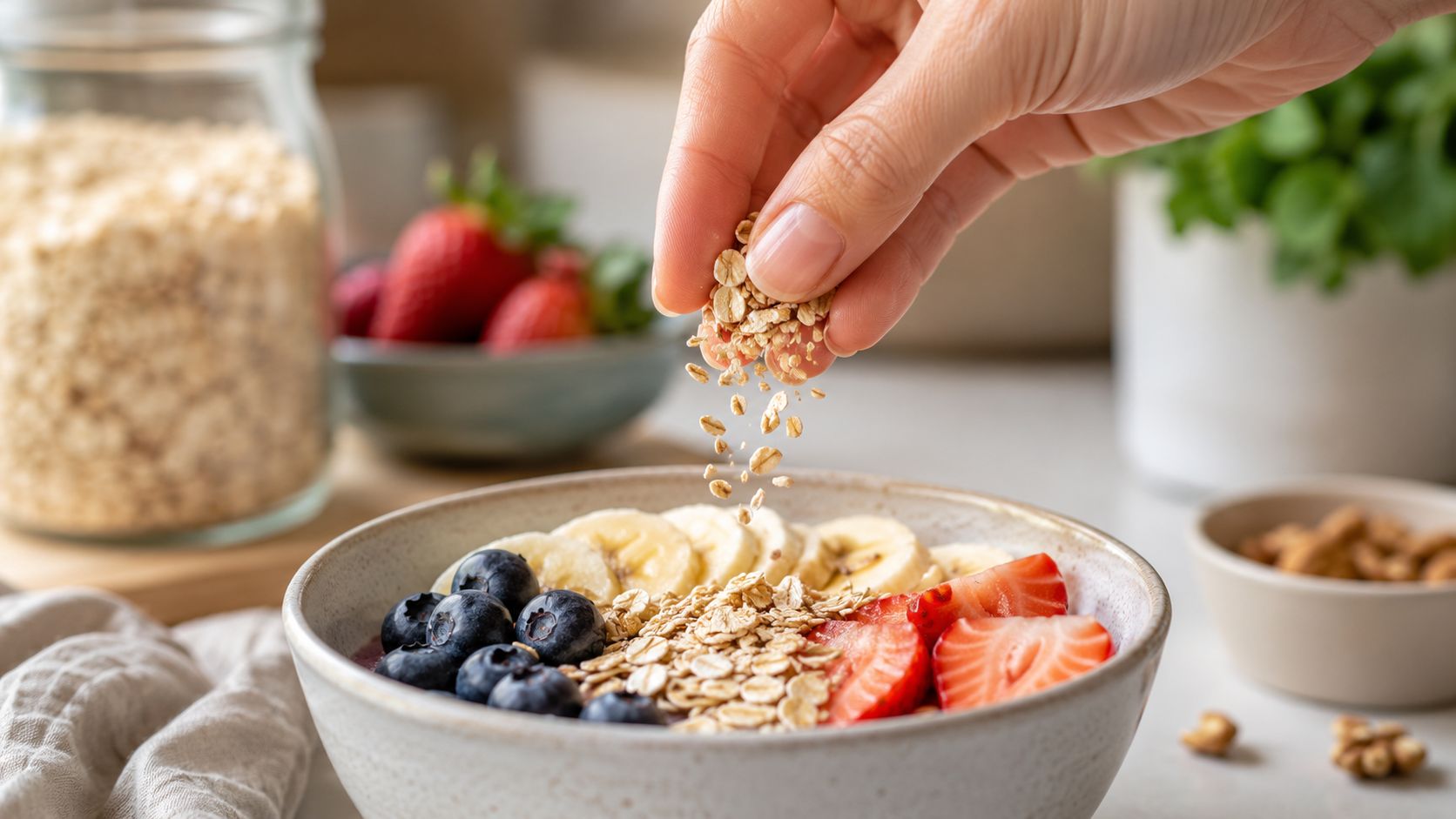
- Breakfast change: add oats to your morning routine
- Lunch change: include onions or chickpeas in a salad or bowl
- Dinner change: serve asparagus or leeks with your main meal
That gives your gut time to adjust.
If prebiotic foods make you feel worse right away, the issue often isn't the food itself. It's the speed and amount.
Pair prebiotics with probiotics
A useful combo is a synbiotic meal. That means pairing a prebiotic food with a probiotic food.
Examples:
- Yogurt with oats
- Kefir with fruit and seeds
- A savory bowl with cooked vegetables plus a side of fermented vegetables
You're feeding beneficial microbes and introducing live cultures in the same meal.
Use the cooked-and-cooled starch trick
One of the most practical hacks is using cooked-and-cooled starches. The prebiotic value of potatoes and rice increases when they're cooked and cooled, because more starch resists digestion and becomes available to feed gut bacteria, as discussed in this overview of resistant starch in cooled foods.
That means leftovers can work in your favor.
- Cooled potatoes can go into a simple potato salad
- Cold rice works well in a rice salad or meal prep bowl
- Beans and lentils also fit nicely into this strategy
For readers who like to zoom out and look at the full eating pattern, OneTwenty's diet pattern analysis is a useful reminder that digestion responds to repeated habits, not isolated superfoods.
If you're also considering supplements, Maximum Health has a helpful overview of the best supplements for digestive health.
A Sample 1-Day Prebiotic Meal Plan
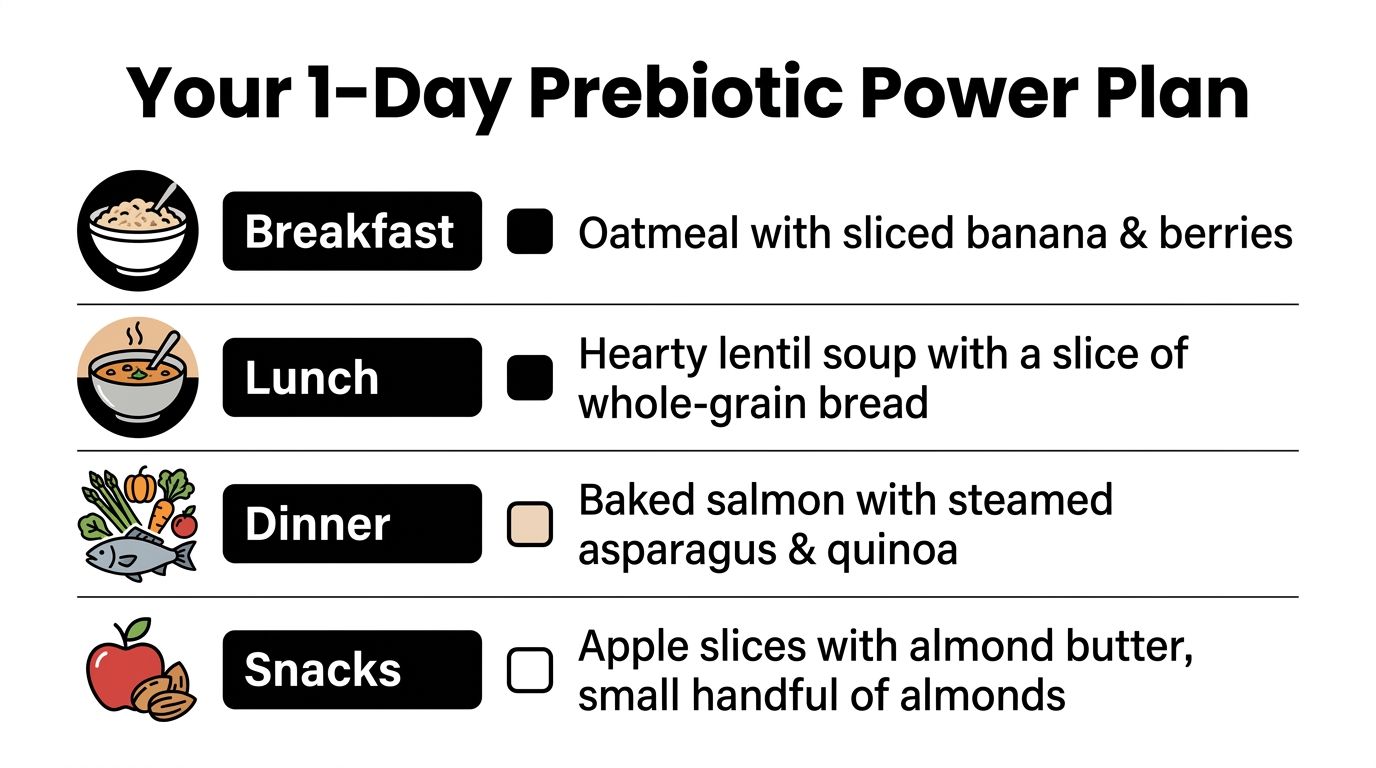
A good gut-supportive day doesn't need to be complicated. It just needs a few smart choices repeated often enough that your digestion notices.
Breakfast
Make a bowl of oatmeal and top it with a slightly less ripe banana and a spoonful of nuts or seeds.
Oats bring prebiotic fiber to the meal, and this kind of breakfast is easy to repeat on busy mornings. If you tolerate dairy, yogurt on the side can add a probiotic partner.
Lunch
Build a lunch bowl with mixed greens, chickpeas or lentils, sliced onions, and a garlic-based vinaigrette.
This meal works because it layers several gut-friendly foods without being fussy. It also avoids the trap of relying only on sweet snack foods for prebiotic intake.
Here's a short video if you want a simple visual nudge for healthy meal planning and food choices:
Snack
Try apple slices with plain yogurt or a small serving of oats mixed into yogurt.
Fruit can play a supporting role here, but it doesn't need to carry the whole day. The bigger win is using it as part of a balanced snack instead of as a standalone sugar hit.
Keep prebiotic eating boring in the best way. Familiar meals you can repeat beat ambitious plans you abandon after two days.
Dinner
Serve salmon with roasted asparagus and a side of cooled grain salad or lentils.
This dinner brings in one of the better vegetable sources of prebiotic fiber while keeping the meal protein-forward and satisfying. If you prep extra grains ahead of time and chill them, you also make weekday eating easier.
The larger lesson from this sample day is simple. You don't need specialty foods at every meal. You need a pattern built around vegetables, legumes, oats, and smart starches.
Frequently Asked Questions About Prebiotics
Should I get prebiotics from food or supplements
Food should be your foundation. Whole foods bring prebiotic compounds along with other helpful nutrients and make it easier to build a sustainable routine. Supplements can be useful for convenience, but they work best as support, not as a replacement for a solid eating pattern.
Are prebiotic foods hard on people with sensitive digestion
They can be. Many prebiotic foods overlap with higher-FODMAP foods, especially onions, garlic, leeks, and some inulin-rich ingredients. If you have IBS or a very reactive gut, start with small amounts and consider working with a qualified clinician. Tolerance varies a lot from person to person.
How long does it take to notice a difference
Instant results shouldn't be expected. Digestive changes usually come from consistency. If you're eating prebiotic foods regularly and building up gradually, you may start to notice improvements in comfort and regularity over time rather than all at once.
If you want clean-label support for digestion, energy, metabolism, and daily wellness, explore Maximum Health Products. Their lineup includes teas, coffees, proteins, greens, and targeted supplements designed to fit a practical, health-conscious routine without added sugars, artificial ingredients, soy, or gluten.

