


The most popular advice about supplement stacking for weight loss is also the most misleading: add more products, hit more pathways, and fat loss will speed up automatically.
That sounds logical. It often isn't.
A stack can help, but only when it's built with a purpose, checked for overlap, and matched to the person using it. Randomly combining a fat burner, an energy blend, a greens powder, and a multivitamin is less like building a strategy and more like throwing five strangers into the same kitchen and hoping dinner improves. Sometimes you get help. Sometimes you get duplication, side effects, or doses you never meant to take.
The better question isn't “What are the best supplements?” It's “How do I stack supplements safely and intelligently for my goal?” That shift matters. It changes stacking from trend-following into decision-making.
Featured Product
Organic Protein Shake - Maximum Slim
Maximum Slim Organic Protein Powder is a delicious plant-based formula designed to support everyday nutrition and a balanced lifestyle
Shop Now →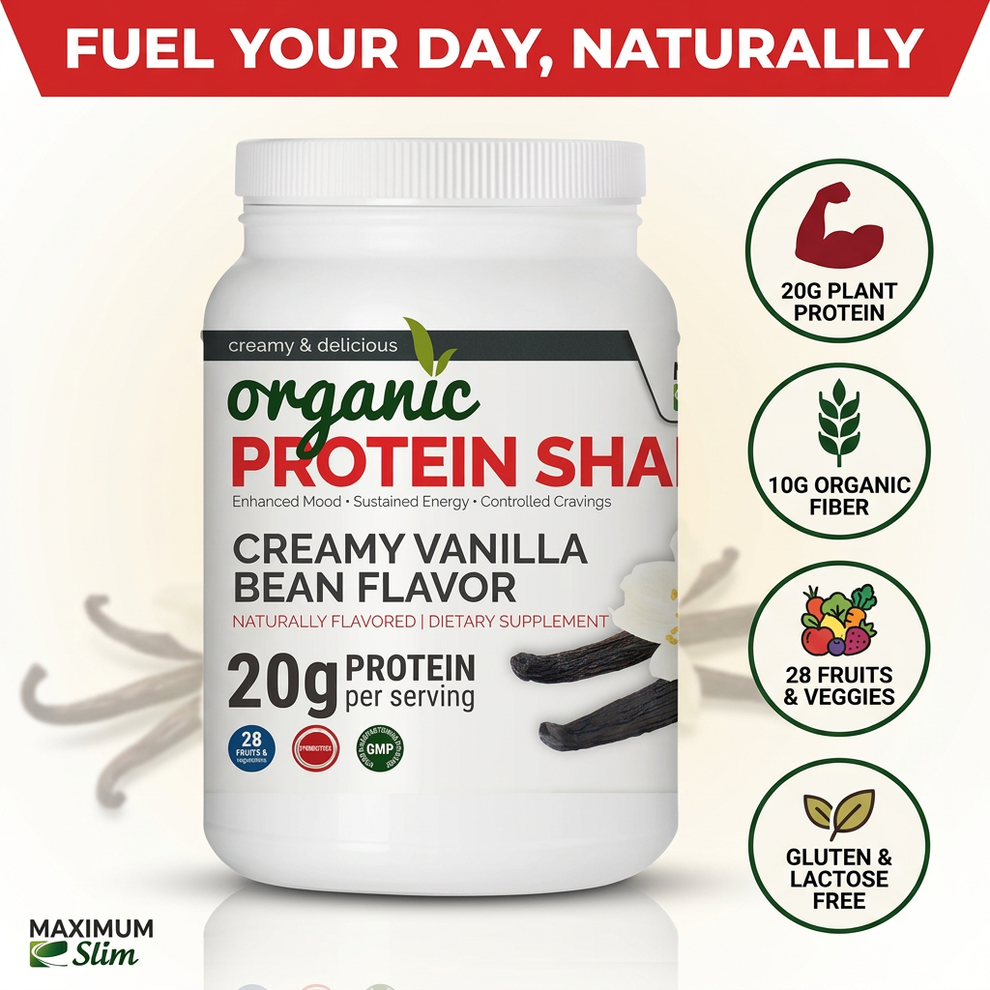
What Is Supplement Stacking and What It Is Not
Supplement stacking means combining more than one supplement in a deliberate way so each one plays a different role. Imagine building a small team. You don't hire five people to do the same job. You want different strengths that work together.
In weight management, one ingredient might support satiety, another might support fat metabolism, and another might help you maintain energy or lean mass while dieting. That is the theory behind stacking. A good stack tries to influence several parts of the process at once.
The useful definition
The idea is straightforward:
- One supplement has a primary job such as appetite support
- Another may complement it by supporting energy use or body composition
- The full stack should have a reason to exist beyond “more must be better”
That last point is where many people get stuck. Social media often treats stacks as shortcuts. In practice, they are only support tools.
Current evidence suggests the theory behind stacking is to target multiple physiological pathways, but experts also warn that stacking without treating a specific deficiency can raise toxicity risk. The same source notes that supplement makers rarely conduct clinical trials, and stacks may offer incremental benefits rather than serving as a standalone solution for sustainable weight loss, as discussed in this review on weight loss supplement stack risks and limits.
Practical rule: If a stack can't survive without basic nutrition, movement, sleep, and consistency, it isn't a strategy. It's a distraction.
What stacking is not
It is not:
- A replacement for meals when the underlying problem is poor food structure
- A cure for overeating caused by stress, sleep loss, or habit loops
- A signal to combine every trendy ingredient in one routine
- A self-prescribed treatment plan for hormone issues, fatigue, or blood sugar concerns
Many people also confuse “personalized” with “complicated.” Those aren't the same thing. A personalized stack may be very simple. In many cases, the smartest plan is fewer products, not more.
If you're unsure where your real obstacle sits, such as cravings, low energy, inconsistent meals, or emotional eating, getting outside guidance can help before you buy anything. Some people benefit from discreet UK weight loss consultations because they clarify whether a supplement belongs in the plan at all.
A better standard
A useful stack should answer three questions:
- What exact problem is this trying to solve?
- What does each ingredient contribute that the others do not?
- How will you know whether it's helping or hurting?
If you can't answer those clearly, you probably don't have a stack yet. You have a pile.
The Building Blocks Evidence-Backed Ingredients
Before combining supplements, you need to know what each one does. Many stacks fail when this understanding is lacking. People mix ingredients with overlapping jobs, or they choose ingredients because the label sounds impressive rather than because the mechanism fits the goal.
A useful way to think about ingredients is by role. Not every product deserves a place in a stack, and not every role needs filling.
Ingredients that target body composition
Conjugated Linoleic Acid, usually called CLA, is one of the clearer examples of a targeted ingredient. In a clinical study, CLA at 3.4 grams per day reduced body fat mass by 1.73 kg and decreased percent body fat by 3.8% over 12 weeks, without significant changes in total body weight or lean body mass according to the published study on CLA and body composition.
That finding matters because it shows an important distinction: fat loss and weight loss are not always the same thing. The scale may not move much even when body composition improves. That's one reason people misjudge whether a stack is “working.”

Ingredients often used for appetite or metabolic support
Some ingredients appear in stacks because they may support hunger control, energy use, or nutrient handling. The evidence isn't equal across all of them, and that's where caution helps.
Here's a simple way to think about common categories:
| Ingredient type | Main role in a stack | What to watch for |
|---|---|---|
| Body composition support | Often chosen when the goal is fat mass change rather than scale weight alone | Progress may show up in measurements or fit of clothing before body weight |
| Satiety support | Often used when cravings, snacking, or poor meal fullness are the main obstacle | Can be pointless if meals are low in protein or poorly structured |
| Energy and metabolism support | Often used when dieting causes sluggishness or adherence problems | Stimulants can overlap across products |
| Nutrient transport or utilization support | Often included because they fit a metabolic theory | Practical benefit may vary widely by person |
Some readers also explore compounds that influence metabolic signaling. If you're trying to understand how certain ingredients may activate AMPK and burn fat, it helps to read with a filter: mechanism is interesting, but mechanism alone doesn't guarantee a worthwhile stack.
How to judge an ingredient before stacking it
Ask these questions before adding anything:
- Does it match your main obstacle? Someone struggling with appetite has different needs than someone focused on preserving lean mass while dieting.
- Is the effect broad or specific? CLA is a good example of a more specific body-composition effect.
- Will you be able to notice the result? If an ingredient claims ten benefits, it's harder to tell what it's doing.
- Does the product hide the dose? If the label uses blends without clear amounts, move on.
A practical way to keep learning is to compare ingredients one by one instead of shopping by hype. This guide to natural weight loss supplements is useful for that kind of ingredient-by-ingredient thinking.
An ingredient can be interesting on paper and still be wrong for your stack. Relevance comes before popularity.
The biggest mistake in this stage
People often stack by label theme instead of function. They buy a “fat burner,” then add a metabolism capsule, then add a detox tea, then add a multivitamin. On paper, that sounds varied. In reality, those products may repeat the same stimulant, the same mineral, or the same promise in different packaging.
A stronger approach is to choose ingredients the way a coach builds a program: one for the main job, one for support if needed, and no extras unless they solve a real problem.
The Power of Synergy How Stacks Boost Results
The appeal of stacking comes from synergy. One ingredient may nudge one process, but several ingredients aimed at different processes may work together more effectively. The idea is not just 1 plus 1 equals 2. The hope is 1 plus 1 works more like a coordinated system.
A simple analogy helps. Think of fat loss like moving stored fuel out of a warehouse and into a furnace. One ingredient may help make fuel available. Another may help the body use that fuel more efficiently. Another may support the conditions that make sticking to the plan easier.

What synergy can look like
A multi-ingredient approach can target several jobs at once:
- Body fat reduction
- Fat-free mass preservation
- Metabolic support
- Adherence support, such as helping someone stay consistent
That doesn't mean every combination is synergistic. Some combinations are just crowded. Synergy requires different ingredients to do different work.
A good example comes from a 12-week study of a seven-component multi-ingredient supplement, which resulted in significant total body weight loss in overweight and obese men and women, driven mainly by a reduction in fat mass while preserving fat-free mass. The treatment arm also showed significant reductions in BMI and waist-to-height ratio, along with improved blood biochemical outcomes, according to the clinical paper on the multi-ingredient supplement intervention.
Why the result is interesting
What makes that study notable is not just that weight changed. The authors reported that the body composition changes were independent of changes in energy intake or physical activity patterns, which suggests the supplement itself influenced lipid metabolism and mitochondrial function within that study design.
That kind of result is why people become interested in stacking at all. A single ingredient may have a narrow effect. A thoughtful multi-ingredient formula may affect several pieces of the puzzle at once.
If you're comparing categories that are commonly grouped under metabolic support, this overview of best metabolism booster supplements can help you think in terms of mechanisms rather than marketing.
Synergy works best when each ingredient has a lane. When several ingredients all try to do the same thing, you often get overlap instead of lift.
Where people overestimate synergy
People often assume timing, complexity, or ingredient count automatically creates synergy. It doesn't.
Sometimes the smartest stack is small. If one ingredient supports body composition and another helps you stay adherent to a calorie deficit, that may be more useful than a six-product routine that is hard to track, expensive to maintain, and impossible to troubleshoot.
Safety First Avoiding Risks and Interactions
The most under-discussed part of supplement stacking for weight loss is not whether a stack might help. It's whether the stack is insidiously unsafe.
That risk often comes from overlap. A person takes a multivitamin, then a metabolism product, then a sleep formula, then a greens powder. Each label looks different. The ingredients inside may not be.
The overlap problem
A 2024 report highlighted that supplement stacking can lead to unintentional vitamin D toxicity, increased liver enzymes, and iron overload, and that people often consume the same vitamin multiple times per day from different products without realizing it, especially when they aren't treating a diagnosed deficiency, according to this medical warning on the hidden dangers of supplement stacking.
That is the first safety lesson: you don't need a “dangerous” ingredient to create a dangerous stack. You only need duplication.

A simple screening checklist
Before you combine products, check for these red flags:
- Repeated vitamins and minerals such as vitamin D, iron, calcium, magnesium, or chromium appearing in more than one formula
- Multiple stimulant sources hiding across pre-workouts, coffees, capsules, and “fat burners”
- Liver-stressing combinations if products include concentrated extracts and you are also taking medications
- Condition-specific conflicts if you have blood pressure issues, liver concerns, diabetes, or a history of medication sensitivity
A lot of readers also get curious about advanced options such as peptides. If you're looking into compounds like AOD9604 peptide, the same rule applies: novelty doesn't reduce the need for medical screening.
How to build a safety habit
Read every active ingredient line from every product side by side. Not the marketing claims. The actual ingredient panel.
Then do four things:
- Circle repeats across products
- Remove anything nonessential
- Start one product at a time, not all at once
- Track side effects in writing, even mild ones
A big part of safety is buying products that are what they claim to be. This primer on what third-party testing means for supplements is worth reviewing if you're comparing brands.
An unsafe stack doesn't become smart because it has good intentions. If you can't audit it clearly, don't use it.
When to stop immediately
Stop and get medical advice if you notice new digestive distress that doesn't settle, unusual fatigue, skin reactions, sleep disruption, dizziness, or anything that feels out of character after starting a stack.
People often push through early warning signs because they don't want to “waste” a purchase. That's backward. Your body is the expensive part.
Designing Your Personalized Weight Loss Stack
A personalized stack should feel more like filling out a worksheet than chasing a trend. You are matching tools to obstacles, not collecting products.
The most useful stacks are usually built in a narrow sequence. Goal first. Health context second. Ingredients third. Monitoring always.

Step 1 and Step 2
Define your specific goal.
“Lose weight” is too vague. Is the main issue appetite, late-night cravings, poor workout energy, body-fat reduction, or preserving lean mass while dieting? A stack built for one problem may do very little for another.
Assess your health and routine.
Look at medications, diagnosed conditions, caffeine tolerance, digestion, sleep, and what you're already taking. Also look at your day. A perfect stack on paper fails fast if it depends on a schedule you never follow.
Step 3 and Step 4
Research ingredients one by one.
Many people often rush this step. Read labels as if you're checking for repeated names in a family tree. If two products both contain overlapping minerals or concentrated botanicals, they may not belong together.
Choose a small core.
Start with one core supplement, or at most two, that directly fit your main goal. If your challenge is hunger, choose around satiety. If your challenge is body composition, choose around that. Don't add “just in case” products.
A short educational video can help if you prefer a visual walkthrough of stack planning:
Step 5
Add only one supporting component if it has a distinct job.
A support ingredient should complement the core, not repeat it. If two products promise metabolism support in vague language, inspect what that means. Different label language can still hide the same type of formula.
A practical workbook question is: If I removed this extra supplement, what specific function would be missing? If you can't answer, it probably isn't needed.
Step 6
Start low, go slow, and monitor.
Do not start everything at once. Add one item, observe, then decide whether to keep it. This helps you catch side effects and tells you what is useful.
Track simple signals in a notebook or app:
- Hunger patterns
- Energy and focus
- Digestion
- Sleep quality
- Body measurements or fit of clothes
- Body weight trend, if you use the scale
Checkpoint: If a stack makes you feel worse, less steady, or more obsessive, it is not helping your weight loss, even if the marketing says it should.
Step 7
Review and adjust.
A stack should earn its place. If something isn't clearly helping, remove it. If two products seem to do the same job, keep the simpler option.
What about timing and cycling
People often ask whether morning stimulants plus evening recovery supplements improve fat loss more than taking products at random times. The evidence for timing as a direct fat-loss advantage is limited, and many timing strategies appear more useful for energy management, tolerance, or sleep support than for extra fat loss itself.
Cycling can also be practical, but not because every supplement “needs” a cycle. Sometimes cycling helps you reassess whether a product still belongs in the routine.
Sample Stacks for Common Weight Loss Goals
Examples help because they show how method beats hype. These are not universal prescriptions. They are illustrations of how different goals lead to different stack logic.
The craving-management stack
Consider a busy professional who eats reasonably well during the day, then loses control in the evening. This person doesn't need a flashy metabolism plan first. They need a stack that supports fullness and consistency.
A simple appetite-focused stack might include:
- A satiety-support supplement as the core
- A supportive protein addition to make meals more filling
- Nothing stimulating late in the day if sleep is already fragile
The logic is simple. If cravings are driving overeating, reducing friction around fullness can do more than adding “fat-burning” ingredients. In this situation, fewer pieces often work better because the goal is behavior support.
The body-composition stack
Now take someone whose goal is not just lower scale weight, but improved body composition. This person might care about reducing fat mass while preserving lean tissue.
A body-composition-focused stack could center on:
- An ingredient with a more targeted body-fat role
- A protein-support element
- A training and meal routine that protects muscle
Many readers often get confused at this point. They expect the scale to tell the whole story. It won't. A stack aimed at composition may show up more clearly in measurements, photos, or how clothes fit.
The calorie-deficit support stack
A third example is someone following a calorie-restricted diet who wants a modest, multi-angle support plan rather than a single ingredient.
One reported combination is Whey Protein, Caralluma at 1 g/day, and Spirulina at 1 to 4.5 g/day, which produced modest but significant reductions in body-fat percentage of about 1.5% over 12 weeks when paired with a calorie-restricted diet, according to this report on a synergistic weight loss supplement stack.
The value in that example is the division of labor:
- Whey Protein can support fullness and lean mass goals
- Caralluma is used in appetite-related stacking discussions
- Spirulina is often included for metabolic and body-composition support
This kind of stack makes sense for someone who already has the diet structure in place and wants modest reinforcement from several directions. It does not make sense for someone who has not yet built regular meals or who is already taking multiple overlapping formulas.
The best sample stack is the one that matches the actual bottleneck. A perfect-looking stack for the wrong problem is still the wrong stack.
Stacking Smartly and When to See a Doctor
Supplement stacking for weight loss works best when you treat it like a method, not a shortcut. Start with one clear problem. Choose ingredients with distinct roles. Keep the stack small enough to audit. Watch for overlap. Pay attention to your response, not just the promise on the label.
See a doctor or pharmacist before starting a stack if you take prescription medication, have any ongoing medical condition, are pregnant or breastfeeding, or have a history of liver issues, nutrient overload, or sensitivity to supplements. You should also get professional help if side effects appear, if your stack feels complicated to manage, or if you're using supplements to compensate for symptoms that may need diagnosis.
If you want a simpler place to start, Maximum Health Products offers clean-label wellness products and educational resources that can help you build a more focused routine without turning your supplement plan into guesswork.

