


If you think vitamin C “boosts” immunity, the better question is this: what does a healthy immune system need from vitamin C in the first place?
That shift matters. Many individuals picture immune health as an on-off switch. You either “boost” it, or you don't. But your immune system doesn't work like a pre-workout drink. It works more like a coordinated team that needs the right tools, timing, and raw materials every day. Vitamin C's role is less about making the team louder and more about helping it function normally.
That's why the phrase vitamin c immune support is more accurate than “immune boost.” The strongest evidence doesn't show vitamin C acting like a universal cold shield for everyone. Instead, it supports normal immune function, especially when intake is low or when the body is under extra strain.
Beyond the 'Boost' Understanding Vitamin C's Real Role
Many supplement claims blur together two different ideas: supporting normal immune function and preventing every cold. Those aren't the same thing.
A major review notes an important gap in consumer health messaging. Vitamin C is better understood as a nutrient that helps correct low intake and supports normal immune function, rather than acting as a stand-alone cold preventive for most adults. That same review says routine supplementation has insufficient evidence for preventing colds in the general population, although some benefits appear in high-stress groups such as soldiers and athletes under unusual physical strain, as discussed in this Frontiers in Immunology review on vitamin C and cold prevention.

That's a more useful framework for real life. If your diet is inconsistent, if you skip produce most days, or if you only think about vitamin C once you feel a scratchy throat, you're treating it like a rescue remedy. The science points more toward steady intake as the meaningful habit.
Why the word support matters
“Boost” sounds exciting, but it creates the wrong expectation. People hear it and assume more is always better, or that a big dose at the first sneeze will change the course of an illness.
That's not the most evidence-based view. For most adults, vitamin C is part of the background work of immune health. It helps the system do what it's already designed to do.
Practical rule: Think of vitamin C like maintaining good tires on a car. Good tires don't guarantee you'll never hit bad weather, but they help the car handle it better.
This is also where readers often get confused about colds. Prevention, symptom duration, and severity are separate outcomes. If you want a closer look at how those outcomes differ, it helps to analyze vitamin C cold prevention data with that distinction in mind.
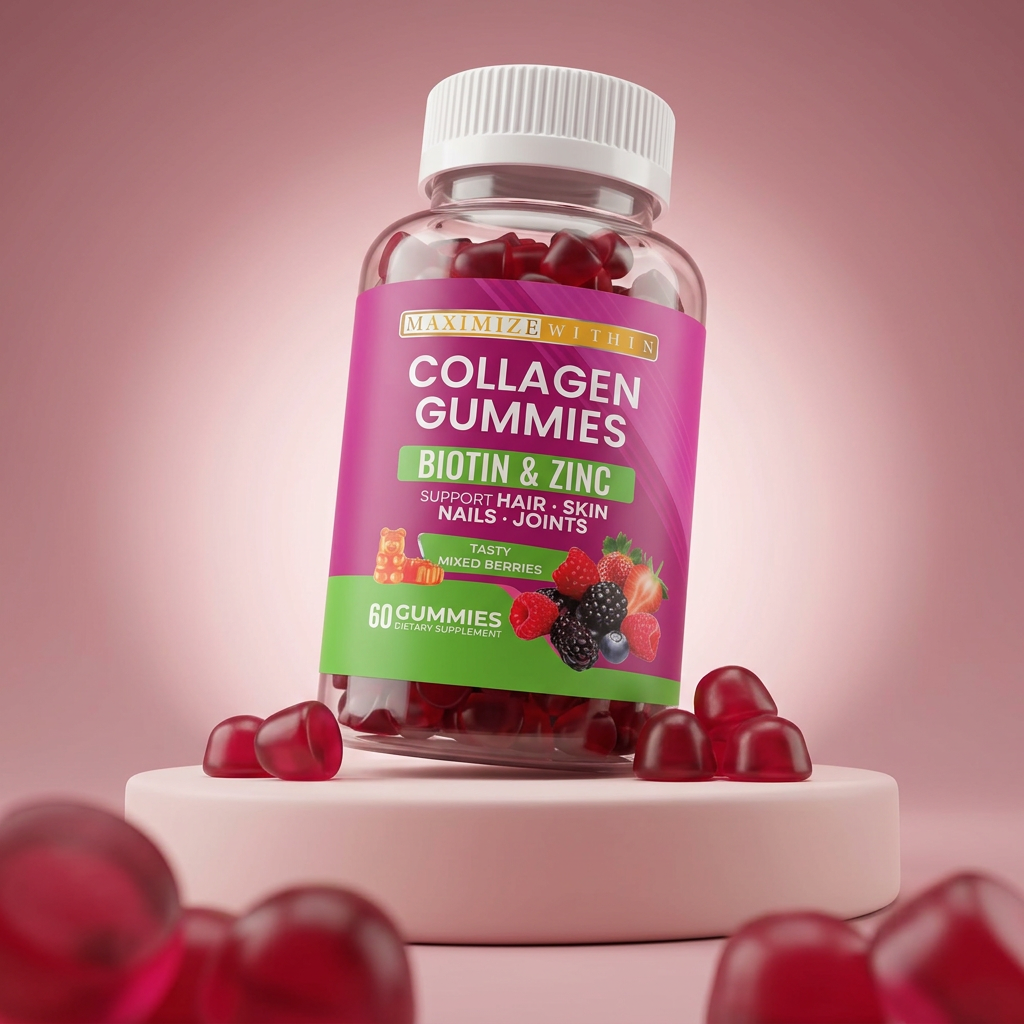
Featured Product
Collagen Gummies, Mixed Berries Flavor – Supports Hair, Skin, Nails, Joints
Support your beauty routine from within with delicious mixed berry Vegan Collagen Booster Gummies.
Shop Now →The clean-label angle most articles skip
If you're shopping carefully, the question isn't only “Should I take vitamin C?” It's also “What else am I taking with it?”
A clean-label mindset is useful here. If your goal is nutritional support, you probably don't want a product padded with sweeteners, artificial colors, or a long list of extras that have nothing to do with immune function. The simpler your routine, the easier it is to use consistently.
How Vitamin C Fortifies Your Immune Defenses
Vitamin C earns its reputation because it works in several parts of the immune response at once. A 2017 review in Nutrients reports that vitamin C supports both innate immunity and adaptive immunity by stimulating neutrophil migration to infection sites, enhancing phagocytosis, and promoting microbial killing, while also helping protect host tissue during the immune response in this PMC review of vitamin C and immunity.
That sounds technical, so let's translate it.
Your innate immune system is your fast-response team. It reacts quickly when something unwanted shows up. Your adaptive immune system is more targeted. It learns, remembers, and responds with more precision over time. Vitamin C helps support both sides.

Think of vitamin C as a bodyguard and cleanup crew
Immune cells do messy work. When they fight microbes, they create oxidative stress as part of that battle. That's useful up to a point, but it can also damage your own tissues if the response isn't well controlled.
Vitamin C acts like a bodyguard for those immune cells. It helps protect leukocytes from oxidative injury while they're working. It also helps with the cleanup phase, supporting the normal removal of spent neutrophils so inflammation doesn't drag on longer than it should.
Here's the simpler version:
- It helps immune cells get where they need to go. Neutrophils need to move toward an infection site.
- It helps them do their job once they arrive. That includes engulfing and killing microbes.
- It helps reduce collateral damage. A strong immune response is useful. An excessive, lingering one can irritate healthy tissue.
A well-supported immune system isn't just aggressive. It's coordinated.
It supports communication too
Vitamin C's role isn't only physical protection. It also affects immune signaling. The Linus Pauling Institute explains that vitamin C acts as an antioxidant, supports leukocyte production and function, and may support B- and T-lymphocyte proliferation and differentiation, while clinical results vary depending on baseline status and study design in this Linus Pauling Institute overview of vitamin C.
You can think of this as helping the immune team stay organized. Cells need to move, communicate, act, and then stand down appropriately. Vitamin C participates in several of those steps.
Why food habits still matter more than “mega” strategies
A lot of people miss this point because supplement marketing tends to focus on dosage drama. But the more practical question is whether your body has enough vitamin C on a regular basis to support normal immune cell function.
That's one reason many people pair their nutrient planning across categories instead of looking at one vitamin in isolation. If you want to see how immune-support nutrients are often discussed together, this guide on vitamin D and C for daily wellness offers a useful comparison.
A helpful analogy is home maintenance. If you only fix the roof during a storm, you're late. Vitamin C works better as part of ongoing upkeep.
Finding Your Daily Dose for Optimal Immune Function
The dose question gets messy fast because people lump together three very different goals: avoiding deficiency, supporting normal immune function, and trying to treat an active cold.
Those goals don't always use the same intake range.
What the research suggests for daily support
A major review in Nutrients reports that dietary intakes of about 100 to 200 mg/day are associated with adequate, saturating plasma levels that support prophylactic prevention of infection, while treatment of established infections may require gram-level doses because inflammation raises metabolic demand. That distinction comes from the earlier-reviewed evidence on vitamin C's immune role.
For practical use, this means many adults don't need to think in extremes. They need to think in consistency. A routine that regularly supplies vitamin C through food, supplements, or both is different from occasional large doses taken only when symptoms start.
Where higher-dose prevention looks more relevant
The evidence becomes more specific here. According to the NIH, prophylactic vitamin C doses of 250 mg/day to 1 g/day reduced cold incidence by 50% in people under heavy physical stress, such as marathon runners, skiers, and soldiers. In the general population, its benefit was different: prophylactic use modestly reduced cold duration by 8% in adults and 14% in children, while taking vitamin C after symptoms began did not change duration or severity, according to the NIH Office of Dietary Supplements vitamin C fact sheet.
That's one of the most important distinctions in the whole topic.
| Situation | What vitamin C seems to do |
|---|---|
| General daily nutrition | Supports normal immune function when intake is adequate |
| High physical stress | Prevention benefits are more noticeable |
| Active cold in most people | Extra vitamin C after symptoms start has limited benefit |
How to interpret that without overcomplicating it
If you're an average adult with a reasonably balanced lifestyle, vitamin C isn't a magic barrier against every cold. Its more realistic value is supporting normal immune readiness and possibly shaving a bit off cold duration when used routinely.
If you train hard, work in harsh conditions, or put your body under repeated physical stress, the prevention question becomes more interesting. That's where stronger benefit signals appear.
Don't confuse “helpful in specific groups” with “works the same for everyone.”
A simple decision framework helps:
- Start with intake quality. Are you getting vitamin C-rich foods most days?
- Consider your stress load. Heavy training, poor diet variety, or physically demanding work can change the picture.
- Separate prevention from treatment. Daily support is one question. “What should I do now that I'm sick?” is another.
Whole Foods vs Supplements for Vitamin C Intake
Food-first is still the cleanest foundation for vitamin c immune support.
That's not because supplements are useless. It's because food gives you vitamin C in a broader nutritional package. You also get fiber, plant compounds, and the habit of eating actual produce. For many people, that's the missing piece.
The Linus Pauling Institute emphasizes that dietary adequacy matters more than megadosing for immune resilience. Vitamin C from food or supplements can support leukocyte production and function, but clinical benefits are most consistent when you're correcting an insufficient baseline rather than piling high doses onto an already adequate diet, as noted earlier in the linked institute review.
A food-first comparison
Here's the practical difference between the two approaches.
| Approach | Main strength | Potential limitation |
|---|---|---|
| Whole foods | Built-in variety and broader nutrition | Intake can be inconsistent if your diet is rushed |
| Supplements | Convenient and predictable | Easy to overfocus on pills and ignore overall diet |
A balanced approach often works best. Eat vitamin C-rich foods regularly, then use a supplement when convenience, travel, appetite, or routine gaps make consistency harder.
Top Food Sources of Vitamin C
Because only verified data may be cited here, the table below lists useful food examples without unsupported milligram amounts.
| Food Source | Serving Size | Vitamin C (mg) |
|---|---|---|
| Red bell peppers | 1 serving | Varies |
| Oranges | 1 serving | Varies |
| Kiwi | 1 serving | Varies |
| Strawberries | 1 serving | Varies |
| Broccoli | 1 serving | Varies |
| Brussels sprouts | 1 serving | Varies |
| Citrus juice | 1 serving | Varies |
| Leafy greens | 1 serving | Varies |
If you're trying to build more variety into your meals, it can help to explore healthy foods by category and then choose a few produce staples you'll keep buying.
When a supplement makes sense
Some people do well with food alone. Others benefit from a backup plan.
A supplement may be practical if you:
- Travel often. Airport and hotel food doesn't always make produce intake easy.
- Skip meals or eat very plainly. Consistency matters more than perfection.
- Prefer measured intake. Supplements can make your routine more predictable.
The key is not to treat supplements like nutritional permission slips. They work best when they support a solid baseline, not replace it.
A Shopper's Guide to Clean-Label Vitamin C
Clean-label shopping sounds simple until you turn a bottle around.
A vitamin C supplement can look straightforward from the front, then reveal added sugars, artificial flavors, dyes, gums, or a long list of fillers on the back. If your goal is focused immune support, that clutter doesn't add much value.

What clean-label means in practice
For most shoppers, clean-label vitamin C means the active ingredient is clear and the non-active ingredients are minimal. You should be able to identify why each ingredient is there.
Look for a label that keeps the formula simple:
- Vitamin C form is clearly named. Ascorbic acid is the standard form. Buffered forms such as calcium ascorbate may be gentler for some people.
- Sweeteners are limited or absent. This matters most with chewables, gummies, and drink mixes.
- Artificial extras are avoided. Colors and flavors may make a product more appealing, but they aren't the point.
Many shoppers also prefer products without common allergens or unnecessary additives. If that matters to you, scan the “other ingredients” panel slowly, not just the supplement facts box.
How to compare formulas without getting lost
A clean supplement doesn't need to be fancy. It needs to be understandable.
Ask these questions:
- Is the dose obvious and easy to fit into my routine?
- Does the form match my digestion and preferences?
- Are there ingredients here that I didn't ask for?
One example in the market is buffered vitamin C products designed for people who want a gentler option. For shoppers comparing broader clean-label wellness standards across categories, this overview of science-backed wellness products can help clarify what to screen for on labels.
Here's a quick visual primer before you shop:
Forms you'll commonly see
Different forms aren't always better or worse. They're often about tolerance and preference.
| Form | What shoppers often choose it for |
|---|---|
| Ascorbic acid | Straightforward, common, widely available |
| Calcium ascorbate | Buffered option for people who want something gentler |
| Bioflavonoid blends | Chosen by shoppers who prefer combination formulas |
If you want a single product example, Maximum Health Products offers Max C Gram Plus, a buffered vitamin C formula with mineral ascorbates and bioflavonoids. That kind of product may appeal to shoppers who want vitamin C support in a gentler format, though it's still worth comparing the full ingredient panel against your own clean-label standards.
The best label is often the one you can explain out loud in one sentence.
Vitamin C Safety and Potential Interactions
Vitamin C is generally well tolerated, but “water-soluble” doesn't mean “take as much as you want.”
The main issues with too much vitamin C are usually digestive. People may notice stomach upset or loose stools when intake gets too high for their system. Dose, timing, and product form all affect tolerance.
Who should be more careful
Extra caution makes sense if you have a medical condition that affects how your body handles nutrients, especially kidney-related concerns, or if you take medications where supplement use should be reviewed by your clinician. That doesn't mean vitamin C is unsafe for everyone in those categories. It means personalized guidance matters more than internet folklore.
It also helps to be thoughtful with children's products. Adult assumptions about dose, form, and flavor don't always translate well to younger users. If family shopping is part of your routine, this guide to best vitamins for kids can help you think more carefully about age-appropriate supplement choices.
The most responsible takeaway
Use vitamin C like a nutrient, not a stunt.
That means:
- Prioritize steady intake. Daily adequacy does more than occasional megadosing.
- Match the form to your needs. Capsules, powders, and buffered options all fit different people.
- Check with a clinician when appropriate. Especially if you have a complex health history or take prescription medication.
Vitamin C can play a meaningful role in immune health. The strongest case for it is not hype. It's steady, informed, clean-label use.
If you want a simple way to build a cleaner daily wellness routine, browse Maximum Health Products for vitamin C and other nutrition options that align with a no-artificial-colors, no-artificial-flavors, no-added-sugars approach.

