


You're in the supplement aisle with a cart full of good intentions and too many choices that sound alike. One bottle promises energy, another promises calm, a third promises joint support, and you're left trying to figure out which ones actually matter now that menopause, slower recovery, and bone-loss worries aren't abstract anymore.
For women over 50, the question isn't whether supplements are trendy. It's which ones match the physiology that changes after midlife. That usually means bone support, but it also means paying attention to muscle, absorption, sleep, cognition, and the gaps diet can leave behind.
A practical way to start is to anchor choices to meals, medications, and lab work instead of marketing claims. Tools like the AI Meal Planner for elderly can help you spot whether your food pattern already covers part of the basics, which matters because supplements work best when they fill a real gap rather than duplicate one.
Why Supplementation Changes After 50
A woman in her mid-50s often starts this search in a very specific mood, part cautious, part tired of guessing. She may be standing in front of calcium bottles after a bone-density scan, or she may be searching online because recovery feels slower than it used to and her usual diet doesn't seem to carry her the same way.
The change after 50 isn't just “aging” in a vague sense. Menopause lowers estrogen, and that affects bone turnover, muscle maintenance, and how resilient tissues feel day to day. At the same time, older adults commonly use supplements already, which helps explain why this category is so crowded. AARP, citing NHANES data, notes that about 3 out of 4 adults over 60 used at least one supplement in the prior 30 days, and 1 in 4 used four or more. Consumer Reports reports the same 74% use figure for adults 60 and older, with a quarter using four or more products in the past month, and AARP also notes that as many as 1 in 5 people over 60 take fish oil daily. Those numbers matter because they show that supplement routines are already mainstream in the age group closest to women over 50, and they explain why evidence-based products tend to beat novelty formulas in practice. See the broader eating pattern first with AI Meal Planner for elderly, then decide what is missing.
Practical rule: Start with physiology, not product type. If the issue is bone, muscle, or absorption, the bottle should match that problem.
A 55-year-old focused on bone density needs a different priority stack than a 62-year-old trying to stay strong on stairs. A 58-year-old dealing with sleep disruption and daytime fatigue may need magnesium or B12 more than another multipurpose blend. The label should follow the problem, not the other way around.
A key shift after 50 is that supplements work best when they fill a specific, identified gap, and the gap is often tied to a predictable physiological change. Bone loss accelerates after menopause, so calcium and vitamin D move up the list for many women. Muscle protein synthesis also becomes harder to maintain, which is why creatine and total protein deserve much more attention than most generic supplement roundups give them. Absorption can also change with age and with common medications, so B12, magnesium, and other targeted nutrients may matter more than a broad shelf full of overlapping pills.
A practical review starts with the body's most common bottlenecks in midlife, not with the label claims on the front of the bottle. If food intake is already strong, a supplement may be a small add-on. If meals are inconsistent, appetite is lower, or protein intake is lagging, the priority changes fast. In that setting, a simple check of eating patterns helps separate what is helpful from what is just expensive redundancy.
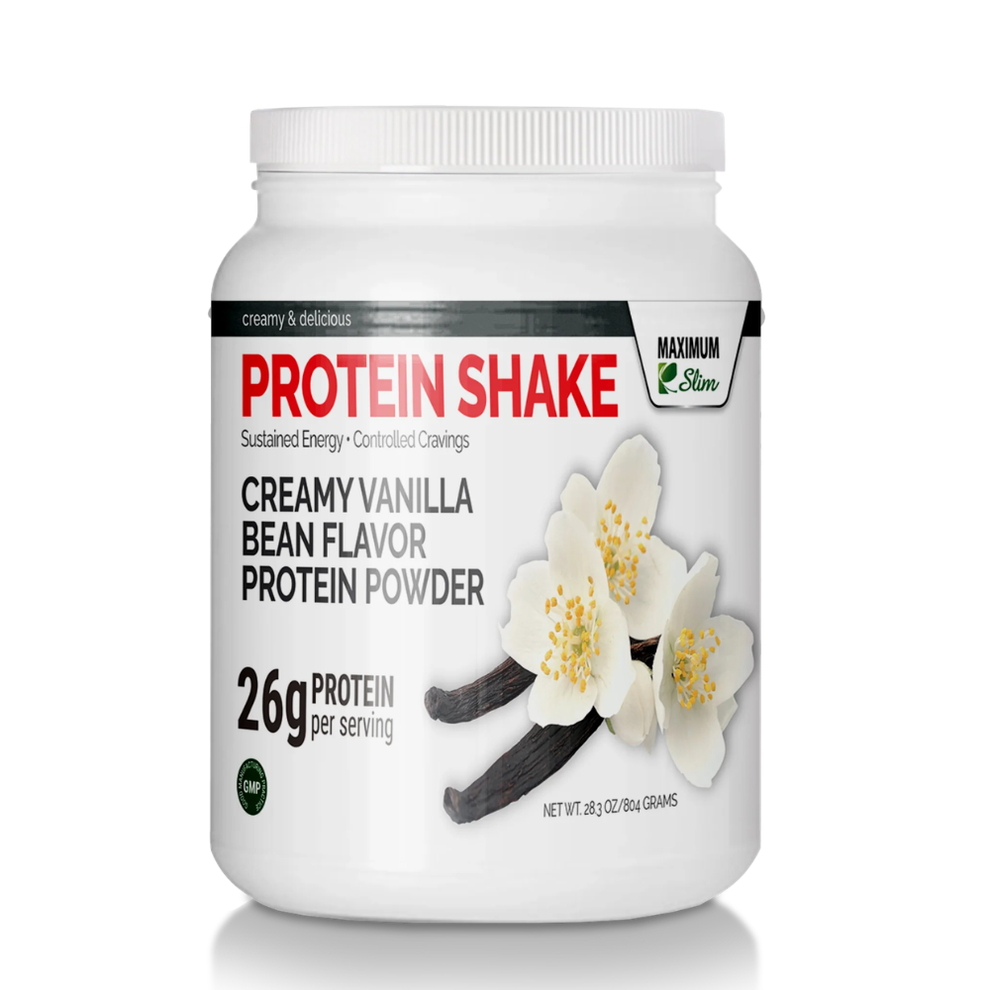
Featured Product
Organic Protein Shake - Maximum Slim
Each serving provides 20g of organic plant-based protein and 10g of organic fiber, making it a convenient option for smoothies, shakes, and meal replacement support.
Shop Now →The Bone and Hormone Foundation
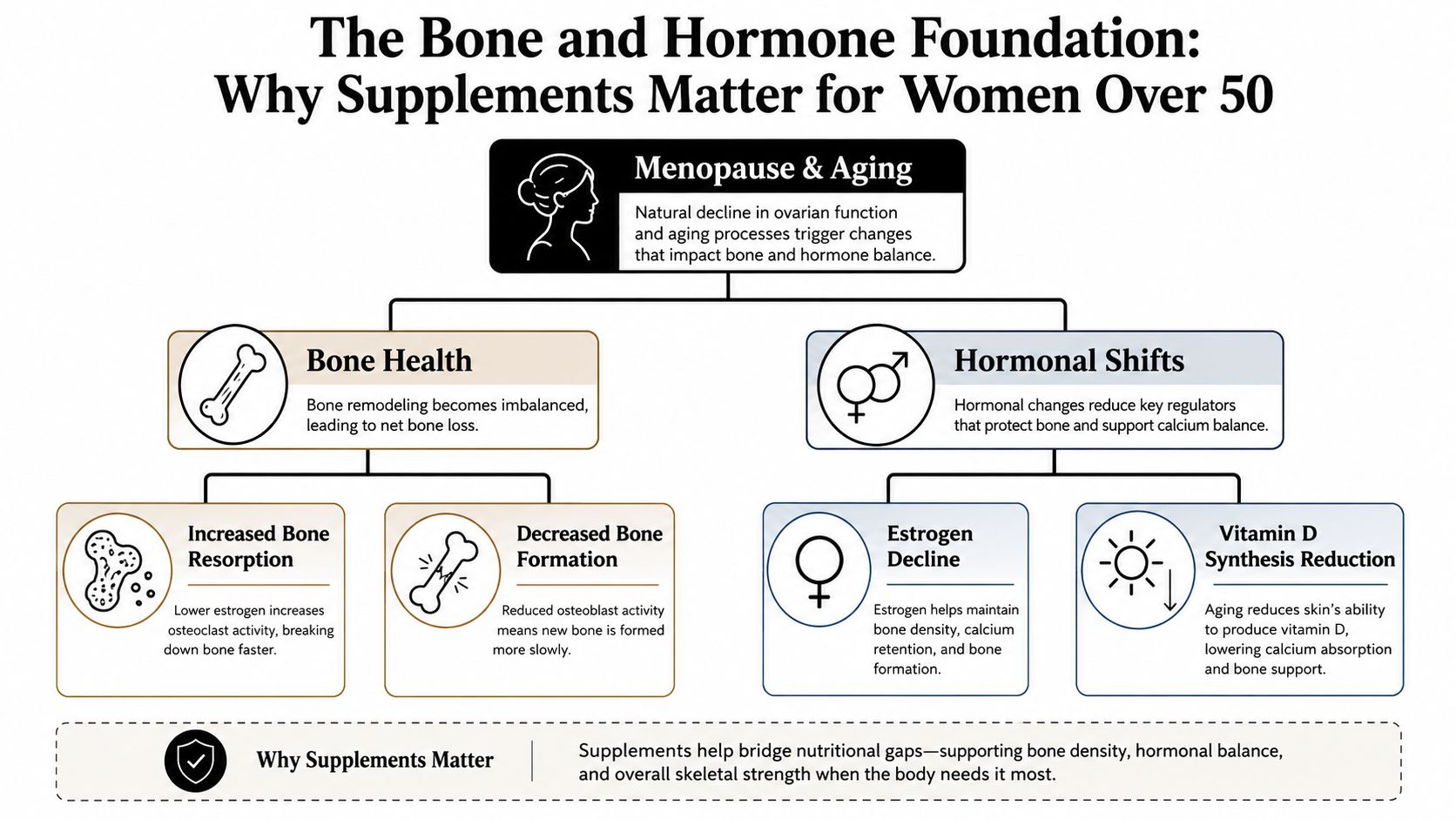
After menopause, bone remodeling tilts in the wrong direction. Bone is always being broken down and rebuilt, but lower estrogen shifts that balance toward loss, which is why calcium and vitamin D stop being “nice to have” and become part of a maintenance strategy. Consumer Reports states that women 51 and older need 1,200 mg of calcium per day, compared with 1,000 mg for most younger adults, and that women 50 and older are at roughly a 50% risk of osteoporosis. It also cites a 2024 Nutrients study finding that 4 in 10 adults did not meet calcium intake recommendations, which is a good reminder that food alone often falls short.
Vitamin D moves in the same direction because age changes how the body makes and handles it. The National Institute on Aging notes that aging skin synthesizes less vitamin D from sunlight and that lower intake and reduced absorption raise deficiency risk. Prevention cites NIH-based guidance of 600 IU per day for adult women, increasing to 800 IU per day after age 50, with an upper limit of 4,000 IU daily. For women who are low at baseline, vitamin D is more useful than broad “immune support” formulas, and the NIA also cautions that large antioxidant doses have not been shown to prevent chronic disease and can be harmful.
The core bone stack
| Nutrient | Typical Daily Range | Primary Role After 50 |
|---|---|---|
| Calcium | 1,200 mg for women 51+ | Supports bone maintenance when dietary intake falls short |
| Vitamin D | 600 to 800 IU | Helps calcium absorption and bone support |
| Magnesium | Varies by diet and product | Supports bone and muscle function |
| Vitamin K2 | Product-dependent | Helps direct calcium toward bone rather than soft tissue |
A smart bone-health approach is usually a system, not four unrelated bottles. Calcium, vitamin D, K2, and magnesium often make more sense together than individually, especially when food intake is inconsistent or dairy intake has dropped. The internal guide on calcium, vitamin D, and magnesium is a useful reference point if you're comparing these basics.
The best bone strategy after 50 is rarely “more calcium.” It's better absorption, better pairing, and a dose that matches your diet.
Energy, Mood, and Brain Function Essentials
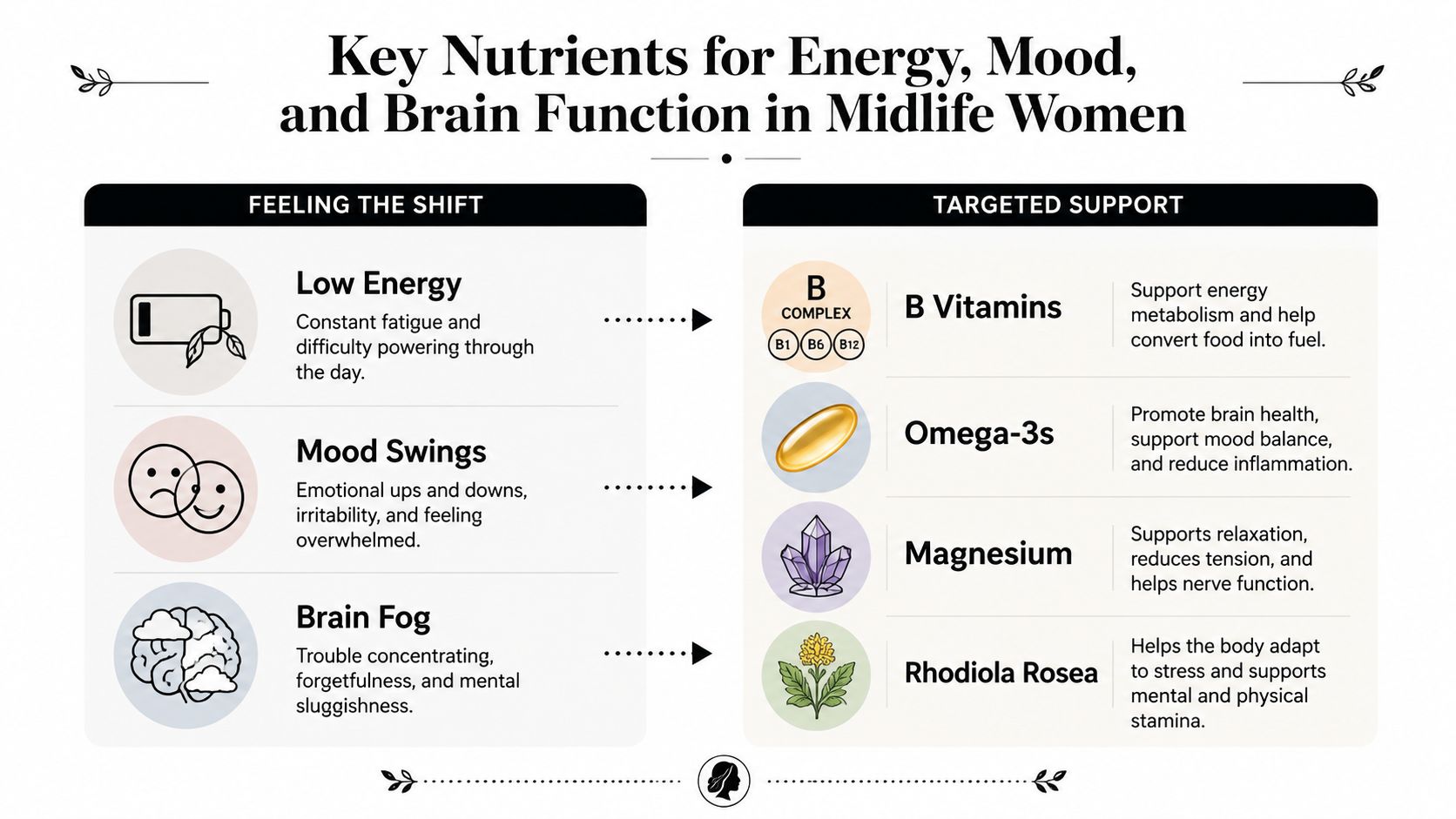
The most common complaint I hear in midlife isn't a dramatic symptom. It's a quiet one. Women say they feel less sharp, less resilient, or more easily drained, and they want to know whether a supplement can help without turning the medicine cabinet into a second job.
B12, omega-3s, and magnesium serve different jobs
Vitamin B12 rises in priority because absorption can drop when stomach acid falls, especially in older adults or in people taking acid-suppressing medication. That makes B12 one of the few supplements that can be high-value when diet looks fine on paper but labs or symptoms tell a different story. If you're considering a targeted cognitive product, a resource like cognitive support for early memory loss can help you separate general brain health from marketing aimed at memory concerns.
Omega-3s, especially fish oil, stay relevant because later-life use is already common and the category is established, not trendy. They're one of the clearest examples of a supplement with broad use and a plausible place in a midlife routine, especially when cardiovascular risk or low fish intake is part of the picture.
Magnesium is the quiet workhorse. It supports muscle relaxation, nerve function, and sleep quality, and the chelated forms, such as magnesium glycinate, tend to be easier on the stomach than oxide. If bedtime supplements upset your stomach, taking magnesium with dinner usually works better than taking it right before lying down.
Here's a practical comparison:
| Supplement | Typical Use After 50 | Form or Timing That Usually Makes Sense |
|---|---|---|
| B12 | Low absorption, fatigue, low intake | Methylated or well-absorbed forms, often earlier in the day |
| Omega-3s | Brain and cardiovascular support | With food, especially a fat-containing meal |
| Magnesium | Sleep, muscle relaxation, cramps | Glycinate or other chelated forms, often evening |
| Calcium | Bone support | Split doses if needed, with meals for tolerance |
| Vitamin D | Bone and general maintenance | With food, often paired with fat |
| Vitamin K2 | Calcium handling | Usually paired with vitamin D in bone-focused stacks |
Individuals don't need every one of these. They need the ones that fit their actual pattern of low intake, poor absorption, or specific goals. For a woman whose main issue is sleep plus muscle tension, magnesium may do more than an expensive blend with six underdosed ingredients.
Creatine and Protein for Lean Mass and Strength
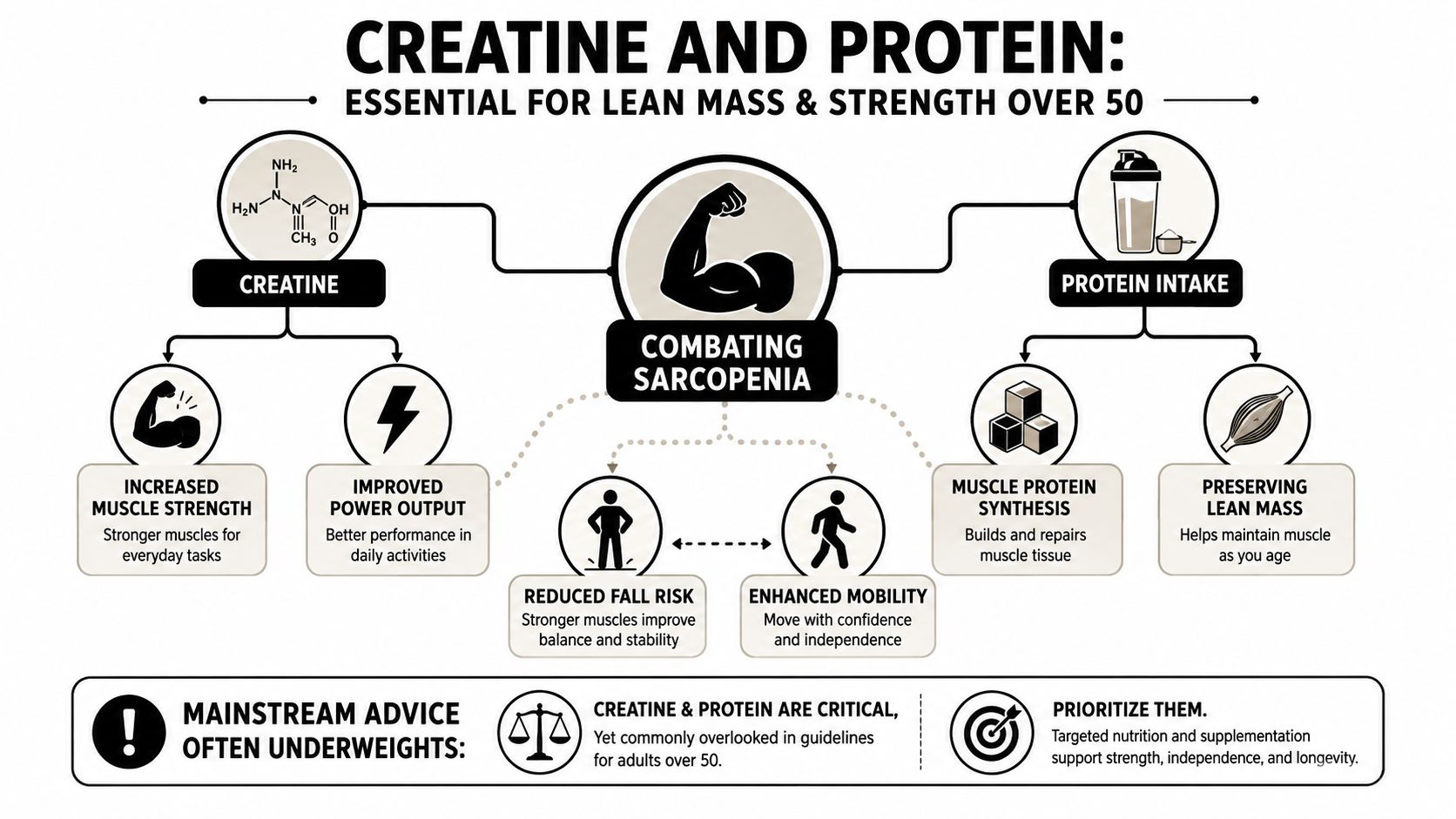
A lot of supplement advice for women over 50 still acts as if the only midlife concern is bone. That misses a major issue: sarcopenia, the gradual loss of muscle mass and function, which affects mobility, balance, and the ability to stay independent. If strength matters, creatine and protein deserve a seat at the front of the line.
Why creatine is not just a gym supplement
The best performance-oriented add-on in older adults is often creatine monohydrate. A critical review in older adults notes that sarcopenia can be mitigated by higher total protein intake of 1.2 to 1.6 g/kg/day, and that creatine doses above 5 g/day are used in this setting, with the main caution being avoidance in people with kidney disease or pre-existing cancer. That doesn't mean everyone needs a high-dose sports stack. It means the conversation should be about lean mass, strength, and function, not just “fitness.”
Women who are already eating enough protein sometimes still benefit from creatine, especially if training, recovering slowly, or noticing declines in grip strength and stamina. Women who are under-eating protein are in a different category, because creatine won't make up for a diet that chronically underfeeds muscle. The clean protein guide at best clean protein powder is relevant here if you're trying to choose a powder that helps you meet intake without a lot of extra clutter.
The decision rule is simple
If your goal is bone only, creatine may be optional. If your goal is strength, walking speed, stair climbing, recovery, or lean mass preservation, creatine plus adequate protein belongs in the first-tier conversation. That's especially true if meals are light, appetite has fallen, or you're relying on yogurt and coffee to get through the morning.
Practical rule: Protein builds the material. Creatine helps the muscle use it more effectively.
The most common mistake is buying creatine while ignoring daily protein, or buying protein powder while never using enough of it to matter. Start with food, then use supplements to close the gap.
Popular Add-Ons and What the Evidence Actually Says
Once the basics are covered, the market gets noisy fast. Collagen, probiotics, multivitamins, and cognitive blends all have a place in some routines, but they're not equally compelling for women over 50, and they shouldn't all be treated as must-haves.
Rank them by use case, not popularity
Collagen peptides make the most sense when the goal is skin elasticity, joint comfort, or connective tissue support. They're a reasonable add-on, but they don't replace protein, and they don't solve bone or muscle loss on their own.
Probiotics are conditional. They're more useful when gut symptoms, antibiotic recovery, or digestion concerns are on the table than as a universal daily buy. A broad probiotic can be helpful, but it's rarely the first thing I'd pick over vitamin D, B12, magnesium, or protein.
Multivitamins are insurance, not therapy. They can fill small gaps, especially when diet is inconsistent or appetite is down, but they're usually not the best answer for a specific issue like fatigue, bone risk, or sarcopenia.
Cognitive-support blends are the most variable. Some ingredients are promising, but the category is still evolving, and the evidence is less straightforward than it is for B12, omega-3s, or magnesium. If memory or focus is the concern, I'd usually look at sleep, B12 status, medication burden, and protein intake before reaching for a stack of trendy nootropics.
A practical roundup like BotoxBarb's supplement guide can be useful if you're comparing beauty-oriented add-ons, but it's worth remembering that hair-focused supplements and midlife health priorities aren't the same thing.
| Add-on | Best-fit use | Skip it when |
|---|---|---|
| Collagen | Skin and joint comfort | You're short on protein overall |
| Probiotic | Gut or antibiotic-related support | Digestion is already fine and budget is tight |
| Multivitamin | Diet gaps, convenience | You want a targeted fix for a known issue |
| Cognitive blend | Experimentation after basics | Sleep, B12, and medication review haven't been addressed |
If money is limited, the better spend is usually on a few well-chosen basics rather than a crowded shelf of overlapping products.
How to Evaluate Supplement Quality and Labels
A supplement can look clean and still be poorly made, underdosed, or hard to absorb. The label is where you separate marketing from formulation, and the first thing to check is the Supplement Facts panel, not the front of the bottle.
Read the form, not just the ingredient name
Form matters. Magnesium glycinate is usually a better-tolerated choice than magnesium oxide. Calcium citrate is often easier to absorb than carbonate for some people. B12 may be labeled as methylcobalamin or cyanocobalamin, and the form can matter if absorption is an issue. The same ingredient name on the front does not guarantee the same experience in the body.
Third-party seals help, but only if they're real and recognizable. USP, NSF, ConsumerLab, and Informed Choice are the kinds of marks that matter because they speak to content and purity verification rather than vague “quality” language.
Practical rule: If a label is crowded with proprietary blends, artificial colors, or mystery fillers, keep walking.
Clean-label standards also matter for people trying to simplify intake. Maximum Health Products says its formulas avoid preservatives, artificial colors or flavors, added sugars, soy, gluten, fillers, and animal products where unwanted, which is the sort of standard that can make routine use easier when you're taking several products at once. If you want a deeper look at how outside verification works, the guide on what third-party testing means is a good companion.
A simple filter helps. Choose the form you can tolerate, the seal you can verify, and the dosage you can stick with. If you can't explain why a product is in your cart, it probably doesn't belong there.
Safety, Interactions, and When to Talk to a Clinician
Supplements aren't risk-free, and the risk profile changes after 50 because many women are taking prescription medications for bone health, blood pressure, diabetes, mood, or thyroid disease. That means the most important question isn't only “What helps?” It's also “What could interfere?”
Vitamin K can interact with blood thinners like warfarin, and high-dose omega-3s deserve caution with anticoagulants. Calcium can compete with iron for absorption, so taking them together can be a bad fit. St. John's wort is the classic example of a supplement that can create problems with antidepressants and other medications, so it shouldn't be treated casually.
Two medication classes matter a lot in midlife: PPIs and metformin. Long-term proton pump inhibitor use can affect B12 and magnesium status over time, and metformin is another reason B12 status deserves attention. That's why supplementing in a vacuum is a mistake if you're on chronic medication.
Large doses are not automatically better. Fat-soluble nutrients can accumulate, and the NIA specifically warns that large antioxidant doses haven't been shown to prevent chronic disease and can be harmful. If you're not sure what to bring to an appointment, bring your full supplement list, recent labs if you have them, and the actual outcome you want, whether that's better sleep, improved energy, or bone protection.
Building a Personal Daily Routine That Actually Sticks
A routine works when it fits the day you already live. A practical template looks like this, vitamin D3 plus K2 and omega-3 with breakfast, creatine monohydrate any time of day, magnesium glycinate in the evening, and B12 or a methylated B-complex only if diet or labs suggest a gap.
If you can only afford two or three products, choose based on your biggest goal. For bone health, start with calcium and vitamin D, then consider magnesium. For energy and cognition, B12 and omega-3s often make more sense than a broad multivitamin. For lean mass and strength, protein intake and creatine are the better first move.
Maximum Health Products organizes supplements by benefit, which can make it easier to keep the routine simple instead of buying randomly. Their shop structure and clean-label approach are useful if you want to test one change at a time and build from there.
Take five minutes and match each product to your diet, medications, labs, and top goal. Then visit Maximum Health Products to compare targeted options and build a routine that fits your bone, muscle, energy, and sleep needs without piling on bottles you won't use.

