


You take a few sips of coffee, start answering emails, and then your stomach flips. The feeling can be so sudden that it's easy to blame the wrong thing, especially if the cup tasted fine going down and the queasiness shows up minutes later. Yes, caffeine can cause nausea, and sometimes the issue isn't only caffeine. Coffee itself, your empty stomach, your sensitivity level, and even reflux can all change how your body reacts.
Introduction to Caffeine and Nausea
A lot of people notice the pattern on an ordinary morning. They reach for coffee to feel more awake, then end up feeling hollow, shaky, or queasy instead of focused. That reaction can be confusing because caffeine is such a normal part of daily life, but the body doesn't treat every cup the same way.
The key is that nausea sits on the same response spectrum as more familiar caffeine effects, not outside it. The U.S. FDA lists nausea and an upset stomach among the symptoms of too much caffeine, while also saying most adults can safely have up to 400 milligrams per day and that toxic effects can appear with rapid intake of around 1,200 milligrams FDA guidance on caffeine safety. That doesn't mean everyone who feels sick has overdosed. It does mean nausea is a real physiological response, not just “being sensitive” in a vague sense.
What makes this tricky is that coffee can be part caffeine, part stomach irritant. If your body reacts badly, the cause might be the stimulant effect, the drink itself, or both.
Featured Product
Maximum Slim Original Green Coffee
Science-backed formula to support metabolism, curb appetite, and help you reach your goals faster.
Shop Now →
How Caffeine Triggers Nausea
The stomach gets “jostled,” not just stimulated
Think of caffeine like a loud guest entering a quiet room. It doesn't just wake up the brain, it can wake up the digestive system too. In clinical toxicology literature, caffeine is linked with gastrointestinal effects including nausea, vomiting, abdominal pain, and diarrhea, and chronic high intake, sometimes called caffeinism, is typically seen at about 1 to 1.5 g/day of caffeine exposure clinical toxicology review.
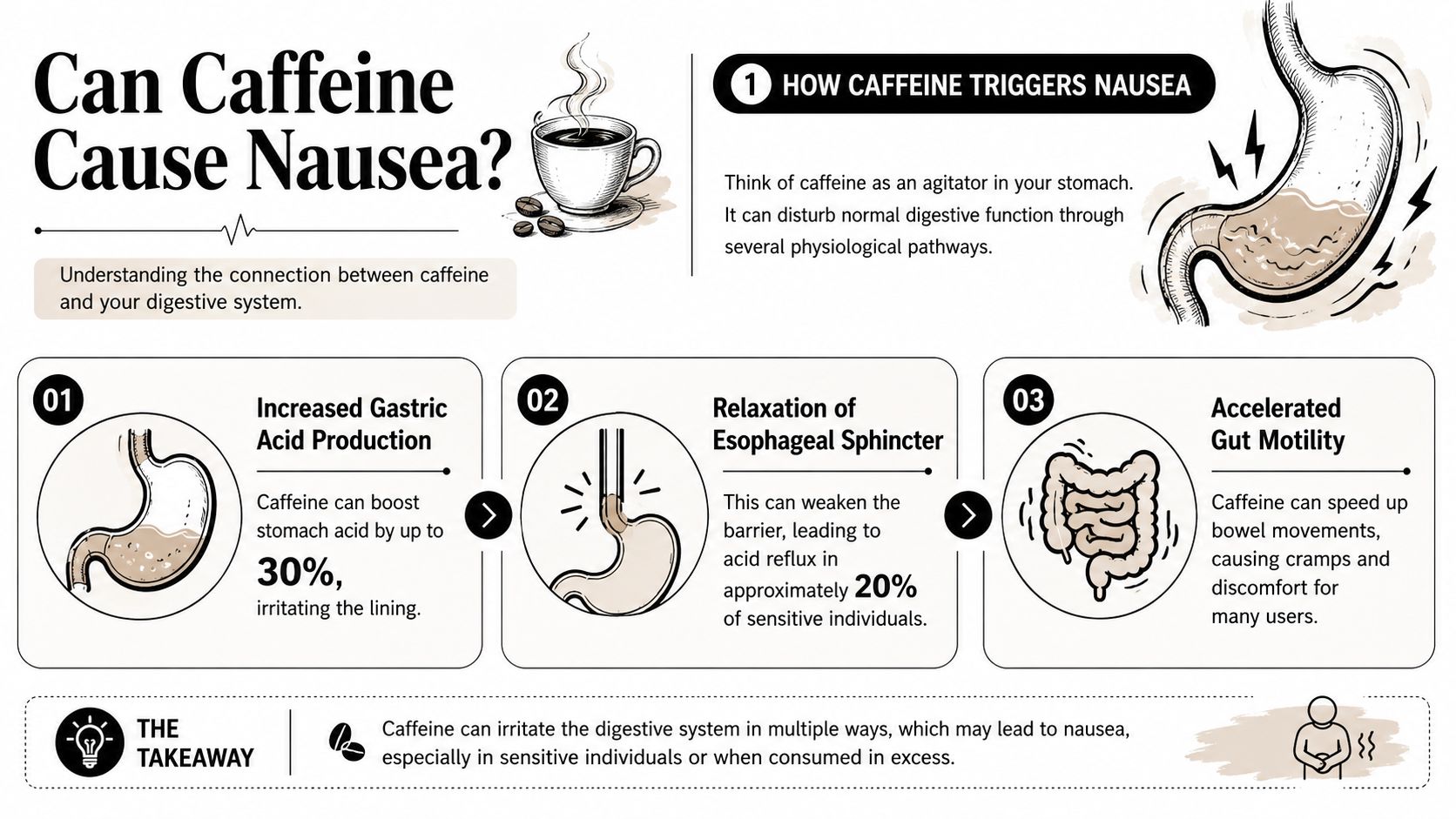
That doesn't mean your body needs to hit an extreme threshold before it reacts. The FDA's safety guidance puts nausea in the same toxicity family as more serious symptoms, which is why a person can feel sick long before anything dramatic happens FDA guidance on caffeine safety. Another way to think about it is that caffeine can push the stomach from “fine” to “irritated” the way rough weather turns a calm lake choppy.
Dose matters, but so does the body's sensitivity
A dose-response pattern helps explain why one person handles an afternoon latte without trouble while another feels queasy after half a mug. Authoritative drug references still list nausea among recognized adverse effects even at typical intake levels, and note that doses of ≥500 mg are more likely to trigger systemic reactions that worsen queasiness drug reference on caffeine. That's one reason “moderation” isn't a perfect answer for everybody. Your own threshold can sit much lower than the general population's.
Practical rule: If caffeine repeatedly gives you an upset stomach, treat it like a sensitivity signal, not a character flaw.
The mechanism also helps explain why symptoms can feel physical and not just “in your head.” Independent review literature notes that caffeine can cause marked gastric irritation and even spontaneous vomiting, which supports nausea as a recognized bodily effect rather than a subjective complaint FDA discussion and linked review context. That's why some people get a tight stomach, others feel hot and restless, and some progress all the way to vomiting if they keep drinking.
For a related look at stomach symptoms that often overlap with coffee reactions, see coffee and bloating considerations.
Risk Factors and Interactions
Why one person gets queasy and another doesn't
Caffeine nausea isn't evenly distributed. Some people can drink coffee daily with no issues, while others feel sick after a small amount. Caffeine sensitivity can cause nausea after small amounts, and even decaffeinated coffee has been shown to aggravate reflux and queasiness, which points to coffee compounds beyond caffeine itself Medical News Today on caffeine sensitivity. That distinction matters because “switch to decaf” helps some people, but not all.
Coffee can also be the problem even when caffeine is low. Mount Sinai notes that if coffee makes you queasy, cutting caffeine can help, but decaf doesn't always solve the issue because coffee can still increase stomach acid Mount Sinai on coffee and the stomach. If acids are part of your trigger, the flavor may be familiar while the effect on your gut is not.
Key risk factors for caffeine-induced nausea
| Risk Factor | How It Increases Nausea | Example |
|---|---|---|
| Caffeine sensitivity | A small amount can trigger stomach upset, jitters, or queasiness | Feeling sick after a single espresso |
| Coffee compounds beyond caffeine | Coffee acids can irritate the stomach even when caffeine is reduced | Switching to decaf and still feeling reflux |
| Pregnancy | Caffeine handling changes, so smaller amounts may feel harsher | Choosing a lower-caffeine drink after reading guidelines on coffee and pregnancy |
| Reflux tendency | Coffee can aggravate acid-related symptoms that feel like nausea | Burning, sour taste, or throat irritation after coffee |
| Empty stomach | The stomach has less buffering support, so irritation is more noticeable | First cup before breakfast |
Pregnancy deserves special care because many people notice that tolerances shift. If caffeine already seems to sit poorly, pregnancy can make the question of timing, portion size, and beverage choice more important. That's why practical guidance like the Bornbir coffee and pregnancy guide can be helpful when you're deciding what still feels safe and comfortable.
If your symptoms seem tied to coffee rather than caffeine alone, try an acidic-beverage lens instead of a stimulant-only lens. A lower-acid option may settle better for some people, and coffee alternatives for acid reflux are worth considering if the pattern repeats.
Recognizing Symptoms and Timelines
How the body usually signals too much
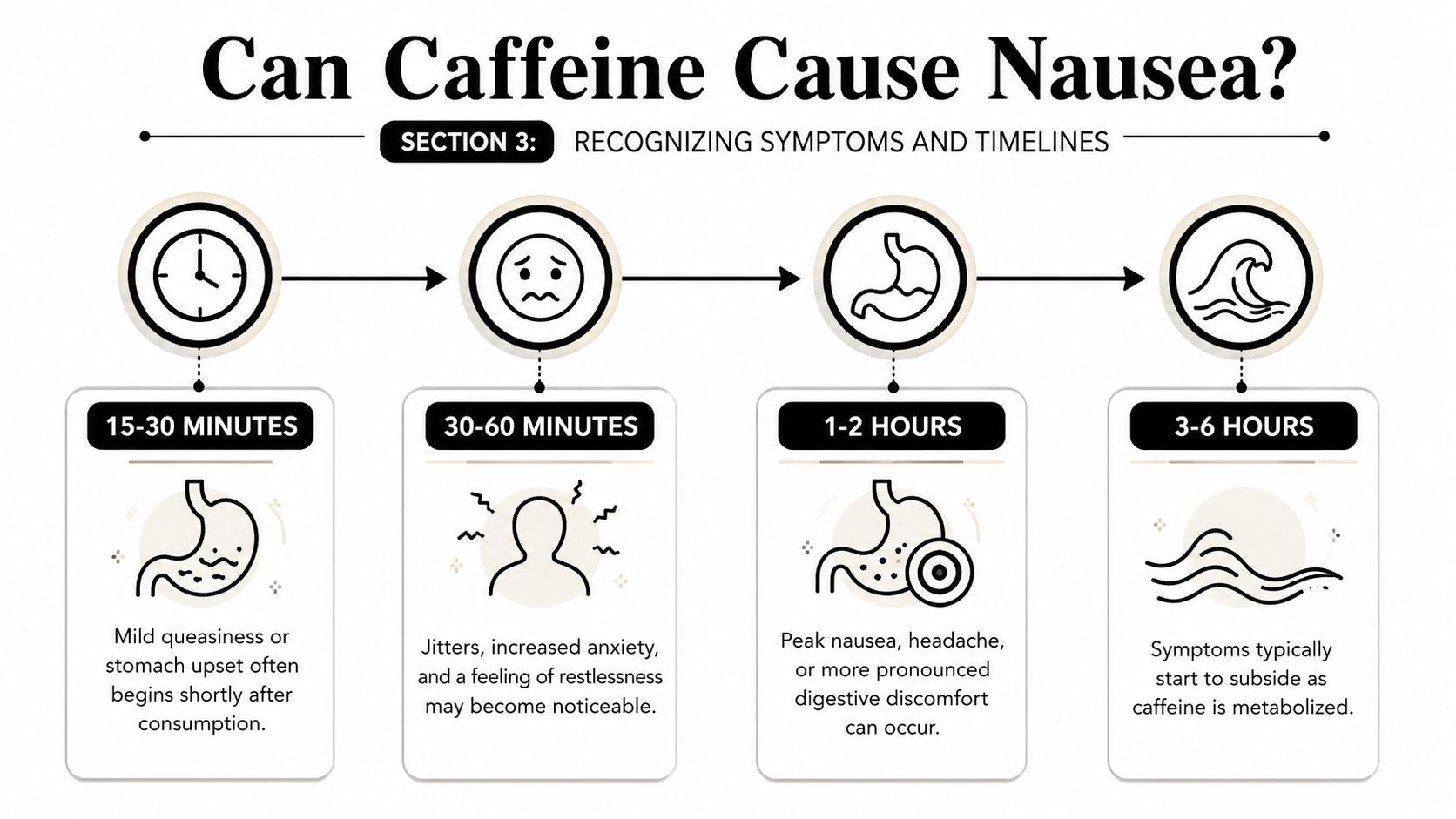
Caffeine-related nausea often doesn't arrive as a dramatic event. It starts as a vague off feeling, then builds into a more obvious stomach complaint if the dose keeps climbing or if sensitivity is high. A clinical toxicology review describes gastrointestinal effects that include nausea, vomiting, abdominal pain, and diarrhea, and it notes that chronic high-intake syndrome, or caffeinism, typically appears around 1 to 1.5 g/day clinical toxicology review. That's the severe end of the pattern, but the milder version can show up much sooner.
For some people, the first clue is not vomiting. It's a twist in the stomach, a sour burp, or a sudden loss of appetite. That's why a symptom log is useful, especially if you're trying to separate a coffee reaction from a stomach bug or another GI issue. If you need a comparison point for bug-like nausea, Rawbiotics' stomach bug guide can help you think through what feels infectious versus what feels beverage-related.
Reading the pattern, not just the feeling
If nausea appears after coffee but eases when you skip it, that pattern matters more than a single bad day. One bad mug can be a coincidence, but repeated timing is a clue. If the nausea shows up alongside diarrhea, abdominal pain, or a pounding heartbeat, the body may be reacting to more than just taste.
Mild queasiness after coffee is often the first sign your dose, timing, or beverage choice needs adjusting.
A person who feels fine after one cup but sick after several cups is seeing cumulative load. Someone who feels nauseous after a small amount may be dealing with caffeine sensitivity, reflux, or coffee itself. Those are different problems, and they don't always need the same fix.
Prevention and Mitigation Strategies
Start by changing the conditions, not just the beverage
The easiest way to reduce nausea is to make caffeine less irritating before you drink it. Eating first is one of the simplest moves because food gives the stomach something to work with instead of leaving caffeine to hit an empty, exposed lining. Hydration helps too, since a dry, irritated stomach tends to feel less forgiving.
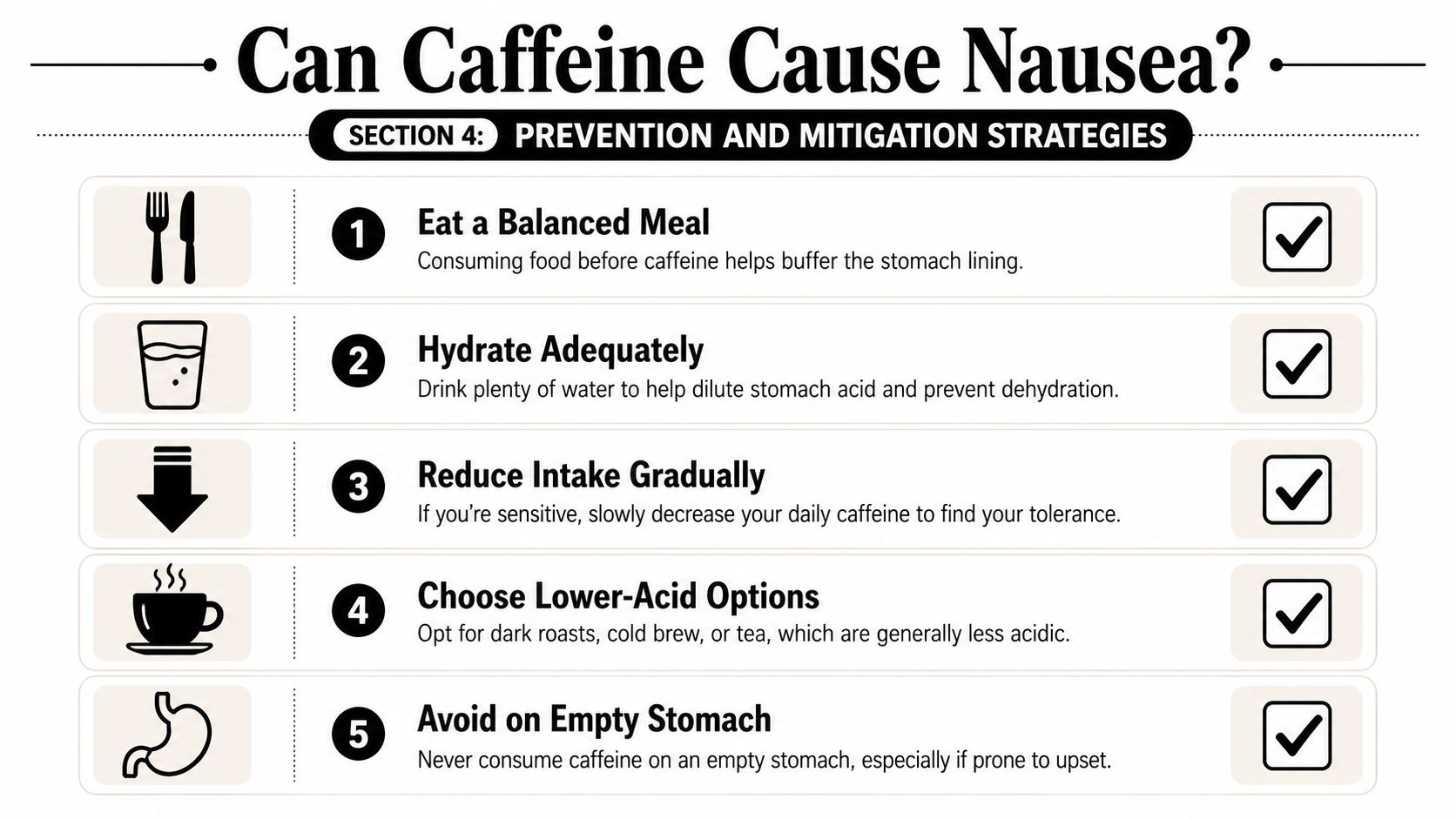
Here's a practical checklist that many people can test one change at a time:
- Eat a balanced meal first. Protein, fat, and carbs slow the hit from caffeine and give your stomach some buffer.
- Hydrate before and after your cup. Sipping water can make the whole experience gentler than going in dry.
- Reduce intake gradually if you're sensitive. A sudden drop or swing can make it harder to learn what your real tolerance is.
- Choose lower-acid options. Cold brew, darker roasts, or tea may feel easier for some people.
- Don't take caffeine on an empty stomach. If you already know your gut is touchy, this is the first rule to respect.
If coffee is the issue, not just caffeine, a decaf switch may still leave you uncomfortable. Mount Sinai notes that even decaffeinated coffee can aggravate stomach acid and reflux, so changing the caffeine content alone doesn't always fix the problem Mount Sinai on coffee and the stomach. That's why some people do better with a different beverage rather than a different label on the same drink.
You can also use a simple journal to identify your threshold. A coffee tasting log, such as Drinkist's coffee tasting journal, can help you track brew type, timing, and symptoms without guessing.
For readers who get jitters and stomach upset together, this guide on stopping caffeine jitters pairs well with a nausea-focused approach because the same dose that shakes your nerves can also bother your stomach.
When to Seek Medical Help
When nausea stops being a minor side effect
Mild nausea after coffee usually improves when you lower the dose, eat first, or switch drinks. But persistent or intense symptoms deserve more attention, especially if they keep happening at low amounts. Authoritative references list nausea among recognized adverse effects even at typical intakes up to 400 mg/day, and note that doses ≥500 mg are more likely to trigger systemic reactions that worsen queasiness drug reference on caffeine.
The most important warning sign is repetition. If the same small amount reliably makes you sick, that points to sensitivity or an underlying GI issue, not just an unlucky morning. Chest pain, severe palpitations, repeated vomiting, or signs of dehydration are not normal coffee side effects, and they shouldn't be managed with more caffeine or just “pushing through.”
Red flags that call for professional input
- Persistent vomiting after caffeine or coffee
- Symptoms after very low doses that keep recurring
- Chest pain or severe palpitations
- Reflux symptoms that don't settle even after changing coffee type or timing
- Dehydration signs, especially if you can't keep fluids down
If reflux seems part of the picture, a clinician may look beyond caffeine and consider whether the coffee itself, not just the stimulant, is the issue. That matters because changing the beverage can be more effective than trying to “toughen up” your intake. The body's message is pretty direct here.
If coffee keeps making you nauseous, don't keep testing it the same way. Change the dose, change the drink, or get checked.
Key Takeaways
Caffeine can cause nausea, and the FDA treats nausea as part of the same toxicity spectrum as more serious caffeine effects FDA guidance on caffeine safety. The reaction may come from caffeine, coffee acids, or both. Sensitive people can feel it after small amounts, while others only notice it after repeated cups or when they drink on an empty stomach.
The most useful strategy is to match the fix to the trigger. Eat first, hydrate, reduce the dose slowly, and try lower-acid options if coffee itself seems to be the problem. If nausea keeps showing up, or it comes with vomiting, chest pain, or strong palpitations, it's time to speak with a healthcare professional.
If caffeine keeps upsetting your stomach, don't keep guessing. Visit Maximum Health Products to explore practical wellness options and find products and guides that fit a gentler daily routine.

