


You're standing in the supplement aisle, holding two bottles that both say things like “pure,” “clean,” and “premium.” One has a long ingredient panel with words you don't recognize. The other looks simpler, but you can't tell whether “simpler” means better or just better marketing. If you shop online, the confusion gets worse. Every brand seems to promise the same thing.
That uncertainty makes sense. “Clean” sounds straightforward, but supplement labels often blur the line between ingredient purity, manufacturing quality, and how well your body can use the nutrient. Those aren't the same thing. A bottle can look clean on the front and still leave important questions unanswered on the back.
The interest in clean vitamin brands isn't small anymore. The global vitamin supplements market is projected to grow from USD 61.10 billion in 2026 to USD 104.06 billion by 2033, with a 7.9% CAGR, according to Coherent Market Insights' vitamin supplements market outlook. That projection matters because it reflects how many shoppers now care about products that avoid preservatives and artificial additives.
Introduction to Clean Vitamin Brands
A lot of people start looking for clean vitamin brands after one frustrating shopping trip. They notice added colors in a gummy multivitamin. They see “proprietary blend” on an energy formula and realize they can't tell how much of anything is inside. Or they buy a “natural” supplement, then discover the capsule contains fillers they were trying to avoid.
That's why the clean label conversation has moved from wellness trend to everyday buying decision. People want supplements that feel more like buying recognizable food ingredients and less like gambling on a mystery bottle. They're checking for soy-free, gluten-free, no added sugar, and no artificial dyes. They're also asking a more important question: is this formula just cleaner on paper, or is it actually well made?
Why this matters now
The phrase clean vitamin brands usually gets used as if it has one simple meaning. It doesn't. For some shoppers, it means “nothing artificial.” For others, it means allergen-aware manufacturing, transparent sourcing, or independent testing. All of those can matter, but they solve different problems.
A useful way to think about it is this:
| What shoppers see | What they often mean | What you should verify |
|---|---|---|
| “Clean” | No junk ingredients | Check inactive ingredients |
| “Pure” | Minimal contamination | Look for third-party testing |
| “High quality” | Better ingredient forms | Review the exact nutrient forms |
| “Gentle” | Easier to tolerate | Check excipients and allergen statements |
Practical rule: A clean-looking label isn't the finish line. It's the start of your inspection.
Many readers get stuck because they think they must choose between two extremes: either a bare-bones formula with fewer additives or a more technical formula that sounds less “natural.” In reality, the best choice often sits in the middle. You want a product that avoids unnecessary extras and uses nutrient forms your body can use efficiently.
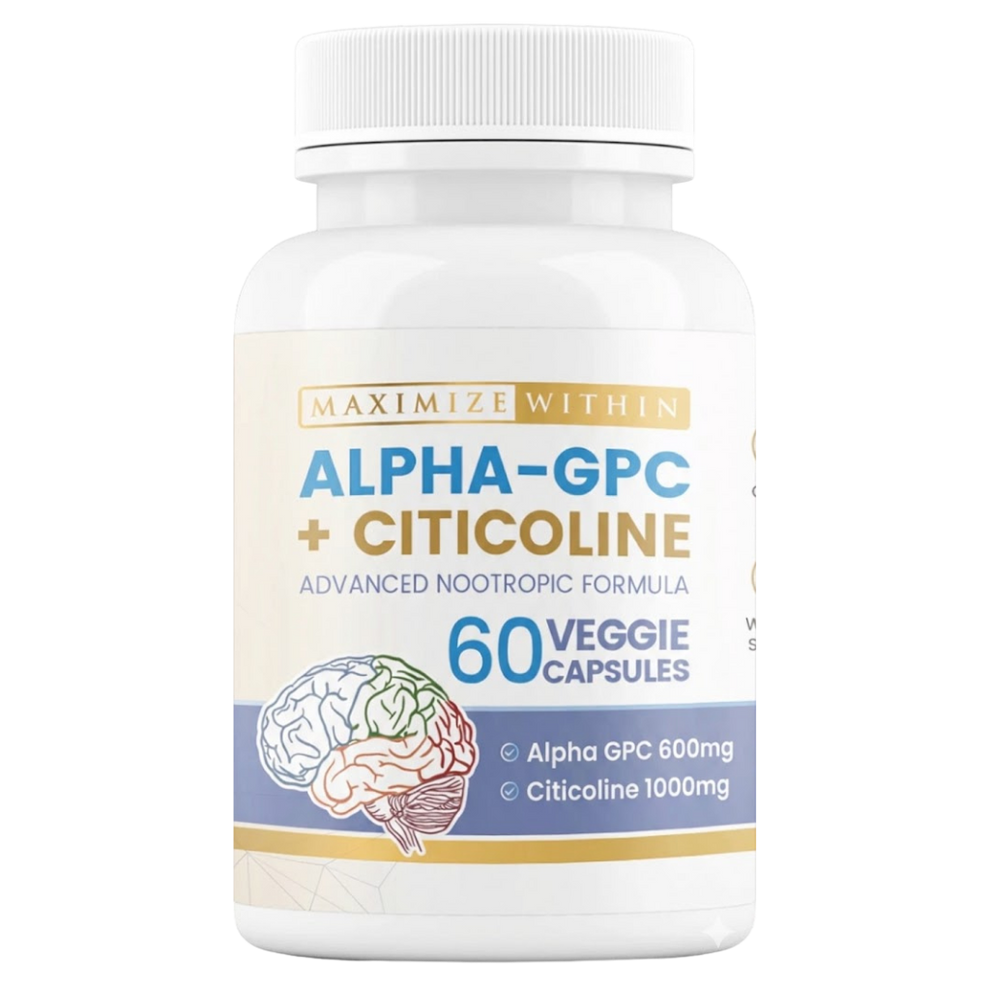
Featured Product
Alpha-GPC + Citicoline - Maximize Within
A premium nootropic formula pairing Alpha GPC and Citicoline — two of the most recognized cognitive-support ingredients — thoughtfully blended for adults who want to support a sharp, focused daily routine.
Shop Now →Understanding Clean Vitamin Brands
A clean vitamin brand isn't just a pretty bottle with words like “wellness” and “transparent” on the front. A stronger definition is more specific. A clean vitamin brand is characterized by the absence of excipients such as fillers, artificial colors, and preservatives, along with Good Manufacturing Practices and third-party verification for purity, as described in PureLab Vitamins' guide to identifying clean supplements.
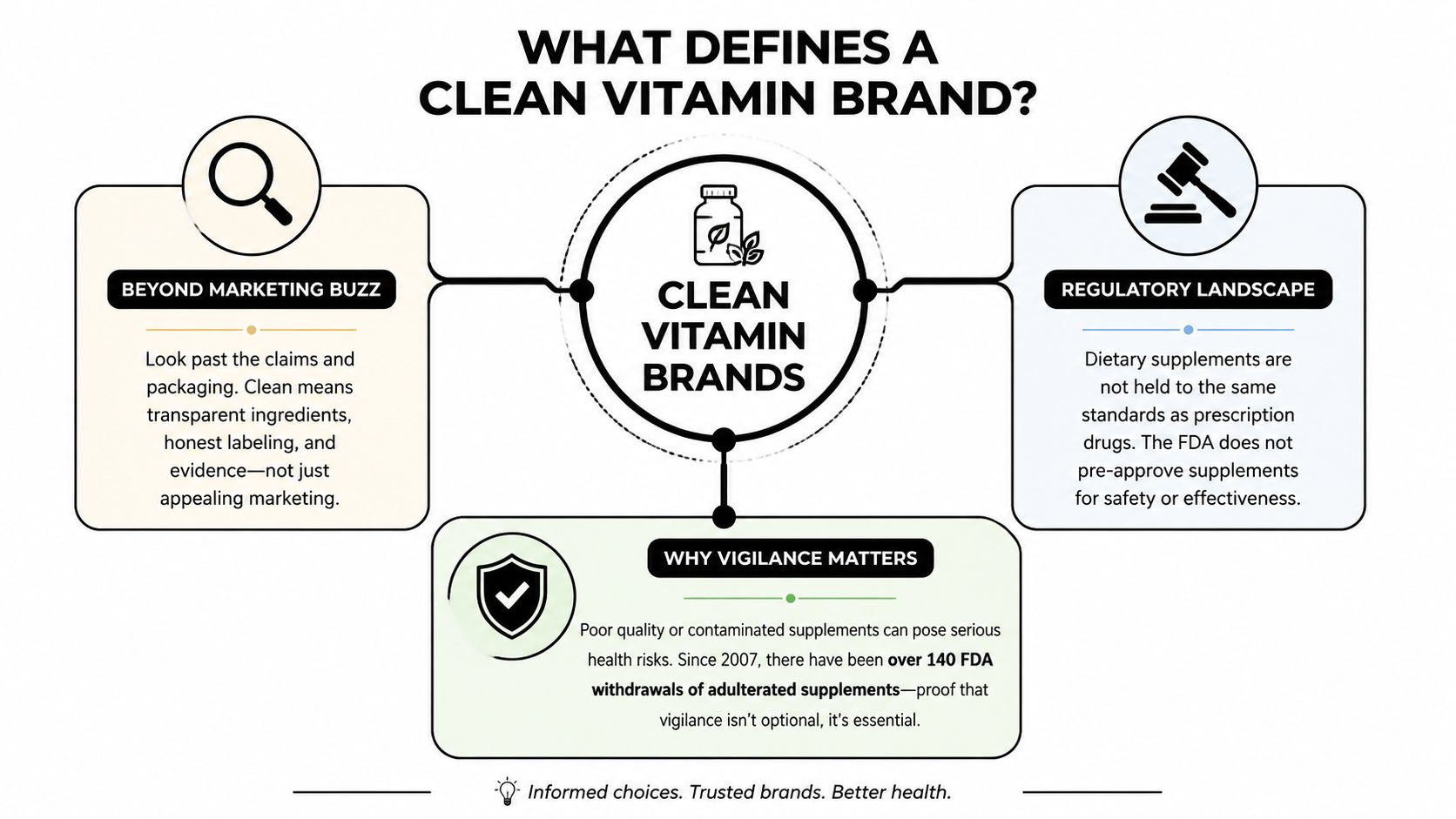
What “clean” should mean
Think of a clean supplement like a simple soup recipe. If you asked for tomato soup, you'd expect tomatoes, seasonings, and a short list of needed ingredients. You wouldn't expect artificial dyes, unnecessary thickeners, or mystery extras added mainly for shelf appearance. Vitamins work the same way. The active nutrient matters most, but the non-active ingredients still affect what you're swallowing.
A clean brand should make it easy to answer these questions:
- What is the active nutrient form? Is it clearly named?
- What else is in the capsule or tablet? Are there fillers, colors, or preservatives?
- How was it made? Is GMP mentioned?
- Who verified it? Is there real third-party oversight?
Why vigilance matters
There's a practical reason shoppers have become more skeptical. The FDA has withdrawn over 140 products that were found to be adulterated with undisclosed pharmaceutical ingredients, according to Harvard Health's supplement scorecard. That doesn't mean every supplement is unsafe. It means the label deserves scrutiny.
Some supplement labels read like a promise. The fine print tells you whether the promise is credible.
Often, people confuse “regulated” with “checked before sale.” Supplements don't work like prescription drugs. That's why independent verification matters so much. It gives you another layer of confidence beyond the brand's own marketing.
If you want a simple analogy, compare supplements to drinking water. Two glasses may both look clear, but clear isn't the same as verified. That's why learning from expert insights on water purification can be surprisingly helpful. Purity claims only become meaningful when you understand the process behind them.
Benefits of Choosing Clean Vitamins
Choosing clean vitamins can reduce guesswork. You're less likely to run into labels padded with ingredients that don't support your health goal and may complicate digestion, allergen avoidance, or personal preferences.
One major benefit is clarity. If a brand clearly states what's in the bottle and what isn't, you can match the product to your needs faster. That matters if you avoid soy, gluten, dairy, artificial colors, or added sugars. It also matters if you're trying to compare two formulas without getting lost in marketing language.
Another benefit is confidence. A cleaner formula often signals that the company expects customers to read the label closely. That doesn't guarantee quality by itself, but it usually makes the evaluation process easier. You can spot the nutrient forms, review the inactive ingredients, and decide whether the formula fits your routine.
The last benefit is often overlooked. Clean choices can support better effectiveness when the brand pairs simple formulations with well-selected nutrient forms. That's similar to choosing whole foods over ultra-processed snacks. The point isn't just removing unwanted extras. The point is getting something your body can use, with fewer obstacles between the label and the result you want.
Key Criteria and Red Flags for Evaluating Brands
The best way to evaluate clean vitamin brands is to stop asking, “Does this look healthy?” and start asking, “Can this label survive a close reading?” That shift changes everything.
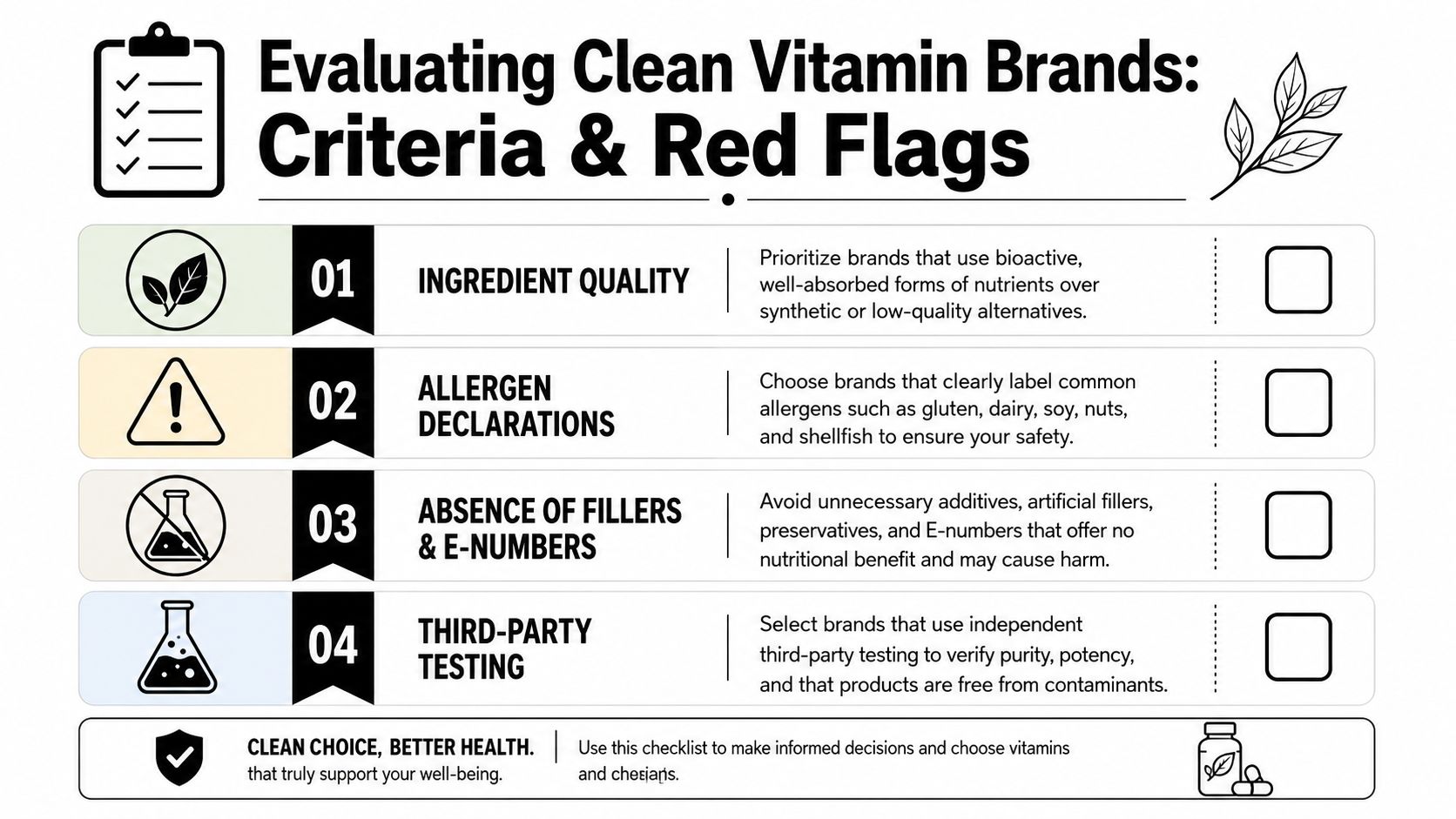
What to look for first
Start with the core definition. A clean vitamin brand should avoid fillers, artificial colors, and preservatives, and it should follow GMP with third-party purity verification, based on this clean supplement overview. That gives you a baseline. But a baseline isn't enough.
Here are the strongest criteria.
- Ingredient form matters: A nutrient can be “present” on the label but still be a weaker choice in practice. Some high-quality formulas use bioactive forms such as methylcobalamin for vitamin B12 or methylfolate instead of more synthetic alternatives. If the front says “B12” but the back doesn't tell you which form, keep reading carefully.
- Allergen language should be explicit: Look for clear “Contains No” statements. These are especially helpful for soy, gluten, and dairy. Vague wording like “crafted with care” doesn't answer the question.
- Inactive ingredients should earn their place: Every capsule material, stabilizer, or flow agent should have a reason to be there. If the label includes a string of unfamiliar additives, ask whether they support the formula or just the manufacturing process.
- Third-party claims should be specific: “Lab-tested” is weak unless the brand says who tested it and what was tested.
A useful offline habit is to photograph two competing labels and compare them side by side. You'll usually notice that one brand gives exact ingredient forms and cleaner inactive ingredients, while the other leans on slogans.
The purity and absorption trade-off
Many shoppers find this aspect confusing. Some “clean” products remove extras well but use nutrient forms that may be less useful than more bioavailable options. As noted in VitaminBrands.org's discussion of whether vitamin brands matter, many clean-label discussions focus heavily on removing fillers and artificial additives but don't explain the trade-off between perceived purity and efficacy.
That matters because people sometimes reject a formula for having one technical-sounding support ingredient, while overlooking the bigger problem: the active nutrient form may be poorly chosen.
Shopping shortcut: Don't ask only, “What did they remove?” Ask, “What useful form did they choose?”
For a similar label-reading mindset in everyday nutrition, these curated healthy eating book recommendations are helpful. Good food guides teach the same lesson as good supplement shopping. Ingredient lists tell a story if you know how to read them.
A quick screen for nutrient forms:
| Nutrient type | Better label question |
|---|---|
| Folate | Does it specify methylfolate or another exact form? |
| B12 | Does it list methylcobalamin or just “vitamin B12”? |
| Minerals | Is the form named clearly, or left generic? |
Here's a useful visual walk-through before you buy.
Red flags worth treating seriously
Some warning signs aren't dramatic, but they're revealing.
- “Proprietary blend” on a key formula: You can't judge value if you can't see the exact amounts.
- “Lab-tested” with no testing body named: This may be real, but the brand hasn't given you enough to verify it.
- No inactive ingredient transparency: If the website shows only front-of-label claims, that's a problem.
- Seal graphics that look official but aren't explained: A badge without a standards page is just a design element.
- Overly broad promises: If a supplement claims to help nearly everything, skepticism is healthy.
Practical Shopping Tips for Different Needs
Shopping gets easier when you stop looking for the “best vitamin” and start looking for the best fit for your situation. A parent buying for a child, a busy professional wanting energy support, and someone with food sensitivities won't screen labels the same way.
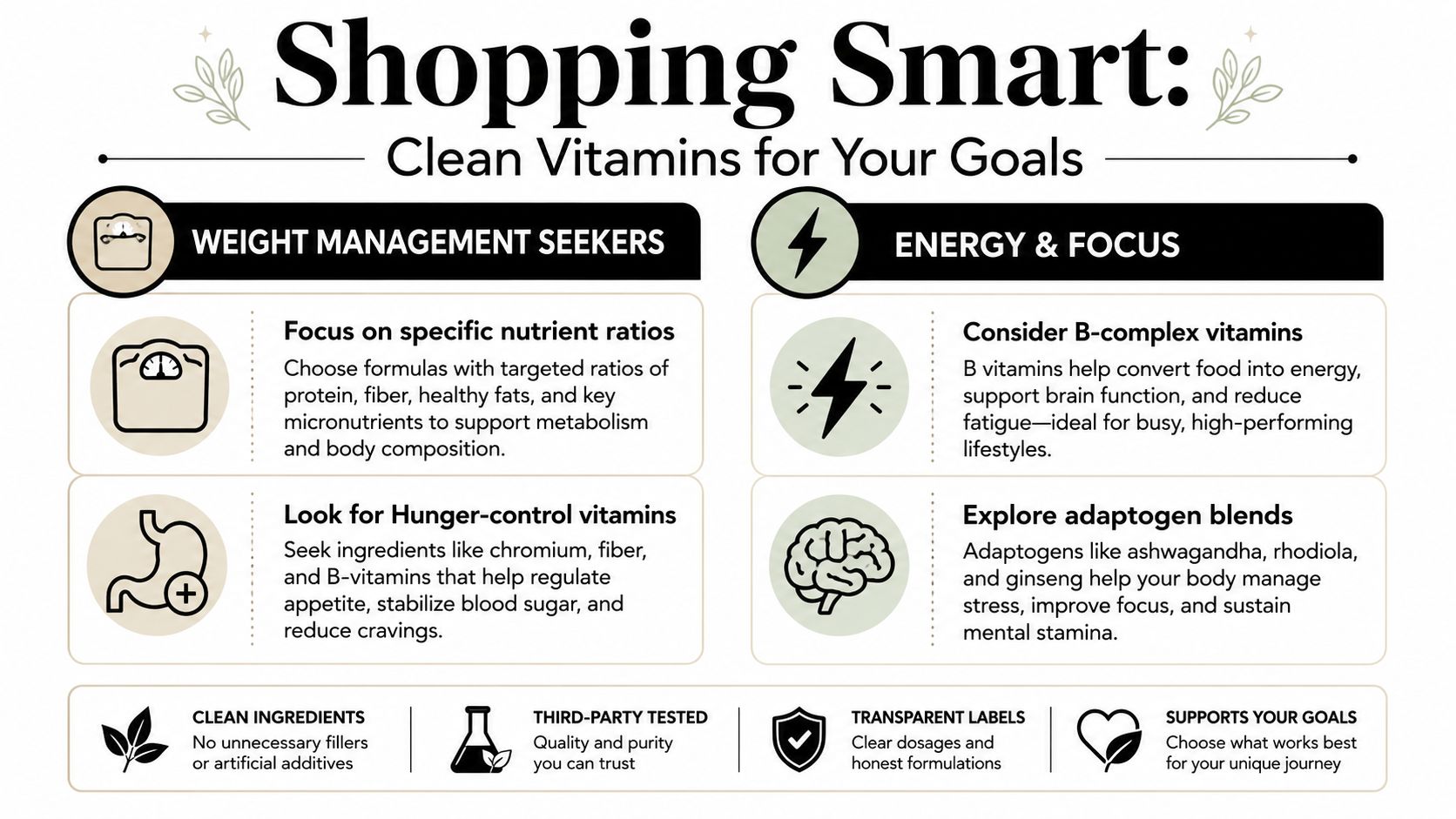
For weight management shoppers
People in this group often gravitate toward dramatic front-label claims. Slow down and inspect the full formula. Look for transparent labeling, no unnecessary sweeteners or colors, and ingredients that match your actual goal, such as appetite support, metabolism support, or general nutritional coverage.
If you're comparing two formulas, the cleaner-looking bottle isn't automatically the better one. As noted earlier, some products market themselves as ultra-clean while using nutrient forms that may be less absorbable. That's why the ingredient form still matters.
For energy and focus support
Energy shoppers often buy B-complex products first. That's reasonable, but don't stop at the category name. Check whether the formula names the exact B-vitamin forms instead of using generic shorthand. If the label is vague, the formula may be too.
For blends that add botanical ingredients, read the non-active ingredients too. Some products are packed with flavor systems, colors, or sweeteners that have more to do with marketing than function.
For parents and allergen-sensitive households
Kids' products deserve extra label scrutiny because chewables and gummies often hide more add-ons than capsules do. Artificial colors, flavoring systems, and sweeteners can crowd out the “clean” promise quickly. If you're shopping for children, this guide to best vitamins for kids can help you think through age-appropriate options and label details.
For allergy-aware shoppers, use a simple store routine:
- Read the “Contains No” statements first.
- Scan the inactive ingredients next.
- Only then compare the active nutrients.
If a label makes you hunt for allergen information, it isn't respecting your time.
Step by Step Plan to Verify Clean Vitamin Brands
A repeatable audit beats gut feeling. If you follow the same sequence each time, labels become much easier to compare.
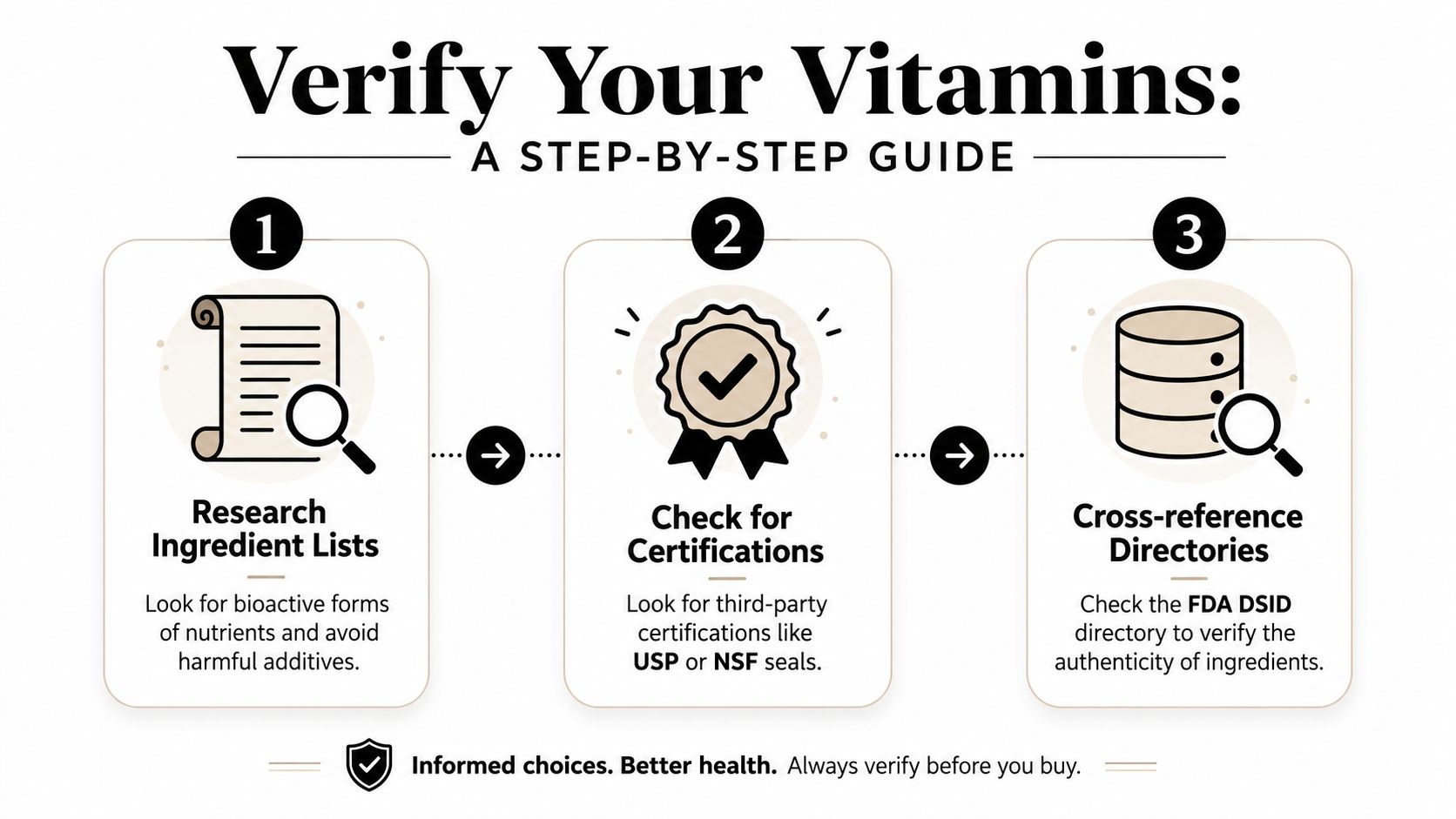
Step 1 through Step 3
-
Read the supplement facts panel closely
Look for exact nutrient forms, not just nutrient names. Then check the inactive ingredients list for fillers, dyes, preservatives, and allergen triggers. -
Inspect the certification claim
A USP logo matters because it confirms the product contains the listed ingredient quantities and is free from harmful contaminants like heavy metals, as explained in Ritual's clean vitamin shopping guide. If a seal appears, verify that it belongs to a real third party and not a house-made badge. -
Learn what third-party testing should include
This plain-language overview of what third-party testing means is useful if certification language still feels abstract. It helps separate actual verification from decorative trust signals.
Step 4 and Step 5
-
Check whether the brand shares batch-level evidence
A Certificate of Analysis can be one of the clearest signs that a company expects scrutiny. If the company mentions testing but shares nothing concrete, treat that as incomplete transparency. -
Compare value by effective formula, not just bottle price
A lower price can hide weaker ingredient forms or vague dosages. You're not buying the bottle. You're buying the usefulness of what's inside.
A trustworthy supplement brand should make verification easier, not harder.
Example of a Clean Label Brand in Action
Here's how to apply the framework in real life. Suppose you're reviewing a methylated B-vitamin formula from a brand that presents itself as clean label. The first thing to check is whether the label names the forms clearly, such as methylfolate for folate and methylcobalamin for vitamin B12, rather than generic nutrient names.
The second check is the inactive ingredient list. A stronger clean-label example keeps that section short and avoids fillers, artificial colors, preservatives, and common allergens where possible. If the label also includes direct “Contains No” language for soy or gluten, the product becomes easier for a shopper to screen quickly.
The third check is verification. A good brand doesn't just place a seal-like icon on the bottle and expect trust. It explains what standards it follows, whether a recognized third party is involved, and whether proof such as batch documentation is available on request or online.
A fourth check is consistency between product page and label. If the website highlights clean formulation, the supplement facts panel should support that claim. You shouldn't find a polished headline on the front and a cluttered additive list on the back.
When a brand meets all four conditions, the label starts to feel less like an advertisement and more like documentation. That's the standard worth copying when you evaluate any supplement, regardless of category.
Conclusion and Next Steps
Clean vitamin brands are easiest to understand when you break the idea into parts. First, remove the marketing haze and inspect the inactive ingredients. Next, look at the exact nutrient forms, because purity and usefulness aren't always the same thing. Then verify any seal, testing claim, or safety promise instead of taking it at face value.
That approach gives you a practical edge. You won't be stuck comparing vague promises. You'll have a checklist for purity, a lens for bioavailability, and a simple audit process for certifications.
Save this guide before your next supplement order. Then use it with one bottle at a time. Read the label, question the seal, and compare what the brand proves against what it merely says.
If you want supplements that align with a clean-label routine, explore Maximum Health Products for science-backed options focused on daily energy, focus, metabolism, and family wellness. Their catalog is organized by benefit, which makes it easier to shop with a clear goal in mind instead of guessing from broad marketing claims.

