


A randomized trial of 49 women found no significant appetite suppression or weight loss from 2,220 mg of purified hoodia extract daily over 15 days. That result means hoodia gordonii hasn't been shown to deliver the reliable weight-management benefits its reputation suggests.
The popular advice about hoodia often falls into one of two extremes. Some marketing presents it as a powerful natural appetite suppressant, while skeptical commentary dismisses it without examining the evidence. The more accurate answer sits between those positions: hoodia has a traditional history and a plausible proposed mechanism, but human research hasn't confirmed meaningful short-term benefits.
That distinction matters if you're comparing supplements, considering a product, or trying to understand whether reduced hunger claims reflect clinical evidence. The available research is small, short, and limited to a specific group, but its findings still provide the clearest human test of the ingredient.
The Hoodia Gordionii Promise vs Reality
Hoodia gordonii became famous through stories connecting the plant with the San people of southern Africa, who were said to use it traditionally to reduce hunger during long hunts. That history helped create a compelling modern narrative: if the plant can reduce hunger in demanding circumstances, perhaps a concentrated supplement can make weight loss easier.
Traditional use can offer a reason to investigate a plant. It can't establish that a commercial capsule will suppress appetite, lower calorie intake, or reduce body weight. Those questions require controlled human research, and the strongest clinical test doesn't support the usual promise. The National Institutes of Health overview of weight-loss supplements describes a randomized controlled trial published in 2011 in which 49 healthy women aged 18 to 50 received purified hoodia or placebo.
For 15 days, the hoodia group took 2,220 mg per day, split into two doses before breakfast and dinner. Participants could eat freely, and researchers measured daily energy intake and body weight. Compared with placebo, hoodia produced no statistically significant reduction in either outcome.
Why the result matters
The trial didn't merely ask whether people liked the product or felt temporarily different. It tested the outcomes behind the central marketing claim: less food intake and lower weight. Under the conditions studied, researchers didn't observe a measurable advantage.
That doesn't prove every possible hoodia preparation, dose, or longer treatment period could never produce an effect. It does mean the ingredient shouldn't be described as a clinically proven fat-loss treatment. Readers looking for more background on the plant can also review what Hoodia gordonii is and how it is commonly discussed.
The most defensible description is restrained: hoodia gordonii is an ingredient with traditional or proposed appetite-support use, but its weight-management benefits remain limited and unconfirmed in humans.
Understanding How Hoodia Claims to Work
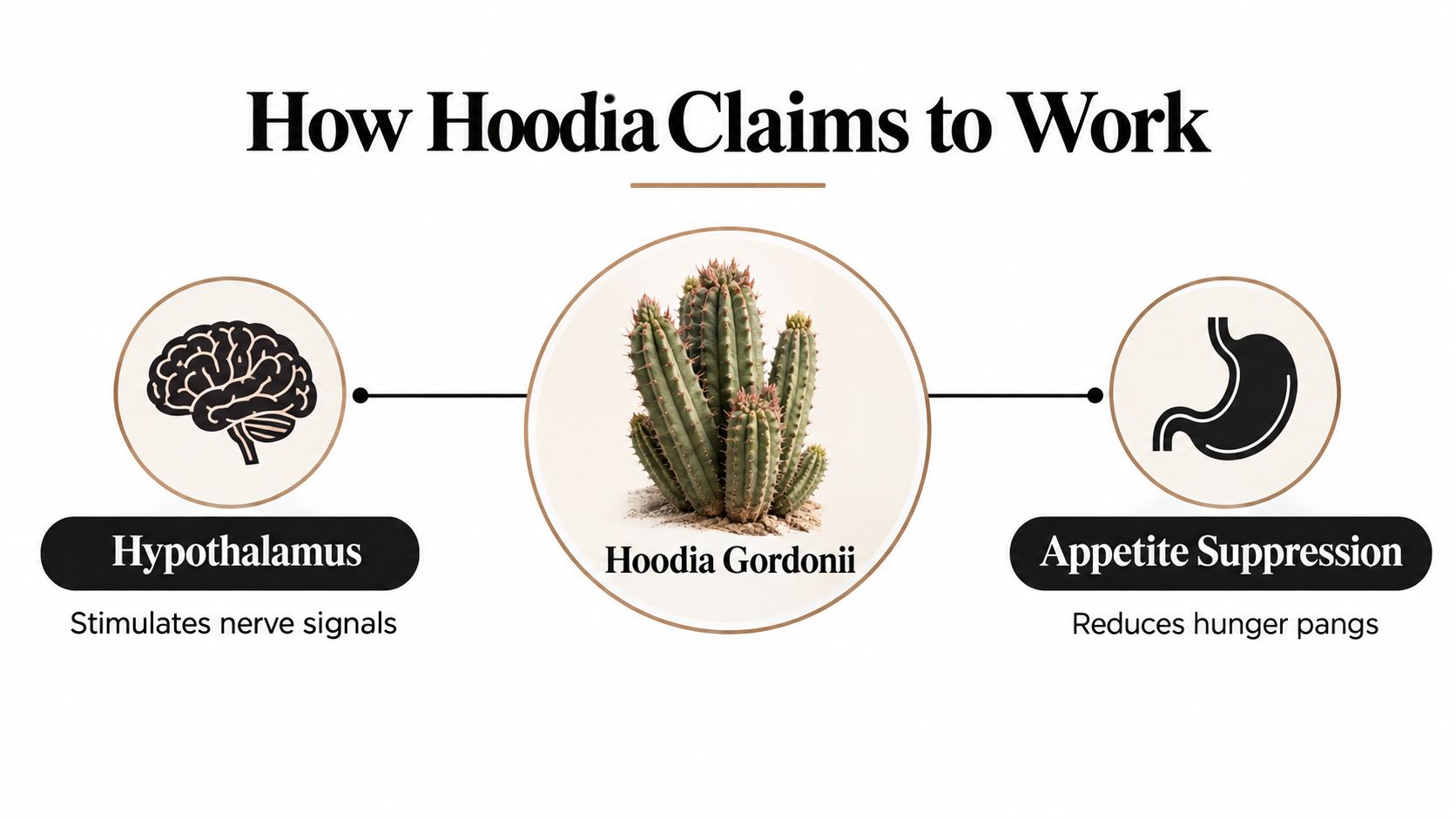
The hoodia story became more persuasive because it included a biological explanation. Supporters proposed that compounds in the plant might influence appetite-regulating signals involving the brain, particularly the hypothalamus. The hypothalamus helps coordinate processes related to hunger, energy balance, and other basic bodily functions.
A proposed pathway might sound like this: hoodia compounds interact with appetite-related signaling, the brain receives a message associated with fullness, hunger feels less prominent, and the person eats less. That sequence is easy to understand, and it gives a supplement claim the appearance of scientific certainty.
Mechanism is not the same as outcome
A mechanism is a hypothesis about how an ingredient might act. An outcome is what researchers measure in people. Those two levels of evidence often diverge.
Laboratory experiments can show that a compound interacts with a receptor or changes a cellular process. Animal studies can show altered feeding behavior under controlled conditions. Neither finding proves that a human taking a retail supplement will experience sustained appetite control or meaningful weight change.
The clinical question is more demanding. Does the product reduce food intake compared with a placebo? Does that change persist? Does body weight respond? Are the effects large enough to matter, and do they outweigh unwanted reactions?
Practical rule: Treat a proposed appetite pathway as a reason for research, not as proof of hoodia gordonii benefits.
The human trial discussed here matters because it tested the proposed pathway against real measures of eating and body weight. Despite the theoretical appeal, the study didn't find the expected reduction. That gap between biological plausibility and clinical performance is useful beyond hoodia. It helps consumers evaluate any supplement that promises results through an impressive-sounding mechanism.
What the Clinical Evidence Actually Shows
The central evidence comes from a randomized, placebo-controlled trial. Researchers enrolled 49 healthy women with a mean body mass index of approximately 25, a level around the overweight threshold, and compared purified Hoodia gordonii extract with placebo over 15 days. The extract dose was 2,220 mg per day, taken in two portions before breakfast and dinner, as summarized by the NIH Office of Dietary Supplements.
The study measured two outcomes directly connected to the claim:
- Daily energy intake, meaning how much participants ate while eating freely.
- Body weight, which indicates whether any change in eating translated into a short-term physical result.
The comparison with placebo showed no statistically significant reduction in either daily energy intake or body weight. In plain language, the hoodia group didn't demonstrate the expected appetite or weight advantage under the tested conditions.
Reading a negative result correctly
A result showing no significant benefit isn't the same as proving that hoodia can never affect anyone. The sample was small, all participants were women, and the intervention lasted only a short time. The study also examined a purified research extract, so it can't answer whether every commercial product contains the same preparation.
Those limitations leave several questions open:
- Whether men might respond differently.
- Whether people with obesity or metabolic conditions might respond differently.
- Whether a longer treatment period would change the result.
- Whether another standardized extract would perform differently.
- Whether any possible effect would remain meaningful over time.
At the same time, those unanswered questions don't justify strong marketing claims. The trial tested a substantial daily amount under controlled conditions and still failed to show the proposed reduction in food intake or body weight. The evidence therefore supports uncertainty about possible future findings, not confidence in current benefit claims.
What consumers can conclude
The fairest conclusion is that human evidence doesn't support Hoodia gordonii as an established appetite suppressant or weight-loss ingredient. Traditional history and mechanistic theories may explain the plant's popularity, but they don't replace a consistent clinical outcome.
For someone evaluating “hoodia benefits,” the key distinction is simple: the ingredient has been studied in humans, and the principal trial did not demonstrate the advertised result. That makes cautious language more appropriate than promises about metabolism, fat loss, craving control, or durable weight reduction.
Typical Dosages and How to Evaluate Products
People often ask what dose they should take. The only concrete human protocol described here used 2,220 mg per day of purified Hoodia gordonii extract for 15 days, split into two doses before meals. That is a description of a research design, not a recommended long-term dosage, and it shouldn't be treated as proof that taking the same amount is effective or appropriate.
Commercial products may differ from the research preparation in several important ways. A bottle might contain a powder, a concentrated extract, or a blend with other ingredients. The label may also provide different information about plant identity, extract concentration, or standardization. A research result involving one preparation can't automatically be transferred to every capsule sold under the hoodia name.
A practical label check
Before buying a supplement, examine the label for details that allow a fair comparison:
- Plant identification. Check whether the product clearly names Hoodia gordonii rather than using only a broad botanical term.
- Amount per serving. Look for the quantity of hoodia and whether the serving size is clearly stated.
- Extract description. Determine whether the label identifies a purified or standardized extract, or just lists plant material.
- Additional ingredients. Review stimulants, botanicals, sweeteners, and other compounds that could affect tolerability.
- Quality information. Look for transparent manufacturing and testing details, while remembering that a clear label doesn't establish effectiveness.
The guide on how to read supplement labels can help you assess these details systematically. Product quality and product efficacy are separate questions. A well-labeled supplement may be easier to evaluate, but better labeling doesn't turn limited evidence into proven results.
A study dose tells you what researchers tested. It doesn't tell you what every consumer should take.
If a product promises guaranteed hunger reduction or rapid fat loss, treat that language as a warning sign. The available trial doesn't support those expectations, regardless of how confidently a label presents them.
Safety Considerations and Who Should Avoid Hoodia
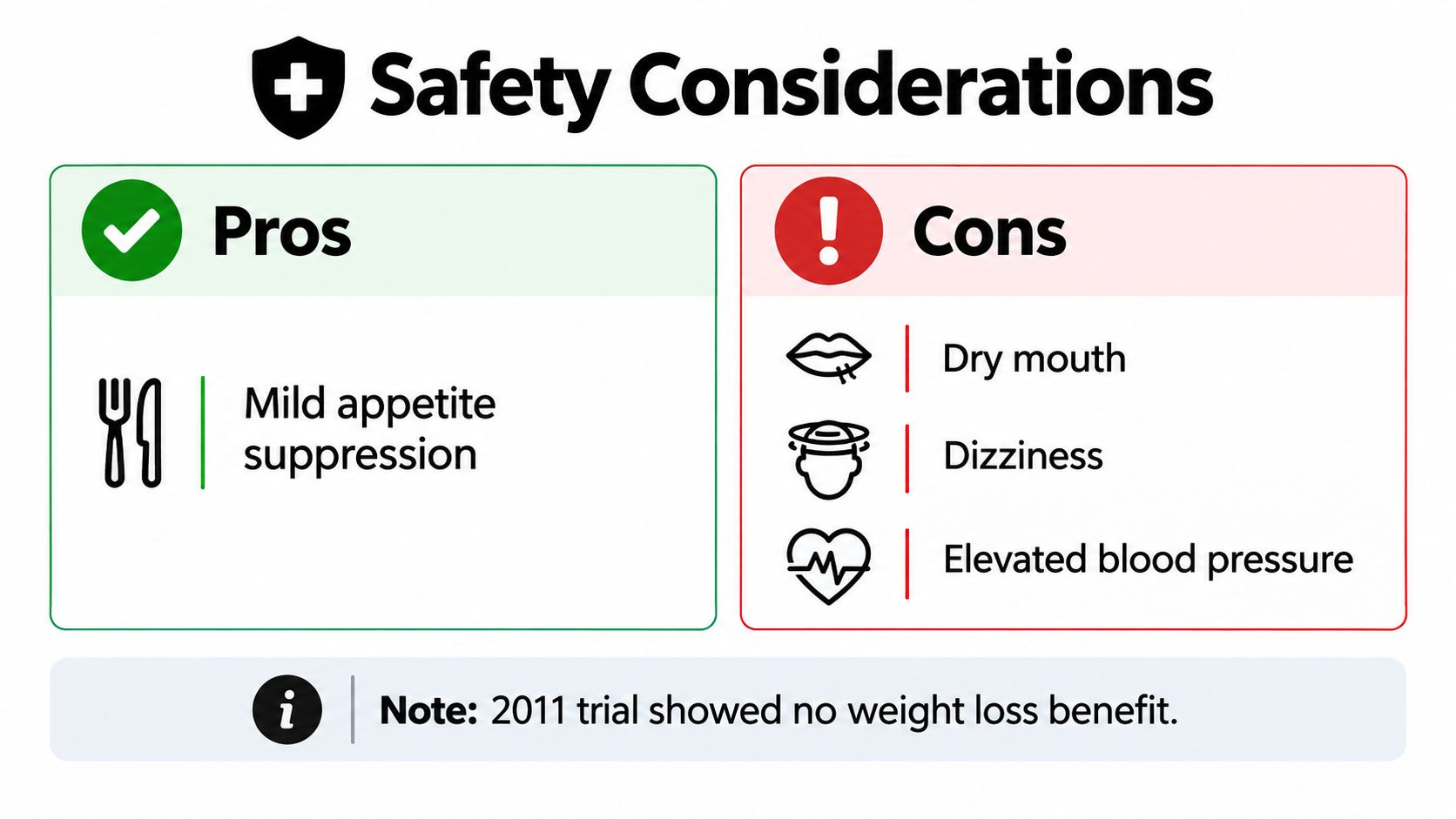
Effectiveness and safety have to be judged together. In the same controlled study that found no significant weight advantage, people taking purified hoodia reported more unwanted effects than those taking placebo. Reported reactions included nausea, vomiting, dizziness, and unusual skin sensations, according to the published clinical study abstract.
Researchers also observed physiological changes that deserve attention. Hoodia consumption was associated with significant increases in heart rate and blood pressure, along with laboratory increases in bilirubin and alkaline phosphatase. The clinical meaning of the liver-related findings remained unclear, because other liver enzymes weren't reported to change, but uncertainty isn't a reason to ignore the signal.
Who should use extra caution
The evidence base is too limited to establish a complete safety profile. People should speak with a healthcare professional before considering hoodia if they have:
- Cardiovascular concerns. Changes in pulse and blood pressure make unsupervised use a poor choice for people managing heart or blood-pressure conditions.
- Liver concerns. The observed bilirubin and alkaline phosphatase changes warrant medical discussion for anyone with liver disease or abnormal liver tests.
- Medication use. A clinician or pharmacist can assess whether hoodia might complicate an existing treatment plan.
- Unexplained symptoms. New dizziness, vomiting, unusual sensations, or other concerning reactions should prompt a reassessment rather than an attempt to push through.
The available safety evidence comes from a small, short study, so it can't establish how hoodia affects longer use or broader populations. The discussion of Hoodia gordonii side effects should be read as part of the decision, not as an afterthought.
A “natural” label doesn't remove cardiovascular or tolerability considerations. If the potential benefit is unconfirmed, the threshold for accepting avoidable risk should be especially high.
Making an Informed Decision About Hoodia
The useful question isn't whether hoodia is a miracle or a scam. It's whether the likely value, uncertainty, and personal risk make sense for your situation. Based on the available evidence, the benefit case is weak, while the safety picture remains incomplete.
Start with your goal. If you're hoping for reliable appetite suppression, lower calorie intake, or measurable weight loss, hoodia hasn't demonstrated those outcomes in the principal human trial. If you're curious about a traditional botanical and understand that its effects are unconfirmed, your decision should still account for health conditions, medications, product transparency, and the possibility of unwanted effects.

A sensible decision filter
Ask yourself:
- What result am I expecting? A supplement shouldn't be judged against a promise it has never clinically demonstrated.
- What information is missing? Consider the extract type, ingredient amount, quality controls, and possible interactions.
- What is my health context? Blood-pressure, heart, liver, and medication concerns deserve professional input.
- What alternatives have stronger foundations? Nutrition habits, physical activity, sleep, behavioral support, and clinically supervised care can form the core of a plan.
The following video can provide another way to think about supplement decisions and realistic weight-management expectations.
Hoodia might be considered only as an optional experiment by an informed adult who has discussed the choice with a healthcare professional and accepts that no meaningful benefit is established. It shouldn't replace foundational habits or medical care, and it shouldn't receive priority just because it is marketed as natural.
Integrating Hoodia Into a Weight-Management Routine
A supplement can't compensate for a routine that doesn't address meals, movement, sleep, stress, and the practical environment around eating. If someone still chooses to try hoodia, the most responsible approach is to treat it as a limited, uncertain addition rather than the engine of a weight-management plan.
Begin by setting an honest expectation. Don't assume that reduced hunger will occur, and don't interpret a few days of normal appetite as proof that the product is working. Track relevant observations in a simple journal, including appetite, meals, dizziness, nausea, vomiting, unusual sensations, and any known blood-pressure concerns.
Keep the core routine independent
Build the plan around actions that remain useful whether or not hoodia produces an effect:
- Plan satisfying meals. Include foods and portions that help you maintain a consistent eating pattern.
- Use regular movement. Choose physical activity you can repeat safely and realistically.
- Notice behavioral triggers. Record whether stress, fatigue, convenience, or social situations influence eating.
- Review the experiment. Stop and seek advice if concerning symptoms appear, rather than increasing the amount or adding more stimulants.
People who want structured support can explore a clinician-led medical weight-management program from ProMD Health Easton. Professional guidance is particularly valuable when weight concerns overlap with cardiovascular risk, liver issues, medication use, or persistent symptoms.
The central principle is proportion. Since hoodia hasn't shown a significant appetite or weight benefit in the available controlled trial, it shouldn't displace strategies with clearer practical value. A careful routine gives you a better basis for judging what helps, what causes problems, and what deserves to remain part of your long-term plan.
Frequently Asked Questions About Hoodia
Does hoodia work for men?
The principal randomized trial enrolled women, so it doesn't establish how men would respond. The available evidence therefore can't support a confident claim that hoodia reduces appetite or body weight in men.
Could longer use produce different results?
Possibly, but that remains unanswered rather than demonstrated. The controlled evidence covers a brief treatment period, so it can't establish long-term effectiveness or safety. Longer exposure could reveal a different effect, no effect, or additional tolerability concerns.
Is hoodia a proven appetite suppressant?
No. The strongest human trial didn't show a statistically significant reduction in daily energy intake compared with placebo. A proposed mechanism and traditional use may explain the claim, but they aren't substitutes for a positive clinical outcome.
How does hoodia compare with other appetite-support options?
It shouldn't be placed in the same evidence category as an established medical treatment just because both are described as appetite suppressants. Different options have different levels of research, risks, eligibility requirements, and supervision needs. Compare the quality of human evidence rather than comparing marketing language.
Does traditional use prove modern supplement benefits?
No. Traditional knowledge can guide scientific interest, but modern products may differ in species verification, extraction, concentration, purity, and dose. Controlled human testing is still needed to determine whether a product delivers a meaningful benefit.
What should I do if I feel unwell?
Stop using the product and seek appropriate medical advice, especially if you experience vomiting, dizziness, unusual skin sensations, or concerns related to blood pressure or heart rate. Don't assume that a reaction is harmless because the ingredient is botanical.
Maximum Health Products offers wellness products in areas such as weight management, protein, beverages, vitamins, and supplements, including a Hoodia Gordonii appetite-support product. Visit Maximum Health Products to review its product information and decide whether any option fits your goals and healthcare guidance.

