


If you're asking what is Hoodia Gordonii, you've probably already seen the usual advice: it's marketed as a natural appetite suppressant with a compelling desert survival story behind it. That advice skips the part that matters most. A supplement can have a memorable origin and still fail when tested in people.
Hoodia sits in that uncomfortable category. Its reputation comes from traditional use and from early laboratory interest in a compound called P57. But the human evidence doesn't match the sales pitch. For a savvy consumer, that's the central issue.
The primary question isn't whether Hoodia has an interesting history. It does. The key question is whether that history translates into safe, reliable weight-loss support for modern buyers. Based on the clinical evidence available, the answer is far less impressive than the marketing suggests.
Featured Product
Maximum Slim Original Green Coffee
Maximum Slim Organic Protein Powder delivers 20g of organic plant-based protein and 10g of organic fibre per serving to support balanced nutrition and everyday wellness. Perfect for smoothies, shakes, or meal replacement support.
Shop Now →The Hoodia Paradox Unpacked
Hoodia became famous because it sounds like the ideal supplement story. It's wild-harvested, tied to indigenous knowledge, and associated with hunger suppression. That combination makes it easy to market as a natural shortcut for weight control.
The problem is that natural origin isn't proof of clinical benefit. Traditional use can point researchers toward an interesting plant, but it doesn't settle whether a concentrated supplement works in capsule form, at commercial doses, in people trying to lose weight today.
Why the story sells so well
Hoodia's appeal rests on three layers of persuasion:
- A survival narrative: People hear that the San peoples used it during long hunts and assume that must translate into dependable appetite control.
- A single-molecule promise: Once marketers focused on P57, Hoodia could be framed as a targeted scientific breakthrough rather than just a folk remedy.
- A weight-loss shortcut: Buyers often want something that feels simpler than changing meals, movement, sleep, and stress.
Those ideas are emotionally persuasive. They aren't the same as evidence.
Bottom line: Hoodia is a case study in how a good origin story can outrun the actual human data.
The question careful buyers should ask
When consumers look up what is Hoodia Gordonii, they often start with "Does it curb appetite?" A better first question is: what kind of evidence supports that claim?
For Hoodia, the answer is mixed at best. The historical use is real. The rodent research generated interest. But the human research didn't confirm the hype. That's why Hoodia deserves a more skeptical review than it usually gets in supplement marketing.
From Kalahari Survival to Global Supplement
Hoodia Gordonii became famous for a reason that sounds more persuasive than it is. A plant associated with survival in the Kalahari is easy to market as a natural answer to modern overeating, even though those are very different use cases.
According to the National Center for Complementary and Integrative Health overview of Hoodia, Hoodia gordonii is native to the Kalahari Desert region of Southern Africa and has been linked to historical use by the indigenous San peoples during long hunts and periods of limited food access. That background explains the interest. It does not verify that a packaged supplement will reproduce the same effect in a sedentary consumer trying to lose weight.
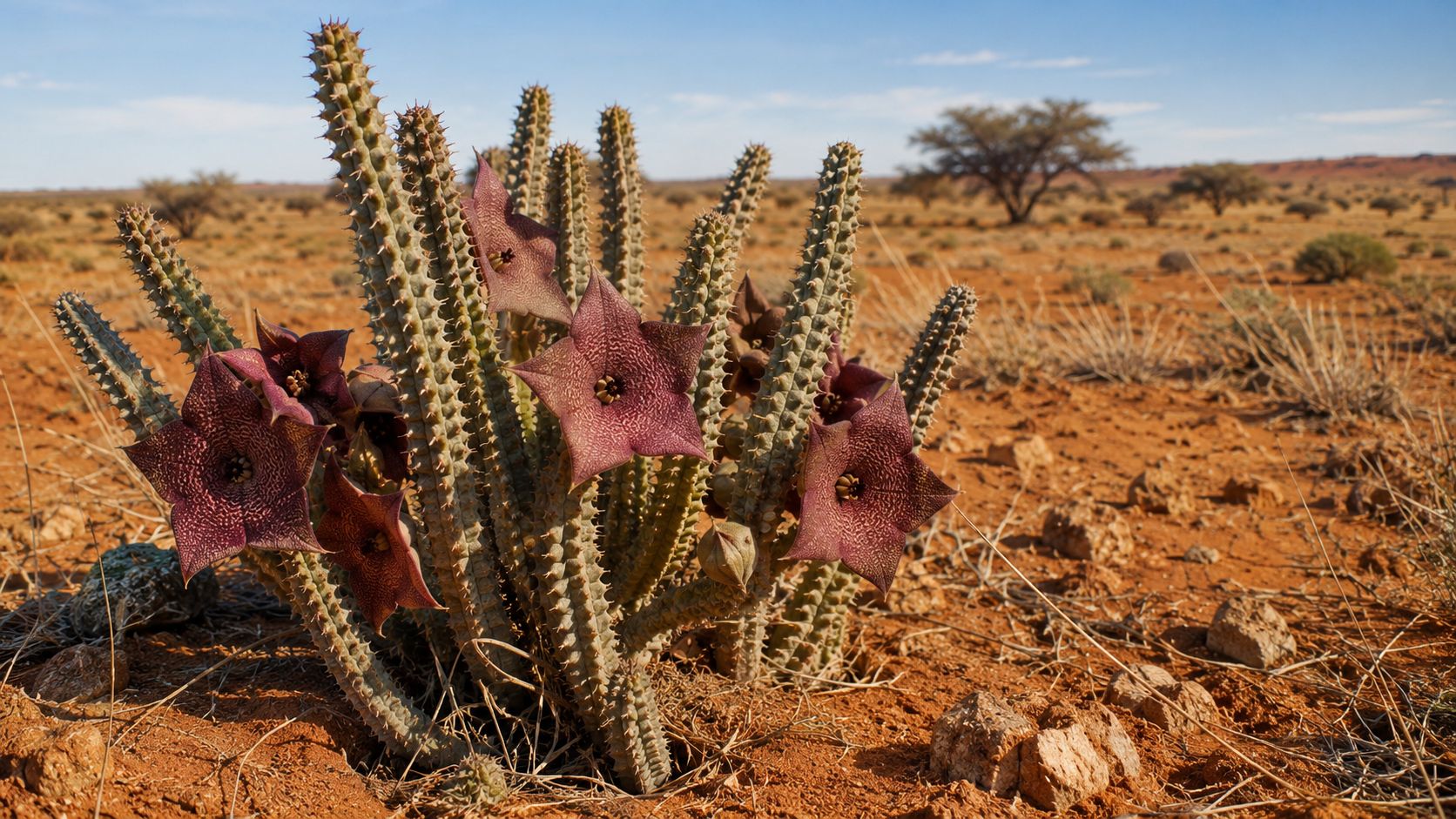
What the plant is
Hoodia is often called a cactus in product copy. Botanically, that is inaccurate. Hoodia is a leafless succulent, a small but telling detail because supplement marketing often starts by simplifying the plant itself, then extends that simplification to its effects.
That matters more than it seems. Once Hoodia entered the global weight-loss market, the story was narrowed into a familiar pitch: rare desert plant, traditional hunger aid, modern appetite solution. The problem is that each step in that chain adds inference. Consumers looking for non-stimulant appetite control options should be especially careful with products built on this kind of narrative, because a stimulant-free label says little about efficacy or risk.
How traditional knowledge became a product category
The San peoples' reported use of Hoodia gave companies a compelling origin story and researchers a reason to investigate the plant. Those are not the same thing. Traditional use can identify a lead worth studying, but it cannot answer questions that matter to buyers now, such as dose, extract standardization, product authenticity, long-term safety, or whether weight loss occurs under controlled conditions.
That distinction is where much of the confusion starts.
| Claim type | What it can tell you | What it can't tell you |
|---|---|---|
| Traditional use | Why Hoodia drew scientific and commercial attention | Whether a retail supplement produces meaningful weight loss |
| Botanical identity | What Hoodia is and where it comes from | Whether a formula contains verified Hoodia in a usable amount |
| Commercial branding | How sellers frame the product | Whether the claims hold up in human trials |
The commercial rise of Hoodia followed a familiar supplement pattern. A culturally specific use was pulled into a mass-market weight-loss story, then reinforced by early mechanistic theories and ingredient branding. For savvy consumers, the key point is simple: historical use explains why Hoodia was sold. Human evidence determines whether it should be trusted.
Does Hoodia Gordonii Actually Work for Weight Loss
The strongest pro-Hoodia argument usually centers on P57, an oxypregnane steroidal glycoside found in Hoodia gordonii. Researchers became interested in P57 because, in rodent studies, it increased ATP levels in hypothalamic neurons, a mechanism linked to appetite regulation in the brain. That sounds promising, and it's the scientific thread most marketing campaigns have pulled.
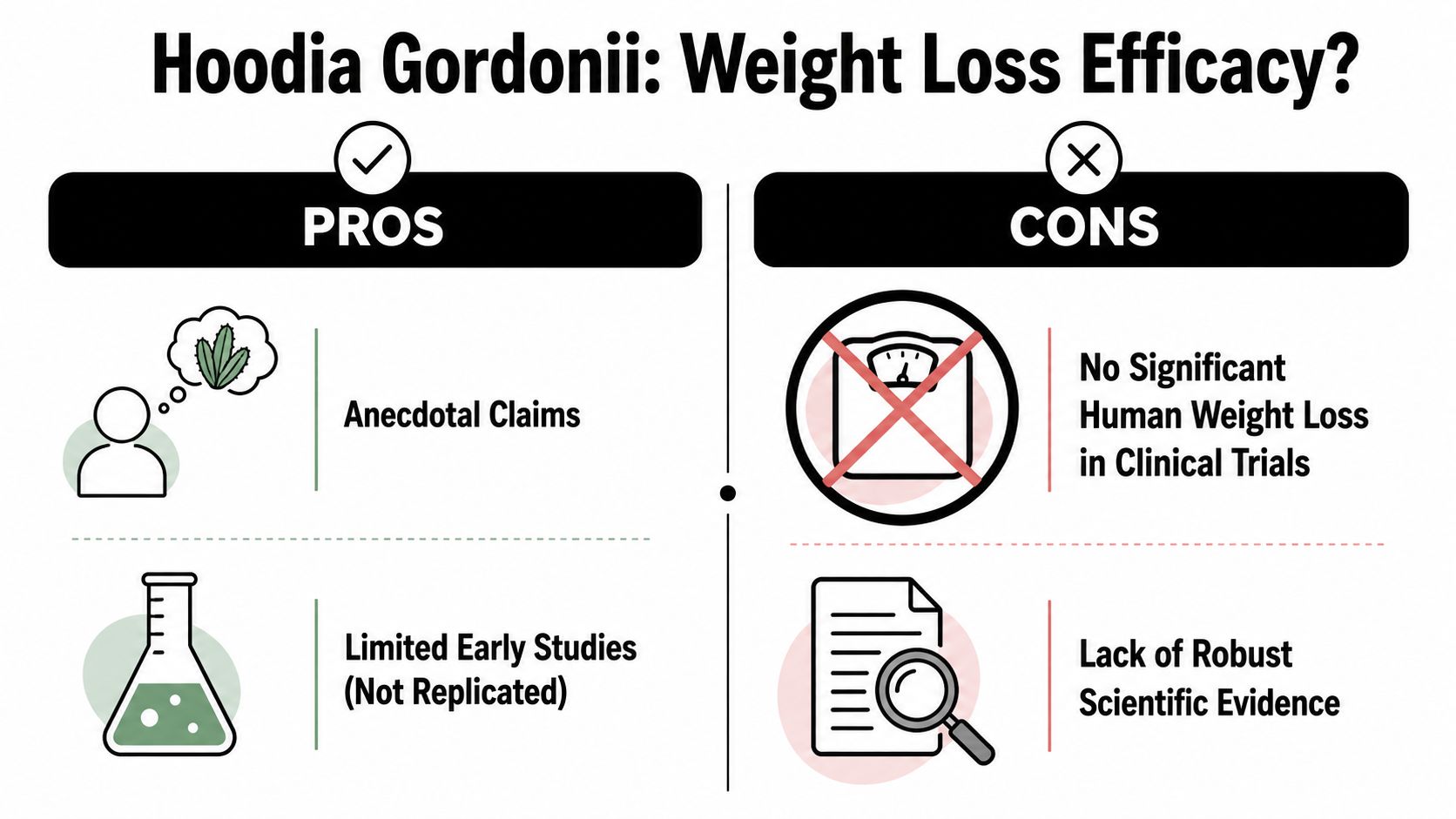
Promising isn't the same as proven. The clinically relevant question is what happened in humans, not rodents.
What the human trial found
A review of Hoodia research published in the Journal of Ethnopharmacology reported that a controlled human trial with 49 overweight women found no significant weight loss over 15 days compared to placebo, despite the mechanistic interest in P57 from rodent work. The same source also noted adverse effects including nausea, vomiting, dizziness, and altered skin sensations, and discussed P57's in vitro inhibition of CYP3A4, which raises drug-interaction concerns even though the clinical relevance isn't settled (scientific abstract on Hoodia and P57).
That one result changes the entire conversation. If a supplement's reputation depends on appetite suppression, but the human trial doesn't show meaningful weight-loss benefit, the marketing narrative loses its foundation.
Why rodent findings weren't enough
Early-stage animal research is useful for generating hypotheses. It isn't enough to support consumer claims on its own.
Here's the key comparison:
- Rodent evidence: Suggested a possible brain-based appetite mechanism involving P57.
- Human evidence: Didn't show significant weight-loss benefit in the available controlled trial.
- Consumer implication: The mechanism may be interesting scientifically, but buyers don't purchase mechanisms. They purchase outcomes.
That's why the phrase "clinically proven" would be hard to justify for Hoodia based on the evidence provided here.
A broader comparison with non-stimulant appetite control options can help consumers see why evidence quality matters more than a dramatic backstory.
Why the myth persisted anyway
The answer is simple. Hoodia had all the ingredients of a blockbuster supplement trend:
- A dramatic origin story
- A named active compound
- A consumer problem people desperately want solved
That combination can keep a product popular even when the human evidence underdelivers.
For readers who want a quick visual summary before moving on, this video gives useful context on the public discussion around Hoodia:
Practical rule: If a supplement's strongest evidence comes from tradition and animal work, treat any weight-loss claim as unproven until human trials clearly support it.
The Hidden Risks of Hoodia Supplements
A weak benefit profile would already make Hoodia questionable. The more serious concern is that the available human evidence also points to meaningful safety issues.
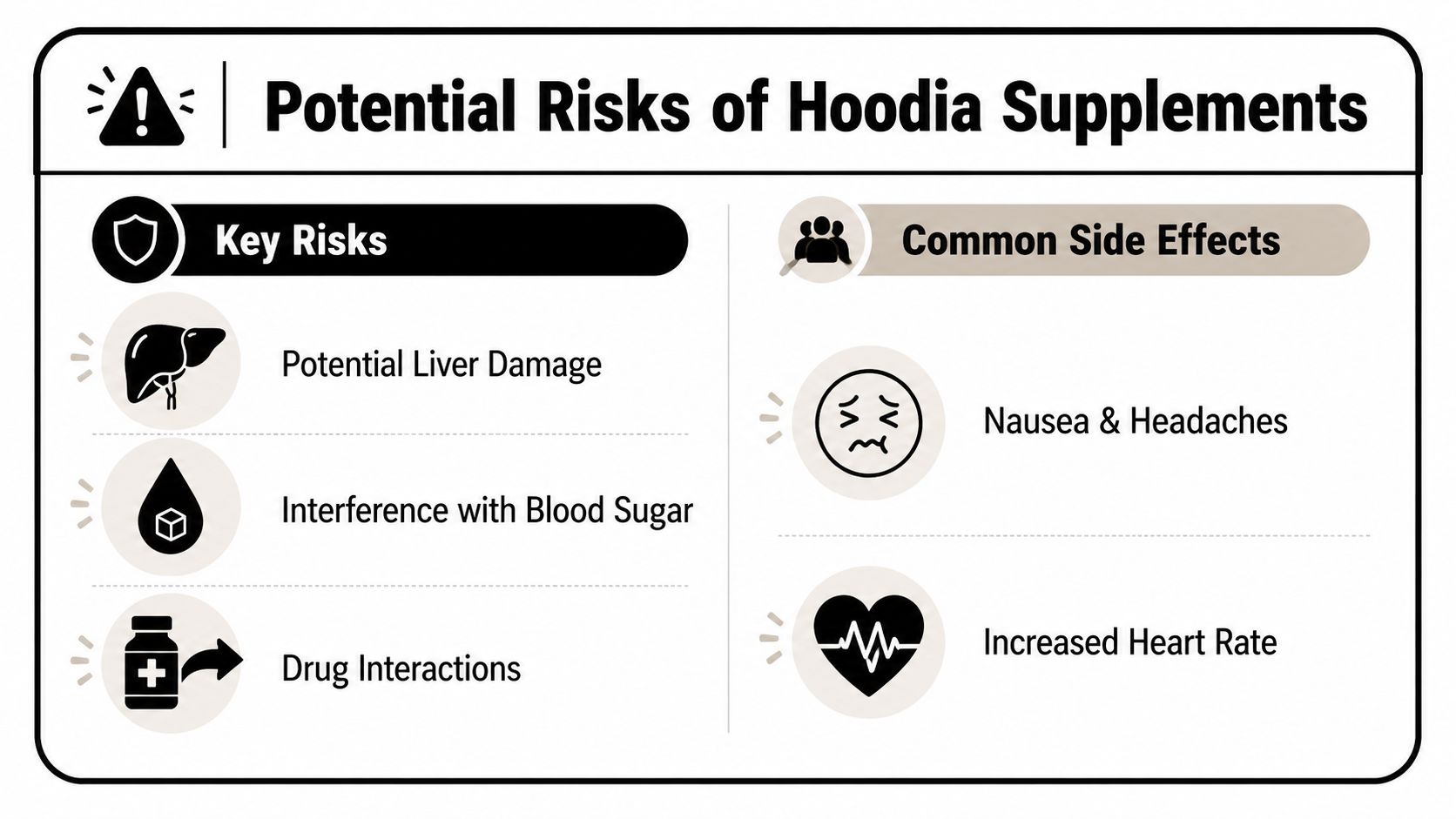
According to a reviewed summary of the human Hoodia trial, the only human trial found no difference in weight loss, but participants taking Hoodia reported significantly more adverse effects, including nausea, vomiting, dizziness, and increased heart rate and blood pressure. That raises a troubling possibility. Any perceived "effect" may reflect the body reacting badly rather than a clean appetite-control mechanism.
The safety paradox
Hoodia is often sold as gentle because it's plant-based. The trial data point in the opposite direction. If a supplement doesn't outperform placebo for weight loss, yet users report more nausea, vomiting, dizziness, and cardiovascular changes, the risk-benefit equation looks poor.
That's the paradox at the center of Hoodia:
| Marketing impression | Clinical concern |
|---|---|
| Natural appetite support | No clear human weight-loss benefit |
| Traditional hunger control | Adverse effects reported in trial participants |
| Simple botanical aid | Possible cardiovascular and medication-related concerns |
Who should be especially cautious
Some groups should treat Hoodia with extra care, especially if they already take medications or manage blood sugar or blood pressure concerns. The underlying reason is that adverse effects and interaction risk become more consequential in people who already have narrow safety margins.
One practical safeguard is to prioritize third-party tested supplements whenever you're evaluating any botanical product, especially one with a mixed evidence profile.
- People on prescription medications: P57 has shown in vitro inhibition of CYP3A4 in the scientific literature cited earlier, so interaction potential can't be dismissed casually.
- People sensitive to stimulatory effects: Reports of increased heart rate and blood pressure deserve attention.
- People with low tolerance for GI side effects: Nausea and vomiting aren't minor inconveniences when the product's benefit is uncertain.
If the likely upside is unclear and the downside includes cardiovascular and gastrointestinal problems, caution isn't pessimism. It's good judgment.
A Buyer's Guide to Hoodia Gordonii Products
Some readers will still consider trying Hoodia, despite the limitations above. If that's you, the smart approach isn't optimism. It's damage control.
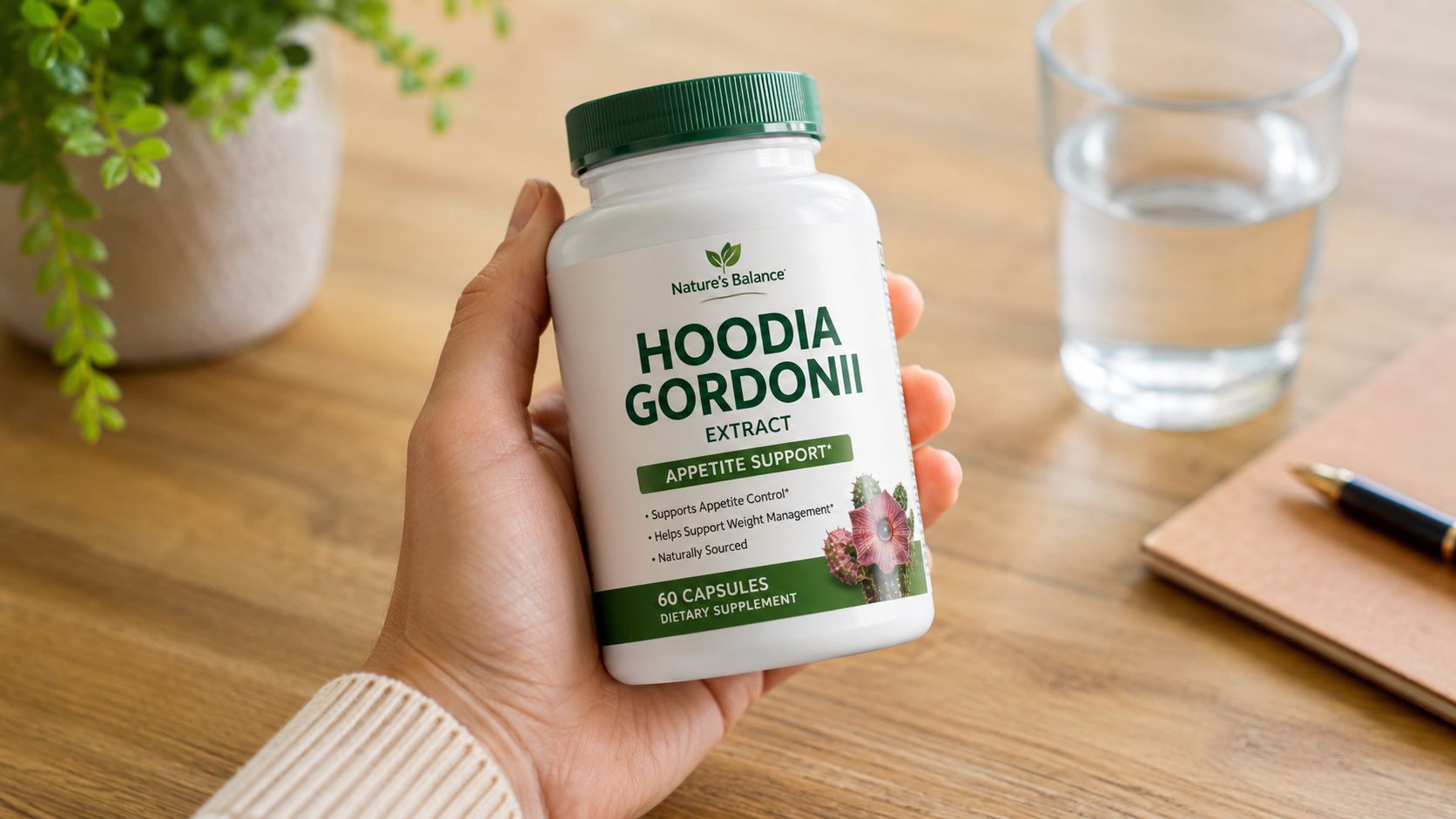
The first thing to understand is that product form doesn't solve the evidence problem. Hoodia appears in capsules, extracts, and teas, but changing the format doesn't change the fact that human support for weight-loss efficacy is weak.
The quality problem most buyers miss
A major issue with Hoodia products isn't just whether Hoodia works. It's whether the product contains authentic, meaningful Hoodia material at all.
A summary of Hoodia's evidence and market history notes that a 2006 review found no published scientific evidence supporting Hoodia as an appetite suppressant in humans, and that many commercial supplements do not contain the active ingredient. The same source notes that the U.S. Federal Trade Commission advises against diet products marketing exaggerated weight-loss claims using Hoodia.
That creates two layers of uncertainty:
- The ingredient itself lacks strong human support.
- The finished product may not match the label in the first place.
What to check before buying
If someone still wants to purchase a Hoodia product, these filters matter more than branding language:
- Independent verification: Look for evidence of identity and purity testing, not just a proprietary-sounding formula name.
- Transparent labeling: A label should clearly identify the plant species as Hoodia gordonii, not just "Hoodia blend."
- Claim restraint: Be suspicious of products promising dramatic appetite suppression or effortless fat loss.
- Sourcing clarity: Since over-collection has been a concern in Hoodia's native range, legal and transparent sourcing matters.
Some shoppers also compare specialized products such as Maximum Slim Hoodia Gordonii Full Spectrum against generic marketplace listings. The useful comparison isn't who promises more. It's who provides more transparency.
Buy supplements the way you'd evaluate a lab report, not the way you'd evaluate an ad.
Frequently Asked Questions About Hoodia
Is Hoodia Gordonii legal to buy
Usually, yes. In many countries, Hoodia is sold as a dietary supplement rather than as an approved drug. That distinction matters. Legal sale mainly means the product fits supplement rules for marketing and distribution. It does not mean regulators have confirmed meaningful weight-loss benefits.
Why do Hoodia claims keep circulating
Because the claim is easy to package. Marketers can combine an exotic plant origin, a named compound, and a simple promise about appetite control. That story is far easier to sell than a careful discussion of weak human evidence, product mislabeling, and side-effect concerns.
There is also a timing problem in how supplement narratives spread. Early findings and dramatic origin stories get repeated for years, while disappointing clinical results receive far less attention.
What does P57 tell us, and what does it not tell us
P57 is often presented as if it settled the case for Hoodia. It did not. P57 was shown to reduce food intake in one rat study, but that mechanism has never been replicated in humans (Memorial Sloan Kettering Cancer Center).
That makes P57 a hypothesis, not proof that a commercial Hoodia supplement will suppress appetite in real-world human use. A named mechanism can make a product sound scientific long before the evidence is strong enough to support the claim.
Can Hoodia's traditional use matter if trials were disappointing
Yes, in a limited way. Traditional use can point researchers toward plants worth studying, and it can offer context about how a plant was used in a specific environment. It cannot substitute for controlled human trials on dose, safety, formulation, and measurable weight-loss outcomes.
That gap matters with Hoodia because the commercial version is not the same thing as indigenous use in the Kalahari. The user, context, preparation, and health goal are all different.
What question should careful buyers ask first
A better first question is not "Is Hoodia natural?" but "What would convince me it works well enough, and safely enough, to use?" For Hoodia, the answer should include consistent human evidence, a product that clearly matches its label, and a risk profile that makes sense for the intended benefit.
Many Hoodia products do not clear that bar. That is why skepticism is more rational than curiosity-driven buying.
If you want a cleaner way to evaluate wellness products, Maximum Health Products focuses on science-backed nutrition, clean-label standards, and practical support for energy, metabolism, and everyday well-being. Browse their product education and wellness resources if you want a more careful starting point than trend-driven supplement marketing.

