


You've got a shaker bottle in one hand, a meeting starting soon, and a protein shake that somehow contains both dry powder islands and a layer of foam thick enough to wear as a mustache. After a few mornings like that, it's easy to decide protein shakes taste bad. Usually, the powder isn't the only problem. Liquid choice, ingredient order, ratio, temperature, and mixing time make a bigger difference than most recipe lists admit.
Protein shakes have moved far beyond their bodybuilding origins. The category grew from niche sports nutrition into an everyday convenience product, and one UK survey reported that 25% of adults regularly consume protein shakes, rising to 37% among adults aged 25 to 34 (market history and consumer adoption overview). The method below is designed to help you make a smoother, lighter shake at home while keeping control over the ingredients, sweetness, and texture.
Why Homemade Protein Shakes Beat the Bottled Stuff
A bottled shake wins on convenience. You grab it from the refrigerator, twist the cap, and drink it without washing a blender. That convenience explains why ready-to-drink products have become so prominent, but it also creates compromises in flavor, texture, portion flexibility, and ingredient control.
At home, you choose whether the shake is made with water, dairy milk, or an unsweetened plant milk. You decide whether sweetness comes from frozen fruit, cocoa, cinnamon, or nothing at all. You can also change the thickness without being locked into a manufacturer's finished formula.
Control matters more than expensive equipment
The basic homemade setup is simple:
- A shaker bottle works for powder and liquid when speed matters.
- A countertop or immersion blender handles frozen fruit, oats, greens, and nut or seed ingredients more smoothly.
- A measuring cup gives you repeatable liquid volume, which helps you troubleshoot texture.
- A cold liquid generally creates a more refreshing result than a warm one.
A large market estimate valued the protein supplements market at USD 30.14 billion in 2025, with a projection of USD 32.89 billion in 2026 and USD 66.23 billion by 2034 (protein supplements market estimate). That demand has encouraged brands to develop cleaner formulations, lighter textures, and formats designed for recovery, meal replacement, and weight management.
Practical rule: If a bottled shake tastes smooth, study its texture rather than assuming you need to buy the same format. At home, the closest improvements usually come from the liquid-first method, enough liquid, and controlled blending.
The trade-off is cleanup and a little preparation. A homemade shake also won't automatically taste perfect just because you used premium powder. Some powders foam heavily, some plant proteins remain sandy, and some sweeteners become tiring when used every morning.
By the end of this guide, you should be able to choose a sensible base, remember a reliable powder-to-liquid ratio, build ingredients in the right order, and diagnose the common failures. You won't need an elaborate recipe or specialized equipment to make a shake that's genuinely enjoyable.
Choosing Your Base Liquid and Protein Powder
Start with the liquid and powder, not the fruit. Those two choices determine most of the shake's body, sweetness, and mixability. A thick powder paired with too little liquid becomes spoonable, while a delicate powder in a large amount of water can taste thin and muted.
Water is the cleanest starting point when you want the powder's flavor to stand alone and keep the drink light. It exposes chalkiness quickly, though, so it isn't always the forgiving choice for plant-based powders. Unsweetened almond or cashew milk adds little flavor and a softer mouthfeel, while soy milk usually contributes more body and works well with vanilla or chocolate profiles. Dairy milk gives the richest result and can make a basic shake feel more like a milkshake, but it also brings its own flavor and may not suit people avoiding dairy.
Match the powder to the job
Whey powders often dissolve more readily than many plant proteins, particularly when the liquid is cold and the powder is added after the liquid. Plant-based powders can work well, but blends containing complementary sources often produce a more balanced texture than a single coarse ingredient. For daily use, look for a formulation that fits your dietary needs, including no added sugar, allergen considerations, and a short ingredient list.
An unflavored option can be useful when you want control over taste. For example, an unflavoured protein powder for shakes gives you a neutral base for cocoa, berries, coffee, cinnamon, or fruit without committing to a strong prebuilt flavor. If you're comparing labels more broadly, this clean protein powder guide can help you assess formulation priorities before buying.
| Base Liquid | Best Protein Match | Texture Result | Flavor & Nutrition Notes |
|---|---|---|---|
| Water | Whey or a highly dispersible blend | Light and refreshing | Shows the powder's flavor clearly and keeps the shake simple |
| Unsweetened almond milk | Vanilla whey or plant blend | Soft, light body | Mild flavor, useful when you want a lower-sweetness profile |
| Soy milk | Whey or plant blend | Creamier and fuller | Adds a more noticeable base flavor and works well in breakfast shakes |
| Dairy milk | Whey or neutral powder | Rich and smooth | Best for a milkshake-like result, but unsuitable for dairy-free routines |
| Unsweetened oat milk | Neutral or chocolate powder | Creamy, sometimes heavier | Works with cocoa and coffee, though the powder-to-liquid balance matters |
Temperature also changes the experience. Cold liquid makes a shake taste fresher and can help reduce the perception of sweetness, while very warm liquid can encourage curdling or an unpleasant cooked flavor. Avoid carbonated liquids, even if a sparkling protein drink sounds appealing, because bubbles make foam control much harder.
Choose the powder you'll tolerate consistently, then choose the liquid that corrects its weakness. A chalky powder may need dairy or soy milk and a blender. A sweet powder may taste better with water, ice, and unsweetened cocoa. There isn't one universally perfect pairing.
The Right Ratio and Blending Method
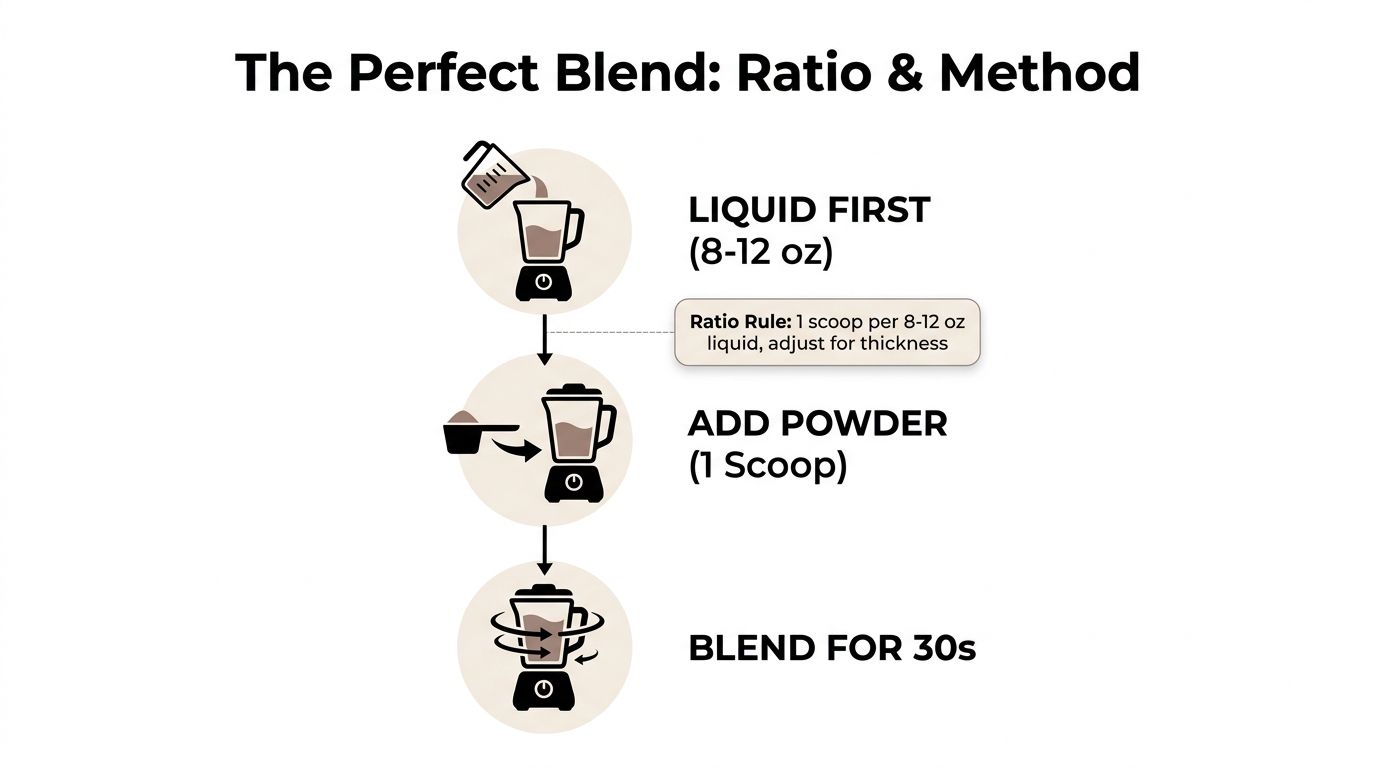
The first morning shake often fails before the blender starts. Too little liquid leaves a paste-like drink, while too much makes the flavor thin. Begin with one scoop of protein powder to roughly 8 to 12 ounces of liquid. Use the lower end for a thicker shake and the higher end for a lighter texture. Powder density differs, so adjust from this starting point rather than treating it as a fixed recipe.
Build from liquid to solids
Pour the liquid into the blender jar or shaker first. Add protein powder next, then soft ingredients such as yogurt, nut butter, banana, or berries. Add ice last in a blender. The liquid reaches the blades or wire whisk before the powder settles on the base and turns into a stubborn paste. This loading order is a simple technique that helps produce the smooth, light mouthfeel found in many ready-to-drink shakes, while keeping ingredient control at home.
For repeatable results, keep the powder amount, liquid, temperature, vessel, mixer speed, blending time, and addition order consistent. Observe wetting time, residue on the container, dry pockets, dispersion, sediment after standing, foam height, and how quickly the foam collapses (protein shake mixing variables and testing guidance). A kitchen does not need laboratory equipment for this method. Change one variable at a time, then keep the adjustment that improves the drink.
Blend a powder-and-liquid shake for about 30 seconds. That usually disperses the powder without whipping unnecessary air into the drink. Frozen fruit, oats, or greens may need more time, so start short and inspect the texture before extending the blend.
The best texture usually comes from enough liquid and a short, controlled blend, not from running the blender until the shake becomes a foam cloud.
Use a shaker bottle for liquid and powder, or a soft addition that dissolves easily. Shake vigorously, then open the lid carefully if air has collected inside. If powder keeps settling, switch to a blender or add a small amount of liquid and shake again. Letting the drink stand briefly can also help before drinking.
Thick mixtures respond well to pulsing. Run short bursts, scrape the sides when needed, and add liquid gradually instead of forcing a dense mixture through the blades. Keep ice and frozen fruit near the end of the loading order so they do not block the powder from reaching the liquid.
Fixing Clumps, Foam, and Gritty Texture
If your shake sits for two minutes and leaves dry powder at the bottom, the problem is usually the loading order or ratio, not a mysterious flaw in the recipe. Texture gives you useful clues. Fix the process first, then decide whether the powder itself needs replacing.
Hard clumps
Powder added before the liquid can hit the container base and form a concentrated paste. Moisture-exposed powder may disperse poorly as well.
Use cold liquid first, add the powder second, and blend or shake immediately. In a shaker bottle, confirm that the mixing ball is inside and the lid seals. A blender gives better control when frozen fruit or oats make the mixture dense. Keep the liquid-to-powder ratio generous enough for the drink to move freely around the blades.
Excessive foam
Foam usually comes from over-blending, aggressive shaking, or a powder with strong foaming behavior. Agglomerates and sedimentation can affect the result too, so the issue does not depend only on whether the powder is whey or plant-based. As noted earlier, protein formulation and these physical behaviors influence how foam forms and settles.
Lower the blender speed and stop as soon as the powder disperses. Avoid carbonated liquids. Let the shake rest briefly, giving the foam time to collapse, then pour it down the side of the glass rather than creating another frothy layer. This technique helps reproduce the smoother, lighter mouthfeel associated with ready-to-drink products while keeping your ingredients under control.
Gritty or overly thick texture
A dense shake often contains too much powder for its liquid, coarse plant ingredients, or frozen fruit and ice doing most of the thickening. Insufficient blending and moisture in the powder can also leave a sandy finish.
Add liquid in small amounts and pulse until the mixture loosens. For plant protein, use a blender rather than relying on a shaker bottle. If the grit remains after the ratio and method are corrected, change the powder instead of covering the texture with extra sweetener.
Run a simple controlled test before discarding ingredients. Keep the liquid, temperature, vessel, and blend time unchanged, then switch only the powder. Improvement points to the original formulation. If every version fails, revisit the liquid-first order, the ratio, and the amount of air introduced during mixing.
Shake Recipes for Weight Management, Recovery, and Kids
The same technique supports different goals, but the add-ins should serve the situation. A weight-management shake needs volume and staying power without unnecessary sweetness. A recovery shake benefits from protein alongside a carbohydrate source. A child's shake needs a familiar flavor and a label parents can understand.
A fiber-focused shake for weight management
Blend:
- Liquid: 8 to 12 ounces of water or unsweetened almond milk
- Protein: One scoop of unsweetened or lightly flavored protein powder
- Fruit: A small handful of frozen berries
- Fiber and body: A spoonful of chia seeds or ground flax
- Flavor: Cinnamon, vanilla, or unsweetened cocoa
Frozen berries provide flavor and volume without relying on added sugar. Chia or flax thickens the drink and contributes fiber, but add more liquid if the shake becomes difficult to pour. This type of shake works best as a planned breakfast or snack, not as permission to ignore hunger signals.
A post-workout recovery build
Use a dairy or soy base when you want a fuller texture, then add:
- Protein: One scoop of a powder that mixes smoothly
- Carbohydrate: A banana or oats
- Flavor: Cocoa, cinnamon, or coffee
- Texture: Ice added after the liquid and powder
The carbohydrate component makes this more substantial than a powder-and-water drink. If you prefer a lighter result after training, use water and fruit rather than stacking milk, oats, nut butter, and ice in one dense blend. The practical target is a shake you can finish comfortably, not the thickest mixture your blender can produce.
A kid-friendly breakfast shake
Blend unsweetened milk or a suitable allergen-free alternative with a neutral or chocolate protein powder, frozen banana, oats, and a little unsweetened cocoa. Banana supplies natural sweetness and a creamy texture, while cocoa makes the flavor familiar without needing syrups. Keep the ingredient list simple, especially when you're introducing a new powder.
Parents managing selective eating can also consult this fussy eater guide for broader ideas around food acceptance and nutrition routines. For another way to structure a lower-carbohydrate option, see this high-protein, low-carb shake guide.
Taste the shake before adding sweetener. More banana, vanilla, cinnamon, or cocoa may solve the problem without turning the drink into a dessert. If a child has an allergy, intolerance, medical condition, or unusual dietary requirement, choose ingredients with professional guidance rather than relying on a generic recipe.
Timing Your Shakes and Building the Daily Habit
A shake fits best where your routine already has a gap. That might be after training, during a rushed breakfast, or in the afternoon when a full meal isn't practical. It shouldn't crowd out every whole-food meal, since meals provide texture, variety, and nutrients that a liquid blend may not replicate.
For whey formulation, a peer-reviewed review summarizes about 20 to 25 grams per day as providing desired benefits, while intakes above 40 grams per day may increase adverse effects, so dosage deserves personal context rather than automatic escalation (whey protein review). People with kidney or liver conditions, pregnancy, breastfeeding needs, or other medical concerns should ask a qualified clinician about their individual intake.
Use a short preparation checklist:
- Pre-portion powder: Keep serving-sized portions beside your shaker cups.
- Freeze fruit: Store berries or banana pieces in single-serve bags.
- Set out the liquid: Put the measuring cup beside the blender.
- Rinse immediately: A quick rinse prevents powder from drying onto the jar or blades.
- Keep one backup option: Water and powder can cover a rushed morning.
If you're combining shakes with a restricted eating window, this guide to an intermittent fasting protein shake offers additional planning context. Once the ratio and order become automatic, a satisfying shake can take under two minutes to prepare. The aim isn't perfection. It's a repeatable drink you enjoy enough to make consistently.
Maximum Health Products offers clean-label protein options alongside nutrition products for weight management, energy, family wellness, and daily routines. Visit Maximum Health Products to compare protein blends and build a shake routine around the texture and ingredients that suit you.

