


Cold brew is often stronger per ounce, with a typical 16 mg of caffeine per ounce and about 200 mg in a 16-ounce serving. But it isn't automatically stronger per cup, because dilution, ice, and serving size can change the total caffeine you drink.
That gap is where most of the confusion lives. When people ask, is cold brew stronger, they usually mean one thing, but coffee answers with three different ones. A drink can be more concentrated, contain more total caffeine, or taste bolder. Those are not the same result.
What People Actually Mean When They Ask If Cold Brew Is Stronger
A customer walks up to the counter and says, “I want the strong one.” A good barista could reasonably ask, “Strong how?”
That question matters because stronger usually points to one of three things:
- Caffeine per ounce. How much caffeine is packed into each sip.
- Total caffeine per cup. How much caffeine ends up in the whole drink you finish.
- Sensory intensity. How strong it tastes through bitterness, body, aroma, and roast character.
People often blur those together. Cold brew has a reputation for being powerful, so many drinkers assume all three meanings line up. They don't.
Three different kinds of strength
If you pour a small amount of cold brew concentrate, it may be very high in caffeine per ounce. But if a café dilutes that concentrate with water, milk, or melting ice, the final cup may end up less intense than a smaller mug of hot coffee.
Taste adds another layer. Cold brew often tastes smoother, so some people assume it must be weaker. Others taste a dark, heavy cold brew and assume it must contain more caffeine. Both shortcuts can mislead you.
Practical rule: Before you decide whether cold brew is stronger, ask three separate questions. Stronger per sip, stronger for the whole cup, or stronger in flavor?
Why the simple yes-or-no answer fails
This is why coffee conversations get tangled so fast. One person is thinking about concentration. Another is thinking about the amount they drink on the commute. A third is talking about bitterness.
If you hold those apart, the question becomes easier. You can compare cold brew and hot coffee without guessing. You can also avoid the classic surprise of drinking a very smooth cold brew quickly, then realizing it hit much harder than it tasted.
The useful answer isn't vague reassurance. It's a little math, a little extraction science, and one habit that clears up most confusion: look at the serving and ask whether it's ready to drink or still a concentrate.
The Four Variables That Decide Cold Brew Strength
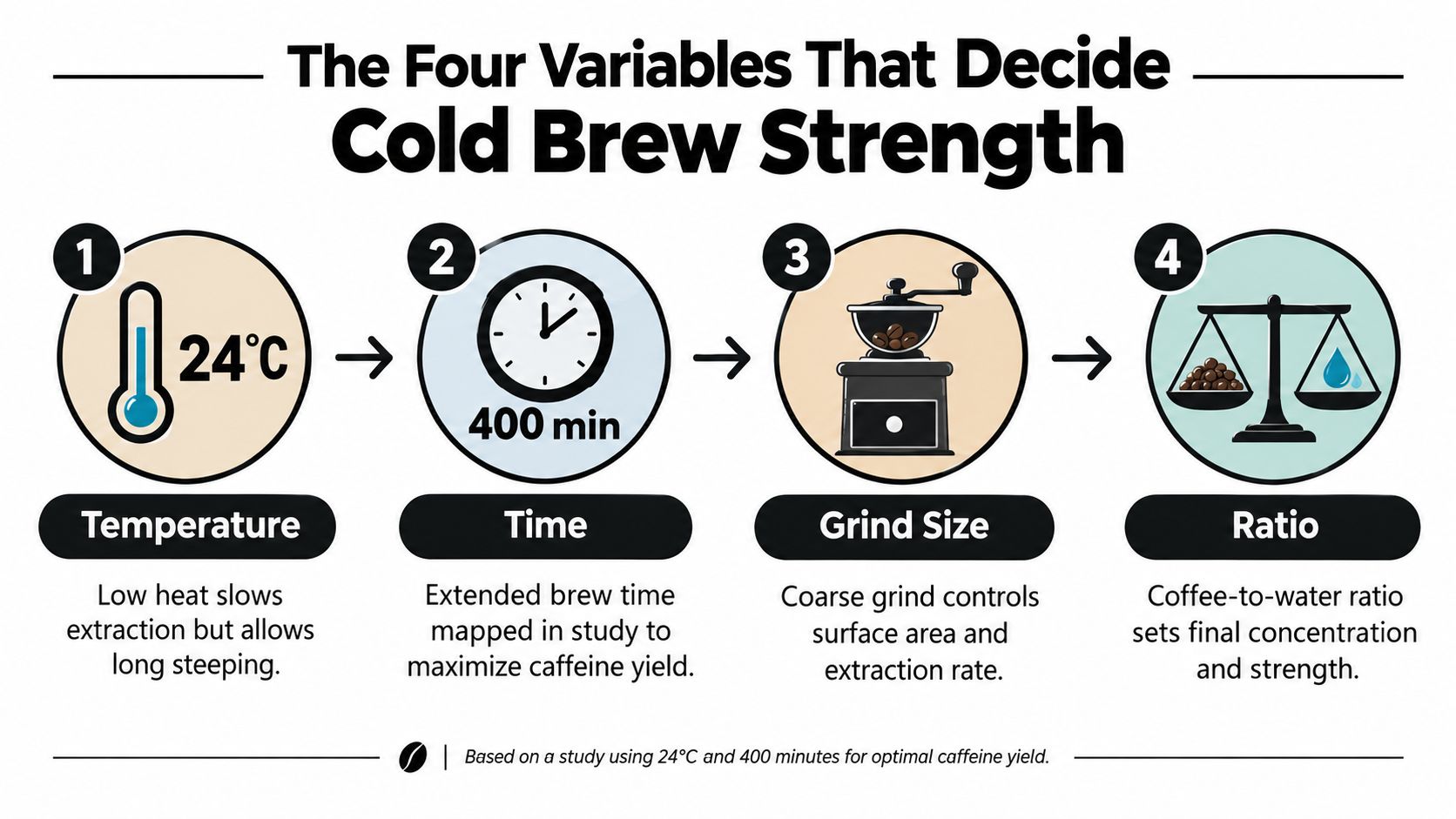
Cold brew doesn't become strong just because the water is cold. Strength comes from a set of brewing choices.
A controlled study on cold extraction found optimized conditions at 24°C, with a 30% coffee-to-water ratio and 400 rpm stirring, producing 3.98 mg/mL caffeine with 93.9% caffeine yield. In that same study, a 595 μm grind reached about 4 mg/mL caffeine, which shows how much extraction depends on the setup, not just the label “cold brew” (controlled cold extraction study).
To make those variables easier to see together, this visual helps:
Featured Product
Maximum Slim Original Green Coffee
Made with green coffee and carefully selected herbal ingredients such as green tea leaf and ginseng root, this unique blend is designed to complement a balanced lifestyle.
Shop Now →Ratio changes everything first
If you remember only one variable, remember ratio. More coffee relative to water means a stronger brew.
Cold brew often starts as a concentrate, so the recipe may use much more coffee relative to water than a standard hot drip. That doesn't guarantee a stronger final drink, because a concentrate may still be diluted before serving. But ratio is usually the first reason cold brew gains its reputation.
Time helps, but only up to a point
Many home recipes tell people to steep for a very long time. That sounds logical. Longer brew, stronger coffee.
But a 2017 study in Scientific Reports found that brewing past about 400 minutes did little to increase caffeine concentration. Most caffeine extraction was reached well before the 10 to 24 hour steep times many people use at home or in cafés (cold brew extraction findings in Scientific Reports).
That means extra hours don't endlessly push caffeine higher. They may affect flavor, but they don't turn an average recipe into a caffeine rocket by themselves.
After those extraction basics, this brewing walkthrough is useful if you want to see the process in action:
Grind size and temperature do the slower work
Grind size controls surface area. Finer grounds expose more coffee to water, which can speed extraction. The study above showed that the finer tested grind reached about 4 mg/mL, which is why grind choice matters even in cold brewing.
Temperature affects speed. Hot water extracts quickly. Cold or room-temperature water extracts slowly, so cold brew trades heat for time. That's why two drinks made from the same beans can land in different places, even before dilution enters the picture.
Cold Brew vs Hot Coffee Caffeine Per Ounce and Per Cup
Is cold brew stronger if one glass is more concentrated, but the other gives you more caffeine by the time you finish it?
That is why "stronger" helps to split into two measurements. First, caffeine per ounce. Second, total caffeine per cup. A third version matters too, but it belongs to taste rather than chemistry: how intense the drink feels on your tongue.
Per ounce, cold brew often comes out ahead. Many ready-to-drink and café cold brews are served as a concentrated beverage or are built from concentrate, so each sip can carry more caffeine than the same sip of standard hot coffee. Per cup, though, the answer gets less tidy. A large mug of drip coffee can match or beat a smaller cold brew once you count the full serving instead of each ounce.
The easiest way to picture it is juice concentrate versus a full glass of juice. The concentrate is stronger ounce for ounce. After water and ice change the serving size, the total amount in the finished drink may end up closer than people expect.
| Brew Method | Typical Ratio | mg per oz | mg per Common Serving |
|---|---|---|---|
| Cold brew ready to drink | Varies by café or brand | Often higher than standard hot coffee per ounce | Often sold with a higher total caffeine load than standard servings |
| Cold brew, typical café serving | Varies | Changes with dilution, ice, and concentrate strength | Can range from moderate to very high depending on how it is poured |
| Standard brewed hot coffee | Varies | Often lower per ounce than cold brew | Can still equal or exceed cold brew in a larger serving |
| Iced coffee | Brewed hot, then chilled | Varies | Often closer to standard brewed coffee than concentrated cold brew |
A menu label rarely tells the whole story.
A cold brew poured from a keg may already be diluted. Another café may pour concentrate over ice and top it with water. A bottled cold brew may be ready to drink at full strength, while a homemade version might be mixed 1:1 before serving. Those are all "cold brew," but they are not the same caffeine experience.
Per ounce and per cup answer different questions
Per ounce asks, "How concentrated is this liquid right now?" Per cup asks, "How much caffeine will I drink if I finish this serving?" Those sound similar, but they can point to different winners.
Say one shop serves 8 ounces of undiluted cold brew and another serves 16 ounces of drip coffee. The cold brew may be stronger sip for sip. The drip coffee may still deliver a similar total caffeine amount because the serving is larger. Serving size acts like the final scorekeeper.
A drink can win on concentration and still lose on total caffeine once the full cup is counted.
That is also why comparisons across caffeinated drinks can get slippery. This guide on matcha caffeine vs coffee uses the same logic. Concentration and total intake are related, but they are not the same number.
The practical rule is simple. Cold brew often wins per ounce. Per cup, the winner depends on the recipe, the dilution, and the size of the drink in your hand.
Why Cold Brew Has Always Been Marketed as Stronger
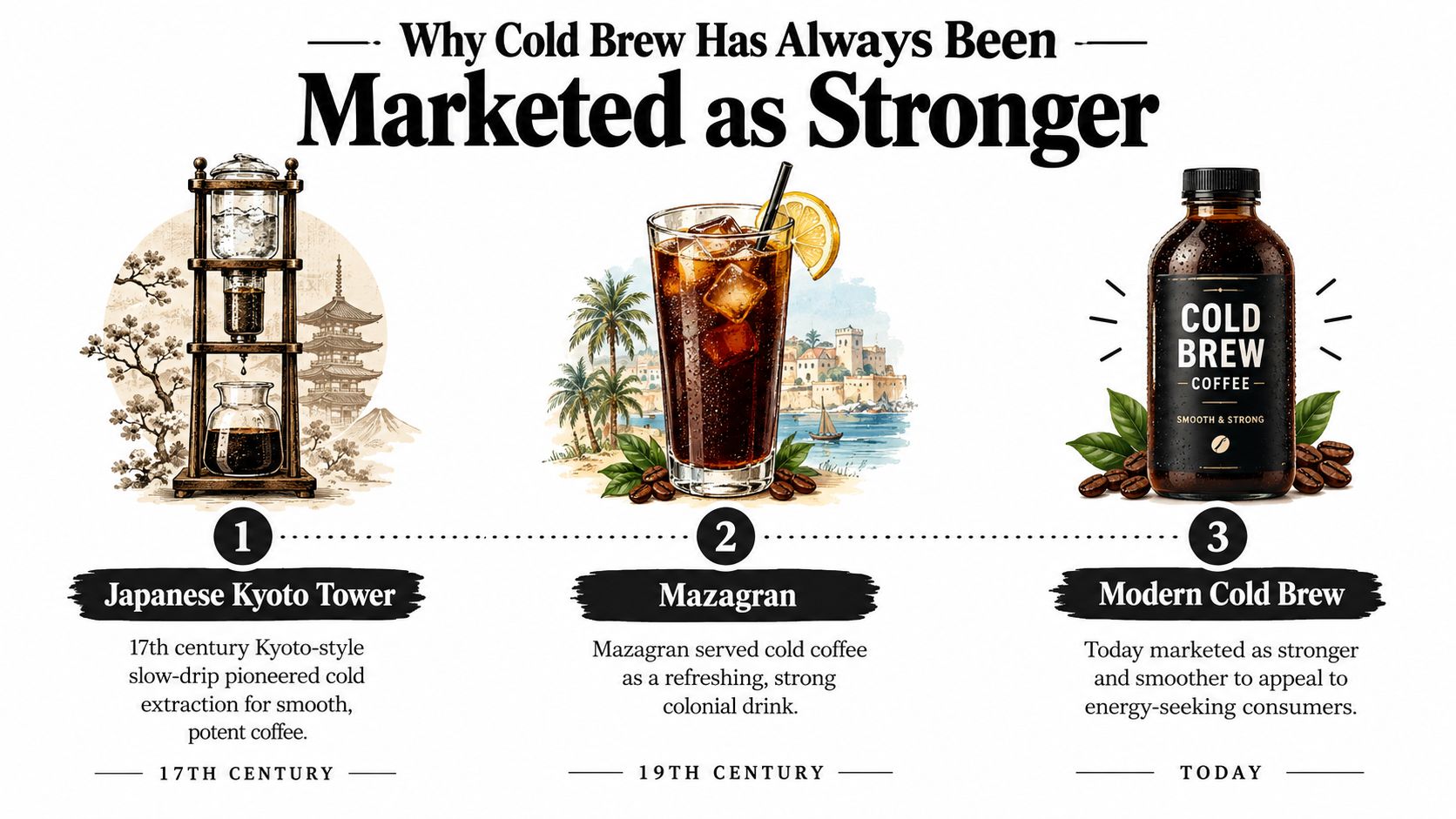
Cold brew's “strong” image didn't start with modern café branding. It grew out of its history as a practical concentrate.
The earliest recorded cold brew use is traced to Kyoto, Japan in the 1600s, where Dutch merchants steeped coffee in cold water as a fire-free, ship-friendly extract. In 1840, French Foreign Legion troops near the Mazagran fortress in Algeria reportedly mixed coffee concentrate with cold water and sugar, creating one of the first documented cold coffee drinks in military history. Cold brew entered wider U.S. commercialization in 1964, when Todd Simpson introduced the Toddy Brewing System after encountering cold brew in Peru (history of cold brew from niche category to global phenomenon).
Concentrate came first, image came later
That pattern matters. Cold brew wasn't originally famous because it tasted trendy. It was valued because it could be made, stored, transported, and then mixed later. Concentrate was the point.
Once concentrate becomes the identity, people begin to equate cold brew with potency. Then menu language does the rest. Words like bold, and intense make the association stronger, even if two cold brews are prepared very differently.
History still shapes the modern menu
Today's drinker often meets cold brew through bottles, taps, and café menus. But the old idea still lingers underneath: this is the stronger coffee.
That isn't always wrong. It just isn't complete. If you're curious how that “functional” framing now shapes coffee more broadly, this piece on functional coffee gives useful context around how coffee gets positioned beyond flavor alone.
Reading a Cold Brew Menu Without Getting Misled
A cold brew menu can look precise while telling you very little. “Bold,” “extra strong,” and “high caffeine” sound informative, but they aren't standardized measurements.
The better question is, what format am I looking at?
Three formats show up most often
| Format | Typical Serving Size | Caffeine Range | Dilution Needed? |
|---|---|---|---|
| Ready-to-drink cold brew | Commonly sold as a single bottle or cup | Often moderate to high, depending on brand | Usually no |
| Cold brew concentrate | Smaller serving because it's meant to be mixed | Often high before dilution | Yes |
| Nitro cold brew | Commonly served from a tap | Can be stronger than expected | Usually no, though serving style varies |
A 2025 pilot study found average caffeine in a 355 mL cold brew concentrate serving was 207.22 ± 39.17 mg, while a 2020 review found caffeine concentrations across hot and cold coffees could be comparable regardless of roast level or brewing temperature. That means some cold brews are stronger than drip coffee, but others aren't, especially once dilution and ice melt enter the picture (pilot data on cold brew concentrate caffeine).
The dilution question changes the answer
If a café uses concentrate, the only useful next question is whether it has already been diluted. A concentrate and a ready-to-drink cold brew can sit beside each other on the same menu and behave like completely different drinks.
Here's the practical habit I recommend:
- Ask whether it's concentrate or ready to drink. That single question clears up most menu confusion.
- Look at cup size with suspicion. A bigger cup may just contain more ice or more dilution.
- Treat marketing words lightly. Bold tells you about branding. It doesn't give you a measurement.
- Ask for the batch style. If caffeine matters for your day, ask how the shop prepares and serves it.
Coffee shop owners think about this from the opposite side too. If you're curious how operators structure drinks, naming, and serving formats, this guide to menu planning for coffee shops offers a useful behind-the-counter view.
When the menu doesn't say concentrate or ready to drink, the strongest-looking item isn't always the most caffeinated one.
Why Smoother Cold Brew Can Feel Deceptively Gentle
Cold brew creates a sensory trap. It can deliver a lot of caffeine while tasting softer than people expect.
That happens because drinkers often use taste as a caffeine detector. Bitter, sharp, aggressive coffee feels “strong.” Smooth coffee feels milder. But those are sensory cues, not direct caffeine measurements.
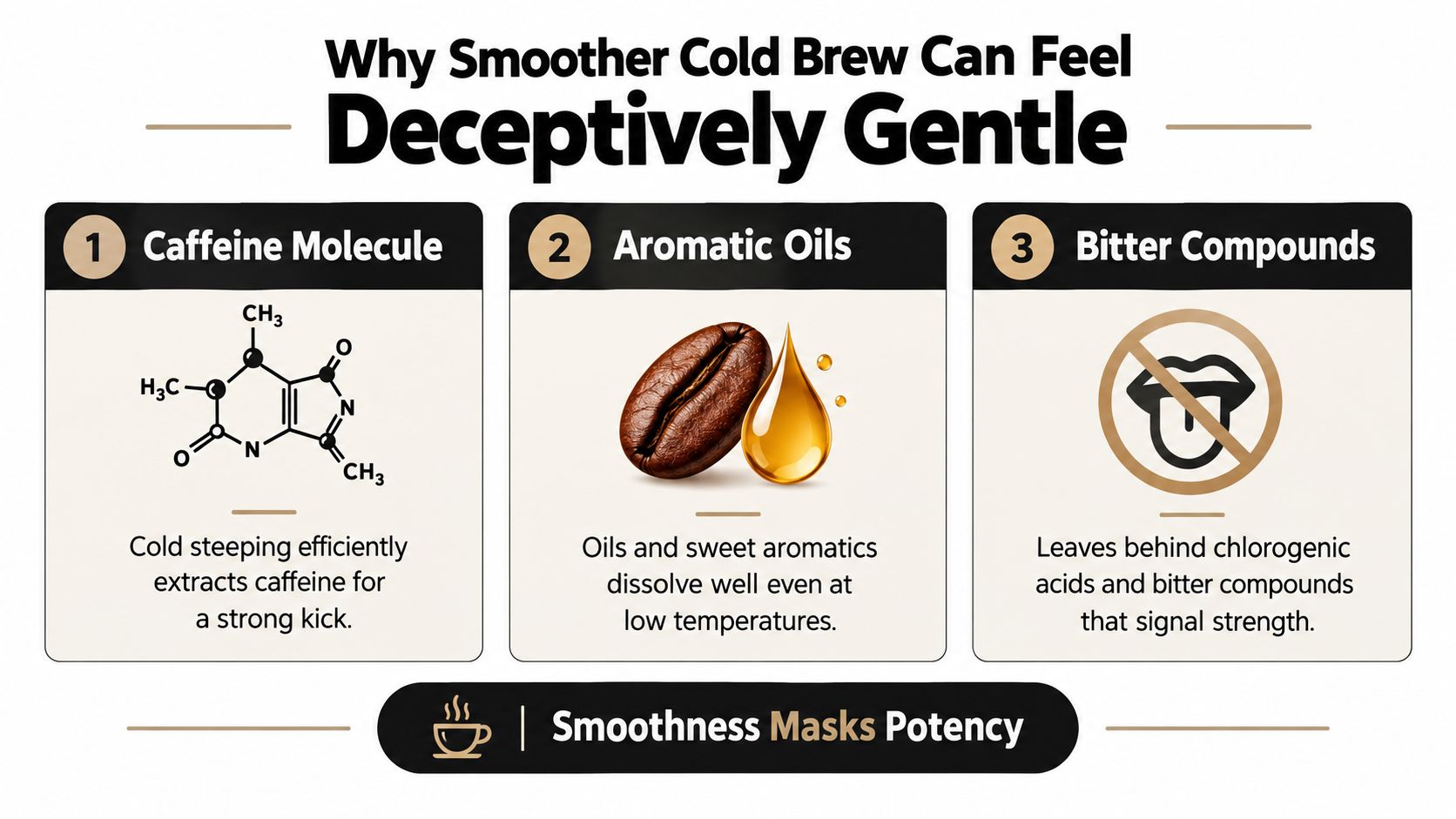
Smoothness and potency can travel together
Recent research adds a modern twist. A 2025 chemistry study found nitro cold brew reached 79.8 mg caffeine per 100 mL, showing that newer nitro and ready-to-drink formats can push caffeine higher than many people expect. The same source notes that market reports project RTD cold brew remains dominant at about 75% of the category in 2025, which it labels as a projection, not a settled present fact (nitro cold brew chemistry and category projection).
A drink like that can still feel easygoing on the palate. Less bite doesn't mean less stimulant.
Why people misread it
Cold brew often tastes rounder and less sharp than hot coffee. That makes it easier to sip quickly, easier to drink in a larger glass, and easier to underestimate.
If acidity is part of your own perception of coffee harshness, this guide on how to reduce acidity of coffee can help separate flavor comfort from caffeine strength.
- Watch volume, not just flavor. A gentle-tasting drink can still deliver a serious dose.
- Be careful with later servings. Smooth cold brew goes down easily in the afternoon, when caffeine may linger longer than you want.
- Use your own response as a clue. If a cold brew feels “easy” but leaves you overstimulated, that mismatch is telling you the flavor was masking the dose.
Stronger Does Not Always Mean Cleaner
People often assume a higher-caffeine cold brew is somehow better. Stronger, cleaner, more premium. That doesn't follow.
A stronger extraction can also carry more of whatever came with the beans and the finished product. In bottled or canned cold brew, that may include added sweeteners or flavor systems. In any coffee, quality starts earlier, with sourcing, storage, and processing.
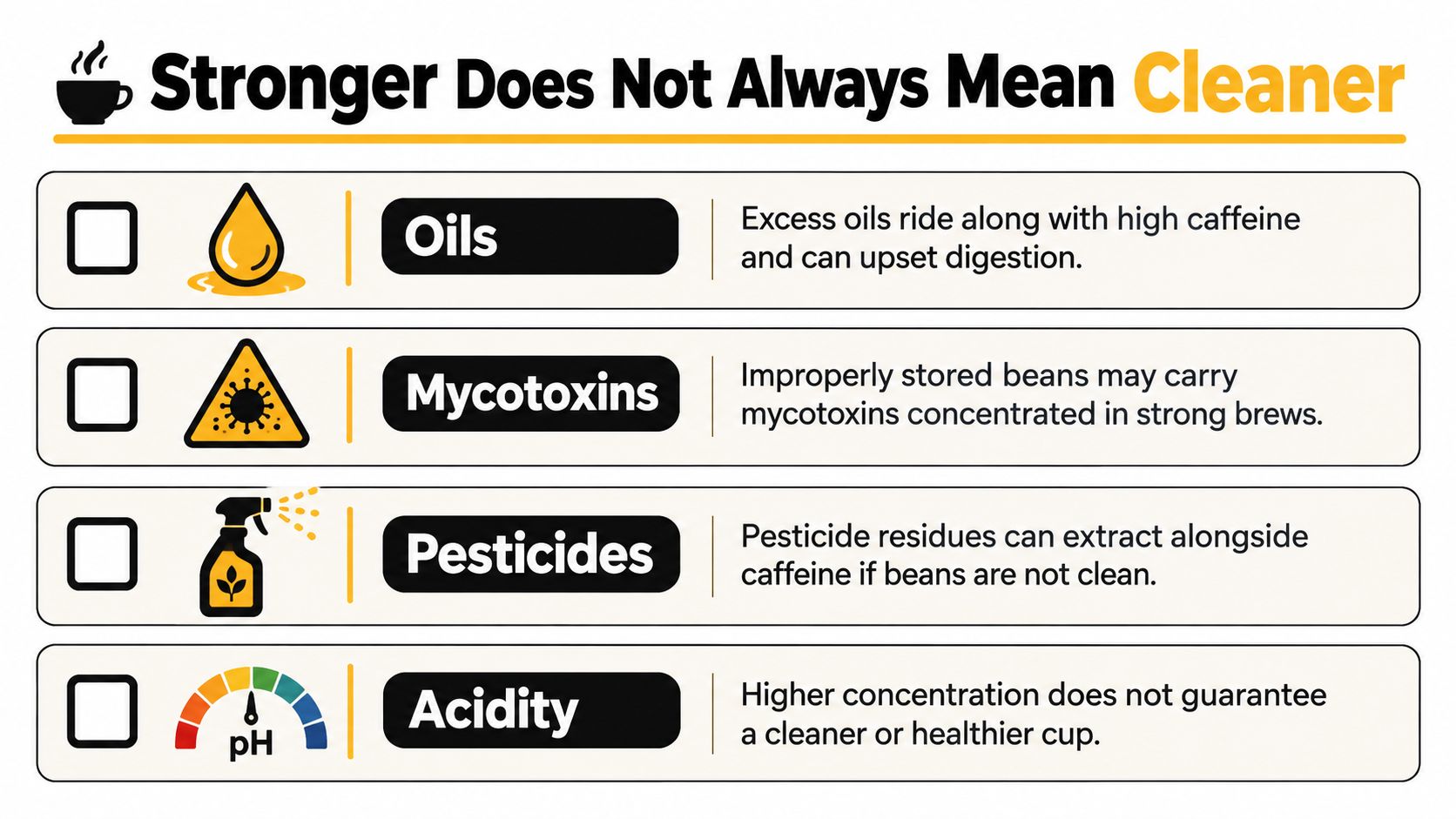
A simple clean-label checklist
When you're choosing a cold brew, these questions are more useful than “How strong is it?” alone:
- Bean transparency matters. Look for clear sourcing information rather than vague coffee descriptions.
- Storage and handling matter too. Coffee quality can drop when beans or brewed coffee are handled poorly.
- Read the full ingredient list. Bottled cold brew can include more than coffee and water.
- Packaging still counts. The container and production process affect the final drink, especially for products meant to sit on shelves.
Strength is not a purity signal
A very intense cold brew may be more concentrated. It doesn't automatically tell you anything about sourcing standards, additives, or ingredient cleanliness.
That's worth remembering because many people use “strong” as a shortcut for “good.” In coffee, those are separate judgments. One describes dose or concentration. The other describes quality.
Choosing the Right Cold Brew Strength for Your Day
The best cold brew isn't the strongest one. It's the one that matches what you're trying to do.
If you want a fast jolt, a concentrate-style drink may make sense. If you want steady focus while you work, a more diluted cold brew is often easier to control. If you mainly want flavor, the smoothness of cold brew can still be enjoyable without chasing the highest dose.
A simple decision table
| Goal | Brew Ratio | Serving Size | Dilution | Estimated Caffeine |
|---|---|---|---|---|
| Quick energy | Concentrate-style | Smaller serving | Little or none | Often higher per ounce |
| Steady daytime sipping | Mid-strength cold brew | Moderate cup | Light dilution if needed | Depends on café or recipe |
| Flavor with gentleness | Lighter cold brew | Smaller to moderate cup | Milk or water to taste | Often easier to manage |
Use this rule tomorrow morning
When you ask, is cold brew stronger, split the question three ways.
Ask what matters most today:
- Do I want more caffeine in each ounce?
- Do I want more total caffeine in the whole cup?
- Do I want a drink that tastes bold, or one that feels smooth?
Strength is a dial you control with ratio, serving size, and dilution. It isn't a fixed property of the words “cold brew.”
That shift is the useful one. Once you stop treating cold brew as one fixed thing, the confusion disappears. You start reading the cup in front of you instead of the reputation around it.
If you care about cleaner energy choices, Maximum Health Products offers coffee, tea, cocoa, and wellness formulas built around simple ingredients and everyday performance. Their approach fits this whole conversation about caffeine because it focuses on energy, clarity, and clean-label standards rather than hype. You can explore their full collection at Maximum Health Products.

