


Organic cocoa powder has a clean, healthful reputation, but the label on the front can hide a harder truth. Organic doesn't automatically mean safer, especially when cadmium is the actual issue sitting in the background.
That matters because cocoa is one of those ingredients people reach for every day, often in smoothies, hot drinks, or protein shakes. If you're choosing it for wellness, you need more than marketing language. You need to know what affects quality, potency, and contamination.
Beyond the Organic Label: The Safety Question That Matters
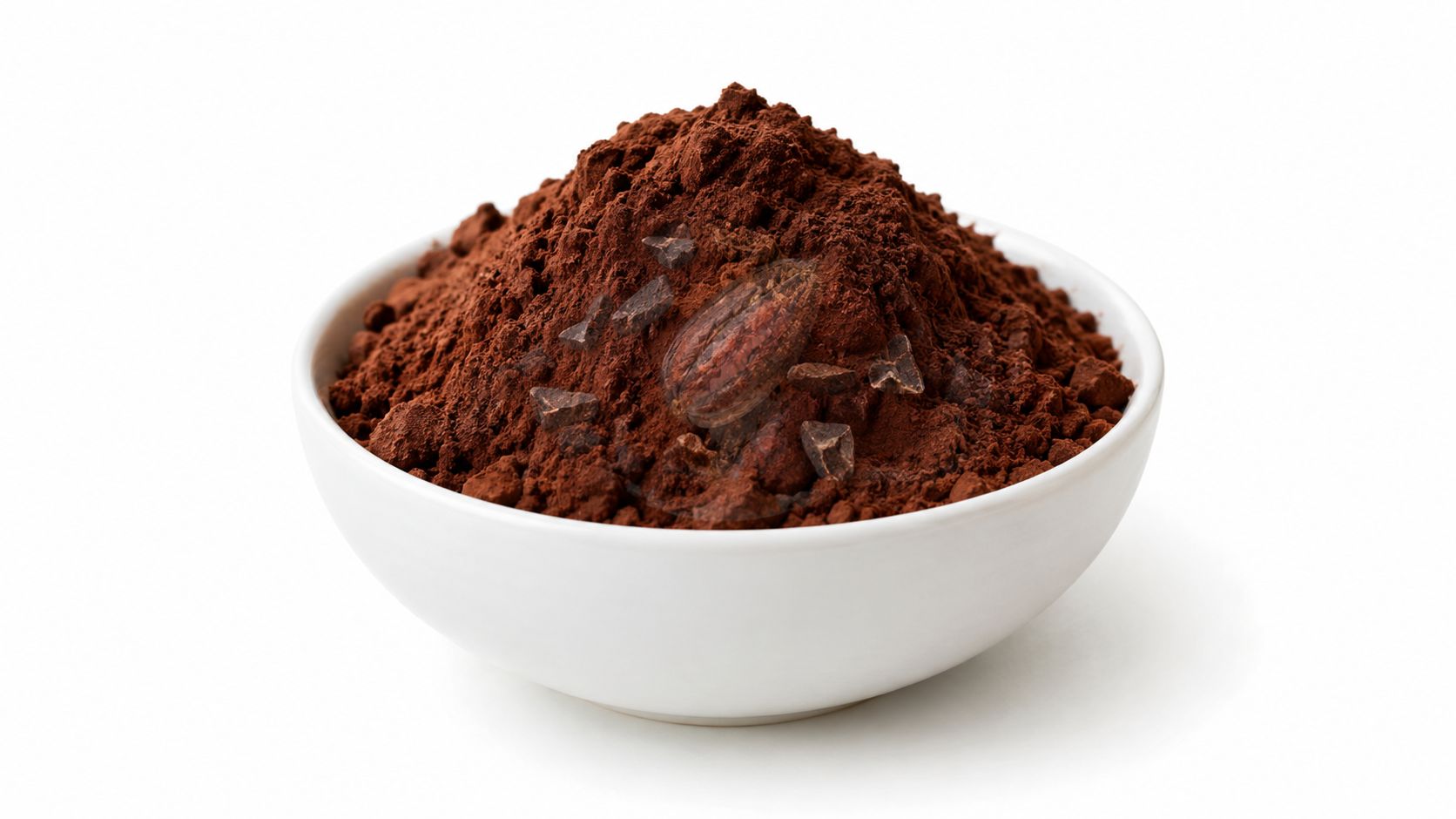
The common mistake is treating organic certification as the same thing as clean testing. A 2024 multi-year analysis of 72 dark chocolate and cocoa products found that neither trade certifications nor the organic label lowered lead, cadmium, or arsenic levels, and organic products were significantly more likely to show higher cadmium and lead concentrations when adjusted per gram (Frontiers in Nutrition study).
That finding matters because contamination does not come from a logo. It comes from soil conditions, growing region, and processing choices. A farmer can follow organic rules carefully and still harvest beans that carry unwanted metals from the ground beneath them.
Practical rule: read the label, but trust the testing.
What deserves your attention
If you buy cocoa for daily use, ask sharper questions than "Is it organic?" Check whether the brand shows third-party testing, where the beans come from, and how the powder is processed. If a company cannot explain those basics clearly, keep shopping.
Third-party testing matters because it checks the product you drink, not just the agricultural story behind it. You can start with this guide to third-party testing if you want to see how that works in practice.
The takeaway is simple. Organic can still be a good choice, but it is not a safety guarantee. For cocoa, the question is whether the product is both traceable and tested.
Understanding Processing Types and Their Impact
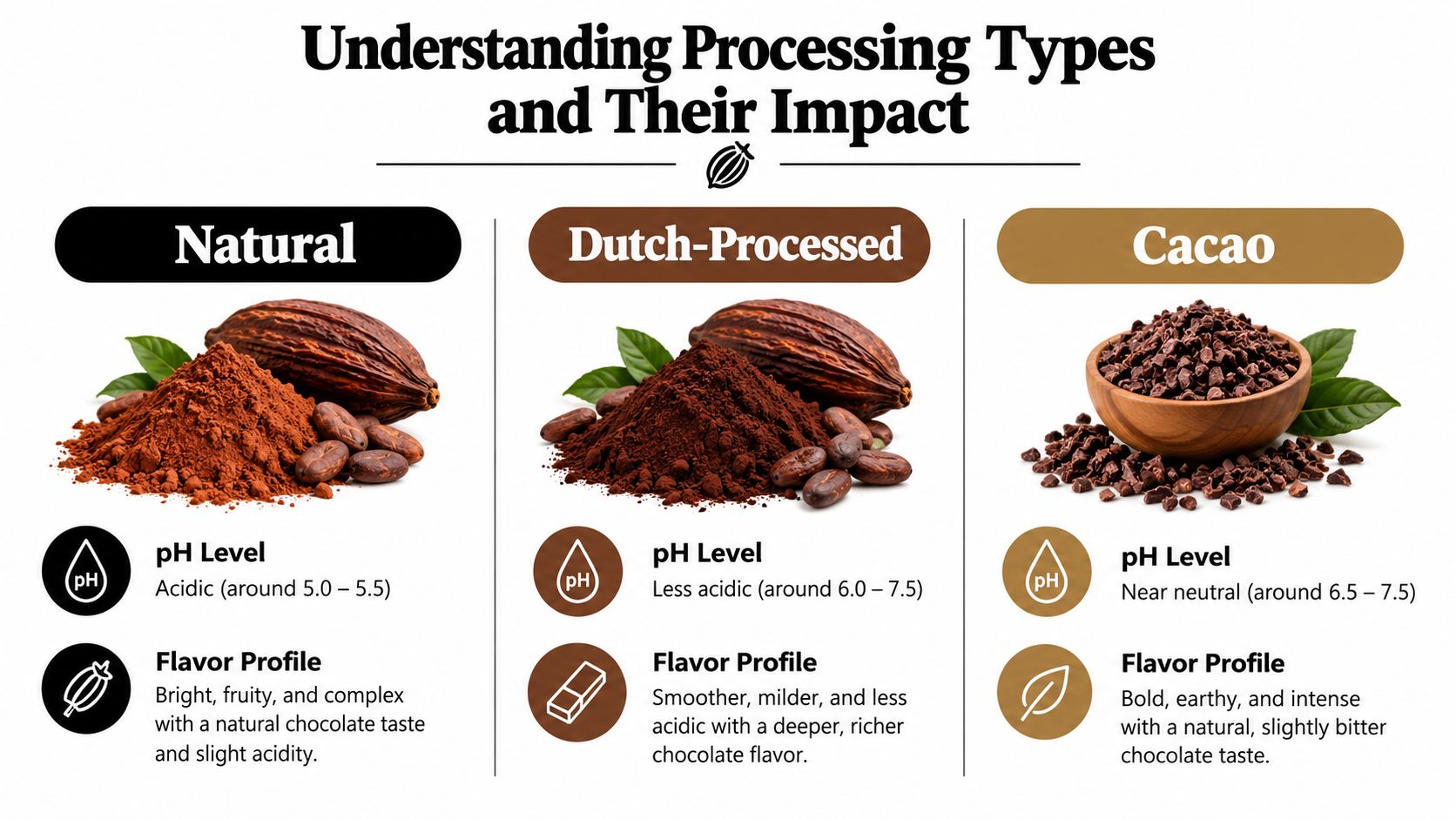
After harvest, the way cocoa is treated shapes its acidity, color, and how much of its original flavanol content survives. The bean may start from the same crop, yet the cup can end up sharp, mellow, earthy, or nearly neutral depending on processing.
Natural, Dutch-processed, and cacao
Natural cocoa keeps more of its acidity. That usually gives it a brighter, more bitter flavor and makes it a good fit when you want a strong cocoa note without much alteration.
Dutch-processed cocoa goes through alkalization. That step softens bitterness and helps it blend more smoothly into drinks and batters, but it can also reduce flavanol retention compared with non-alkalized or minimally processed cocoa (processing reference).
Cacao is usually the least altered option. It often tastes more rustic and earthy, which appeals to people who want a more minimally handled ingredient, even if the flavor feels less dessert-like.
How to choose the right one for the job
Natural cocoa, Dutch-processed cocoa, and cacao serve different purposes. Natural cocoa brings brightness and a stronger cocoa edge, Dutch-processed cocoa gives a smoother drink and deeper color, and cacao suits people who want the ingredient handled as lightly as possible.
A kitchen example makes the difference easier to see. In a morning smoothie, the less bitter option may be easier to drink. In baking, the type of cocoa affects flavor balance and texture, so the choice should match the recipe rather than a health slogan.
For daily use, the better question is simple: do you want the most intensity, the smoothest blend, or the least processing? The right answer depends on how you plan to use it.
The Nutritional Profile Behind the Health Benefits
Defatted organic cocoa often clusters around 10 to 12% fat, roughly 0 g sugars, about 23.5 to 25 g protein, and around 32% fiber per 100 g. That mix explains why cocoa behaves more like a functional pantry ingredient than a simple flavoring.
The balance matters. Fiber and protein help a drink or bowl feel more filling, while very low sugar keeps cocoa easy to fit into routines that limit sweeteners. For people building more protein-forward meals, this protein cocoa powder guide shows how cocoa can fit into that pattern without turning every recipe into dessert.
Cocoa also has a mild stimulant profile that is easy to misunderstand. The guide to cacao theobromine and caffeine is useful here because cocoa's lift is gentler than coffee's and usually feels steadier rather than sharp.
A spoonful of cocoa changes the texture of a smoothie or oat bowl in a practical way. It adds body, depth, and a fuller mouthfeel without depending on sugar to carry the taste. That makes it easier to use in breakfast blends or post-workout shakes, where steadiness matters more than dessert-like sweetness.
Simple coaching tip: use cocoa to support satisfaction, not to replace a real meal.
Its value is plain enough. Fiber, protein, and minimal sugar make cocoa easy to work into daily eating, and that is a bigger reason for its health reputation than the label on the front of the bag.
Culinary Uses and Recipe Applications
Organic cocoa powder is easiest to appreciate when it disappears into a real habit. A scoop in a smoothie, a spoon in oats, or a stir into warm milk can change the whole experience without making the recipe feel heavy. That's where it earns its place in the kitchen.
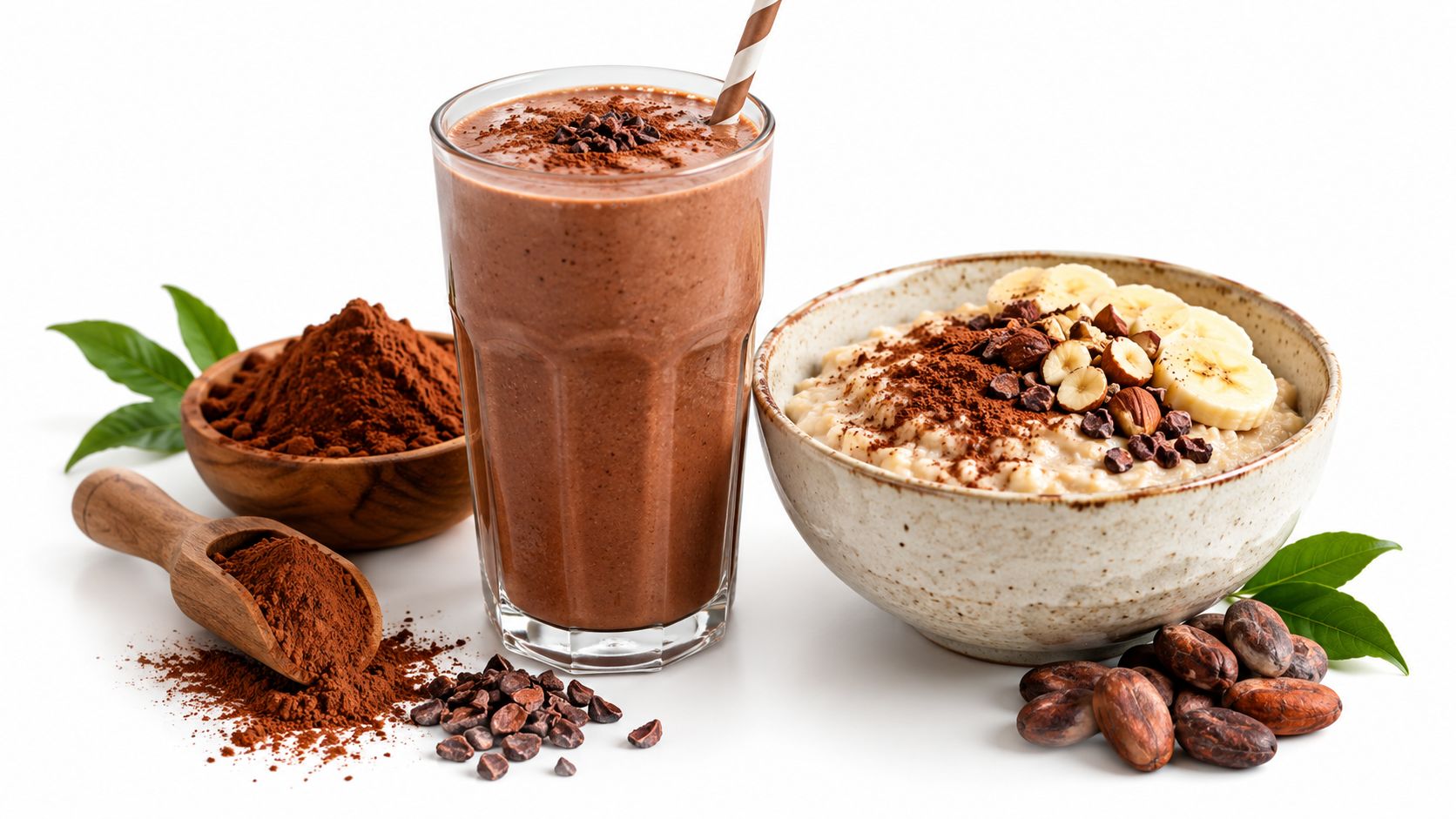
A simple post-workout smoothie is the easiest entry point. Blend cocoa with banana, milk or a dairy-free base, and protein powder, and the result tastes like a treat while still feeling substantial. If you prefer something warmer, cocoa stirred into milk with cinnamon makes a calmer evening drink, especially if you want the mood of hot chocolate without a sugar-heavy packet, and the hot cocoa and sleep guidance gives a helpful frame for thinking about evening use.
Baking is where cocoa becomes more than a beverage ingredient. It deepens brownies, muffins, and protein bites without relying on extra sweetness. A darker, more bitter cocoa usually gives you a stronger chocolate note, while a smoother processed version can round out the flavor in cakes or soft cookies.
A lot of people also like cocoa in coffee. If you're blending a morning drink, the cacao powder in coffee guide offers a practical way to think about balance, because cocoa can soften coffee's edge without drowning it out.
Best everyday move: start with a small amount, taste, then add sweetness only if you still need it.
The easiest recipes are the ones you'll repeat. Cocoa works best when it complements foods you already eat, not when it forces you into a complicated routine.
How to Choose Quality Organic Cocoa Powder
The label can tell you the category, but it won't tell you whether the powder matches your goals. A better buying decision starts with three questions. Where did it come from, how was it processed, and was it tested for heavy metals?
Compare the label, the origin, and the testing
European rules set a maximum level of 0.60 mg/kg for cocoa powder sold to consumers or used in drinking chocolate, while an EFSA-based health benchmark puts the tolerable weekly intake at 2.5 μg/kg body weight (heavy metals reference). That doesn't give shoppers a shortcut, but it does show why origin and bean-shell processing matter so much.
| Factor | What to look for | Why it matters |
|---|---|---|
| USDA Organic | Organic farming standards | Helpful for farming practices, but not a safety guarantee |
| EU Organic | Organic compliance in the EU market | Useful for sourcing transparency, but still not enough on its own |
| Fair Trade | Social and supply-chain claims | Valuable for ethics, not a substitute for contaminant testing |
| Third-party testing | Public heavy-metal or batch test results | This is the clearest check on actual product safety |
| Origin disclosure | Country or region of origin | Soils differ, and cadmium risk can differ with them |
A buyer's checklist that keeps things simple
Start with the product page. If the brand names the origin and shares test results, that is already better than a vague "premium organic" claim. If it doesn't disclose anything beyond the word organic, treat that as a weak signal.
Next, look at the processing description. If you want a smoother drink, Dutch-processed may suit you. If you want a more minimally processed option, look for natural cocoa or cacao. Then decide whether you care more about flavor softness or bioactive retention, because you usually can't maximize both at once.
Choose the brand that explains the product in plain language.
The cleanest purchase is rarely the flashiest one. It's the one that gives you enough information to compare origin, processing, and testing without guessing.
Storage and Optimal Dosage Guidelines
Cocoa stays useful longer when you treat it like a dry pantry staple, not like a spice that can sit open forever. Keep it in an airtight container, away from heat, moisture, and strong odors. That helps preserve flavor and keeps the powder from clumping.
The bigger issue is how much to use. ConsumerLab's review notes that cocoa products may provide modest benefits at roughly 200 to 900 mg of flavanols per day, but many cocoa powders don't disclose flavanol content and some carry cadmium or lead concerns, with two of ten tested cocoa and cacao powders failing for cadmium (ConsumerLab review).
Use a rotation mindset
If you drink cocoa daily, don't lock yourself into one unknown source forever. Rotate between brands that publish testing information, and pay attention to serving size. That way you're not relying on a single supply chain to answer both the potency question and the contaminant question.
For families, pregnant people, and anyone who uses cocoa often, consistency matters more than chasing the strongest-tasting powder. A moderate amount from a tested product is a more reasonable pattern than assuming more cocoa always means more benefit.
Rule of thumb: buy for disclosure, not for hype.
If your product doesn't list flavanol content, you can still use it sensibly. Just treat it as a flavor ingredient with possible wellness upside, not as a precise daily supplement. That keeps expectations realistic and lowers the chance of overdoing intake from a product you can't fully assess.
Incorporating Cocoa into Daily Wellness Routines
Cocoa works best when it has a job. In the morning, it can fit into a breakfast shake or oatmeal. In the afternoon, it can make a snack feel more satisfying. In the evening, it can be part of a warm routine that feels calming without becoming a sugar bomb.
The easiest way to build consistency is to pair cocoa with habits you already keep. Mix it into a protein smoothie after exercise, stir it into yogurt, or add it to a coffee blend when you want something richer than plain coffee. If you're curious about tea-based options, this cocoa puerh tea example shows how cocoa can also fit into a tea ritual instead of only a dessert pattern.
Time it to match the moment
Morning cocoa works well when you want something that feels grounding but not heavy. Afternoon cocoa can help a snack feel more complete, especially if you pair it with protein or fruit. Evening cocoa is best kept simple and unsweetened or lightly sweetened so it supports winding down instead of turning into another treat cycle.
You don't need a complicated system. You need a repeatable one. Once you've chosen a tested product with a clear origin and a processing type that suits your taste, cocoa becomes a flexible tool in your routine rather than another supplement bottle on the counter.
Maximum Health Products offers clean-label wellness options across cocoa, coffee, tea, protein, and support blends, so it's easy to build a simple daily routine around ingredients you already use. If you want to explore functional cocoa and related nutrition products, visit Maximum Health Products and compare the options that fit your taste, timing, and health goals.

