


You're probably standing in the supplement aisle, or scrolling through tubs online, seeing the same promises over and over: organic, clean, lean, plant-based, women's formula, beauty blend. At a glance, they all seem close enough. Pick the one with the prettiest label, right?
Not quite.
If you're looking for an organic protein powder for women, the smartest choice usually isn't the one with the loudest wellness language. It's the one that helps you meet your protein needs, fits your digestion, and gives you evidence of purity that goes beyond the word “organic.” That last part matters more than most shoppers realize.
The Rise of Organic Protein and What Women Must Know
You're standing in front of two tubs. Both say organic. Both use soft green packaging and words like clean, natural, and pure. One may still be the better choice, but not for the reason the label suggests.
Protein powder has become a normal pantry item for far more than gym regulars. It now sits in kitchens used by women who want an easier breakfast, a steadier afternoon, or a practical backup for busy days. That shift helps explain why organic protein powders have gained so much attention. Organic often signals fewer synthetic pesticides and a shorter ingredient list, which sounds reassuring.

The catch is simple. Organic answers one question, not every question.
A common point of confusion is the difference between organic certification and contaminant testing. They are separate checks. Organic standards focus on how ingredients are grown and processed. They do not automatically confirm that the finished powder has been screened for heavy metals or other contaminants at levels a cautious shopper would want to know about.
That distinction matters because protein powders are concentrated products. If the original ingredients absorb contaminants from soil or water, processing can leave you with a more concentrated end product, much like reducing a sauce makes every ingredient in the pot stronger. The organic seal does not erase that risk by itself.
So the smarter view is more nuanced than “organic is better.” Organic can be a useful starting point. It can reflect sourcing preferences and ingredient standards. Purity and safety require another layer of proof, ideally from third-party testing that checks the final product rather than relying on marketing language.
The part most labels don't explain
Many women assume organic should simplify the decision. In reality, it changes the questions you ask.
A strong organic protein powder for women should do three jobs well:
- Provide enough protein to matter: A scoop should make a real contribution to your day, not just sprinkle in a small amount for label appeal.
- Use ingredients you tolerate well: The protein source, gums, flavorings, and sweeteners all affect how the product feels in real life.
- Show evidence of purity: Independent testing helps confirm that “clean” is more than a design choice on the container.
This can feel frustrating at first. You picked up an organic product to make shopping easier, and now you still have to check sourcing, formulation, and testing. But once you separate those categories, labels become far less confusing. Organic tells you part of the story. Verification fills in the part that matters just as much.
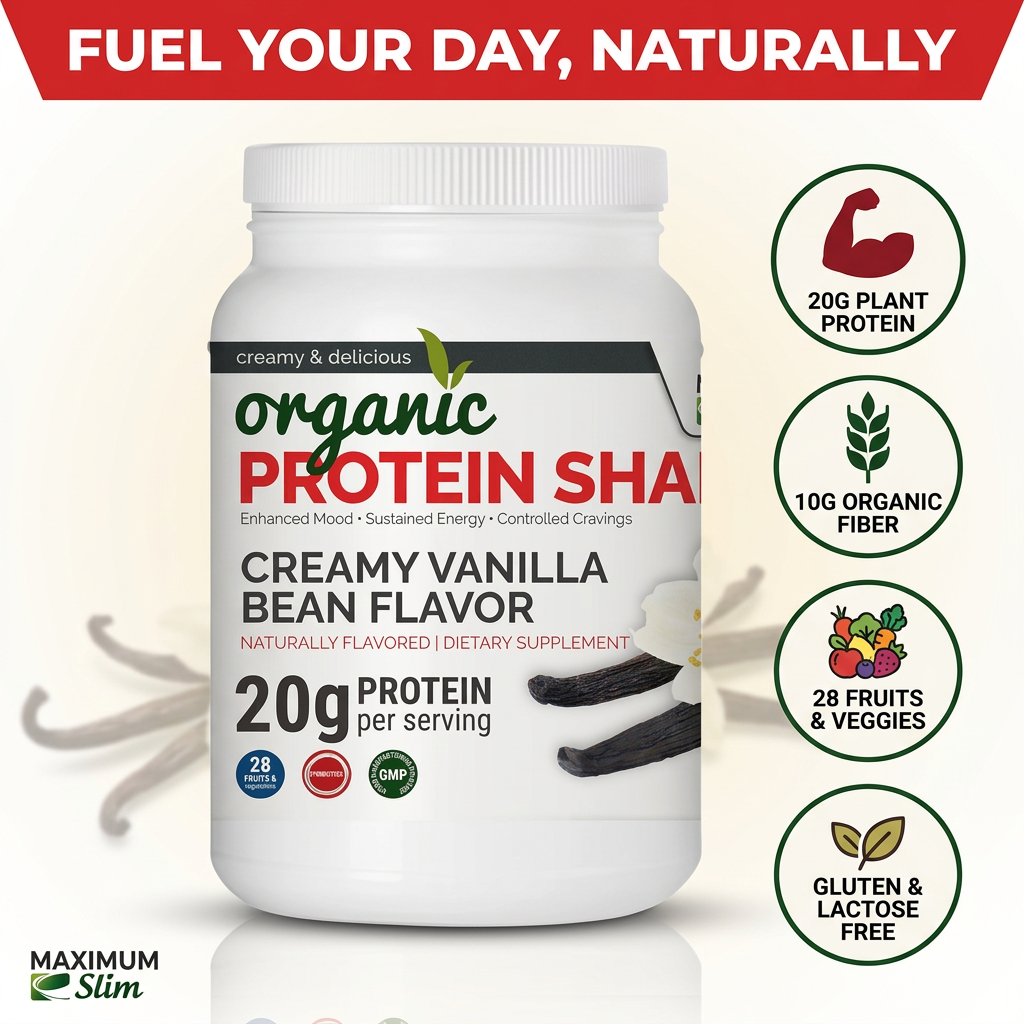
Featured Product
Organic Protein Shake - Maximum Slim | Nutrient Rich Drink for Muscle Recovery
This formula includes a blend of 28 fruits and vegetables and is made to fit a variety of dietary needs.
Shop Now →How Protein Powers a Woman's Health and Goals
Your morning starts with coffee and fruit. Lunch gets pushed back. By 3 p.m., you are searching the pantry and wondering why your energy and appetite feel so hard to manage.
Low protein is often part of that pattern.
Protein helps your body repair tissue, recover from exercise, and stay satisfied after meals. For women, that matters for far more than gym goals. It affects how filling breakfast feels, how well you bounce back from a workout, and how easy it is to meet your nutrition needs on busy days.
A helpful way to view protein is as daily maintenance, not a specialty supplement. Your body uses amino acids from protein the way a home uses basic building materials for regular upkeep. If meals are consistently light on protein, the gap can show up as weaker meal satisfaction, harder recovery, or a diet that feels less steady than it should.
What “enough protein” can look like
The baseline recommendation for adults is 0.8 grams per kilogram of body weight per day, but that number is best understood as a minimum, not always the most useful target for an active woman, an older woman, or someone trying to stay fuller between meals.
That is why meal-level thinking often helps more. A breakfast with almost no protein and a dinner with a large serving does not always feel as good in real life as spreading intake across the day. Many women do better when each meal contains a meaningful protein source, with protein powder filling in the gaps when food routines get rushed or inconsistent.
If your breakfast is toast or fruit and your lunch is unpredictable, a scoop in a smoothie or yogurt bowl can be practical. It gives structure to the day.
Where women often notice the difference
Different goals often improve from the same habit. More consistent protein intake.
- Appetite support: Protein can help meals and snacks feel more substantial, which makes random grazing less tempting.
- Training and recovery: After strength training, long walks, fitness classes, or physically demanding days, protein gives your body the raw material it uses to repair and adapt.
- Healthy aging: Muscle maintenance matters in every adult decade, not only later in life.
- Hair, skin, and nails: Protein supplies building blocks for these tissues, although supplement marketing often stretches this point further than the evidence supports.
One simple checkpoint works well. If a meal contains very little protein, it usually will not keep you satisfied for long.
Why this matters for protein powder choices
Protein powder is useful because it solves a practical problem. It can help you reach a reasonable intake without cooking another meal. But usefulness and quality are not the same thing.
A powder can have plenty of protein and still raise questions about purity. That matters because women are often told to focus on labels like “organic,” while the more important safety question is whether the finished product has been checked for contaminants such as heavy metals. Organic certification speaks to farming and ingredient standards. It does not confirm third-party testing of the final powder.
So if protein powder becomes part of your routine, use it as a convenience tool and judge it like a careful shopper. Check the protein amount per serving, how well you tolerate the ingredients, and whether the brand shows independent verification for purity. For broader meal ideas that support activity and recovery, HYDAWAY's active nutrition tips can complement a protein-first routine.
Decoding Organic Protein Sources for Women
Walk down the aisle and you'll usually see four familiar sources: pea, rice, hemp, and whey. They're not interchangeable. Each behaves a little differently in taste, texture, digestion, and amino acid profile.
The biggest point of confusion is “complete protein.” Many shoppers assume every protein powder gives the same quality of protein. It doesn't.

Why amino acids matter
Think of amino acids like the full set of materials needed to finish a job. If one key piece is missing, the body can't use that protein as effectively as it could.
For organic plant protein powder, a strong quality marker is a complete amino-acid profile built from complementary sources. The Nature's Plus overview of protein powder benefits explains that blends such as pea and rice can provide all nine essential amino acids when properly formulated.
That's why blended plant proteins often make more sense than a single-source formula.
Organic Protein Source Comparison
| Protein Source | Key Benefit | Amino Acid Profile | Best For |
|---|---|---|---|
| Pea | Often well tolerated and popular in plant formulas | Better when paired with a complementary plant source | Women who want a plant-based base with a smooth shake format |
| Rice | Gentle option often used in blends | Better when combined with another plant protein | Women who want a lighter-tasting plant blend |
| Hemp | Adds a more earthy whole-food feel | May need blending support for a more complete profile | Women who like less processed, seed-based formulas |
| Whey | Naturally complete protein | Complete | Women who tolerate dairy well and want a classic fast-mixing option |
How to read the front label with more confidence
If a brand says “plant protein,” turn the tub around. Don't stop at the front-of-package claims.
Look for clues like these:
- Single-source plant protein: This isn't automatically poor quality, but it deserves a closer look.
- Blended plant proteins: Pea plus rice is often easier to trust from an amino-acid standpoint than a lone source.
- Organic whey: This may suit women who digest dairy well and prefer a complete animal-based protein.
- Hemp-heavy formulas: These can appeal to women who value a less refined, more earthy ingredient profile.
A lot of food confusion starts when people assume oils, seeds, and “superfoods” contribute much more protein than they provide. If you've ever wondered about plant-food myths, this short explainer on the truth about olive oil protein is a good reminder that not every health food meaningfully boosts protein intake.
For a broader breakdown of categories and formulas, this guide to different protein powders can help you compare labels more practically.
The best plant formula usually isn't the one with the longest ingredient list. It's the one with a thoughtful blend that solves a real amino-acid gap.
Your Smart Shopper Checklist for Protein Powder
Once you know the source, the next question is whether the product is well made. For this, smart shopping beats branding.

A helpful rule is to judge a protein powder the way you'd judge any packaged food: by what it delivers, what it includes, and what the company is willing to verify.
Five things worth checking every time
- Protein that fits a real meal goal: If you're using it to support breakfast, recovery, or a snack, the serving should contribute meaningfully toward your intake target.
- A short ingredient list: Fewer extras usually means fewer opportunities for fillers, gums, or flavor systems you don't want.
- Clear protein source information: You should know whether it's whey, pea, rice, hemp, or a blend.
- Sweeteners you tolerate: “Natural” doesn't always mean comfortable for digestion.
- Evidence of testing: This is the checkpoint many shoppers skip.
The most important quality benchmark is choosing an organic powder with minimal additives and third-party testing for contaminants. The guidance in Healf's article on organic protein powder emphasizes this dual standard because organic certification may reduce exposure to pesticides and artificial ingredients, but independent testing is what helps verify low levels of heavy metals and other unwanted substances.
What third-party testing does that an organic seal does not
Organic certification tells you something about how ingredients were grown or handled. Third-party testing tells you whether a finished product has been checked for what you don't want in the tub.
That distinction matters.
Here's a useful video overview to keep in mind while you compare labels:
A quick label-reading routine
When you pick up a tub, ask:
- Is the protein source obvious?
- Is the ingredient list readable without a chemistry degree?
- Is there mention of third-party testing or certification?
- Does the product avoid unnecessary extras for your needs?
- Would you use this consistently?
If you want another reference point for what clean-label criteria can look like in practice, this guide to the best clean protein powder is worth reviewing.
Practical rule: Don't let “organic” end your evaluation. Let it start it.
Integrating Protein Powder Into Your Daily Routine
The best protein powder is the one you'll use in a way that helps your day. For most women, that means convenience first. If it takes a blender, seven ingredients, and perfect motivation, it probably won't become a habit.
Where protein powder fits best
A shake works well when a meal is rushed, when you need post-workout support, or when a snack needs more staying power. It can also be stirred into foods you already eat, like oatmeal, yogurt, or a smoothie bowl.
A few common use cases:
- After exercise: Helpful when you want an easy meal bridge until your next full meal.
- At breakfast: Useful if mornings are light on protein.
- In the afternoon: Can take the edge off the late-day crash that often leads to random snacking.
- On non-workout days: Still useful if your meals are inconsistent or low in protein.
Timing matters less than consistency
Women often overthink this part. Yes, post-workout protein can be convenient. But if the rest of the day is low in protein, one perfectly timed shake won't fix the bigger pattern.
A better question is, “Where do I regularly fall short?” That's where protein powder belongs.
If breakfast is your weakest meal, use protein there first. If recovery is the issue, use it after training. Match the powder to the gap.
How to keep it sustainable
You don't need to turn every shake into a meal replacement. Sometimes the smartest use is just adding a scoop to something you already enjoy.
Try these simple habits:
- Keep a scoop routine: Same time, same shaker, less decision fatigue.
- Pair with real food when needed: Fruit, oats, nut butter, or yogurt can make it more balanced.
- Start simple: Water, milk, or a dairy-free base is enough.
- Adjust based on digestion: If a full scoop feels heavy, split it across the day.
This also answers another common concern. Yes, you can use protein powder even when you don't work out. Protein supports daily nutrition, not just exercise days. The key is using it to support your overall intake rather than treating it like a shortcut that replaces balanced meals.
Simple Recipes and Important Safety Considerations
A protein powder has to work in real life. If it only tastes acceptable in one complicated smoothie, it's not going to stay in your routine for long.
Here are a few easy ways to use it without turning your kitchen into a supplement lab.
Three simple ways to use it
Creamy berry breakfast shake
Blend protein powder with berries, your milk of choice, and ice. If you want it more filling, add oats or yogurt.
Chocolate banana afternoon snack
Blend protein powder, banana, milk or water, and ice. This works well when you want something that feels like a treat but still helps with satiety.
Vanilla cinnamon oats
Stir protein powder into cooked oats once they've cooled slightly. Add cinnamon and fruit on top. This is great for women who don't want another shake.
If you want more kitchen-friendly ideas beyond smoothies, these easy high-protein meals can help you use protein powder in regular food instead of only drinks.
Common side effects women ask about
The most frequent complaint is bloating. That can happen for several reasons: the protein source, the sweetener, the gums and thickeners, or using too much too fast.
A few ways to troubleshoot:
- Try a different protein source: Some women do better with blended plant proteins. Others feel better with whey isolate if they tolerate dairy.
- Check the extras: Sweeteners and additives can be the main issue, not the protein itself.
- Use a smaller serving first: Let your digestion adapt.
- Change the liquid base: Sometimes the mix-in matters as much as the powder.
Important safety reminders
Protein powder is a supplement, not a mandatory food. If you're pregnant, breastfeeding, managing kidney concerns, or taking medication that affects your nutrition plan, talk with your clinician before adding it regularly.
That isn't fear-based advice. It's just sensible.
You should also stop using a product if it causes persistent digestive discomfort, headaches, or a strong aversion that makes you dread taking it. A powder that looks ideal on paper but doesn't agree with you isn't the right fit.
For more drink ideas that can make the habit easier to keep, this collection of protein powder shakes offers simple combinations that don't require complicated prep.
The safest long-term choice is usually the one with a clean formula, clear sourcing, and a routine your body tolerates well.
The Maximum Health Standard for Clean Organic Protein
You are standing in the supplement aisle, holding two tubs that both say organic. One has polished branding and trendy promises. The other gives you a clear ingredient list, a straightforward protein source, and proof that someone outside the company checked the product. For a daily supplement, the second standard is the one that deserves your attention.
By this point, the smart choice should feel simpler. A strong organic protein powder for women needs to do four jobs well: provide enough protein to matter, use a protein source with a useful amino acid profile, keep the formula simple, and show clear evidence that the brand takes quality control seriously.

What a higher standard looks like
A label can tell you what a brand wants you to notice. A better screen tells you what matters.
Use this short filter:
- Protein quality: The source should fit your needs, whether that means a complete protein or a thoughtful plant blend.
- Formula simplicity: Fewer extras often means fewer opportunities for digestive issues and less label clutter.
- Clear transparency: You should be able to understand the ingredients without digging through vague marketing copy.
- Independent verification: If a brand talks about being clean, it should be willing to show outside testing or meaningful certification.
Educated shoppers should use that filter with every product, especially ones marketed with words like “lean,” “tone,” “glow,” or “detox.” Those terms sell an image. They do not tell you much about amino acids, digestibility, or quality checks.
Why this matters in real life
Protein powder is not just a purchase. It is something many women use several times a week, sometimes daily. That makes trust more than a branding issue. It is a routine exposure issue.
A practical question helps cut through the noise: would you feel comfortable using this product often based on what the brand shows you, not just what it claims?
The Good Trade's review of protein powders for women reflects the kind of consumer guidance many health-conscious shoppers are now using. They are looking beyond buzzwords and paying closer attention to formula quality, ingredient clarity, and signs that a company takes product standards seriously.
Maximum Health Products aligns with that cleaner-label approach by focusing on formulas without preservatives, artificial colors or flavors, added sugars, soy, gluten, fillers, or animal products. That philosophy will not replace careful label reading, but it does give shoppers a clearer starting point.
If choosing an organic protein powder has felt confusing, that reaction makes sense. The category often rewards marketing more than clarity. Your best next step is simple: choose the product that makes quality easiest to verify.

