


Many still treat the post workout protein shake like a race against the clock. Finish your last set, count to 30, and chug protein before the so-called anabolic window slams shut. The science is more forgiving than that, and that matters because a smarter shake works around your real life, your training style, and what you already ate earlier in the day.
The better question is not, “How fast can I drink it?” It's, “How much protein do I need, what else should be in the shake, and does this workout call for recovery, refueling, or just a simple top-up?” That shift takes the pressure off timing and puts the focus on total daily protein, ingredient quality, and your actual goal.
If you want a practical overview of the bigger recovery picture, Lola's guide to workout recovery pairs well with the approach here. A good shake is one tool in a larger routine, not the whole routine.
Featured Product
Organic Protein Shake - Maximum Slim
Each serving provides 20g of organic plant-based protein and 10g of organic fiber, making it a convenient option for smoothies, shakes, and meal replacement support.
Shop Now →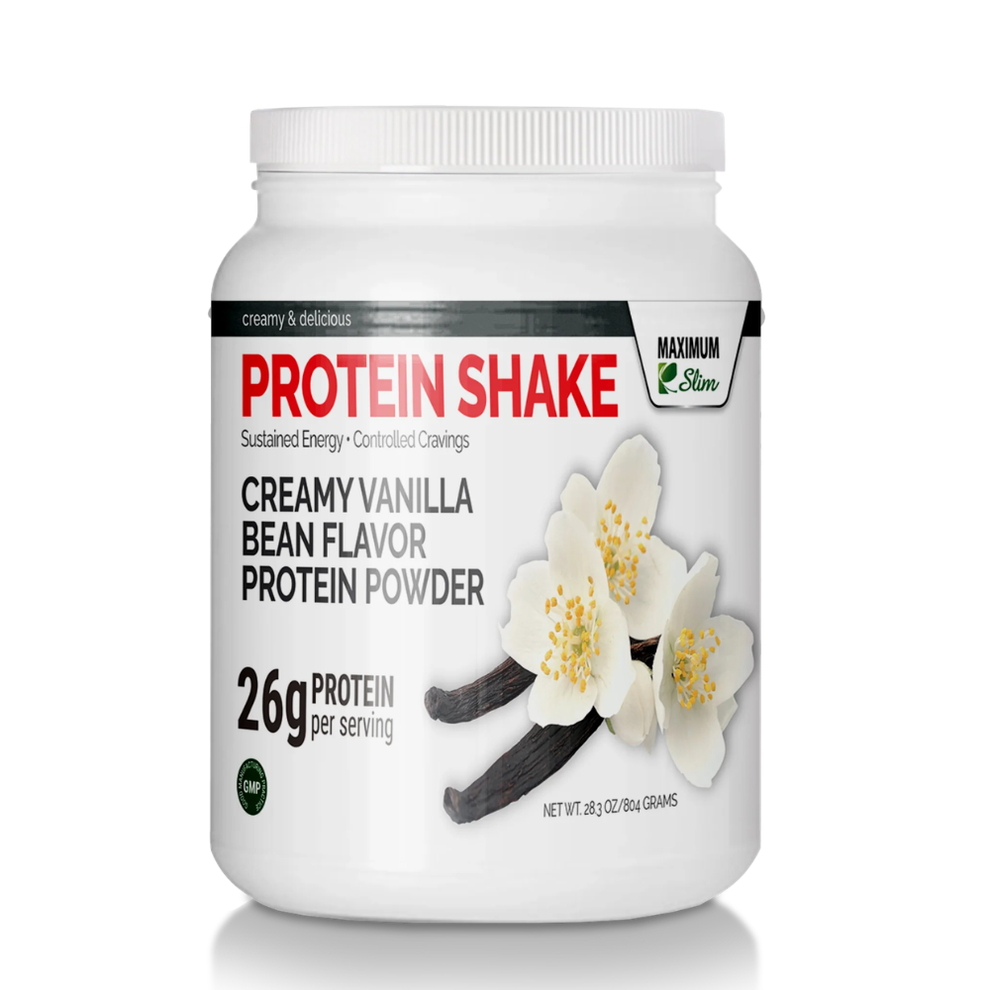
Rethinking Your Post Workout Shake
The old rule said you had to drink protein within 30 minutes of training or you'd waste the workout. That idea is too rigid. Controlled research comparing protein taken before versus after exercise found no meaningful difference in body composition or strength over a 10 week period (source), and later summaries suggest that protein within about 1 hour can help, but it is not required if your daily intake is already on track.
Timing matters, but not in the way gym myths suggest
A more useful rule is simple. If you already ate a protein-rich meal in the prior 2–3 hours, an immediate shake is less urgent. If you did not, getting protein within about 1–2 hours after training is a sensible habit, especially when it helps you stay consistent (source).
Practical rule: do not trade good daily nutrition for perfect shake timing.
Many people get stuck on the clock and miss the bigger picture. They focus on the post-workout window, then fall short on protein across the rest of the day. Research reviews keep pointing back to total daily protein intake as the main driver of adaptation, while the post-exercise window works as a flexible support rather than a narrow deadline (source).
The smarter mindset is to use your shake as a tool that fits your schedule. If you trained before work, it may be your easiest breakfast. If you trained after dinner, your protein needs may already be covered.
What the shake should solve
A post workout protein shake can do different jobs depending on the day. It can be a quick recovery option after lifting, a more complete refuel after endurance work, or a lower-calorie way to steady appetite when weight management is the goal.
If you want a closer look at the building blocks, Maximum Health Products has a practical amino acid guide for muscle recovery that helps explain why the protein source matters, not just the timing. For a broader recovery context, Lola's guide to workout recovery fits well with this approach. The goal is not to turn every shake into a formula. It is to make the shake match the work you just did.
The Science of Post Workout Nutrition
Muscle does not grow because protein arrives at a perfect minute. It grows because training gives the body a reason to adapt, and protein supplies the building material for that response. A practical way to frame the research is that many resistance-training reviews place a useful per-meal range at 0.25 to 0.40 g/kg of body weight, which often lands around 20–40 g for many adults. For a person around 80 kg, that usually means roughly 20–24 g, and other summaries describe 25–40 g as a workable evidence-based range for supporting acute muscle protein synthesis.
Why dose beats the stopwatch
The body responds to how much amino acid you give it, much like a construction crew needs enough bricks before it can start building. A tiny sip of protein is not the same as a properly dosed shake. Research summaries also show that protein taken before and/or after training can raise muscle protein synthesis, while the post-exercise window is flexible and total daily intake remains the main driver (source).
A useful way to think about it is direct. If your shake is too small, it may not provide a strong recovery signal. If it is oversized, it can add calories your day does not need.
Simple benchmark: for many lifters, 25–30 g of whey is a strong starting point, with 2.5–3 g leucine often cited as part of the trigger range for an effective anabolic response (source).
How body weight changes the target
Fixed scoop sizes can be misleading. A smaller athlete and a larger athlete do not need the same amount, so the body-weight-based range is more useful than a generic “one scoop” rule.
If someone weighs 80 kg, the practical recovery target may land around 20–32 g of protein in the shake, depending on the day and the rest of the diet (source). That range is wide enough to stay realistic and narrow enough to act on.
For a reader who wants more context on the amino acid side of recovery, the article on what vegan athletes should eat post-workout is a useful companion because it shows how recovery can come from different food patterns, not just one type of shake.
What leucine actually does
Leucine helps switch on muscle-building signals. It is not the only amino acid that matters, but it is one of the clearest markers that a protein source is likely to support recovery. That is one reason whey appears so often in shake recipes, and one reason some plant-based formulas are designed to improve their amino acid profile.
A shake does not need to be complicated to work. It needs enough protein, a useful amino acid profile, and ingredients that fit the training demand. If you want a closer look at the building blocks, a practical amino acid guide for muscle recovery can help explain why the protein source matters as much as the serving size. Everything else is customization.
Building Your Perfect Protein Shake From Scratch
The easiest way to build a smarter shake is to treat it like a template. Start with protein, decide whether you need carbs, then add fats only if they serve your goal. That order keeps the shake useful instead of random.
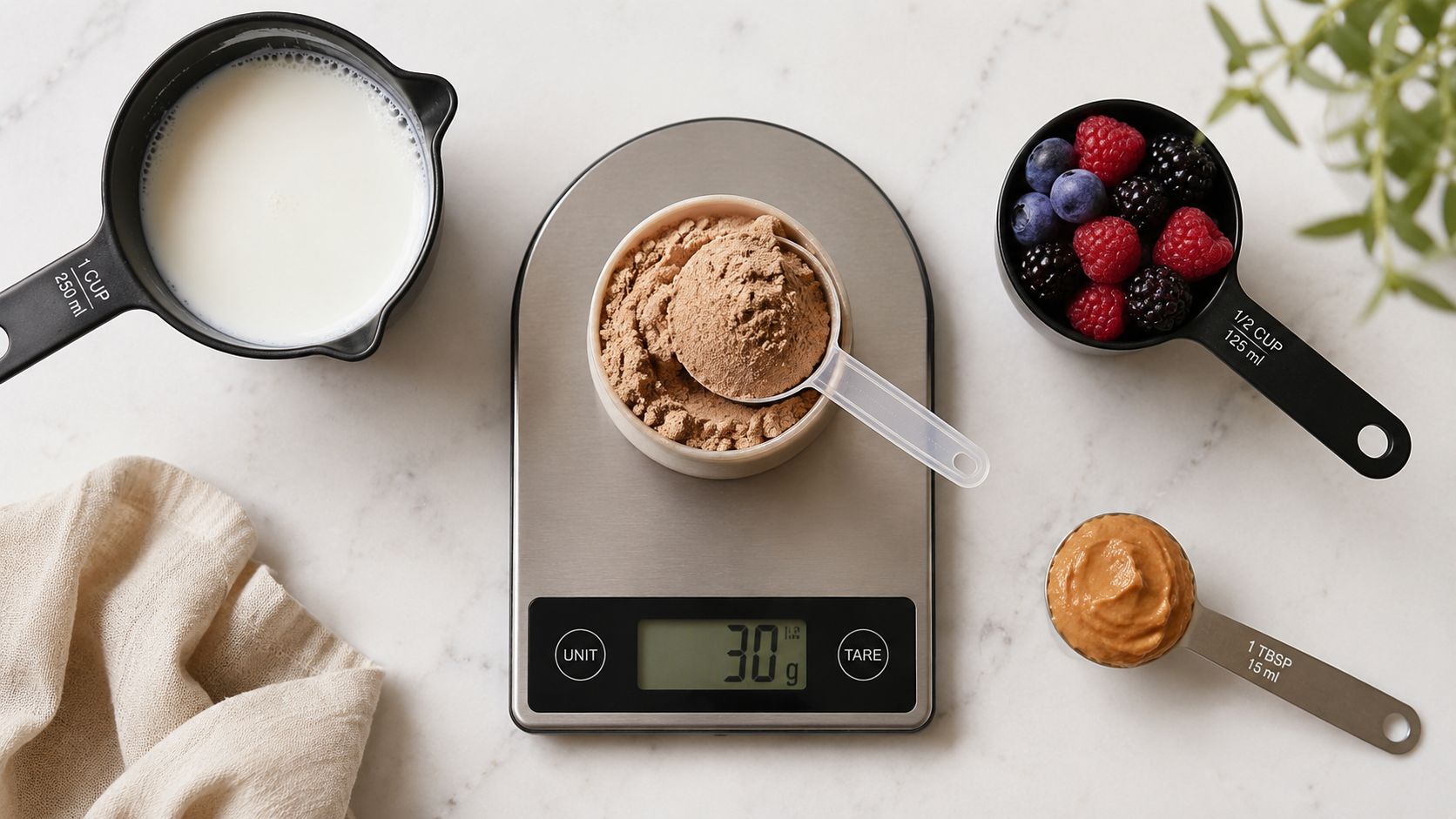
Step 1 Choose the protein base
Whey is the classic option because it mixes easily and delivers a strong amino acid profile. Casein digests more slowly, which can be useful when the shake is also serving as a longer-lasting meal replacement. Plant-based blends work well too, especially when they combine sources to improve amino acid completeness.
If you want an allergen-free, plant-based route, Maximum Health Products' clean Organic Protein is one option to consider alongside other clean-label protein powders. The label matters more than the marketing. Check protein per serving, ingredient simplicity, and whether it fits your digestion.
Step 2 Add the right liquid
Water keeps calories low and works well after most lifting sessions. Milk adds more protein and a creamier texture. Unsweetened plant milks are useful if you want a lighter taste or need a dairy-free base.
The liquid also changes the speed and fullness of the shake. Thin shakes are easier to drink quickly. Thicker shakes feel more like a meal.
Step 3 Decide if you need carbs
Carbs are optional after a short, low-volume strength session. They matter more when the workout was long, intense, or endurance-based. A recovery shake can include fruit, oats, or another carb source when glycogen replenishment is part of the goal.
That's one reason many shake recipes feel different from one another. A shake meant for muscle gain doesn't need the same carb load as a shake built for a long run.
Step 4 Use fats with intention
Fats slow digestion and make shakes more filling. That can help when your goal is appetite control, but it may be less useful immediately after a hard session if you want faster digestion. Nut butter, chia seeds, or flax can make sense when the shake is doubling as a meal.
A simple rule helps here, too. Add fats when satiety matters. Skip them when you want a faster, lighter recovery drink.
A clean formula usually tastes better than an overbuilt one. Too many add-ins can bury the protein base and make the shake harder to drink consistently. Keep the core simple, then adjust one ingredient at a time.
Goal-Specific Protein Shake Recipes
Different training days call for different shakes. A lifter, a runner, and someone trying to manage appetite after a workout do not need the same ingredient list. The examples below use the same basic logic, then tilt the recipe toward the goal.
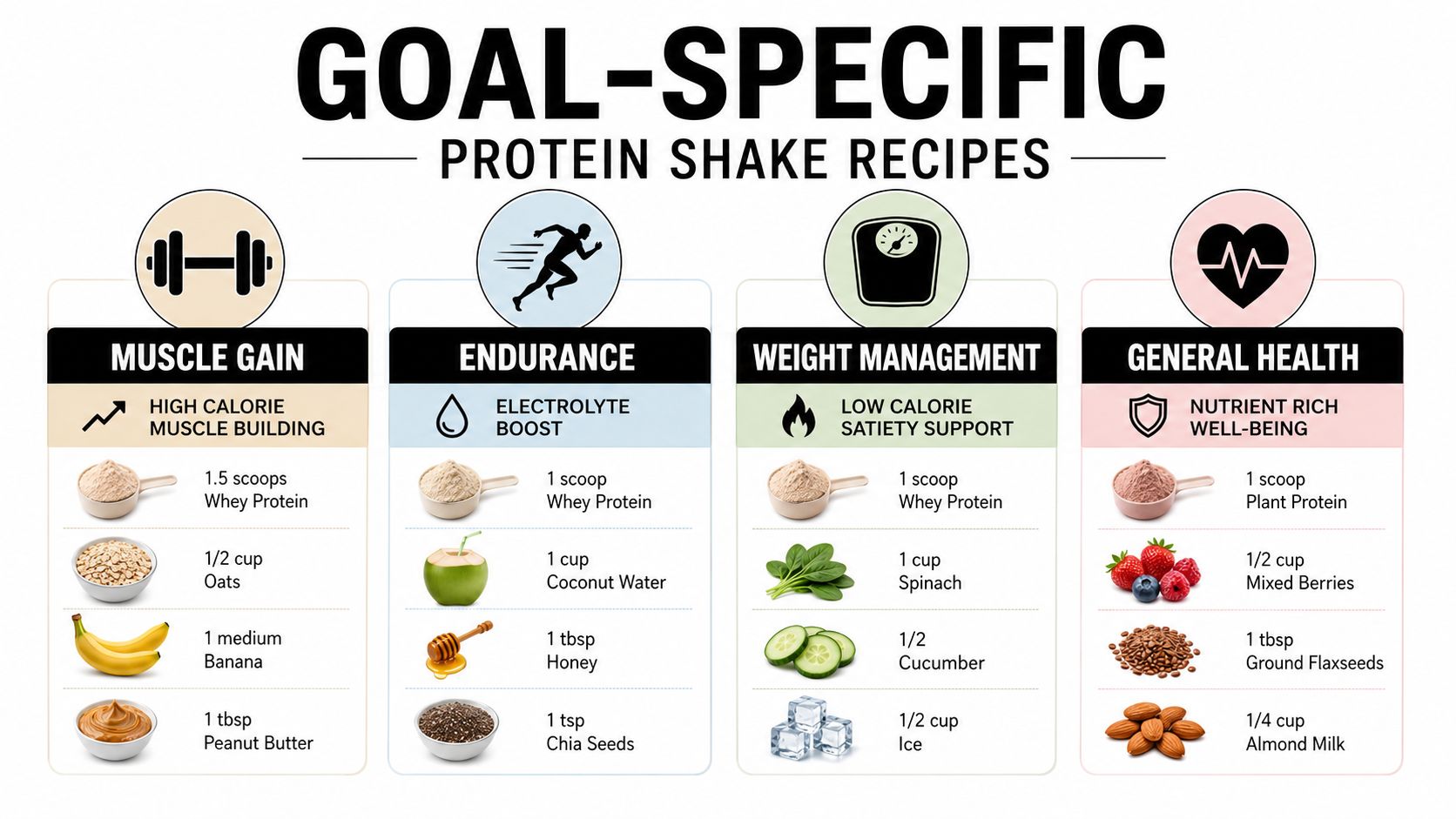
Muscle gain shake
Use one scoop of whey or a similarly protein-dense blend, milk, a banana, and oats. Blend until smooth, then drink it after lifting or use it as part of a larger post-training meal.
This version works because it pushes protein high enough to support muscle protein synthesis while adding carbs that help restore energy. The oats also make the shake feel more like fuel than a snack. If you like a lower-carb format, Maximum Health's high-protein low-carb shake guide gives another way to think about recovery without overloading calories.
Endurance refuel shake
For long runs, rides, or high-volume conditioning, build the shake around a carb source plus protein. Bodyspec's recovery guidance points to carbohydrates at about 1.0–1.2 g/kg on endurance days, paired with roughly 0.3 g/kg protein, and notes that some experts use a 3:1 or 4:1 carb-to-protein ratio for harder or longer sessions (source).
Use fruit, oats, or another easy carb source, then add a moderate protein base. The goal here is performance recovery, not just fullness.
A carb-inclusive shake makes more sense after endurance work than a protein-only one.
Weight management shake
Choose a lean protein base, water or unsweetened plant milk, berries, and maybe ice. Keep the shake simple enough to control calories, but filling enough to prevent a rebound snack later.
Protein can help most with practical adherence. A lighter shake still supports recovery, and it's easier to fit into a calorie-conscious day when you don't stack on extra fats or sweeteners.
General health shake
Use a balanced protein base, a small handful of fruit, and a liquid you enjoy. This option works on rest days or lighter training days when you want a convenient protein boost without turning it into a big meal.
It's a useful default for people who train regularly but don't need a highly specialized recovery drink every time.
Shake Prep Tips and Common Mistakes to Avoid
The best shake is the one you'll consistently keep making. That usually means good texture, fast prep, and ingredients that don't leave you feeling heavy or annoyed. If the shake is clumpy, too sweet, or too large, consistency falls apart fast.
One simple fix is to blend liquid first, then protein powder, then the rest of the ingredients. A shaker bottle works for plain protein and water, but anything with fruit, oats, or nut butter blends better in a real blender. Pre-portioning dry ingredients into jars also helps busy mornings run smoother.
Mistakes that quietly work against recovery
- Using fruit juice as the default liquid: it can push the shake toward a dessert profile and make calories add up quickly.
- Relying on shakes for every meal: whole foods still matter for satiety, fiber, and micronutrients.
- Choosing a protein that doesn't agree with your gut: if the shake sits poorly, you won't use it consistently.
- Adding too many extras at once: more ingredients do not automatically make the shake better.
The biggest mistake is often not in the blender at all. It's treating the shake like the whole recovery plan instead of one part of it. A smart shake supports the day, but it doesn't replace enough sleep, enough total protein, and a solid overall eating pattern.
Frequently Asked Questions About Protein Shakes
A lot of the confusion comes from treating convenience like urgency. If you already ate a protein-rich meal a couple of hours before training, you usually do not need to rush for a shake the moment you rack the weights. The practical takeaway is simple, the timing window is flexible, and total daily intake matters more than the clock, as noted earlier.
If you're plant-based or avoid common allergens, the first job is to find a powder that gives you enough protein per serving and mixes well. Clean-label options can help here, because the best shake is the one your body tolerates and your routine can support. A vegan protein shake can work just as well as a dairy-based one if the dose and ingredient quality are right.
Rest days are still a good time for a shake if it helps you reach your protein target. You do not need to earn protein only after training. Your muscles are still recovering, and the broader daily intake pattern still matters.
Clumps usually come from poor mixing, not from bad protein. Start with liquid, use cold water or milk, and shake or blend long enough to break up the powder. If the texture still bothers you, change the base or adjust the ratio before you give up on the format.
When the goal is muscle gain, endurance refueling, or weight management, the best shake is the one that fits the day instead of forcing the same formula every time. A heavy blend may suit a bulking day, while a lighter shake may make more sense when you want easier digestion or fewer calories. If you want clean protein, recovery-friendly blends, or simple nutrition tools that fit a real routine, visit Maximum Health Products and look for options that match your training, your digestion, and your daily goals.

