


You're standing in front of the cabinet, staring at a bottle you know you should take, and already thinking about the part you dislike most, swallowing a big tablet. That tiny moment matters more than it seems. If a supplement is awkward, chalky, or hard to swallow, people skip doses, and the routine that should support bone health turns into another abandoned habit.
Chewable Calcium with Vitamin D solves that problem in a simple way, because it changes the experience of supplementation without changing the goal. Calcium supports bone structure, and vitamin D helps the body handle calcium more effectively, so the pairing makes sense on both a practical and physiological level. The primary question is not whether the nutrients belong together, but how to use a chewable format without making absorption or tolerability worse.
Introduction
A supplement only works when it fits real life. That's why chewables matter, especially for people who don't want to swallow large pills first thing in the morning or who need a routine they can keep up with every day.
Chewable calcium with vitamin D is designed to make that routine easier. The texture, flavor, and format can improve consistency, while the vitamin D component supports calcium handling in the body. In other words, this is not just a candy-like tablet with a health label on it, it's a delivery format built around a nutrient pairing that depends on regular use.
The trade-off is simple. Convenience can improve adherence, but dosing still matters. If you take calcium in a way that your body can't use well, or if the product is formulated in a way that doesn't suit your digestive system, the chewable advantage starts to shrink. The smartest approach is to choose a product that feels easy enough to take daily, then use it in a way that matches how calcium is absorbed.
Understanding chewable calcium with vitamin D
What makes it chewable
A chewable supplement is more than a soft tablet. It is built as a matrix that can break down in the mouth, it uses flavor to cover calcium's chalky taste, and it still has to keep the active ingredients stable in a compact form. Technical labels show that these products often rely on polyol-based excipients like sorbitol, isomalt, xylitol, and maltodextrin to do that job, which helps explain why chewables feel different from standard tablets and why they can sometimes cause bloating or laxative-like effects at higher intakes (technical product labeling example).
The active part is the calcium, usually paired with vitamin D3. In regulated chewable calcium plus vitamin D products, the calcium dose is often built around 500 mg elemental calcium per chew with 10 to 20 µg of vitamin D3 to support absorption (EMA referral document). That pairing is not decorative. Vitamin D helps the intestine move calcium across the gut wall, so the product is designed around function as well as convenience.

If you want a plain-English reference for the nutrient pairing itself, this overview on vitamin D and calcium is a useful place to start.
Why the pairing matters
Calcium is the material, and vitamin D helps with access. Calcium is the building block, but vitamin D helps the body use more of that building block by supporting intestinal uptake. That is why a chewable calcium with vitamin D product is not just two nutrients squeezed into one tablet, it is a coordinated design.
Practical rule: if a chewable tastes easy but is not taken consistently, it loses its main advantage.
The balance is in the formulation. Too much chalky calcium and people dislike the taste. Too much sweetness or poorly chosen excipients and some users run into digestive discomfort. A good chewable has to solve both problems at once, which is why ingredient lists matter as much as flavor claims.
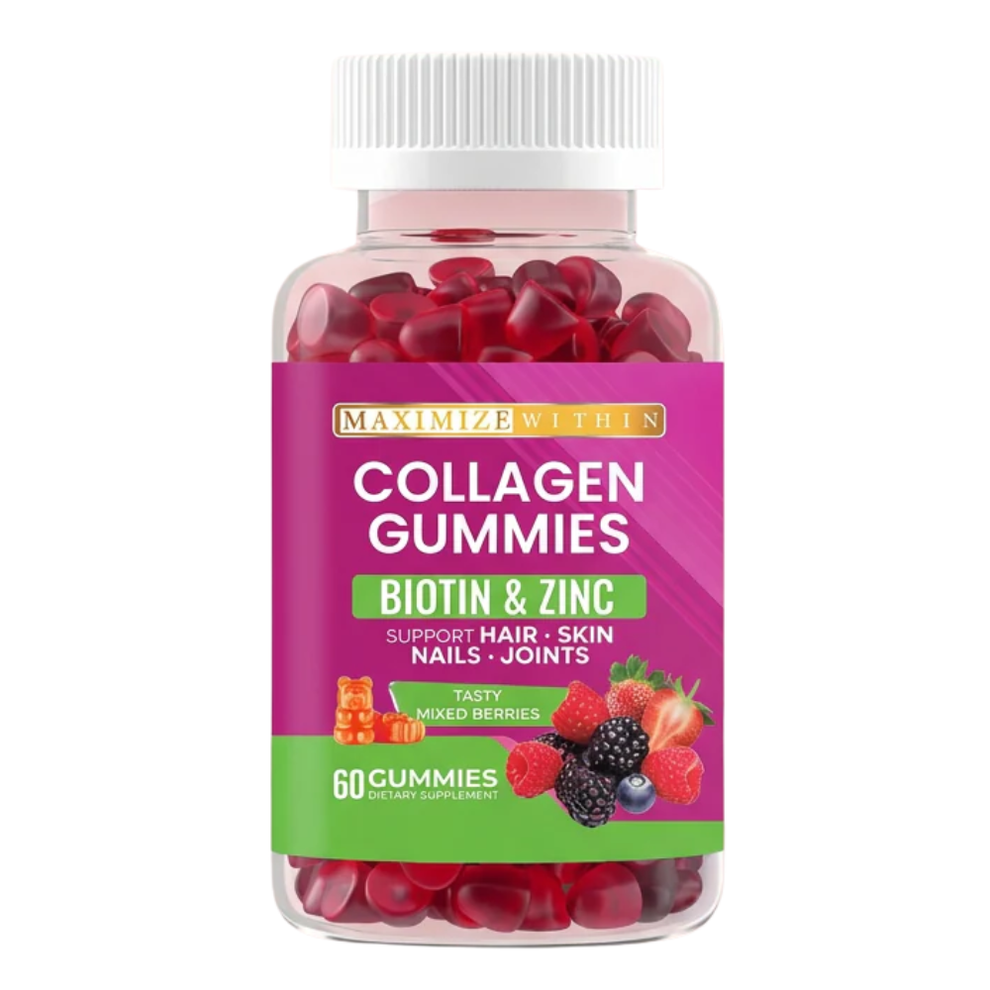
Featured Product
Collagen Gummies Mixed Berries Flavor
Made with a plant-based formula, these chewable gummies are designed to help support healthy hair, skin, nails, and lashes while fitting easily into your daily wellness routine.
Shop Now →Health benefits and mechanisms
A calcium plus vitamin D supplement works best when the nutrients are doing two different jobs at the same time. Calcium supplies the mineral the body uses to help maintain bone structure, while vitamin D helps the intestine move more of that calcium across the gut wall. For readers who want a simple overview of how these nutrients relate to one another, calcium, vitamin D, and magnesium is a useful starting point.
The clearest large-scale evidence comes from the Women's Health Initiative trial, published in the New England Journal of Medicine (NEJM). In that randomized study of 36,282 postmenopausal women, daily supplementation with 1,000 mg calcium carbonate plus 400 IU vitamin D3 improved hip bone density by 1.06% compared with placebo. The report also listed hip-fracture hazard ratios of 0.88, clinical spine fracture 0.90, and total fractures 0.96, so the overall fracture reductions were not statistically significant. When adherence was included in the analysis, the hip-fracture hazard ratio improved to 0.71.
What the numbers mean in practice
That pattern is easy to miss if you focus only on the label. Bone support depends on regular use, not just on choosing a supplement with the right ingredients. A chewable that people take can do more for day-to-day consistency than a tablet that feels harder to use, even if the latter looks more serious.
The same study also reported a 17% increase in kidney stone risk, with a hazard ratio of 1.17 (NEJM). That matters because calcium supplements are not the same for everyone, and taking more does not automatically mean getting more benefit. The practical takeaway is simple. Long-term use should be chosen with safety in mind, not just with bone health in mind.
Why chewables fit the mechanism
Chewables help the mechanism indirectly by making daily use easier to sustain. If the format is easier to remember, easier to tolerate, and easier to keep close at hand, the calcium and vitamin D pair has a better chance of being taken often enough to matter over time. That is especially helpful for adults who dislike swallowing tablets or want something they can keep in a kitchen, purse, or travel bag.

The trade-off is straightforward. Convenience can improve adherence, but it can also hide a dosing habit where people assume one chewable covers everything, even when calcium often works better in divided amounts. That is why the mechanism here is not only about absorption in the gut, it is also about whether the user can stick with the routine long enough for the nutrients to do their job.
Comparing formulations
Calcium carbonate and calcium citrate do not behave the same way in every situation. Carbonate is common in chewables because it is compact and inexpensive, but it depends on stomach acid, so it is generally best taken with food. Citrate is less dependent on stomach acid and can be taken more flexibly, although it usually provides less elemental calcium per gram of tablet mass.
Carbonate versus citrate
The simplest way to compare them is practical rather than technical. Carbonate is efficient in a small space, while citrate is often easier to fit around a variable meal schedule. If calcium has ever felt heavy in your stomach, that difference matters more than the marketing on the front of the bottle.
A supplement should fit the stomach you have, not the one the label assumes.
Chewables change the experience too. They are portable, do not require water, and can feel less medical than a traditional swallow tablet. That convenience can also hide a dosing problem, because people may assume “one and done” when calcium often works better in divided amounts.
Why adherence studies matter
A preference study comparing a chewable tablet with a sachet containing calcium and vitamin D3 found that participants generally preferred the chewable tablet (PMC study). In the same body of research, a randomized study of vitamin D3 dosage forms found that the chewable tablet produced the largest improvement in 25-hydroxyvitamin D over 8 weeks, from 14.54 ng/mL to 57.62 ng/mL, an increase of 43.08 ng/mL, or about 296.30%, and it also produced the highest rise in calcium levels among the forms tested.
That does not mean every chewable is superior. It means the delivery form can affect whether people use the product, and whether nutrient status changes at all. When a supplement is easier to take consistently, it has a better chance of doing the job it was bought to do.

Dosing timing and practical tips
Calcium works better when the dose respects how the gut handles it. Clinical guidance recommends splitting calcium into doses of 500 to 600 mg or less to maximize absorption and reduce side effects, rather than taking a single large dose (Bone Health & Osteoporosis Foundation).
A simple daily pattern
Start with food whenever the label says the product is carbonate-based. Food helps with dissolution, and that matters because carbonate depends on stomach acid to break down well. If a chewable is citrate-based, timing is usually more flexible, but many people still find meals make it easier to remember.
A practical schedule is straightforward. Take one dose with breakfast, another with lunch or an afternoon snack, and only add an evening dose if your total daily target requires it. That's not about being rigid, it's about giving your body smaller jobs instead of one oversized one.
Small habits that help
- Use reminders: Set a phone alarm or app notification if you know you forget midday doses.
- Keep one pack visible: A bottle in the kitchen or work bag is easier to remember than one hidden in a drawer.
- Plan around other supplements: Calcium can interfere with some nutrients, so spacing matters.
- Check the label before splitting doses: Some chewables are designed as a full serving, others are meant to be taken in halves or multiples.
The main mistake is treating chewable calcium like a snack. It's a nutrient tool, and tools work better when you use them on purpose.
Safety interactions and side effects
The most common issues with chewable calcium plus vitamin D are usually digestive, not dramatic. Constipation, bloating, and a heavy stomach can show up, especially if the product uses polyol excipients like sorbitol or xylitol or if the dose is too large for one sitting. That is why split dosing matters so much. A chewable is convenient, but the body still handles calcium best when the load is smaller and easier to process.
Where interactions come in
Calcium can also interact with medicines based on timing. Acid-reducing medicines can make carbonate less convenient because carbonate depends on stomach acid for dissolution, while some antibiotics and iron supplements are better kept separate from calcium so they do not compete for absorption. If you take prescriptions, the schedule is part of the supplement plan, not a small detail to deal with later.
The kidney-stone signal from the Women's Health Initiative trial is another reason to stay thoughtful about dose and hydration. The study reported a hazard ratio of 1.17 for kidney stones in the calcium plus vitamin D group. That does not mean everyone will have a problem, but it does mean people with a history of stones should ask a clinician before starting. The point is simple, a supplement can be easy to chew and still require careful use.
If calcium leaves you constipated or causes stomach discomfort, the first fix is often to lower the per-dose amount, not to quit immediately.
If symptoms persist, or if you have kidney disease, recurrent stones, or multiple medications, a healthcare professional should review the plan. A supplement that is easy to chew still needs to fit your specific situation. If you are comparing labels and want a cleaner ingredient profile, a guide to choosing clean vitamin brands can help you read the excipients with more confidence. For readers also weighing dose needs during pregnancy, how much calcium in pregnancy is a useful starting point to discuss with a clinician.
Who benefits and product selection
A chewable calcium with vitamin D product makes sense for people who are more likely to take it consistently in this format. That often includes older adults, people with packed days, and anyone who knows a tablet bottle can turn into background clutter after the first week. The trade-off is simple, convenience can improve adherence, but the label still has to match the dose and digestive tolerance you require.
For pregnant readers trying to understand dose needs in that life stage, a separate practical guide on how much calcium in pregnancy can help frame the discussion with a clinician.
What to look for on the label
The ingredient list deserves the same attention as the front panel. Chewables often use polyols such as sorbitol or xylitol to cover the chalky taste, which can make them easier to take, but a sensitive gut may treat those sweeteners like extra baggage. If that sounds familiar, the issue is not cosmetic, it affects whether the product fits your routine.
A simple label check can keep the choice clearer:
- Elemental calcium per serving: Match the serving size to the amount you plan to take each day.
- Vitamin D3 amount: Make sure the D3 supports the calcium without crowding the formula with extras you do not need.
- Excipient profile: Check for sugar alcohols if you tend to feel bloated or loose after similar products.
- Form of calcium: Carbonate is common, citrate may suit some people better.
- Brand transparency: Look for clear labeling instead of broad bone-health claims that say little about what is inside.
If you want a cleaner-label supplement brand to compare with other options, Maximum Health Products' clean vitamin brands guide is one place to compare how ingredient standards can differ.
The best fit is the one you can take regularly, digest comfortably, and understand at a glance. A chewable that looks appealing but sits unused is still the wrong choice.
Conclusion
Chewable calcium with vitamin D works best when you treat it as both a nutrient strategy and a behavior strategy. The nutrients support bone health, but the format determines whether you'll stay consistent. Split dosing, meal timing, and the right calcium form can make the difference between a supplement that just sits there and one that becomes part of your routine.
The clearest takeaway is simple. Convenience matters, but absorption still rules. Choose a chewable that you can tolerate, divide the dose when needed, and pay attention to the label so you're not trading ease for digestive trouble.
Maximum Health Products offers supplement options and clean-label wellness products for people who want practical routines they can stick with. If you're comparing bone-health support formats and want to review related product categories, visit Maximum Health Products and check the labels, ingredients, and serving sizes against your own daily needs.

