


You drink filtered water. You buy decent groceries. You try to stay active. On paper, your routine looks healthy.
Yet many people still feel slightly off. Not sick, just not fully steady. Energy dips. Muscles feel tight. Hydration never seems to “stick.” One reason can be simple: modern wellness often focuses on removing things, like contaminants, sugar, additives, and excess sodium, but pays less attention to what may also get removed along the way.
That matters with water. Purified and reverse osmosis water can be very clean, but it may also be low in the natural minerals that help your body use that water well. Food quality matters too. Even a careful diet doesn't always deliver the broad mineral variety people assume it does.
That's where ConcenTrace Trace Mineral Drops enters the conversation. It's a liquid mineral supplement designed to put a broad spectrum of trace minerals back into your routine in a simple way. If you've been curious about whether mineral drops are useful, overhyped, or worth trying, the key question isn't just what's in the bottle. It's why these minerals matter in the first place.
The Missing Element in Your Wellness Routine
A common pattern shows up in practice. Someone cleans up their diet, carries a stainless bottle everywhere, and swaps tap water for filtered water. They expect to feel better. Sometimes they do. Sometimes they also notice stubborn fatigue, headaches, poor exercise recovery, or a feeling that they're drinking plenty but still not feeling well hydrated.
Water alone doesn't do every job. Your body also needs minerals to help regulate fluid balance, support nerve signaling, and assist muscle function. When those minerals are missing, hydration can feel incomplete.
Why modern habits can create a gap
Filtered water solves one problem well. It helps reduce unwanted substances. But depending on the system, it can also leave water with very little mineral content. That's not automatically harmful, but it does change what you're drinking every day.
At the same time, many people don't eat a wide enough range of mineral-rich foods consistently. Stress, sweating, travel, intense exercise, and restrictive eating patterns can make that gap more noticeable.
Water is only part of hydration. Minerals help your body direct where that water goes and how well cells can use it.
This is why trace minerals get attention in wellness circles. They're needed in small amounts, but they support large jobs. ConcenTrace Trace Mineral Drops is often used as a practical way to remineralize water and provide a full-spectrum mineral profile without turning your routine into something complicated.

Featured Product
Maximum Slim SuperGreens Powder | Plant-Based Nutrient Drink Mix
Maximum Slim SuperGreens delivers 27 organic superfoods in a single daily scoop — making it one of the easiest ways to fuel your body with real plant-based nutrition
Shop Now →What Are ConcenTrace Trace Mineral Drops
A lot of people arrive at this product after making a healthy change that seems sensible on paper. They clean up their diet, switch to purified or reverse osmosis water, and end up drinking water that is cleaner but also lower in naturally occurring minerals. ConcenTrace Trace Mineral Drops is meant to fill part of that gap by adding a broad mix of trace minerals back into water in a liquid form.
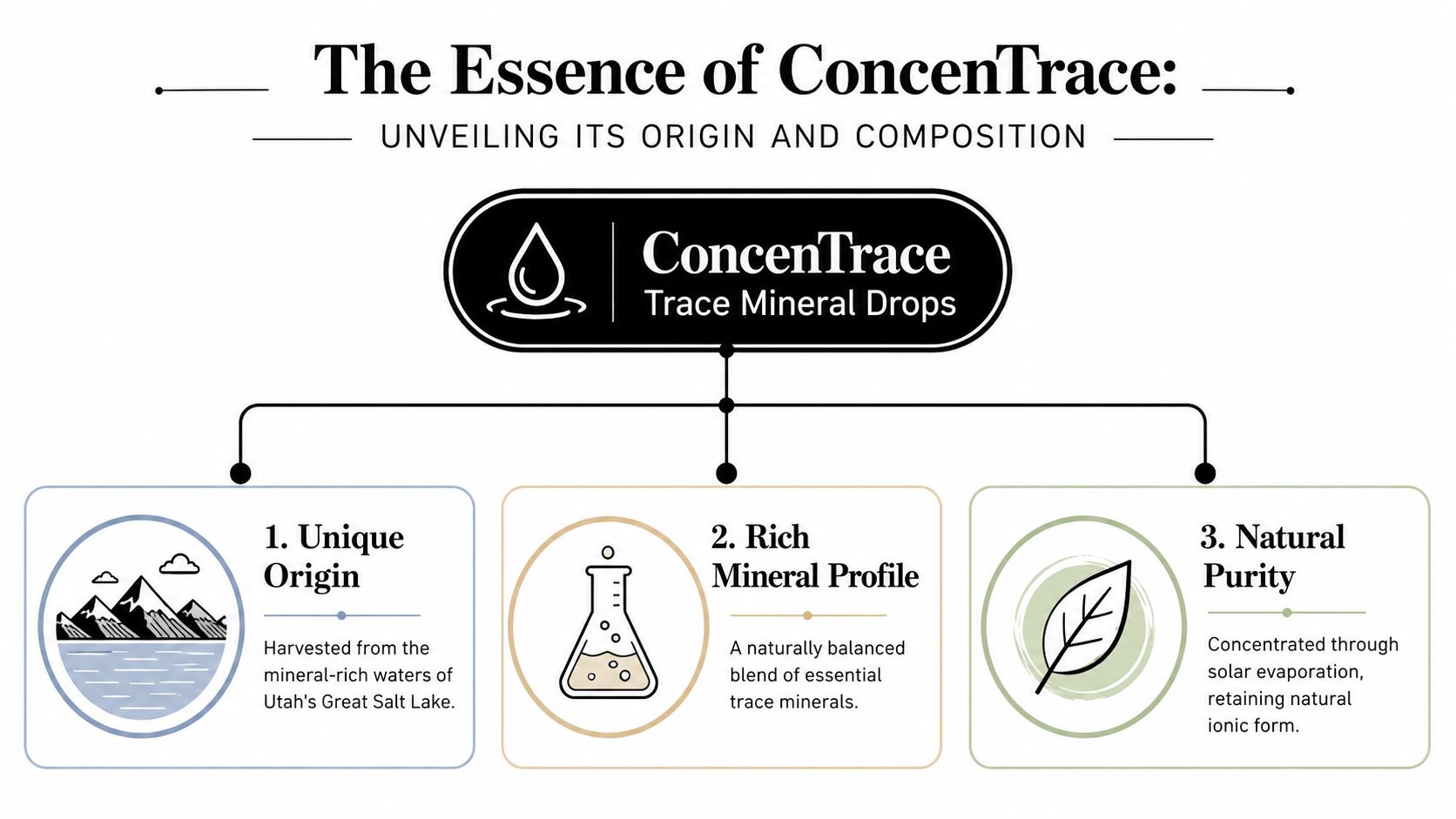
The product is sourced from Utah's Great Salt Lake and concentrated into drops that can be mixed into water or other beverages. The formula is known for providing a wide mineral profile rather than centering on one headline nutrient. That distinction matters. Modern wellness habits often focus on removing things, contaminants, additives, excess sugar, highly processed foods, but less attention goes to what may also be removed along the way, including naturally occurring minerals.
What full-spectrum means in plain language
“Full-spectrum” sounds abstract until you connect it to how the body functions. Minerals rarely do their jobs alone. Magnesium helps with muscle and nerve function, chloride helps regulate fluid balance, potassium supports electrical signaling, and smaller trace minerals participate in enzyme activity and other behind-the-scenes processes. A product with a broader mineral profile appeals to people who want general mineral support, especially if their water and food supply are less mineral-rich than they used to be.
One instrument can play a clear note. A full section creates depth and balance. That is the practical idea behind a trace mineral blend.
This also helps explain why some people choose broad mineral support instead of chasing one nutrient at a time. If you want to learn how three major minerals often work together, this article on calcium, vitamin D, and magnesium balance gives helpful context.
What ionic means
The word “ionic” can sound technical, but the basic idea is simple. These minerals are already dissolved in liquid and carry an electrical charge. Since your body is largely water, dissolved minerals are well suited to that environment.
Bioavailability is the next term people usually ask about. It refers to how much of a nutrient can be absorbed and used. A liquid ionic mineral supplement does not need the same kind of breakdown step as a compressed tablet. The minerals are already in solution, which is one reason liquid mineral drops are often described as easy to absorb.
That does not mean pills are ineffective. It means the delivery format is different, and for some people a liquid added to water is a practical option.
What's actually in the formula
ConcenTrace is generally described as a seawater-derived trace mineral concentrate with magnesium as one of its better-known components, along with chloride, potassium, and smaller amounts of other trace minerals. The appeal is not just the ingredient list. It is the reason that list exists. A broader mineral profile tries to reflect the mixed mineral environment found in natural water sources, which is relevant for people whose daily routine now relies on highly purified water and a narrower range of whole foods.
Magnesium often gets the most attention, and for good reason, but it is still part of a larger mineral story. If you want a useful companion read on understanding magnesium dosage, that guide can help you place magnesium within the bigger picture instead of treating it as a stand-alone fix.
In short, ConcenTrace Trace Mineral Drops is a liquid, full-spectrum trace mineral product designed to remineralize water and support baseline mineral intake in a way that fits modern habits.
Key Benefits and The Science Behind Them
The most useful way to think about ConcenTrace isn't “What miracle will this do?” It's “What basic jobs do minerals help my body do every day?”
That shift matters. Mineral supplements usually work best as foundational support, especially for hydration and mineral intake, not as a dramatic quick fix.

Hydration support starts with electrolytes
Many people think hydration means volume alone. Drink more water, problem solved. But your body uses minerals such as magnesium, chloride, and potassium to help regulate fluid movement and cellular balance.
According to Trace Minerals' explanation of ConcenTrace, the ionic state of the minerals facilitates superior bioavailability and rapid cellular absorption, and 1 drop can restore approximately 30 ppm of ionic minerals into an 8 oz glass of water, while shifting the water's pH toward the alkaline spectrum. In everyday terms, that means the drops don't just flavor the water. They change its mineral content.
If you regularly drink purified or reverse osmosis water, that point is especially relevant. Those waters can be very low in naturally occurring minerals.
Why magnesium gets so much attention
Among the listed minerals, magnesium stands out because it's involved in energy production, muscle function, and normal nerve activity. When readers ask why a trace mineral product might make them feel more “steady,” magnesium is often part of that answer.
If you want a deeper look at forms, timing, and understanding magnesium dosage, that guide is useful because it helps separate general interest in magnesium from the bigger picture of full-spectrum mineral support.
For people already thinking about mineral balance more broadly, this related overview on calcium, vitamin D, and magnesium working together adds context on why minerals rarely act alone.
Bioavailability matters more than label hype
A supplement can look impressive on paper and still be less useful if your body struggles to absorb or use it. That's where bioavailability comes in. Bioavailability means how much of a nutrient becomes available for your body to use.
Practical rule: The best mineral supplement isn't always the one with the longest label. It's the one your body can comfortably absorb and consistently use.
Liquid ionic minerals appeal to many people because they're already dispersed in water. You're not waiting for a compressed tablet to break apart. You're adding dissolved minerals directly into a fluid your body is prepared to handle.
The broader wellness angle
ConcenTrace is also popular because it fits a very modern problem. People often clean up their diets, remove additives, and purify their water, but they don't always replace the minerals lost in the process.
That doesn't mean everyone needs a mineral supplement. It does mean some people may feel better when they stop thinking only about what to remove and start considering what to restore.
A broad mineral profile can be especially appealing if you:
- Drink filtered or reverse osmosis water often and want to remineralize it
- Exercise or sweat regularly and want more than plain water
- Use single-nutrient supplements already but suspect the bigger issue may be overall mineral balance
- Prefer liquid supplements because they're easier to adjust than capsules
How to Use ConcenTrace for Optimal Results
You fill a bottle with purified water, head to the gym, and do all the right things for your health. Then you add mineral drops and wonder, "How much do I need, and how do I use this without overdoing it?" That question matters because trace minerals work best as a steady background support, not a rush job.

The simplest approach is to start with a small amount in water and increase gradually. That gives your palate time to adjust and gives your digestive system a fair chance to tell you how it responds. Minerals may be tiny, but they still change the composition of what you drink. A good comparison is seasoning food. A pinch can improve the whole dish, while too much at once can overwhelm it.
A practical way to begin
For many adults, consistency works better than intensity.
- Begin with a small serving in a full glass or bottle of water.
- Use the same amount for a few days so you can judge taste and tolerance.
- Increase slowly if needed rather than jumping to a full serving on day one.
- Split it across the day if that feels better than taking more at once.
This gradual build makes sense for another reason. If you drink filtered or reverse osmosis water, your routine may already be low in minerals. Adding them back in slowly is often more comfortable than making a sudden shift.
Why timing and routine matter
ConcenTrace does not need a complicated schedule. It helps to attach it to a habit you already keep, such as your first glass of water, your lunch drink, or your workout bottle. That lowers the odds that the supplement sits in the cabinet unused.
Some people prefer minerals with meals because it feels gentler on the stomach. Others like adding them to a large bottle they sip over several hours. Either option can work. The better choice is the one you can stick with.
Minerals also work as part of a bigger nutrition picture. If you are already paying attention to nutrient balance, pairing a mineral routine with the basics can make more sense than treating drops like a stand-alone fix. For example, these vitamin D and vitamin C nutrition basics help explain how different nutrients support each other in everyday wellness.
What it tastes like and how to make it easier
A concentrated mineral product often tastes briny, bitter, or "salty-metallic." That flavor can surprise people the first time. It usually reflects the mineral concentration, not a problem with the product.
A few ways to make it easier:
- Mix it into cold water instead of taking it straight
- Use more water at first so the flavor is less intense
- Add it to juice or a smoothie if plain water is hard to tolerate
- Take it with meals if your stomach prefers that
One sentence matters here. Strong taste does not mean stronger results. It just means the drops are concentrated.
Here's a quick product video if you want to see the format and handling more clearly.
Easy ways to build it into your routine
The goal is to replace missing minerals in a way that fits modern life, especially if your water is highly purified and your diet is not always perfectly varied.
| Routine moment | Simple use idea |
|---|---|
| Morning water | Add drops to your first glass of filtered water |
| Workout day | Mix them into a water bottle you sip during or after exercise |
| Afternoon hydration | Add to water when you want something more supportive than plain water |
| With meals | Stir into a drink alongside lunch or dinner |
Some people also add trace minerals to soups or other liquids. Regular use usually works better than an ambitious routine you stop after a week.
Understanding Safety and Potential Interactions
You add mineral drops to your water because you want support, not surprises. That is the right mindset.
ConcenTrace is designed to supply trace minerals, but safety still depends on dose, timing, and your personal health history. A full-spectrum mineral profile can be useful in a routine built around purified water and modern food grown in mineral-depleted soil. It still needs to fit the person using it.
A good way to think about mineral tolerance is this: your body handles minerals a bit like traffic entering a small road. A steady flow is usually fine. Too much at once can cause a backup. With mineral drops, that backup often shows up as digestive discomfort, loose stools, or a laxative effect, especially because magnesium is part of the mix.
That is why a gradual start matters. It helps your stomach adjust, and it gives you a clearer read on how your body responds.
What to watch for first
The first safety question is usually not contamination or a rare reaction. It is dosage. Concentrated mineral products can be irritating if you jump in too quickly, particularly if you already use other supplements that contain magnesium or electrolytes.
Pay attention to the full picture. If your multivitamin, hydration powder, and mineral drops all contribute overlapping minerals, your total intake can add up faster than expected.
Who should be more cautious
Some people should pause and get personalized advice before adding any trace mineral formula:
- People with kidney concerns: The kidneys help regulate mineral balance. If kidney function is reduced, even reasonable-looking supplement habits may need closer review.
- People taking medications: Minerals can affect how some medications are absorbed when taken too close together.
- People who are pregnant or breastfeeding: Needs can change during these stages, and individualized guidance is safer than guessing.
- Children: Smaller bodies need more careful dosing, and pediatric guidance is the better route.
If you are already building a broader nutrient plan, this article on how vitamin D and vitamin C fit into a supplement routine can help you think in systems instead of isolated products.
A practical way to think about interactions
Minerals in liquid form are often described as ionic, which can sound more technical than it is. In plain terms, that means the minerals are present in a dissolved, charged form. Sugar dissolving into tea is a useful comparison for the format, although minerals behave differently in the body than sugar does. The main takeaway is that the minerals are already dispersed in liquid, which is one reason people like drops for flexible dosing.
Bioavailability creates similar confusion. It does not mean a supplement is automatically better because it is liquid. It means your body has to absorb and use what you take in. That process depends on the mineral itself, the amount, your digestion, and what else you take alongside it.
Safety, then, is partly about product quality and partly about context. The same mineral blend may be a reasonable choice for one person and a poor fit for another person with a medication schedule, kidney issues, or a habit of stacking several supplements without checking overlap.
Good supplement use is usually simple. Read the label, start with a small amount, stay consistent, and ask for professional guidance if your health history is complicated.
That approach may sound plain, but it is the one that causes the fewest problems.
ConcenTrace vs Other Mineral Supplements
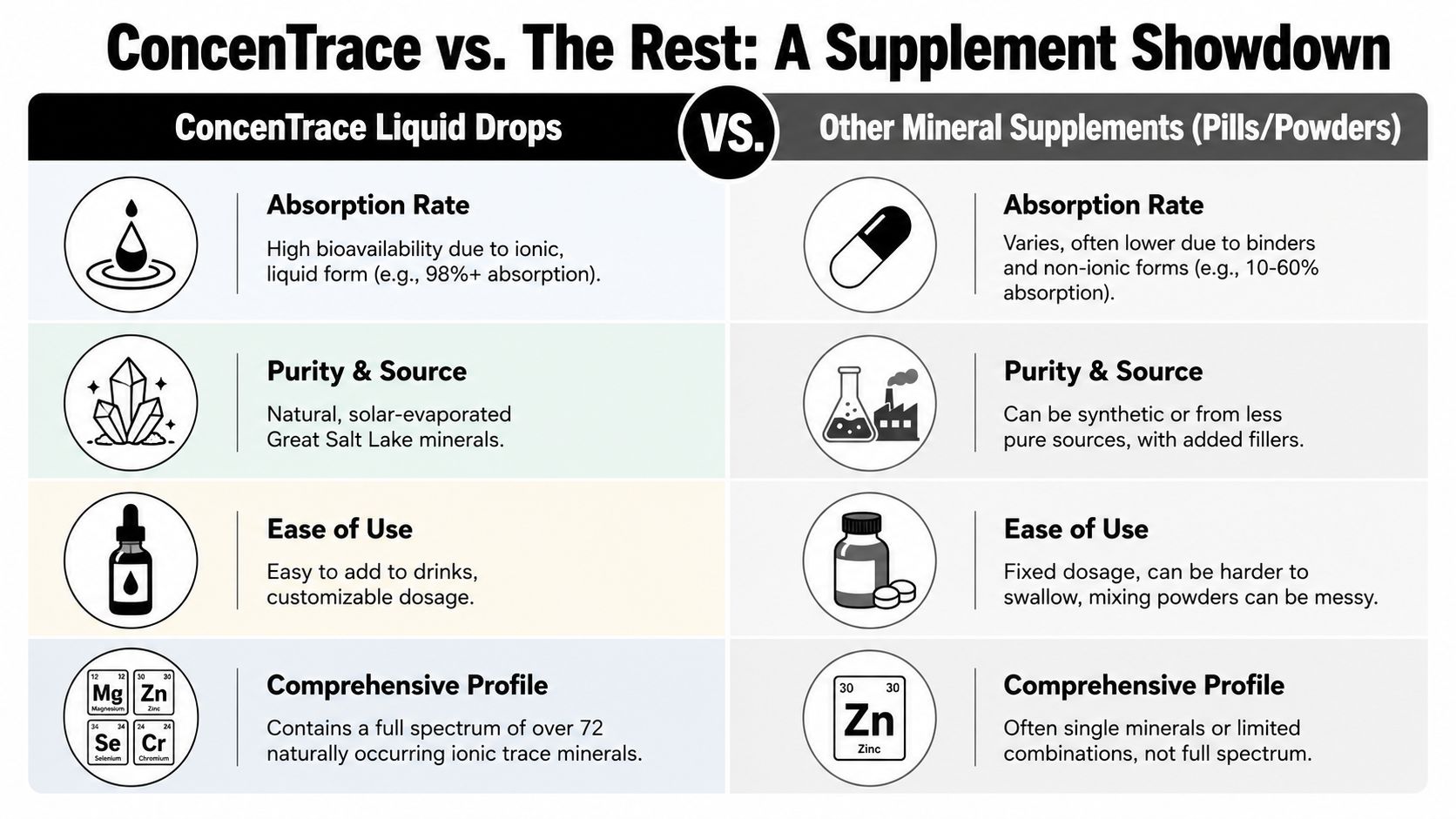
Shoppers usually compare ConcenTrace to three categories: mineral pills, single-mineral formulas, and electrolyte powders. Each has a place. The best choice depends on what problem you're trying to solve.
How the options differ
| Type | Best for | Limitation |
|---|---|---|
| ConcenTrace liquid drops | Broad remineralization and flexible dosing | Strong taste may take adjustment |
| Single-mineral supplement | Targeting one known nutrient need | Narrower mineral coverage |
| Electrolyte powder | Convenience and flavor during exercise | Often focused on a shorter list of electrolytes |
| Mineral pills | Familiar routine and portability | Less flexible if you want to fine-tune intake |
Where ConcenTrace stands out
ConcenTrace's main appeal is the combination of liquid format, full-spectrum mineral profile, and easy customization. You can add a few drops or more depending on your routine and tolerance. That's very different from swallowing a fixed-dose tablet.
It also suits people who care specifically about remineralizing purified water. A flavored sports powder may support hydration during exercise, but it isn't necessarily designed with that daily use case in mind.
Where another product may be better
ConcenTrace isn't automatically the right pick for everyone.
A standalone magnesium supplement may make more sense if your clinician specifically wants you focused on magnesium. A sports drink powder may be more practical if your main issue is getting fluids down during long training sessions. A capsule may fit better if you travel constantly and don't want to carry liquids.
That's why this product is best viewed as a foundational mineral tool, not a universal winner in every category.
The right supplement should match the reason you're taking it. Broad support, targeted correction, and workout hydration are not the same goal.
A Smart Shopper Guide and FAQs
You're standing in the supplement aisle or scrolling through product pages, and several mineral products look almost identical. The front label says “trace minerals,” but the fundamental question is simpler. Does this product match the reason you want minerals in the first place?
That matters because mineral supplements can solve different problems. Some are built for a single nutrient, like magnesium. Others are designed to add a wider range of trace minerals back into your daily routine, which can be useful if you drink mostly purified water or eat foods grown in mineral-poor soil. A smart purchase starts with that distinction.
Quality matters too. If you want help evaluating labels, sourcing, and verification, read this guide on what third-party testing means for supplements. It gives you better questions to ask before buying any supplement, including mineral drops.
What to check before buying
- Brand and product name: Confirm you're getting the actual Trace Minerals ConcenTrace product, not a similar-looking listing from another seller.
- Intended role: Decide whether you want broad-spectrum mineral support for daily use or a targeted supplement for one specific need.
- Dietary compatibility: Check the label for details that matter to your routine, such as vegan or gluten-free status.
- Serving flexibility: Liquid drops let you start small and adjust gradually, which can be helpful if you are sensitive to taste.
- Practical fit: Ask yourself whether you will realistically use drops every day. The best supplement is the one that fits your habits.
Common questions
Will it make my water taste strong
It can. Trace minerals often give water a sharper, more mineral-like taste, especially at higher amounts. Starting with fewer drops in a larger glass usually makes the flavor easier to adjust to.
Can children use it
A pediatric healthcare professional should guide that decision. Children's mineral needs are different from adult needs, so dosing should not be estimated by cutting down an adult routine.
How long does one bottle last
It depends on your daily serving. Someone using a small maintenance amount will go through a bottle more slowly than someone taking larger servings to remineralize multiple bottles of water each day.
Is this better than a magnesium supplement
It serves a different purpose. A magnesium supplement is more focused. ConcenTrace is usually chosen by people who want a broader mineral profile rather than one isolated mineral.
Who tends to like this product most
It often appeals to people who drink reverse osmosis or distilled water, want flexible dosing, and like the idea of adding a wider spectrum of minerals back into their day.
What makes a full-spectrum mineral product appealing
A full-spectrum product tries to fill in small gaps across many minerals rather than pushing one nutrient hard. It works like adding missing instruments back into an orchestra. One violin matters, but the full sound depends on many parts working together. That “why” is often what draws people to trace mineral drops in the first place.
If you're building a cleaner, smarter supplement routine, Maximum Health Products offers science-backed wellness options that fit everyday life. Browse their collection for clean-label nutrition support that helps simplify energy, focus, metabolism, and daily well-being.

