


It's 10:30 a.m. You've finished one coffee, your inbox is still growing, and a deadline needs sustained attention rather than another burst of nervous energy. A second espresso might wake you up, but it can also leave you restless, distracted, or waiting for the next crash.
That's where matcha tea focus becomes interesting. Matcha doesn't provide a caffeine-free lift, and it isn't a magic solution for concentration. Its appeal comes from the way caffeine and L-theanine arrive together, creating a form of alertness that many people experience as steadier and calmer than coffee. The effect also depends on the powder's quality, the serving size, and when you drink it.
Why Matcha Keeps Showing Up in Focus Routines
A busy professional choosing a drink before a writing session has more to consider than caffeine alone. Matcha is a finely milled powder made from tea leaves shaded before harvest. Because you consume the leaf rather than steeping it and discarding it, grade, origin, preparation, and dose can affect the experience more noticeably than they do with ordinary green tea.
That helps explain its place in focus routines. A standard 2 g serving can provide roughly 60 to 70 mg of caffeine and about 25 mg of L-theanine. Higher-quality shade-grown matcha may contain 30 to 46 mg of L-theanine per serving, according to this overview of matcha and L-theanine. Matcha's caffeine is typically about half that of a standard cup of coffee, so it offers a measured alternative for people who want stimulation without coffee's sharper feel.
Practical rule: Treat matcha as a measured focus tool, not as unlimited green tea.
The serving and timing should fit the work. A professional might use a small bowl before writing, reviewing financial documents, or preparing for a long meeting. A student could choose it before a reading block rather than adding another highly caffeinated drink to an already tiring day. The aim is to support a period of steady attention, not to force the brain into overdrive.
Matcha now appears in energy drinks, focus powders, lattes, and other wellness products, not only in the tea aisle. Different market analyses project strong expansion for matcha, showing how the ingredient has moved from a specialized tea ritual into broader energy and wellness routines. For more context on how tea can relate to mental energy, see this guide to tea for energy and focus.
The practical questions are straightforward: What does matcha do in the brain? How much should you use? When should you drink it? And how can you tell whether a particular powder is helping or merely making you wired? Grade, serving size, and timing provide the starting points for answering them.
The Caffeine and L-Theanine Pairing Behind the Calm Alertness
A busy morning can feel like driving onto a long motorway with a half-empty fuel tank. Caffeine is the gas pedal, helping a sluggish brain move toward alertness. L-theanine is the steering wheel, helping that added energy feel more controlled instead of turning every increase in speed into a swerve.
Featured Product
Maximum Slim Original Green Coffee
Made with green coffee and carefully selected herbal ingredients such as green tea leaf and ginseng root, this unique blend is designed to complement a balanced lifestyle.
Shop Now →Caffeine promotes wakefulness by interfering with adenosine signaling, a process linked to rising sleep pressure. That can make a tired brain feel more ready for work. Increase the dose too far, however, and the same stimulation may become racing thoughts, tension, or physical jitters.
L-theanine is an amino acid naturally found in tea. In matcha, it arrives alongside caffeine rather than as a separate supplement. Their combination is associated with calmer alertness, and clinical reviews describe possible improvements in attention, memory, reaction time, and perceived alertness compared with caffeine alone. Research has also reported better attention and work performance under psychological stress with matcha than with caffeine alone. The broader evidence is discussed in this review of matcha research.
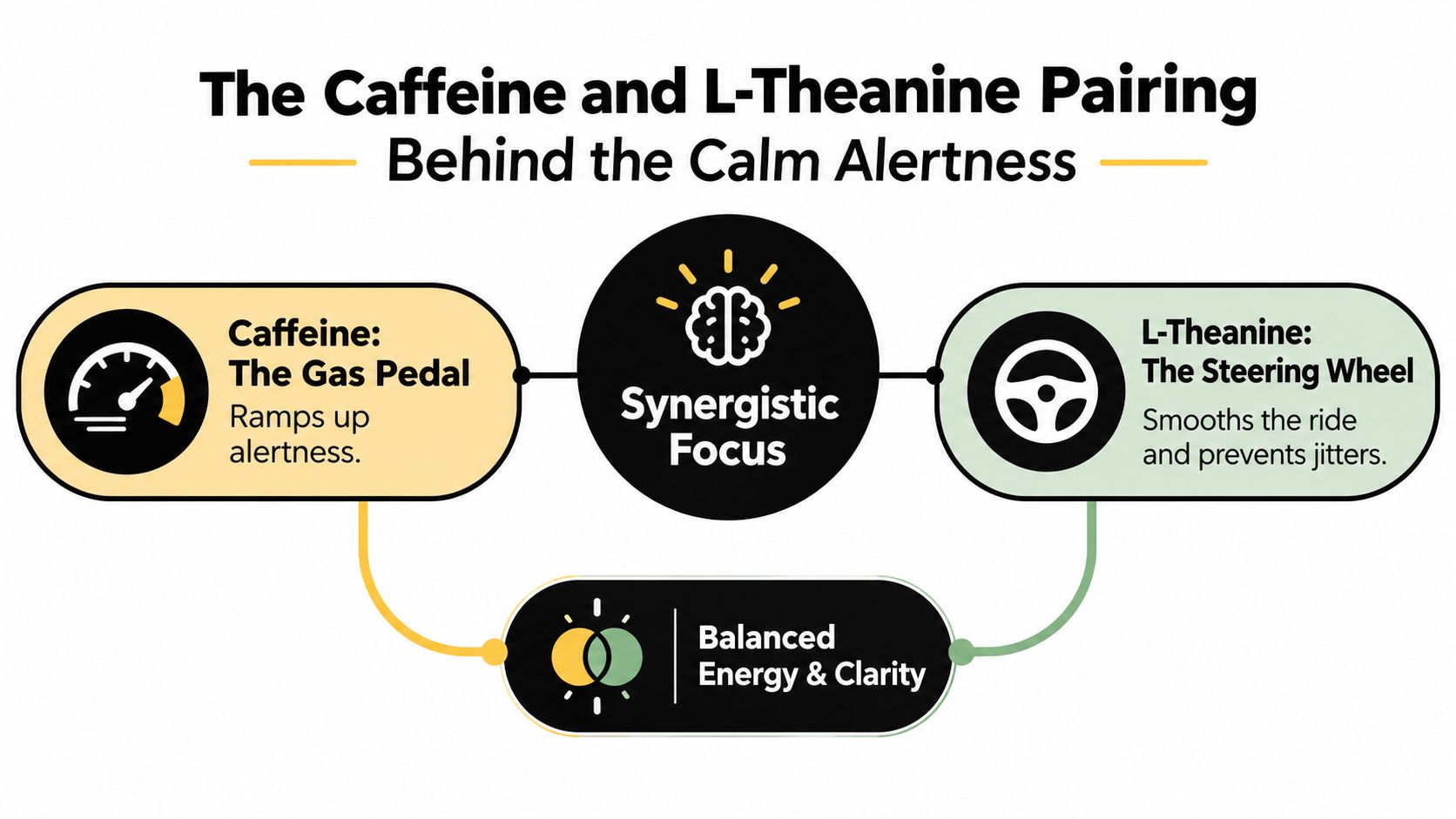
The analogy has limits. L-theanine does not cancel caffeine, and matcha cannot prevent overstimulation for everyone. Someone with low caffeine tolerance may react strongly to a modest serving, especially after drinking it quickly or without food.
Matcha therefore fits a focused work block better than a rapid jolt before a brief task. Its effect depends on the powder, serving, drinking speed, and personal sensitivity, so the same scoop can feel mild to one person and intense to another. A smaller serving before writing or a long meeting may be more useful than a larger one taken after fatigue has already set in.
For a closer explanation of l-theanine caffeine for calm focus, look for guidance that discusses both compounds together rather than treating L-theanine as a sedative. Timing also deserves attention. This guide to the best time of day to take L-theanine can help you compare morning alertness, evening relaxation, and your own sensitivity instead of assuming one schedule suits everyone.
What the Research Shows About Attention and Memory
A busy workday rarely needs a miracle supplement. It needs enough alertness to read carefully, hold information in mind, and keep working when pressure rises. Research on matcha supports that smaller, more practical role. A critical review reported randomized trials suggesting slight improvements in attention and memory, while repeated intake was associated with anti-stress effects that may help attention during demanding periods.
A separate human intervention study found only slight changes in attention speed and episodic secondary memory at a realistic dose. The format also changed the results. A matcha drink performed better than a matcha bar on several cognitive measures, including spatial working-memory speed and delayed picture recognition, as described in this human intervention review. Matcha is therefore not one fixed intervention. A drink, snack, extract, or loosely measured scoop can produce different exposures and different experiences.
Matcha and cognition compared
| Documented in research | Marketed but unproven |
|---|---|
| Matcha and the caffeine-L-theanine combination may support attention, reaction time, and aspects of memory. | Matcha guarantees deep work or eliminates every distraction. |
| Some studies report improved performance under psychological stress. | Matcha is a complete nootropic that transforms long-term cognitive ability. |
| Results vary with the product format, dose, and study design. | Every grocery-store powder has the same cognitive effect as a standardized research preparation. |
| The overall effect appears modest and practical. | Matcha “detoxes” the brain or reverses cognitive decline. |
The distinction sets realistic expectations. Matcha may suit a writing session, study period, or demanding administrative block, especially when a measured serving is taken early enough for the work ahead. The same product may feel different if the scoop is larger, the drink is consumed quickly, or caffeine sensitivity is higher.
It should not replace sleep, food, movement, medical care, or treatment for persistent concentration problems.
The narrow conclusion is the most defensible: matcha can help some people feel more alert and may support specific attention and memory tasks, but the effect is neither universal nor dramatic. Judge a chosen grade and serving by actual focus, physical comfort, and sleep, then adjust timing for the work pattern you want to support.
Matcha vs Coffee for Sustained Focus
A brief meeting and a four-hour writing block create different caffeine needs. Coffee often fits a stronger, faster-feeling lift, while matcha can suit a steadier routine that pairs caffeine with L-theanine.
Caffeine values follow this matcha and coffee comparison and are serving examples, not universal standards. The serving sizes used in the tables below are 1 g matcha and 8 oz drip coffee. Matcha varies by powder and scoop, while brewed coffee changes with beans, grind, and preparation.
| Factor | Matcha, 1 g, whisked | Coffee, 8 oz drip |
|---|---|---|
| Caffeine example | Roughly 30 mg in the serving example | Roughly 95 mg in the serving example |
| Companion compound | Contains L-theanine, with the amount varying by product | Does not naturally provide matcha's L-theanine pairing |
| Onset | Often feels gentler and less abrupt | Usually feels faster and more forceful |
| Focus pattern | Suits a calm plateau for reading, writing, or analysis | Suits a quick lift or short demanding task |
| Main drawback | Can still cause caffeine effects, especially at a higher dose | May feel harsh for people sensitive to stimulant peaks |
“One cup” is not a scientific unit. A small matcha scoop may contain much less caffeine than a large café drink, while a generous serving of strong powder can reverse that comparison. Use the chart to understand the categories, then check your powder's label and weigh the serving. Those details matter more than a generic drink name.
Coffee may work well before a brief meeting if you already tolerate its faster lift. Matcha may fit a long work block if coffee makes you restless or you prefer a more gradual routine. The choice depends on the work pattern, serving size, and timing, not on a universal winner.
Sleep, meal timing, baseline fatigue, and total caffeine exposure still shape the result. A measured matcha serving can support a focused block, but it cannot compensate for inadequate recovery or an oversized dose.
Dose, Timing, and Grade for Real-World Use
A matcha routine becomes easier when you stop measuring by an ambiguous teaspoon. Start by weighing the powder, because the same scoop can feel different from one tin to the next.
Build your starting serving
For a first trial, use 1 to 2 g of ceremonial or premium grade matcha. Whisk it into 60 to 80 ml of water. If that feels too mild after you've observed your response, you can test a stronger serving of 2 to 4 g, but increasing the powder also increases your exposure to caffeine and tea compounds.
Culinary grade usually has a more assertive, bitter flavor. That makes it practical for a latte, smoothie, or recipe where milk and other ingredients provide balance. Ceremonial or premium grade is generally easier to drink with water because producers select it for a smoother straight-tea experience.
Let the powder set the expectation
Independent summaries report matcha caffeine ranging from about 18.9 to 44.4 mg per gram, while L-theanine can reach roughly 20 to 45 mg per 2 g serving. A study portion has also used about 50 mg of L-theanine in a daily intake. These figures are summarized in this discussion of matcha caffeine and L-theanine variability. The range explains why one person calls matcha calming while another calls the same category stimulating.
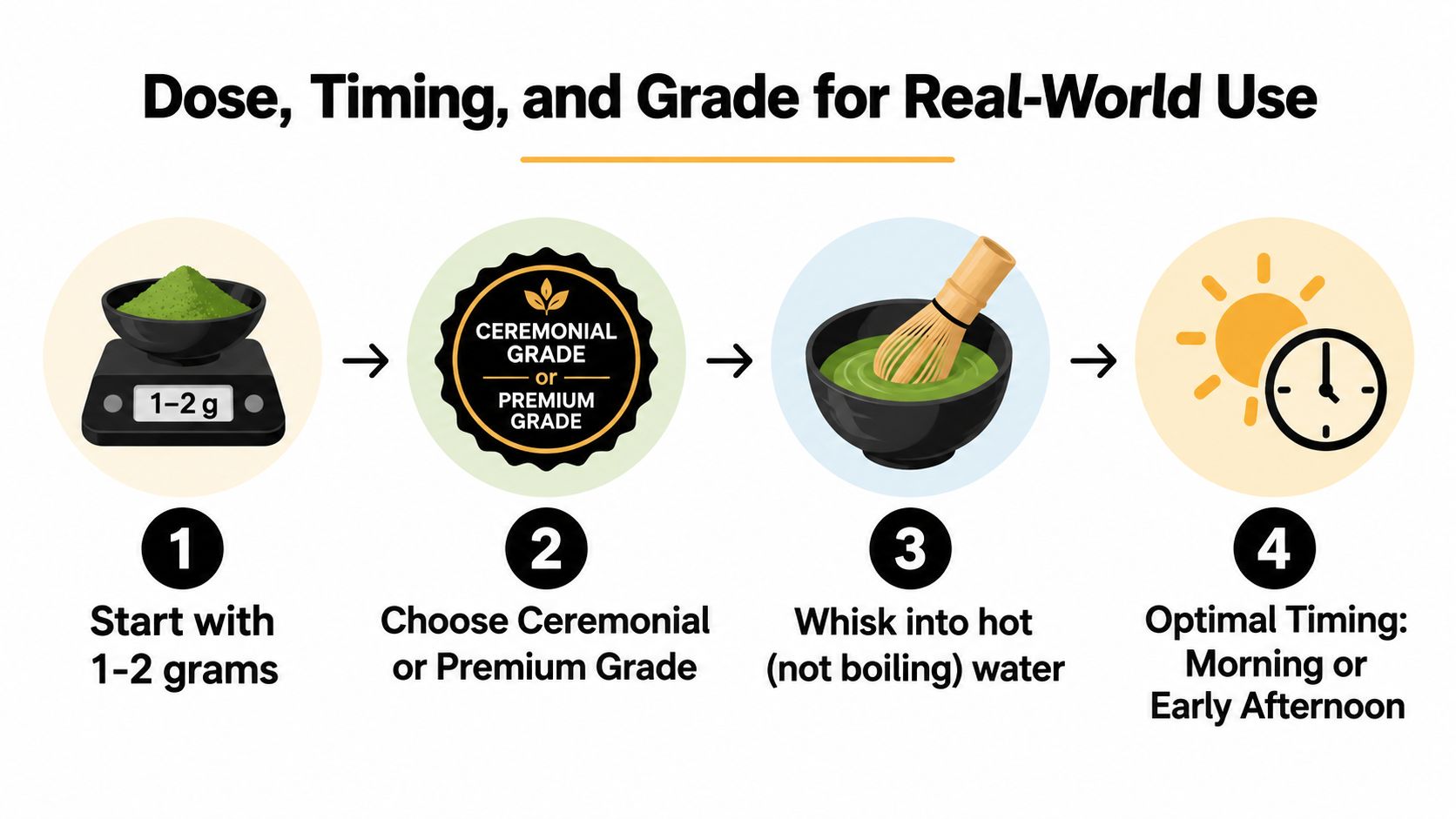
Try your serving 20 to 40 minutes before focused work, then keep notes for a week. Record the approximate dose, the type of work, your perceived focus, and your sleep quality. Avoid taking it close to bedtime. If you use a second serving, place it in the earlier part of the afternoon rather than treating late-day fatigue with repeated doses.
Your powder is part of the dose. The number on the scale tells you how much powder you used, but the product's caffeine range determines how stimulating that serving may feel.
Preparation Methods and Simple Recipes
Preparation changes flavor, texture, and how easy it is to use a measured amount. The three methods below give you a clear starting point without requiring a full tea ceremony.
Traditional whisked bowl
Sift 1 to 2 g of matcha into a bowl. Add 60 to 80 ml of water at 75 to 80°C, then whisk in an M or W motion for about 15 seconds until a fine layer of foam forms.
A bamboo chasen creates the lightest texture, but a small electric frother can work for everyday use. A sieve prevents clumps, which otherwise make the drink taste uneven and force you to swallow concentrated pockets of powder.
Shaken iced matcha
Combine 2 g of matcha with 200 ml of cold water in a sealed jar. Add simple syrup if you want sweetness, close the jar securely, and shake hard for 20 seconds. Pour the mixture over ice.
This version suits commuting or a desk with no whisk. It also makes the serving visible, because you can measure the powder before adding water rather than guessing from a café cup.
Focus latte
Whisk 1.5 g of matcha with 30 ml of warm water until smooth. Add 150 to 200 ml of warmed or frothed milk, dairy or plant-based.
Milk softens matcha's bitterness and makes culinary grade more approachable. If the drink tastes harsh, check the water first. Boiling water can pull out unpleasant bitterness, so let it cool before whisking. If clumps remain, sift the powder more finely and whisk the small water mixture before adding milk.
Side Effects, Cautions, and Common Misconceptions
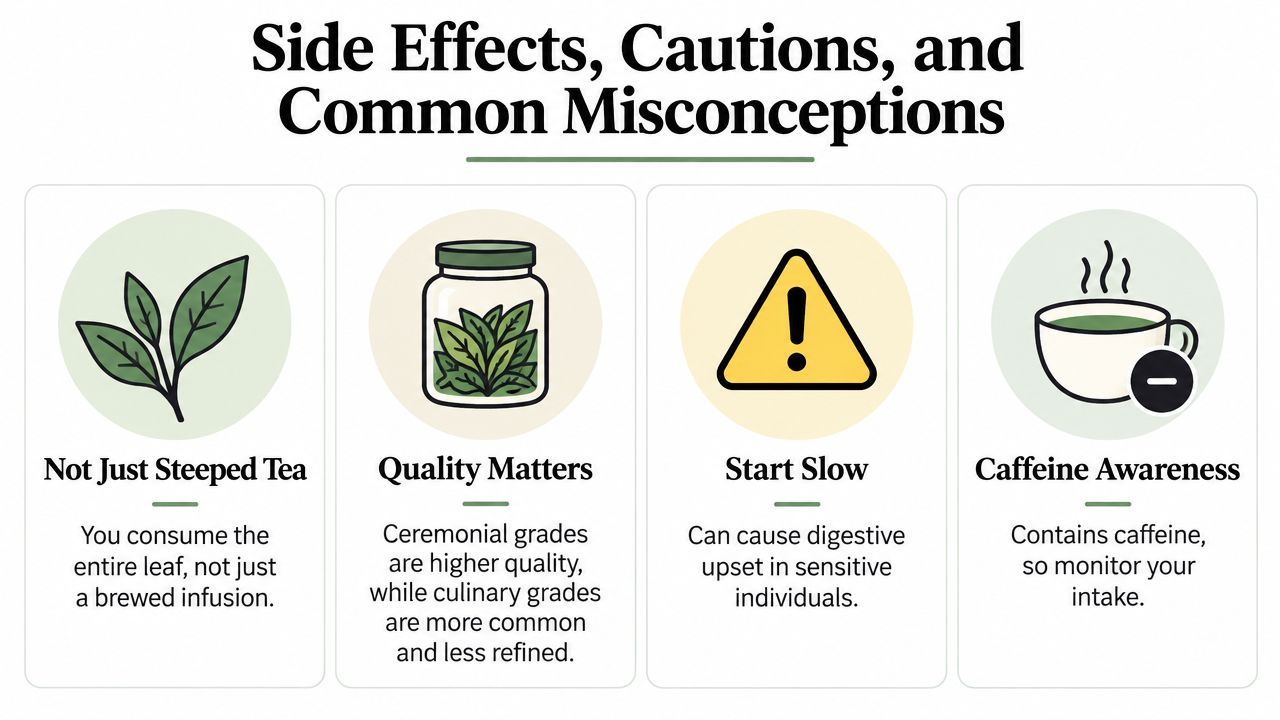
Matcha is not just steeped green tea. You consume the entire powdered leaf, so the drink's caffeine and other tea compounds depend directly on how much powder enters the bowl. That makes portion control more important than it is for a cup where most leaves remain in the strainer.
It also contains meaningful caffeine. A person who reacts to coffee may still experience jitteriness, nausea, reflux, a racing feeling, or disrupted sleep after matcha. These effects become more likely when the serving is large, the drink is taken quickly, or the stomach is empty.
Four assumptions worth correcting
- “Matcha is stimulant-free.” It isn't. The caffeine-L-theanine combination may feel smoother, but L-theanine doesn't remove caffeine's effects.
- “Any green powder works the same way.” Grade, cultivation, shading, storage, and serving size can change the experience.
- “Matcha detoxes heavy metals.” That claim is overstated. Because matcha is a leaf product, the tea plant can accumulate lead from soil, so quality and sourcing deserve attention rather than vague detox promises.
- “More powder means more focus.” More powder means a larger dose. It may increase stimulation without improving concentration.
People who are pregnant, take blood thinners, have iron deficiency, or manage a condition affected by caffeine should ask a clinician about regular use. Tea catechins can inhibit absorption of non-heme iron, the form found in many plant foods. If iron status is a concern, drink matcha away from an iron-rich meal by at least an hour, and follow your clinician's advice.
Start with half a serving if you're sensitive. Drink it earlier in the day, eat something if empty-stomach nausea is an issue, and stop adjusting upward if your sleep worsens. Current evidence also doesn't establish matcha as a validated cortisol or stress-hormone intervention, so don't use it as a substitute for treatment or assume that “calm” means medically proven stress reduction.
Matcha can support alertness and selected cognitive tasks. It can't compensate for chronic sleep loss, diagnose attention problems, or guarantee better memory.
Building a Simple Matcha Focus Routine
A useful routine starts with the work you need to do, not with the largest serving your whisk can produce. For a Monday morning trial, prepare a small ceremonial-grade bowl between 9 and 10 a.m., then begin the hardest task during the period when you normally feel most mentally available.
Use the same preparation for several days so you can identify your response. On a day with afternoon analysis or creative work, you might test a second serving between 1 and 2 p.m. Keep a firm cutoff in the early afternoon if later caffeine affects your sleep. If your concentration drops because you skipped lunch, matcha won't solve the underlying problem.
Match the grade to the job
- Ceremonial or premium grade: Use it whisked with water or in a simple latte where the flavor remains central.
- Culinary grade: Use it in smoothies, baked recipes, or a stronger milk-based drink where a bolder taste can work.
- A measured serving: Weigh the powder rather than relying on a scoop that may vary between tins.
When shopping, scan the label and packaging for the leaf's origin, whether the tea was shade-grown, the harvest date, and organic certification where that matters to you. A vibrant green appearance is generally more consistent with fresh, well-preserved matcha than a dull yellow tone, though color alone can't prove quality.
A one-week starting plan
On the first day, use the whisked bowl method with a modest serving and write one line about focus, mood, digestion, and sleep. On the second or third day, repeat it before a defined work block rather than drinking it casually. Later in the week, try the iced version or latte while keeping the powder amount stable.
Don't set a budget by chasing the most expensive tin. Choose an amount you'll use consistently, then compare how the product tastes and feels across the week. For broader concentration habits beyond beverages, Orange Neurosciences' guide to improving focus and concentration offers additional context around building an environment that supports attention.
Maximum Health Products offers Maximum Slim Organic Tea, a seven-herb blend that includes matcha and rooibos, alongside other nutrition products for energy, focus, and daily wellness. If you want to compare a blended tea option with measured straight matcha, visit Maximum Health Products and review the ingredients and serving guidance before choosing.
If you want to test matcha tea focus without guessing, choose one powder, weigh a modest serving, and use it at the same time for several workdays. Track focus and sleep in one line each evening, then adjust the grade, timing, or serving only after you have enough personal feedback to make the change meaningful.

