


Most advice about a mushroom for sleep starts with the wrong expectation. You take a capsule at bedtime, wait for a sedative effect, and expect to fall asleep quickly. Medicinal mushrooms generally don't work that way. Their more realistic role is to help the body manage stress and fatigue during the day, creating better conditions for restorative sleep at night.
That distinction matters because sleep difficulty often involves more than the moment you get into bed. Mental overactivation, persistent tension, and daytime exhaustion can keep the nervous system alert after the lights go out. Reishi and mushroom blends may support this stress-sleep relationship, but the evidence remains limited, and they shouldn't be presented as replacements for established insomnia treatments or medical care.
Rethinking How Mushrooms Support Rest
A mushroom supplement is unlikely to work like a sleeping pill. Mushrooms are better understood as adaptogens and stress modulators than as acute hypnotics. Melatonin signals biological nighttime, while prescription hypnotics act through specific nervous-system pathways. Mushrooms generally support a slower, broader adjustment in how the body handles stress.
Reishi, or Ganoderma lucidum, has one of the longest traditional histories among ingredients marketed for sleep, particularly in Asian medicine. Modern sleep research is newer, and direct human evidence remains limited independent coverage of reishi and sleep evidence. Traditional use can guide questions for research, but it does not establish a treatment effect. The sensible position is interest without overconfidence.
Sedation and adaptation are different
A sedative reduces alertness directly. An adaptogenic approach addresses the conditions that keep the body prepared for action, such as sustained daytime pressure and tension.
That distinction helps explain why a person may feel exhausted yet remain mentally busy at bedtime. Stress-related arousal can carry into the evening, contribute to nighttime waking, and leave sleep feeling less restorative. A mushroom blend may support stress regulation in that setting, potentially helping nighttime sleep architecture indirectly. It should not be expected to “knock you out.”
Practical rule: If a product promises an immediate, reliable sedative effect from reishi alone, treat that claim cautiously.
A randomized trial of a mushroom extract blend linked better sleep-quality scores with lower salivary cortisol, pointing toward a stress-mediated effect rather than simple sedation. The full sample and protocol are detailed in the evidence section below.
What this means for expectations
A realistic goal is not to fall asleep on command. It may be less evening tension, fewer stress-driven disruptions, or a steadier sense of restoration after regular use. These changes depend on the formula, the individual's health, and the habits surrounding sleep, so patience matters.

Featured Product
Maximum Slim SuperGreens Powder
delivers 27 organic superfoods in a single daily scoop — making it one of the easiest ways to fuel your body with real plant-based nutrition.
Shop Now →A supplement can support a routine, but it cannot identify why sleep is difficult. Persistent or severe insomnia, or sleep problems connected with medication, pain, breathing issues, or significant anxiety, deserves assessment by a healthcare professional. The right role for a mushroom product is supportive, not a substitute for diagnosis or established care.
The Biological Mechanisms of Medicinal Mushrooms
Medicinal mushrooms do not work like conventional sleeping tablets. Their compounds interact with systems involved in immune signaling, stress regulation, inflammation, and energy balance. In reishi research, polysaccharides and triterpenes receive particular attention because they may influence several of these processes at once.
A useful way to understand this is to follow the body's stress-response network. The hypothalamic-pituitary-adrenal axis, or HPA axis, coordinates communication between the brain and endocrine system during stress. It helps increase alertness and mobilize energy when demands rise. That response serves a purpose in the short term, yet persistent activation can keep the body prepared for action when bedtime calls for recovery.
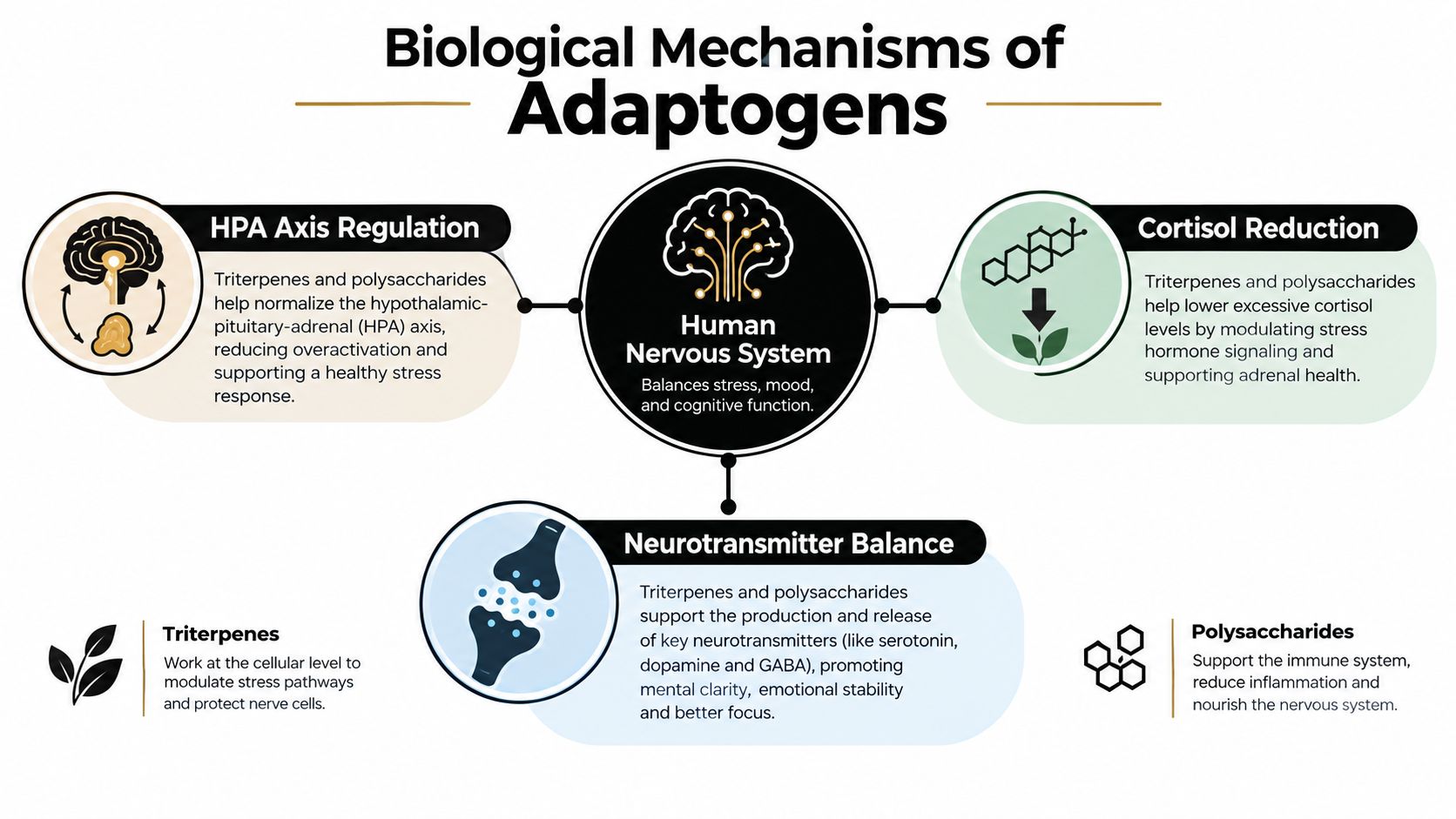
From stress signaling to sleep continuity
Cortisol is not harmful. The body needs it for normal daily function. The more useful question is whether stress signaling stays too high or appears at the wrong time, leaving someone physiologically alert when they want to relax.
The mushroom trial described earlier found lower salivary cortisol alongside improved sleep-quality scores. As noted earlier, that pattern supports a possible relationship between reduced stress arousal and better subjective sleep. It does not show that every mushroom product will produce the same response. It offers a more specific biological hypothesis than the broad claim that mushrooms “calm the brain.”
This model places adaptogens closer to a thermostat than a sedative. They may help moderate the conditions that keep daytime stress running into the night, rather than forcing sleep immediately. Polysaccharides may influence immune and inflammatory signaling, while triterpenes are studied for interactions with cellular pathways. These effects are systemic, so any sleep benefit would depend on the person's broader physiological state.
The raw material also matters when comparing products. A fruiting body and a mycelium-based material can differ in composition and labeling, making source information relevant to product evaluation. This guide to fungi fruiting bodies explains the distinction.
Why fewer awakenings remain an open question
Stress does not disrupt sleep in one uniform pattern. One person may take a long time to fall asleep, another may wake repeatedly, and someone else may sleep for an apparently adequate period yet feel unrefreshed.
Research may eventually show which patterns respond most consistently. At present, claims about fewer awakenings, faster sleep onset, or altered sleep architecture remain product-specific possibilities, not universal outcomes. A careful evaluation should use validated measures such as PSQI or ISI and, where appropriate, track stress-related measures alongside them.
That approach separates a plausible mechanism from a proven result. Adaptogens may support a calmer physiological background, but they cannot correct poor sleep timing, untreated anxiety, excessive caffeine, or an underlying medical sleep disorder.
What the Clinical Evidence Shows
Reishi's traditional reputation provides context, while clinical research asks a narrower question: does a defined preparation improve a measured sleep outcome under controlled conditions? Traditional use may explain why people view reishi as calming or restorative. It cannot establish that every mushroom product will produce the same result.
One frequently cited pilot study involved 132 participants with mild-to-moderate sleep disorders. After 4 weeks of reishi extract, Pittsburgh Sleep Quality Index scores improved by an average of 3.2 points versus placebo. Participants also reported less difficulty falling asleep and fewer nighttime awakenings reported pilot-study findings.
The result is encouraging, but a pilot study mainly identifies a signal for further research. It does not show that every reishi extract, dose, or population will respond similarly. It also does not establish the rapid or predictable effect associated with a standard insomnia treatment.
Promising signals need boundaries
A separate randomized, double-blind, placebo-controlled trial tested an organic mushroom extract blend in 80 adults with self-reported poor sleep. Participants took 250 mg per day for 25 days, divided into equal servings. Compared with placebo, the mushroom groups had significantly lower PSQI scores by days 13 and 25. Salivary cortisol was also significantly reduced by day 25, with the reported result at p<0.001. No treatment-related adverse events or clinically significant safety-marker changes were reported full trial report.
These findings fit an adaptogen-based explanation. The blend may be more relevant to the stress conditions surrounding sleep than to immediate sedation at bedtime. Still, the trial cannot be treated as evidence for reishi alone. Ingredient combinations, extraction methods, serving schedules, and participant characteristics can all affect results.
The evidence is still developing
A newer randomized, double-blind, placebo-controlled study of a mushroom blend reported improvements in sleep quality alongside reductions in anxiety, depression, and fatigue. This broader pattern is consistent with the possibility that improved daytime resilience may support better nighttime rest.
The evidence remains limited in scope and certainty. Consumers should therefore judge products by transparent labels and realistic claims, rather than treating historical use or early clinical signals as proof of a universal sleep effect. The most defensible role for a mushroom for sleep is gradual support for the conditions that make restorative sleep easier, not an acute sedative substitute.
Understanding the Stress and Sleep Connection
Sleep disruption often feeds itself. Stress keeps the nervous system alert, poor sleep reduces resilience, and the following day becomes harder to manage. By night, someone may feel physically tired while remaining mentally activated.
This cycle changes how a mushroom for sleep should be understood. Medicinal mushrooms are not best viewed as instant sedatives. Their potential role is closer to adaptogenic support: helping the body handle daytime stress so the transition into nighttime rest becomes easier. Clinical findings have connected mushroom supplementation with sleep quality and cortisol, while newer research has also reported changes in anxiety, depression, and fatigue reported neurobehavioral findings.
Start with the reason sleep is failing
Identify the main pattern before choosing a supplement:
- Racing thoughts: Use a consistent wind-down routine, reduce evening stimulation, and seek professional support if anxiety persists.
- Daytime fatigue: Review sleep duration, meals, activity, and possible medical causes instead of adding stimulating products.
- Frequent waking: Consider stress, alcohol, room conditions, pain, and breathing-related problems.
- Irregular timing: Set a stable wake time and get morning light before judging whether a supplement helps.
The same symptom can have different causes. A supplement may offer limited value if the main problem is an untreated medical condition, persistent anxiety, or an inconsistent schedule.
Teenagers and young people need particular care. Anxiety-related sleep disruption may point to a broader mental-health concern. Families can use Uptown Psychology on teen anxious sleep to understand when professional help may be appropriate.
Build a measured trial
Use the product label rather than copying a dose from an unrelated extract. The documented mushroom trial used a defined blend and schedule, so its 250 mg daily protocol should not be treated as a universal recommendation for every reishi capsule or powder. The protocol is detailed in the clinical evidence section.
Start with one product and consistent timing. Keep a simple sleep log covering bedtime, estimated time to fall asleep, awakenings, morning energy, and unwanted effects. This record helps separate a gradual change from ordinary night-to-night variation.
Give the routine enough consistency to assess it, while remembering that a higher amount is not automatically better. Stop if the product causes restlessness, digestive discomfort, or worsening sleep, and discuss the reaction with a healthcare professional.
Choosing the Right Format and Dosage
The format affects convenience and label clarity more than it guarantees effectiveness. Capsules make it easier to track a serving, powders can be mixed into drinks, and gummies may improve adherence for people who dislike swallowing pills. None of these forms automatically proves superior sleep support.
A product's extract identity, serving size, mushroom source, and complete ingredient list matter more than its appearance. Look for the mushroom species, the quantity per serving, and whether the label distinguishes fruiting-body material from other components. Avoid treating a large total blend weight as proof that each mushroom appears in a meaningful amount.
Comparing common options
| Format | Pros | Cons | Best For |
|---|---|---|---|
| Capsules | Precise serving format and easy storage | Less flexible for adjusting intake | People who want a simple routine |
| Powders | Easy to mix into a warm or cold drink | Taste and measuring can vary | Users who already prepare evening beverages |
| Gummies | Convenient and familiar | May include sweeteners or several added ingredients | People who struggle with capsules |
| Blended formulas | Can combine mushrooms with ingredients such as L-theanine or GABA | More difficult to identify which ingredient affects the result | Users seeking a multi-pathway approach |
The category is moving from single-ingredient reishi toward blended sleep formulas in mainstream retail, including capsules and gummies. One retail listing shows a product combining reishi with GABA, L-theanine, and melatonin, while a registered trial testing reishi on sleep onset, awakenings, and perceived restfulness remains ongoing through 2026, indicating that the field is still being evaluated retail example and trial context.
Read the dosage panel carefully
Don't compare products by capsule count alone. Compare the labeled mushroom amount, extraction details, serving instructions, and additional sleep ingredients. A blend may be convenient, but it also makes it harder to isolate the effect of reishi.
Timing should match the formulation and your response. If a product includes a potentially calming combination, evening use may make sense. If it contains stimulating ingredients, including caffeinated mushroom coffee, it may work against the intended goal. This guide to whether mushroom coffee contains caffeine can help clarify that distinction.
Safety Profiles and Clean Label Standards
“Natural” describes an origin, not a safety guarantee. Mushroom supplements may contain several active compounds, and suitability can change with allergies, medicines, pregnancy, breastfeeding, or existing health conditions.
Sleep support also does not mean sedation or universal tolerance. Some safety references list insomnia as a possible side effect of reishi, so a product intended for nighttime use can still affect people in an unexpected way. The available evidence remains limited, which makes careful product selection and symptom tracking more sensible than assuming a mushroom is harmless. review of evidence and safety considerations
What a responsible label should show
- Full ingredient disclosure: The label names every active ingredient, filler, flavor, and sweetener.
- Traceable sourcing: The manufacturer explains where the mushroom material comes from and how it was processed.
- Independent testing: A credible third party checks identity, contaminants, and whether the contents match the label.
- Manufacturing controls: The company provides evidence of consistent production practices, such as a GMP-certified facility.
A clean-label approach reduces variables that can obscure your response. Artificial colors, hidden stimulants, undisclosed proprietary blends, and excessive sweeteners make it harder to identify what you are taking. Clear labeling works like a map: it connects the serving, ingredients, and your experience without forcing you to guess.
Check interactions before starting
Ask a clinician or pharmacist before use if you take medicines that affect bleeding, immune function, blood pressure, or blood sugar. Seek advice as well if you are pregnant, breastfeeding, managing a chronic condition, or preparing for surgery. Stop using the product if you develop an allergic reaction or a new symptom that concerns you.
The labeled dosage is a starting point, not a personal prescription. Avoid stacking several sleep formulas because each appears mild. Overlapping ingredients can make side effects difficult to identify and turn a controlled trial of one product into a confusing mixture.
A practical guide to clean-label ingredients can help shoppers assess what belongs in a transparent supplement and what deserves closer scrutiny.
Building a Sustainable Nighttime Routine
A sustainable routine doesn't depend on one capsule rescuing a difficult evening. It starts earlier, with morning light, regular movement, manageable caffeine timing, and a gradual reduction in stimulation as bedtime approaches. The mushroom supplement, if appropriate, fits into that pattern as a consistent support rather than an emergency switch.
Consider an office worker who spends the day in meetings, checks messages late at night, and wakes with a busy mind. Instead of taking a new blend only after a poor night, that person could use a clearly labeled product consistently, keep a short sleep log, dim lights during the wind-down period, and stop using screens before bed. The aim is to reduce the stress load that follows them into the bedroom.
A simple evening sequence
- Finish stimulation early: Avoid late caffeine and demanding work close to bedtime.
- Create a repeatable cue: Use the same quiet activity, such as reading or a caffeine-free drink.
- Take only the labeled serving: Don't increase the amount because the first night felt uneventful.
- Track patterns: Look for changes in restfulness and nighttime disruption over time.
- Review the result: Continue only if the routine feels beneficial and well tolerated.
A helpful guide to natural sleep improvement steps can add practical ideas for light exposure, bedroom conditions, and screen habits. These basics matter because even a well-formulated adaptogen can't compensate for a schedule that continually signals wakefulness.
The right timeline is personal. Some people notice a change quickly, while others need a consistent routine before they can judge whether stress and sleep are improving. If sleep remains poor, worsens, or interferes with daily functioning, seek medical guidance instead of continually changing supplements.
Maximum Health Products offers clean-label nutrition products, including a Sleep & Relax collection and wellness resources focused on stress and rest. Explore Maximum Health Products to compare its available formulas and build a supplement routine that complements, rather than replaces, sound sleep habits.

